
The Hero and the Felon
Draws attention to the irony of two people’s fates being reversed by chance.


Two lives changed on the same night.
One swerved left. One pushed forward.
Both made choices, both meant no harm. But fate didn’t care for intentions.
Elias Voss had taught history for twenty-three years. He spoke softly, remembered birthdays, and never gave up on a failing student. That night, driving home from an open mic poetry event hosted by his school, he was humming a song stuck in his head. It had started to rain. A dog darted onto the road.
He turned the wheel instinctively.
The car skidded.
A sharp scream.
A life ended.
A boy of seventeen, on his way home from a late shift at a gas station. He never saw the car coming. Elias never saw the boy.

That same night, across town, Marin Holt sat in a leather chair on the 89th floor of Halverton Tower. Numbers flashed across the screen—red, green, red again. Billions of dollars riding on a final decision.
Her team advised caution. Her gut said otherwise.
She authorized the trade.
By morning, the deal saved 4,200 pensioners from losing their life savings. Markets stabilized. News anchors called her "The Woman Who Stopped the Collapse."
She smiled at the praise. She hadn’t done it to save anyone. She just trusted her instinct.
The Justice AI handled all civic evaluations. It judged by output, not motive. Elias’s moral score dropped below the threshold for “rehabilitative trust.” His teaching license was revoked. He was arrested for negligent manslaughter.
Marin’s score soared. She was awarded a national merit. The President cited her as a moral example for the next generation.
Their names became symbols. Elias: The Felon. Marin: The Hero.
But symbols are not people.
Elias's trial lasted one day. The data was clear. His car, his decision, his result. There was no place for ambiguity in a society where the AI measured ethics by consequence.
He said little in court. Not because he was guilty, but because words felt weak. "I didn’t mean to," sounded like a child’s excuse. He’d meant to save a dog. Not to end a life.
Still, he remembered the boy’s name. Leo. He would say it often, like prayer. In his cell, he began to teach again. Not in a classroom, but to himself. He read philosophy. Camus. Nagel. Aristotle.

He kept coming back to the same line: "We are not wholly responsible for what we are, yet we must act as if we are."
Marin didn’t feel like a hero.
She had rolled the dice, not knowing—or caring—about the consequences. She had won, yes. But it had been luck.
She started reading. Searching. What was it called when people judged you by results alone? Moral luck. A term she'd never heard until she stumbled into a late-night philosophy forum. She read stories like Elias’s. She read his story.
And she couldn’t sleep after that.
Three months later, she requested a meeting at Elias’s prison. The warden laughed, but arranged it.
He was thinner now. Older in the eyes.
“You’re the one who saved the economy,” Elias said.
“And you’re the one who killed a boy,” she replied, bluntly. “That’s how they describe us.”
He nodded, a ghost of a smile passing. “They forget everything else.”
“I didn’t do it to save anyone, you know,” she confessed. “I just made a guess.”
“You guessed right,” Elias said.
She hesitated. “Did you… know what might happen?”
“No,” he said. “I was thinking about a song. I was tired. I wanted to get home.”
He swallowed. “And I wanted to save a dog.”
They sat in silence.
“I think,” Marin said, “we’ve both been misnamed.”
The essay she published one week later went viral.

"The Hero and the Felon: What We Choose and What Chooses Us" was its title.
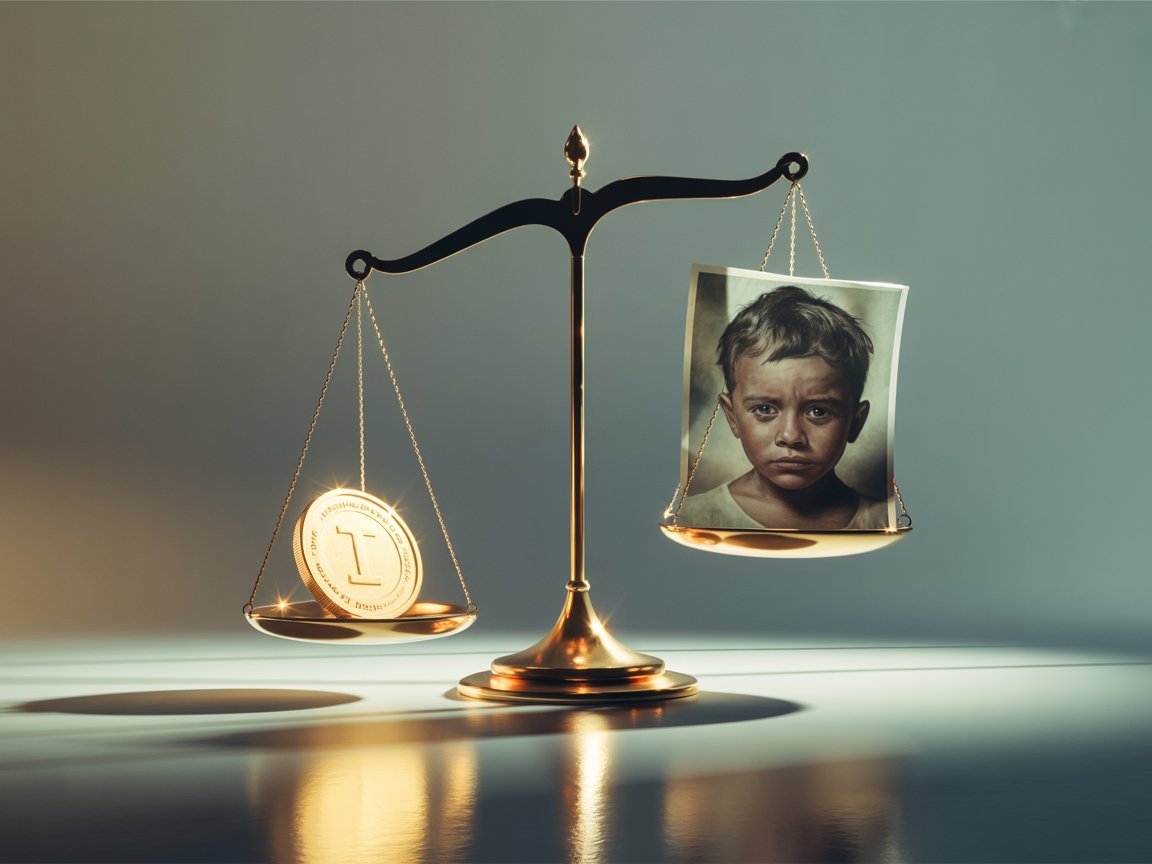
In it, Marin described two lives—her own and Elias’s—set side by side like a moral coin toss. She challenged the AI’s premise. She questioned a world that confused luck with virtue, error with evil.
“Would you still call me a hero,” she wrote, “if the markets had crashed? And would you still call him a felon if the boy had lived?”
People began to ask the same.
There was no revolution. No uprising. But there was a whisper. Then a conversation. Then a demand: for context. For nuance.
The Justice AI’s protocol was revised to include “intentional probability”—a small, hesitant step toward mercy.
Elias was released quietly, without apology. His record remained. He never taught in a classroom again.
But he began giving public lectures on moral philosophy. His first talk was titled: “The Danger of Outcome.”
Marin attended. She sat in the back, anonymous.
Two lives changed on the same night.
One became a felon.
One became a hero.
And then, one day, they simply became people again.
Author’s Note:
This story explores moral luck, the unsettling reality that people are often judged not by what they intended to do—but by what happened afterward. It asks a question we all must face: Are we truly the sum of our outcomes, or something deeper still?
About the Creator
Enjoyed the story? Support the Creator.
Subscribe for free to receive all their stories in your feed.
Comments
There are no comments for this story
Be the first to respond and start the conversation.