
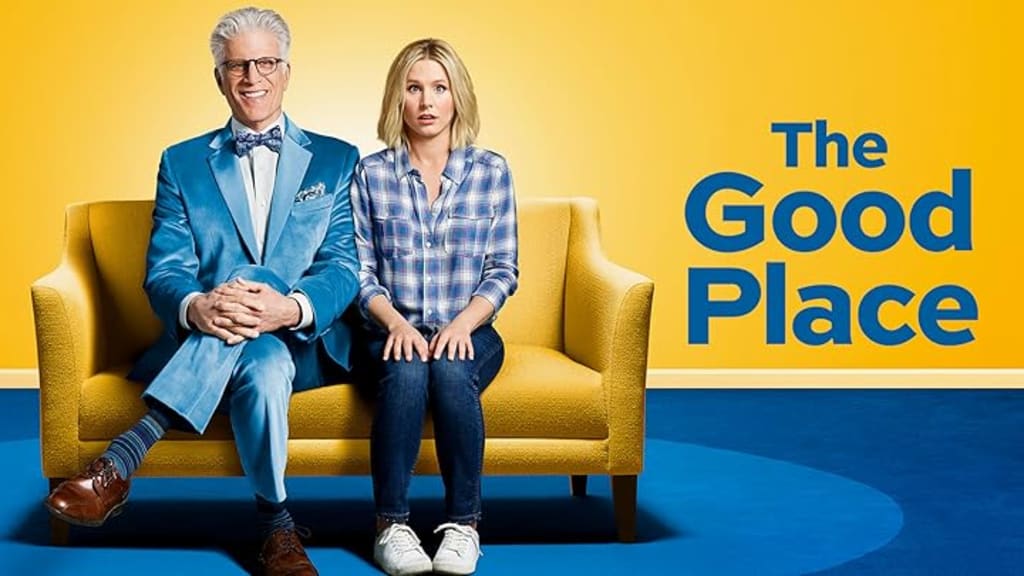
The Good Place is a life-changing show as it offers a narrative that teaches us to truly look at the bigger picture of life. This perspective with its many takes on philosophy provides a new way for people to think critically. The best part of philosophy is that it's not fact but just theories about behavior up for discussion. It gives us the tools to question things like what gives a person their worth and what it really means to be a good person in our limited lifetime.
Everything Is Fine presents our characters, dynamics and ties in ethical dilemmas to provoke creative ideas about Eleanor’s situation. Michael seems like the perfect guy trying to bring peace to the good people but is he too good to be true? Eleanor asks Chidi for help for the first time which doesn’t mean much in this pilot except for a wholesome moment between friends but sets the foundation for their relationship where Chidi will always help her and bring out the best in her and she will always loosen him up to take life more easy to deal with his indecisiveness. This episode being the first one chooses to tackle a simple lesson about consequences based on what happened when Eleanor was selfish.
Flying follows the series’ premise where Eleanor finds herself feeling guilty about how she doesn’t deserve to be in the good place with such great people. In this episode, Chidi teaches her about moral particularism, which is that our world isn’t black and white and that the difference between right and wrong is circumstantial. Eleanor comes to understand that her behavior simply has no circumstances and that it’s just unnecessary causing us to see development from her once she picks up trash and refrains from her mean comments. This was a step in the right direction for her.
Tahani Al-Jamil properly introduces Tahani as a main character and her dynamic with Eleanor stemming from jealousy on both ends. Eleanor learns to not always look for the worst in people as Tahani doesn’t necessarily have to be a horrible person just because of her bad phrasings of well-intentioned words. Additionally, Tahani learns to be less fake with her backhanded compliments. The plant Tahani gave as a gift is also a fun simile used to represent Eleanor and Tahani’s relationship. Chidi’s lesson for this episode is on utilitarianism which becomes a central part of the show as it’s how people’s worth is calculated; actions are morally right if they maximize happiness for the greatest number of people.
Jason Mendoza welcomes Jason as the last main character who shows a flaw in the system that both him and Eleanor don’t belong in the good place but still made it. This subtly reveals what the season is building up to in the grand scheme of things and gives Eleanor her first clue of what’s going on. However it does add to her guilt of being there that another good person didn’t make it to the good place because of Jason. This episode’s lesson from Chidi is virtue ethics which is the opposite of utilitarianism which is that being good means intentional actions and steps to work on one's character instead of a set of rules.
Category 55 Emergency Doomsday Crisis confronts Eleanor's overwhelming pent-up guilt from each episode. Meanwhile, Chidi talks about moral integrity: picking the right path even if it's harder and that the easy way is not always the right way. He also explains the concept of Kantian ethics which is that lying violates a universal moral law. This doesn’t cause Eleanor to do anything drastic but to improve her behavior even though some of her intentions are just from fear.
What We Owe to Each Other has Michael feel bad about the glitches in the neighborhood which just adds to Eleanor's guilt. Chidi teaches her about contractualism which is the idea of morality being about what we owe one another as a society. Tahani learns that she doesn’t owe anyone but herself anything in that regard as she’s always been insecure: requiring validation. However her attempts to impress Jason fail and she sees her own worth.
The Eternal Shriek has Chidi teach moral duty which is that people are obligated to act beneficially to others even if it puts them in an uncomfortable situation which essentially translates to selflessness. This tests Eleanor’s selfish tendencies seen in her flashbacks throughout the season of what she was like on earth. Eleanor gets puzzled about moral particularism and Kantian ethics on if telling the truth is the right thing to do.
Most Improved Player is where Chidi teaches another central argument of the show which is the philosophical idea of moral progress which is where being good is not about being perfect but continuous improvements in character. Eleanor makes an improvement by confessing part of her lie of pretending to belong in the good place.
…Someone Like Me as a Member allows Eleanor to see herself as a better person just as she is as Chidi teaches her about ethical egoism which is the morality that people should act in their own best interest to protect themselves first.
Chidi’s Choice decides to focus on Chidi this time and present flashbacks of his time on earth for a change. We learn how indecisive he used to be and how it would hurt everyone in his life which is what happens to people with people-pleasing tendencies; they try their best to make everyone happy but in the end, no one’s happy. The lesson in this episode is about existentialism which is the idea that existence precedes essence which falls under the nature vs. nurture debate seen in media like the musical ‘Wicked”. Lessons like existentialism, virtue ethics and moral progress teach Eleanor how she can become a better person while she takes small steps to improvement however actual developments still need to be built upon.
What's My Motivation is one of the first major developments for Eleanor as Chidi teaches her about moral desert which is the idea that doing good deeds for selfish reasons cancels the moral value of the deed. She spends the majority of the episode helping people just to get more points but at the end she helps a neighbor who she disliked without expecting anything in return proving her understanding of the lesson.
Mindy St. Claire gives Eleanor a choice to pick the easy way out and take shortcuts or truly become a better person. This episode tackles the idea of neutrality as we’ve learnt about moral particularism in Flying as Mindy turned her life around but was too late to accomplish enough to get to the good place so the medium place was created for her. Chidi’s effect on Eleanor is highlighted in this episode as he’s changed her for the better and acts as her moral compass to guide her about moral integrity in this episode, she also confesses the truth about her not belonging in the good place which is the decision that changed the course of the show. It just goes to show that people can always become better and when they do everything else around them changes too which is the central theme of the show.
Michaels's Gambit is the final episode of this season, and it’s the episode that redirects the show into its central theme in new and exciting ways. Throughout the season, the neighborhood was experiencing a lot of glitches as Michael's plan was literally falling apart. Eleanor figured it out. Amongst all the chaos between her, Chidi, Tahani and Jason about her and Jason being sent to the bad place she sees the chaos for what it is: a big spectacle of hatred. Those 4 were in the bad place the whole time to psychologically torture each other however they became better in the process. Eleanor also realizes her romantic feelings for Chidi from how they bring out the best in each other. We also learn why each character is in this version of the bad place; Jason hurt everyone with his ignorance, Chidi with his indecisiveness and lack of pragmatism, Tahani with her selfish reasons and Eleanor with her overall lack of compassion and selfishness. In the end, Michael resets their memory to restart the neighborhood.
In conclusion, The Good Place is an inspiring show on how it’s never too late to change and be a better person. Each episode provides a lesson on philosophy as we follow our characters struggling mentally to work it out to improve and mature. This season was just the set up for a wild ride of a philosophical rollercoaster.
About the Creator
Enjoyed the story? Support the Creator.
Subscribe for free to receive all their stories in your feed.
Comments
There are no comments for this story
Be the first to respond and start the conversation.