
The Girl Who Found a Photograph of Tomorrow
This isn't a ghost story. It's about a camera that showed me how little time we actually have with the people we love

The Girl Who Found a Photograph of Tomorrow
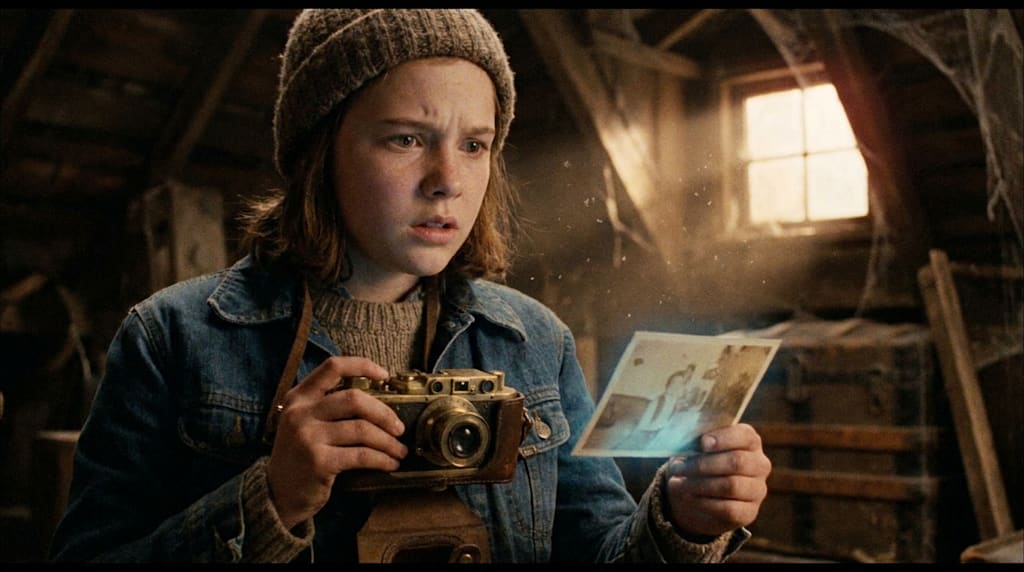
I found the camera in my grandmother's attic, wrapped in a towel that smelled like dust and old rain.
It was a simple thing. Black body, scratched lens, the kind of camera nobody makes anymore. No brand name I recognized. Just a small engraving on the back, worn almost smooth: "Develop within 24 hours."
I didn't think much of it. I was seventeen, bored on a summer afternoon, looking for something to sell on a local marketplace app. Old cameras get decent money from collectors. I figured I'd clean it up, snap a few test photos, and post it online by evening.
That decision changed everything.
I want to tell you this story the way it happened to me, slowly, with confusion before fear, and fear before understanding. Because if something like this ever happens to you, you'll need to know that the panic comes later. At first, it just feels strange.
The first photograph
There was film already inside the camera. One roll, half used. I didn't think about whose photos they might be. I just wanted to see if the thing worked.
I walked to the small park near my house and took a picture of the bench under the old neem tree. Nothing special. Just light testing.
I dropped the film at a photo lab the next morning, the kind of small shop you still find in older neighborhoods, where the owner knows your face but not your name. He told me to come back in a few hours.
When I picked up the photos, I almost didn't look at them in the shop. I shoved the envelope in my bag and walked home, scrolling through my phone instead.
That evening, I finally opened it.
The picture of the bench was there. Except it wasn't the bench as I'd seen it. In my photo, there was a man sitting on it, an old man in a grey shawl, feeding pigeons.
I hadn't seen any man when I took that picture. The bench had been empty.
I assumed it was a double exposure. Old film cameras do that sometimes, especially with film that's been sitting for who knows how long. I didn't think twice about it.
The next morning, I walked through the same park on my way to a tutoring job I had that summer. And there he was. An old man in a grey shawl, sitting on that exact bench, feeding pigeons.
I stood frozen for a full minute.
It could be coincidence, I told myself. Old men feed pigeons in parks all over the world. It's not exactly a rare sight. I kept walking, but something in my chest had shifted, like a door left slightly open in a room I thought was sealed.
Testing what shouldn't be tested
I want to be honest with you about something. If you ever come across an object that seems impossible, your first instinct will not be fear. It will be curiosity, dressed up as scientific doubt. You will tell yourself you're testing a theory. You are not. You are hoping the impossible thing is true, because impossible things are exciting, until they aren't.
I took more pictures. My street, my neighbor's gate, the small grocery store at the corner. Ordinary things. I took them in the evening, developed them in the morning, and then walked past those exact locations to check.
Every single time, the photograph showed something that hadn't happened yet, but would happen, almost exactly twenty-four hours after I took the picture.
A delivery bike parked outside the grocery store that wasn't there when I shot the photo, but was there the next day. A red kite stuck in the neighbor's tree, which I saw tangled in the branches a full day after the photograph predicted it.
Small things. Harmless things. The kind of details that don't change your life, they just rearrange your sense of what's possible.
I stopped telling myself it was coincidence around the fifth photograph.
For readers outside Pakistan who might wonder why I didn't immediately tell someone or post about it online, here's the honest answer: in many South Asian households, and honestly in a lot of households worldwide, a teenage girl claiming she found a magic camera is not taken seriously. It's the kind of thing adults smile at and dismiss, the same way a claim about ghosts or curses gets brushed off at the dinner table. I knew that if I told my mother, she'd assume I was either joking or exhausted from the heat. So I kept it to myself, the way you keep most strange and important things to yourself when you're a teenager. Quietly. Carefully. Like a secret you're not sure is a gift or a burden.
The photograph that changed everything
Three weeks into my quiet experiment, I decided to try something different. Instead of photographing places, I photographed myself.
I set the camera on a stack of books in my room, used the timer function, and took a selfie-style shot, standing near my window with afternoon light coming in.
I dropped the film off that evening. The shop owner, Rashid uncle, as I called him, was starting to give me strange looks by now. I'd become a regular, and regulars who develop one photo a day, every day, for weeks, eventually raise eyebrows.
The next morning, I picked up the photograph.
I was in the picture, standing where I expected, in the clothes I'd worn. But the background wasn't my room.
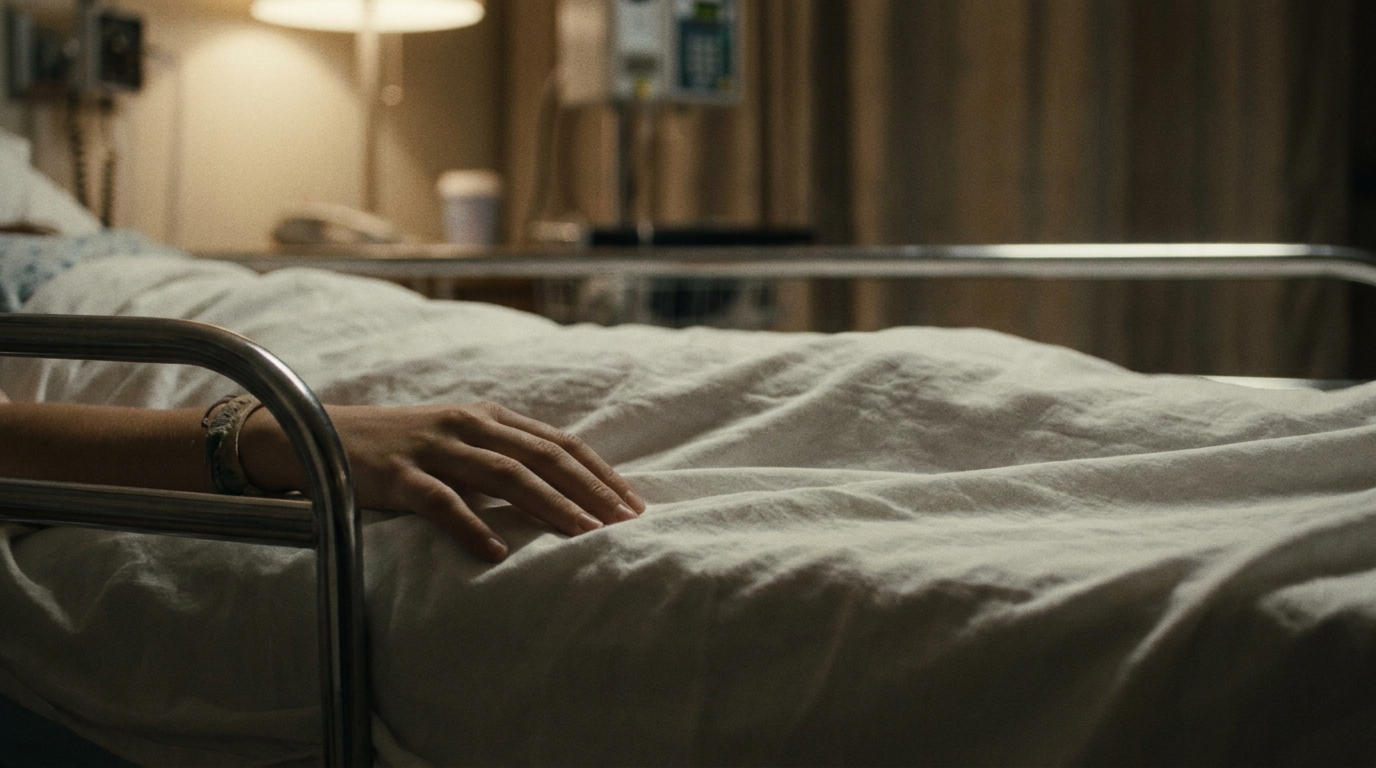
I was standing beside a hospital bed. There was a body on it, covered up to the chest with a white sheet. I couldn't see the face clearly. The photograph was slightly blurred near the head, almost like the camera itself didn't want me to see who it was.
My hand in the photo was resting on the side of the bed.
I sat on the steps of the photo lab and stared at that picture for what felt like an hour. People walked past me. Someone asked if I was okay. I don't remember answering.
I want to pause here and say something important, especially for anyone reading this who has ever felt the ground shift suddenly beneath an ordinary day. The fear that hits you in moments like this isn't loud. It's quiet and cold. It doesn't make you scream. It makes you very, very still.
I had twenty-four hours, give or take, before that moment would arrive. And I had no idea whose body was in that bed.
The hours that followed
I called everyone I could think of. My mother, who was at work. My older brother, who was at university in another city. My best friend, Hira, who lived two streets away.
Everyone was fine. Everyone sounded normal, slightly annoyed by my unusual urgency, asking if something was wrong.
I didn't tell them about the photo. What would I even say? "I think one of you might be dying tomorrow because of a magic camera I found in my grandmother's attic"? I would have sounded unwell, and worse, I would have terrified them without giving them anything useful to act on.
So I did something else instead. I went back to basics. I thought about every hospital within reach of our city, every possible accident, every possible illness in our family that I might have overlooked.
My grandmother. She'd had heart trouble for two years. She lived with my uncle's family, about forty minutes away.
I called my uncle's house. My grandmother answered the phone herself, her voice steady, telling me she'd just had her afternoon tea and was about to take a nap. She sounded completely fine.
I didn't sleep that night.
What the photograph actually showed
The next day, I asked my mother, carefully, without raising alarm, if we could visit my grandmother. I said I missed her. It wasn't a lie.
We went in the afternoon. My grandmother was sitting in her usual chair, complaining about the heat, asking my mother about groceries, completely herself.
I stayed close to her all day. I made sure she ate properly, made sure she didn't overexert herself in the kitchen, made sure someone was nearby at all times. I didn't explain why. I just stayed.
Nothing happened that day.
I want to tell you the dramatic version of this story, where my vigilance saved someone's life, where I prevented exactly what the photograph predicted through quick thinking and stubborn love. But that's not entirely what happened.
What actually happened is this: two days later, my grandmother was taken to the hospital after a fall in her bathroom. Nothing related to her heart. A simple fall, the kind that happens to elderly people more often than we like to admit. She fractured her hip and needed a minor procedure.
I was the one standing beside her hospital bed when she came out of anesthesia. The sheet was pulled up to her chest. My hand was resting on the side of the bed, exactly like in the photograph.
She was alive. She recovered. But I understood something in that hospital room that I hadn't understood before.
The photograph hadn't shown me a death. It had shown me a moment of fear, a moment where someone I loved was vulnerable, and I was there for it.
What I learned from a camera that shouldn't exist
I never used that camera again. I wrapped it back in the same towel, put it in a drawer, and haven't touched it since. Some things, once you understand their weight, you don't want to carry casually anymore.
But I think about what it taught me often, especially now that I write online and share stories with people from completely different parts of the world.
The lesson wasn't really about predicting the future. It was about how easily we assume tomorrow is guaranteed for the people we love. We get used to their voices on the phone, their complaints about the heat, their ordinary presence in our lives. We stop paying close attention because nothing seems urgent.
That camera forced urgency into my hands for twenty-four hours, and it changed how I show up for people, permanently.
You don't need a magic camera to learn this. You just need to notice that everyone around you is one ordinary day away from becoming a photograph you'd give anything to take again.
If you're reading this from anywhere in the world, the lesson translates without needing explanation. Call the person you've been meaning to call. Visit the relative you keep postponing. Sit beside someone fo
r an extra hour, even when nothing seems wrong.
You never know which ordinary afternoon is actually the one that matters.
About the Creator
Muhammad Farman
**✨ Writer | Storyteller | Explorer ✍️** **Sharing unique stories, thought-provoking ideas, and unforgettable journeys that inspire, spark curiosity, and leave a lasting impact. 🌍📖**
Enjoyed the story? Support the Creator.
Subscribe for free to receive all their stories in your feed.
Comments