
“Nobody can hear a scream in the vacuum of space, or so they say.” Exclaimed the Professor, Dr. Starr, of our Galaxy Study class. He continued, more quietly, “But since that is a theory that has never been tested, is it true?”
I had been daydreaming and was startled into awareness when everyone in the room broke out into excited chatter, some laughing, some exclaiming what they thought. As soon as I had entered the classroom, I noticed that Graham Trent was in this class. I had had a crush on him since I was in his class in grade school and was imagining scenarios where we met and he confessed how much he liked me.
As I looked around, I noticed Graham wasn’t either laughing or talking. He had a rather introspective look, as if he were searching for an answer within himself. He was lucky; he had studied space from a simulation capsule as a test subject, courtesy of the Children’s Space Discovery Centre which his father, Matthew Trent, had founded. Matt was famous for his research into planetary relocation and had begun the Discovery Centre to, among other things, introduce children to the idea that it was possible to find and inhabit a planet similar to Earth. I watched as Graham’s eyes darted to the door of the room and just as quickly looked down.
The door opened slowly and a tall, trim, middle-aged man entered the room. His handsome face was alive with humour and interest, a smile showing through the trim grey beard he sported. As the class became aware of his presence, the noise abated abruptly. Professor Starr turned to him saying, “Ah, there you are. Class, may I introduce Mr. Trent, yes, Mr. Matthew Trent. He is the Commander of the TransGalaxy Relocation Taskforce responsible for the Relocation Program.” The classroom was silent – you could have heard a pin drop – as the students took this in. “Mr. Trent will be telling you about a special project that will be a part of your work in this class.”
I glanced at Graham but he was still looking down at the desk. At the mention of the special project, he lifted his head and turned his head slowly, considering the rest of the students. His eyes lingered on mine and I smiled at him. He smiled back and once again, faced front. I was thrilled! Being the studious type and not a part of the popular crowd, I didn’t think he had ever noticed me. With a famous father and startling good looks, he was always surrounded by pretty girls vying for his attention.
The murmuring started again but died down just as quickly, shushed by a quelling look from Dr. Starr.
“In this class we shall be studying what makes a galaxy. We will delve deeply into the make-up, the creation, the maturity and the viability of life on planets within these galaxies. Mr. Trent will be providing data from his earlier findings for our review and consideration.” He paused here, for effect. “How many of you would like to travel to a distant planet and begin a whole new civilization? The project, which will form half of your final marks for this course, is the creation of a plan to relocate humans to another viable planet and begin a new civilization. There will be extra consideration given for research into finding new galaxies and/or new planets.”
Again, excited chatter broke out, students looking at each other, hands fluttering, some already getting out paper and pens or tablets. What a privilege to be able to study Mr. Trent’s research and to use it to create a plan to settle a whole new world.
Matt spoke, “We at the Space Institute, and more particularly, the Program, need your help. As you may be aware from the current news, the world is facing an overpopulation crisis in this year of 2050 and the Earth may be hard-pressed to support that population. The projected population in only 10 years will be over 10 billion people. With this in mind, the Program has accelerated its research and we would like you to be a part of the solution; to use the information we provide you, your imagination and your own research to create a plan of where, and how, we can accomplish this relocation. Nothing is too extreme, everything will be considered. I will visit the class weekly to discuss your findings and ideas as well as to provide you with updates of the Program’s progress.”
He paused, and tried to make eye-contact with as many students as possible. “I can’t emphasize enough the importance of this Program. It is imperative that we have a plan in place as soon as possible. I have considerable confidence that working together, we can accomplish our goal.” He viewed the reactions of the students who were looking at each other with excitement. What an opportunity this was!
The class was made up of many different ages, education and cultures; in this university, those factors didn’t matter as it was a special place for people with an abiding interest in the universe and who had proven during the challenging entrance exam that they were exceptionally qualified to attend this course.
Matt continued, “The Program is reaching out to a number of universities to harness the creativity, intelligence and imagination of a broad range of people to participate in a planet-wide attempt to find an alternative planet for habitation. We are excited to see what you can contribute to this process. I look forward to working with you all. Thank you.”
As well, the Program was working on a number of new and exciting projects: the first was the most powerful telescope ever imagined, magnification 10 times that of the existing high-power machine; the second, a faster, more efficient space travel vehicle; and, third, a new, small vehicle that was solar powered, and was needed to test all components of a newly discovered planet.
Dr. Starr spoke, “You may work in pairs or in a group, or you may work alone. This is a semester-long project, to be completed on your own time and in your own way although from time to time, we will have in-class tasks that will tie into this project. The other course material makes up the remainder of the marks for this semester. There will not be an end-of-semester exam; the project will be the deciding factor of a pass. You will have an opportunity to use the Program’s telescope for research, as well as some of their files and data. Don’t be afraid to let your imagination go; be creative.”
The students settled back into their seats. “This is going to be a fantastic semester,” I thought. “I can’t wait to get started. I wonder if Graham would work with me.” I wasn’t sure he knew who I was, even though we had been in several classes together over our school years.
Continuing with the class, Mr. Starr outlined the remaining content of the course which would begin the next day. It was an intensive class, designed to motivate students into thinking about the future; what it could bring, how it could come about, inventive ideas, brainstorming, etc.
By the time the bell rang to end the class, my mind was clicking along at a fast pace. First and foremost, I had to reach Graham before anyone else did. As I rose quickly, however, my feet got stuck between the legs of my chair and as I pushed it back, it tripped me and I fell heavily. Lying there, cursing to myself, blinking away angry tears, I waited until the shock subsided before trying to get up. A shadow fell across my face and Graham’s concerned green eyes looked down at me. He leaned over and extended his hand, an invitation to help me rise. I was mortified and I could feel the wave of heat flush my face but I had the presence of mind to grasp his hand and allow him to assist me.
“Are you okay, Ella?” he inquired. He seemed oblivious to the fact that several other students were standing around waiting for him. I answered, “Yes, thank you.” I didn’t immediately let go of his hand as I looked directly at him, trying to decide whether to say something about working together when he spoke again, “Would you like to work with me? And Rayna? We could also ask someone else so we have a good, 4-person group.”
I didn’t hesitate and said quickly, “I’d love to. How about Henry? He looks a little lost, being so young, but I know he’s really smart – actually he is a genius!” Reluctantly, I let go of his hand – it hovered there, just for a moment, as if he hadn’t wanted to let go.
Graham replied, “Let’s speak with him, and Rayna, and see if the four of us would mesh well. We each have our own area of interest so that we would have an innovative and diverse approach to the project.”
He was right; the four of us – Graham and his experience with observing and analyzing data from a telescope, me and my obsession with the blank slate of a new world, Rayna and her grasp of space travel vehicles and little Henry, only 12 years old but a genius with gadgets – we did work well together and comprised a plan that was simplistic in its execution but complex in its preparation.
. . .
A month earlier, at a meeting of the TransGalaxy Relocation Taskforce office, Matt sat at a large, oval, gleaming wooden table with the other members of the TGRT.
He said “Among other things, we need to step up our research; we’re running out of time and we need to have some action on this soon. With the population topping 10 billion in the next 10 years, a viable plan is of the utmost importance.”
“What do you suggest Matt? We are all working at the limit of our time, energy and expertise,” replied Geoffrey Stanton, an Astronomer with a PhD in Astrometry. “We’ve found a few interesting galaxies but no viable planets yet.”
Matt replied, “I had an idea. It may be a little farfetched but … have you ever watched children play? Teenagers who want to do something? They have one thing in common; they don’t give up and they think outside the box to come up with a solution so that they can do what they want to do. What about creating a special committee, made up of children and teens to work alongside some university students? Let’s see what they can do. Give them access to our research and the Bellex Space Telescope.”
A few mutters were heard around the room and Talon spoke up, “Intriguing idea. I think that may be workable. How would we choose the participants?”
Matt said, “I’ve had a bit of time to think about this; what about a survey in the schools? That would let us know about the knowledge and interest level of the kids. Then we can pare it down to – what do you think – about 20? My son is in university – perhaps he would know a few likely individuals to help guide the committee.”
The members of the TGRT looked around the table, nodding. Perhaps that would help kick-start the Program!!
Mica, an expert in AstroPhysics, said, thoughtfully, “I think that a survey may take too long. What about the university right here, in Texas? Isn’t there a special program for kids of all ages who are especially interested in space?”
“Matt, Graham is in that program, isn’t he? Would you speak to Graham and sound him out, see if he thinks the kids would be interested.” Geoffrey started planning. “We should assemble a list of other schools with this program; I know there are a few. That would give us a good cross section of participants.”
Matt replied, “Yes, he is. Sure, I’ll speak with him about it. I’m positive, though, that the kids will be very interested and quite excited, especially because they’ll be able to use the Bellex. That’s probably the most powerful telescope they’ve ever used!!”
The TGRT had a little more discussion, resolving to confer about the plan in the next few days, and went on to other matters.
. . .
Creating a plan to settle a new world had been amazing, comprehensive and immersive. As a class, we had discussed and rejected ideas, expanding on some and then discarding them too. There were some pretty extreme thoughts but sometimes, through our research, we incorporated some of the components into our plan.
Rayna had been studying traditional space crafts that were available for human travel. She and Henry had been working together on the logistics of moving a large number of people, construction materials, communication devices that would work across the distance, and innovative vehicles that would work indefinitely on solar power.
Rayna had come to the conclusion that an updated, larger and faster craft would be required and had conferred with some of the members of the TGRT who introduced her to the designers of the latest space travel vehicle. When she had outlined the requirements, they had initially laughed and said it was impossible but when she had shared her ideas on how to implement some of the changes, they got serious and, inspired, came up with a surprisingly simple but effective design change that allowed the craft to travel at a hyper speed that was still safe for the humans who were aboard. It would allow the transfer of a large number of people in a manageable time frame.
Henry, who had been fascinated with gadgets from a very young age, had been thinking along a different route. Although travelling to the planet more quickly and efficiently would be of tantamount importance, it would be terrible if, once they got there, the atmosphere was less than hospitable and the project had to be abandoned. Returning to Earth would be hazardous and it was unlikely that it could be accomplished safely. There needed to be a way to test the atmosphere, the flora and fauna, the gravity force, the weather patterns and the water, in fact, everything about the planet. Since the Program had a rudimentary vehicle in the planning stages, he applied his expertise to this project.
His idea was deceptively modest; a drone. But a very special drone. The one contemplated by the Program hadn’t been comprehensive enough. Henry had taken their design and had upgraded it so it would perform the functions required for accurate measurements as it traversed the planet. It was a transformer of a sort – it could fly, it could convert to a mini-submarine and it was an all-terrain, wheeled vehicle all the while taking photos, videos, air and water samples, samples of rock and vegetation. As well, it could be sent in advance of the human space vehicles, to do the measurements and send the information back to Earth for analysis in real time, allowing the plan to be carried out with the confidence of success.
My proposal for the establishment of a settlement was rudimentary at first. I laid out a preliminary town plan with streets and buildings but I had to wait for the location of a viable planet and its topography before I could do a more comprehensive plan for the initial community. However, I had to consider the personnel that would be required – the list was extensive. I had to consider what we would need in terms of plants and animals from Earth. The building materials that may have to be brought with us for homes and other structures. All the equipment required for building and survival. How we would choose the individuals for the initial journey and a contract to be signed by the chosen people that they understood the risks involved. I created list after list and waited for the final piece of the mission.
. . .
Five years later …
“Ell, come here,” cried Graham, excitedly, “I want to know if you see what I see.” He had been the first to use the new telescope, the John Everett Space Telescope, which was 10 times as powerful as the Bellex telescope we had previously been using. The JEST had just been launched the day before and he was searching the same pattern we had been using. Each search took a fraction of the time it had taken previously and the images were startlingly clear.
Startled by the urgency in his voice, I jumped up from my chair, nearly fell as I lost my balance, got tangled up with my feet moving more slowly than my body, grabbed the edge of the table and held on until my wits caught up. I let go cautiously and peered at Graham through the curtain of hair that had come loose from my ponytail during my bout of uncoordination. He was practically hopping up and down with excitement and held out his hand to steady me as I reached him. “Look,” he said. Holding on to me and leaning forward to have a quick look again at the screen, confirming the placement of the viewer, he pushed me closer and put his arms around me as I looked at the images. At first, I didn’t know what he was talking about, but as my breathing slowed and I looked more closely and carefully, I saw … something. “Is that …? No. Yes?” I didn’t want to believe it if it wasn’t true. I blinked my eyes a couple of times, wiping away a little moisture. Graham was barely holding it together, his breathing was shallow and rapid, his heart beating fast and hard against my back. I leaned forward again and used the zoom button, sharpening the image for myself. It was!!!!
“You found it Graham! Holy cow, you found it!! It’s beautiful.” I gazed in awe as the image became more detailed. “We should call your father immediately. He’ll be so excited and proud.”
I turned in his arms, hugging him tightly and we stood, locked in time for an instant. As we slowly pulled apart, our hands slid down each others arms and we clasped each others hands, looking at our wedding rings and remembering that perfect day for a moment … but now we had so much work to do. Our plan was becoming a reality!
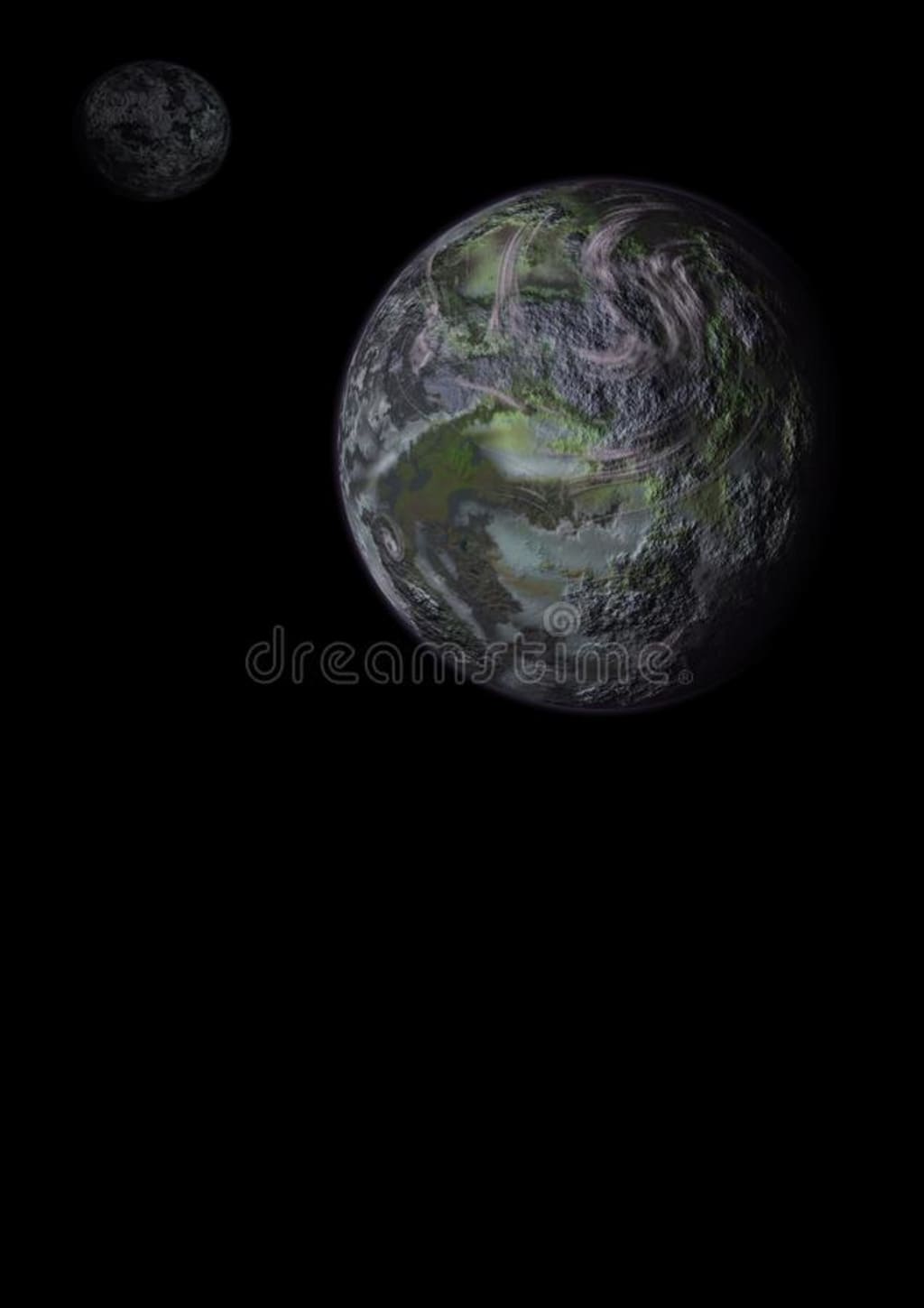
We had found it! The answer we had been searching for, or rather, the place. A planet we had seen before but disregarded because we couldn’t get enough detail. Now, with the addition of the JEST, it became clear, focused and feasible. The galaxy it belonged to, called Cypher, was very similar to ours, the Milky Way. It had a central “sun”, several planets orbiting that sun, each with at least one moon and the best thing of all, it was within range for the new space craft. The planet itself glowed with greens and subtle blues interspersed with browns and overlaid with white, cloud-like patterns.
It was a heady feeling; Graham, Rayna, Henry and I had joined the TGRT shortly after we finished school. Our ambitious plan for relocating personnel to another planet had been met with awe and acclaim; we had included a design for a new space travel vehicle, which had started production shortly after Rayna had met with the designers, a drone of Henry’s ingenious specifications, designed to measure all aspects of the planets’ components (once we found one) and a plan for the establishment of a new, agricultural-type society upon the planet when it was established to be habitable.
. . .
Five years had passed since that moment of discovery. The drone had been deployed, the data it provided analyzed and the years of planning, the research and details, the creation of new technology, the newest, fastest and least physically challenging spacecraft, the choosing, loading and leaving, the travel through space, the suspended animation for the time it took to travel the distance, were behind us. Waking to find myself and Graham side by side, seeing him there as I became aware. We hugged each other as we stepped into the pod that was to take us to the surface of the planet below. It was called Futura, in honour of being the future home for humanity in the galaxy called Cypher which meant “secret or mystery”. How fitting, a mysterious future.
The pod settled onto the firm surface of the planet. Graham and I, hand in hand, pushed the airlock door open and when the hydraulic steps had deployed, stepped down onto our new land. There was a feeling of infinite possibility and of coming home.
About the Creator
Enjoyed the story? Support the Creator.
Subscribe for free to receive all their stories in your feed.
Comments
There are no comments for this story
Be the first to respond and start the conversation.