

There is a moment in every life when a person realizes that time has only one direction.
Not forward in the hopeful sense people talk about when they are young, but forward in the quieter, harder way. Forward without permission. Forward without interruption.
Nothing returns.
Yesterday is gone. Last week is gone. Last year has already disappeared into something that cannot be touched again.
And aging, whether one accepts it or not, continues its slow, flawless work.
Karl understood this long before he could explain it.
When he was young, time felt generous. There was always another morning waiting. Another opportunity to correct a mistake, another year that seemed endless.
But the years had a strange habit of passing unnoticed.
Julian Barnes once wrote words that Karl saw printed beneath a photograph in a magazine many years ago:
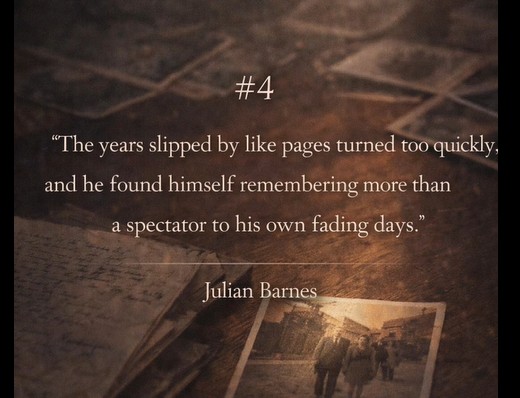
At the time Karl had read the sentence without much thought. It belonged to older people, he assumed. People in photographs who looked distant and gray.
He was not one of them.
Not yet.
Back then his days were full.
There had been work, long hours, and the smell of metal and oil in the workshop where he spent most of his life. There had been evenings with his wife Marta, who liked to open the windows even in winter because she said the air made the house feel alive.
And there had been their daughter Lena, who ran through the apartment like a small storm of questions.
Time moved then, but gently.
It was taken so gently that Karl did not notice what was being taken with it.
Aging never announces itself.
Virginia Woolf once described it in a way Karl would only understand decades later:
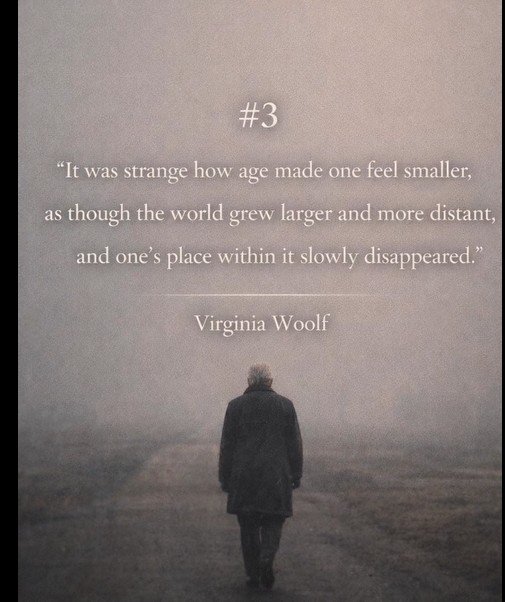
Karl began to feel that sensation sometime after Marta died.
It did not arrive dramatically.
It arrived quietly.
The apartment did not change its shape. The furniture remained where it had always been. The kettle still whistled in the mornings and the street outside still carried the same slow rhythm of passing cars.
But something had shifted.
Karl had begun to watch life instead of living inside it.
From the chair by the window he could see everything that continued without him.
Children grew taller.
Neighbors moved away.
New families appeared who did not know the names of the people who had lived there before.
Time had replaced them without asking permission.
Ernest Hemingway once wrote a line Karl never forgot:
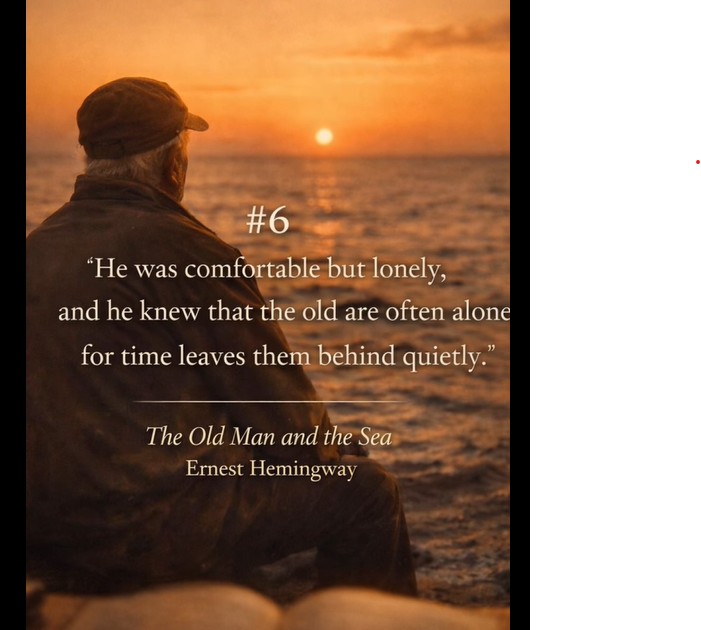
That was the truth people rarely spoke about.
Time does not attack.
It simply continues.
Karl still remembered the day Lena was born.
It had happened so quickly. Marta had squeezed his hand and laughed through her exhaustion when the nurse announced the time: 10:00 in the morning.
A new life had begun in that exact second.
But even in that moment something irreversible had already happened.
At 10:01 the child was already one minute old.
Nothing could bring that minute back.
Birth, like aging, moves in only one direction.
Karl thought about that often.
People say life begins with birth, but in another way life begins with the quiet loss of every second that follows it.
Minutes disappear.
Hours vanish.
Entire decades slip away without anyone noticing while they are busy living inside them.
Mistakes remain as well.
Some can be forgiven. Some can even be repaired.
But they can never be undone.Karl remembered one particular argument with Marta many years ago.
It had been over something small. It always is.
A forgotten appointment. A careless word spoken after a long day.
He had left the apartment angry and walked for hours through the city, convinced he was right.
By the time he returned home the anger had already lost its shape.
Marta forgave him.
But the words he had spoken still existed in the past. They could not be removed from time any more than a footprint can be erased from hardened stone.
Somerset Maugham once wrote something Karl would only understand much later:
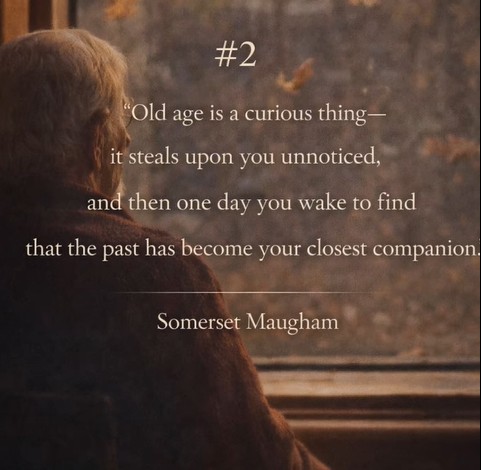
For Karl the past was everywhere now.
It lived in the chair where Marta used to sit.
It lived in the photograph of Lena at the Baltic Sea, holding her shoes in one hand while waves chased her along the shore.
The present felt smaller than it once had.
Not empty.
Just quieter.
Leo Tolstoy once wrote a sentence that Karl read in a newspaper article many years ago:
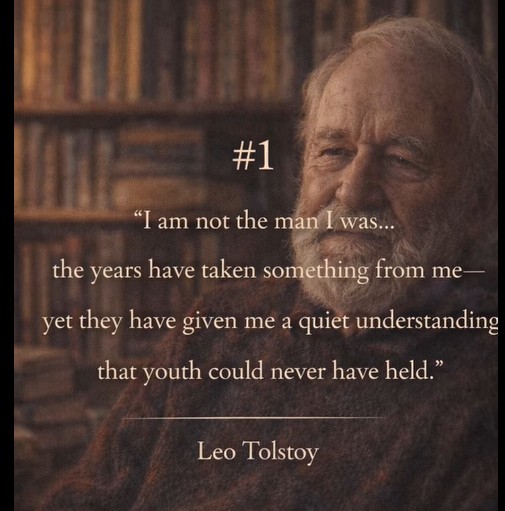
That understanding arrives slowly.
Young people believe that time can be rearranged.
That mistakes can be erased.
That life will allow endless corrections.
But time does not behave that way.
A broken friendship can sometimes be repaired, but the moment it broke cannot be removed from the past.
A cruel word can be apologized for, but it cannot be unsaid.
And there are things far more final.
A murder cannot be reversed.
Once a life is taken, that life remains gone.
Nothing in the world can place it back where it once existed.
Time accepts everything but returns nothing.
Graham Greene once wrote something Karl found painfully accurate in his later years:
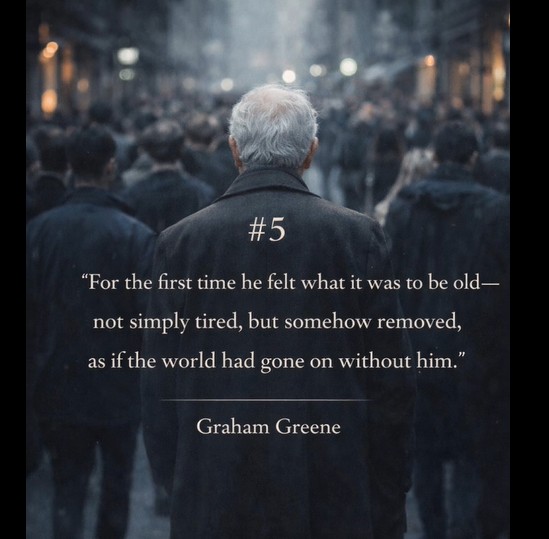
That feeling arrived gradually.
Karl noticed it in small ways.
The young cashier who called him “sir” without looking up.
The neighbors who moved in and out of the building without ever asking his name.
The conversations that passed him on the street like trains that no longer stopped at his station.
Life had not rejected him.
It had simply continued.
And time, flawless and patient, continued its work.
One evening Karl sat in his chair by the window as the sky darkened over the street.
A boy kicked a ball against the wall across the road.
Kick.
Kick.
Kick.
Each echo bounced through the evening air.
Karl watched the boy for a long time.
Eventually the boy picked up the ball and ran home.
The street grew quiet.
Karl thought again about time.
About how every moment passes into something that cannot be reclaimed.
You can return a gift you bought for someone.
But the feeling you had while searching for it — the quiet excitement, the hope that the other person will smile — that moment cannot be returned to the store.
It is already gone.
Just like yesterday.
Just like last week.
Just like the years that slip past while we are busy believing there will always be more.
Karl sat there until the room filled with darkness.
The streetlights came on one by one.
Cars passed.
A dog barked somewhere in the distance.
Time moved forward exactly as it always had.
And nothing that had already happened moved with it.
About the Creator
Enjoyed the story? Support the Creator.
Subscribe for free to receive all their stories in your feed. You could also become a paid subscriber, letting them know you appreciate their work.
Comments
There are no comments for this story
Be the first to respond and start the conversation.