
The Day I Realized I Was the Problem
I used to think my husband didn’t listen
The Day I Realized I Was the Problem
I used to think my husband didn’t listen.
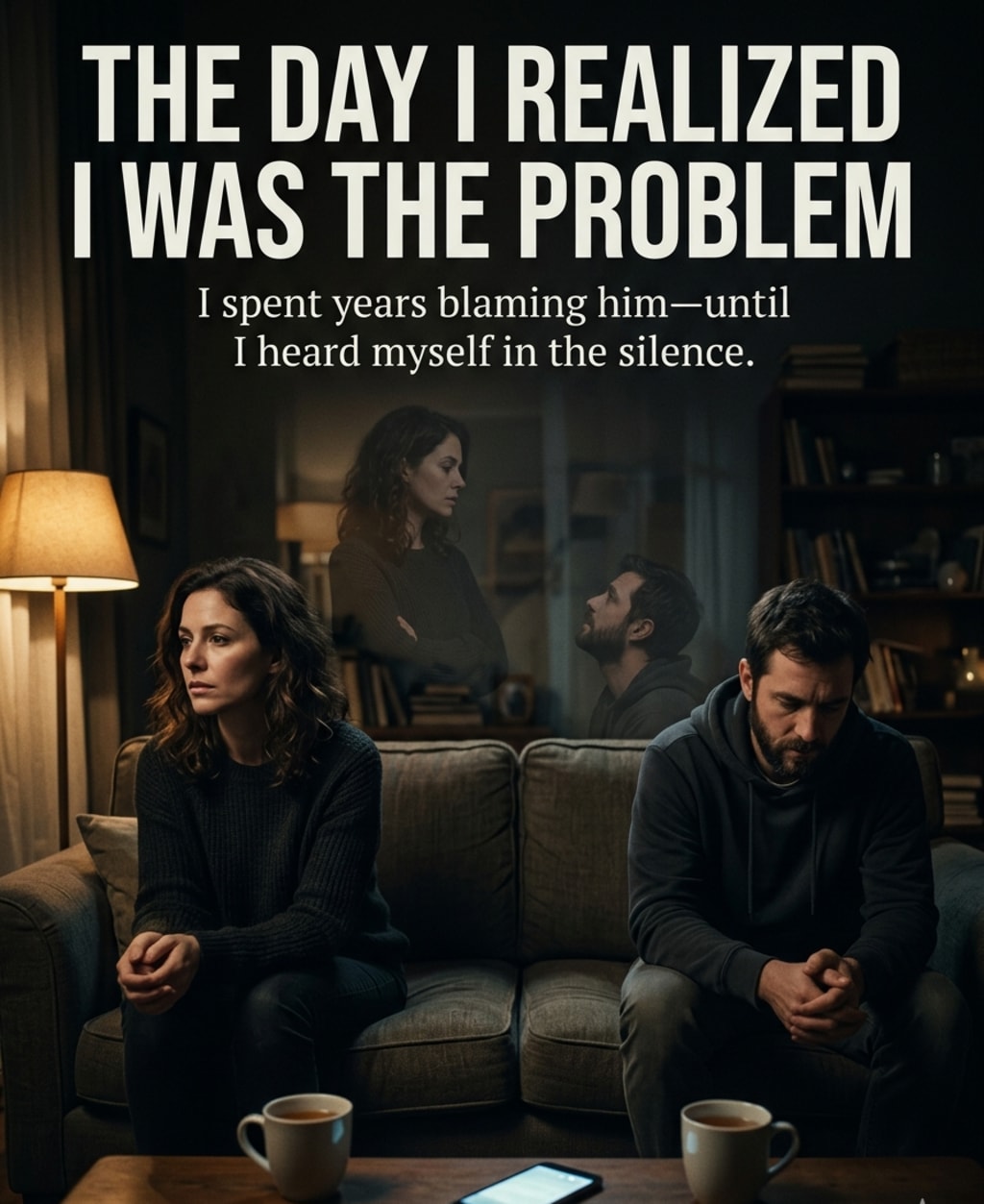
That was the story I told myself. The one I repeated to friends over tea, to my sister over late-night calls, even to myself in the quiet moments when the house finally settled. He didn’t listen. He didn’t care. He didn’t try. It sounded clean. Simple. Easy to believe. “Men are like that,” my friend Nadia would say, shaking her head. “You have to accept it.” I nodded every time, feeling understood, justified. Because it wasn’t just one thing. It was everything. The way he checked his phone when I was talking. The way he answered with “hmm” instead of real words. The way he forgot things I told him—important things, like the appointment I had been nervous about, or the story I had repeated twice already. It felt like I was invisible in my own home. And the worst part? I kept trying. I tried to talk more. Explain better. Choose the right time. The right tone. The right words. Nothing worked. So eventually, I stopped trying. Silence is not quiet. Not really. It’s loud in ways people don’t notice at first. It shows up in the way you put plates on the table without looking at each other. In the way you sit on opposite sides of the room, both pretending you’re just tired. In the way small questions—“Did you eat?” “Are you coming home early?”—replace real conversations. That’s where we were. Living together, but not really living with each other. And in my mind, it was his fault. The day it changed wasn’t dramatic. There was no shouting. No breaking point. Just a small moment. I was in the kitchen, cutting vegetables, when he walked in. He looked tired. More tired than usual. “I had a long day,” he said. I didn’t respond. Not because I didn’t hear him. I heard every word. I just didn’t feel like answering. He waited for a second, maybe two. Then he said, “They’re making changes at work.” Again, I stayed quiet. I told myself he didn’t deserve my attention. Not after all the times he had ignored me. So I kept cutting, the knife hitting the board a little harder than necessary. “I might lose my position,” he added, his voice lower now. I paused for a fraction of a second. Then continued. He stood there a little longer. I could feel it, even without looking at him. The waiting. The hesitation. And then he left. Just like that. That night, he didn’t say much. He ate quietly. Sat quietly. Slept early. I noticed it, of course. But I didn’t react. Part of me felt satisfied. Now he knows what it feels like. That’s what I told myself. The next morning, I found his message. Not a dramatic one. Not emotional. Just a simple line: “I tried to talk to you yesterday.” That was it. No accusation. No anger. Just… a fact. I read it once. Then again. Something about it felt different. Not because of what it said—but because of what it didn’t. There was no blame in it. No “you never listen.” No “you don’t care.” Just a quiet observation. And for the first time, I didn’t feel defensive. I felt… uncomfortable. I started replaying the moment in my head. Him standing in the kitchen. His voice, slightly uncertain. “I had a long day.” “They’re making changes at work.” “I might lose my position.” I had heard every word. And I had chosen silence. It’s easy to ignore someone when you believe you’re right. It’s harder when you start to question that belief. I sat there, holding my phone, and realized something I hadn’t allowed myself to see before. He had been trying to talk. And I had done exactly what I accused him of doing. The thought didn’t settle immediately. I resisted it. It’s not the same, I told myself. He does it all the time. But the more I thought about it, the weaker that argument became. Because the truth was, I had stopped listening long before that day. Not just with my ears—but with my attention, my patience, my willingness to understand. I had built a story where he was always wrong. And once you believe a story like that, you stop seeing anything that doesn’t fit it. I remembered all the times he had tried, in small ways. Asking how my day was, even if I answered shortly. Sitting next to me, even when I stayed distant. Bringing things home he thought I might like. I had dismissed all of it. Because it wasn’t enough. Or maybe because it wasn’t the way I wanted it. That realization didn’t feel empowering. It felt heavy. Because blaming someone else is easy. Taking responsibility is not. That evening, I did something I hadn’t done in a long time. I waited for him. Not just physically—but mentally. When he walked in, I didn’t stay in the kitchen. I didn’t pretend to be busy. I sat in the living room and looked up. He seemed surprised. “Hi,” he said. “Hi,” I replied. There was a pause. A familiar one. But this time, I didn’t let it stretch. “How was your day?” I asked. Simple words. Nothing special. But I meant them. He hesitated, like he wasn’t sure if this was real. Then he said, “It was… complicated.” I nodded. “Do you want to talk about it?” Another pause. Then he sat down. He didn’t say everything at once. It came slowly. In pieces. Work stress. Uncertainty. Fear he hadn’t voiced before. And for once, I didn’t interrupt. I didn’t prepare my response while he was speaking. I just listened. At some point, I realized something quietly unsettling. This wasn’t new. He had always been this person. I had just stopped seeing him. Later that night, after the conversation had ended and the house was quiet again, I sat alone and thought about everything. Not just that day. But all the days before it. All the moments I had ignored. All the times I had chosen silence over understanding. I had spent so long believing I was reacting to him. That I hadn’t noticed how much I was shaping what we had become. The truth wasn’t comfortable. It didn’t make me feel strong or justified. It made me feel responsible. And maybe that was the point. Because for the first time, I understood something clearly. If I had the power to make things worse… Then maybe, just maybe, I had the power to make them better too.
About the Creator
Enjoyed the story? Support the Creator.
Subscribe for free to receive all their stories in your feed.
Comments
There are no comments for this story
Be the first to respond and start the conversation.