
The Cup of What Was Forgotten
Where every cup holds a forgotten moment, and the price is paid in silence

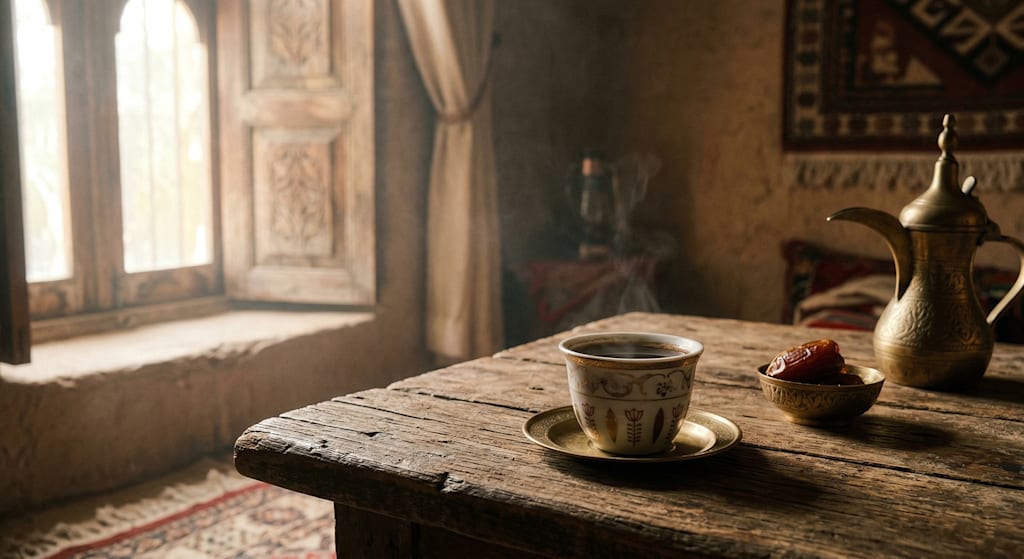
In a narrow alley that never appears on tourist maps, Yasser stands behind a tarnished brass counter. The scent of cardamom and dark-roasted beans clings to the stone like memory to skin. He did not inherit the café from his grandfather. He inherited the silence that comes before every cup. On a weathered wooden sign, hung by a frayed linen string, someone had carved in slanting script:
We do not sell coffee. We return what was lost.
No one had explained it. No one needed to.
Each morning, Yasser fills the small brass pot, waits for the first boil, and pours the black liquid into slender glass cups. No sugar. No pastries. Only the quiet request that customers close their eyes and whisper what they have forgotten.
Not things. Memories.
Amira came on a day of light rain. She sat on the splintered wooden chair, wrapped her hands around the cup as if holding a child, and said in a voice that barely held together:
I forgot my mother’s voice.
Yasser did not ask for dates, illnesses, or the weight of years. He only nodded, returned the pot to the flame, and waited. When the foam rose, he poured. He set the cup on a brass tray, let it cool, and read the grounds.
He did not tell fortunes. He witnessed.
He saw a small kitchen, a window open to a gray sky, a woman stirring a pot with a wooden spoon. A whisper rode the steam: Bread needs patience, little one. And so does the heart. Then a short laugh, light as a spoon tapping the rim of a glass.
Yasser looked up and spoke what he had seen. Plainly. Without ornament. Only the words, the pause between them, and room to breathe.
Amira wept. Not for the loss, but for the return. She left money he would not take, and said, I will come back.
Many returned. A man who had forgotten his father’s courage on his first day at work. A girl who had forgotten the color of her grandmother’s dress on her seventh birthday. A young man who had forgotten a promise he made to himself before fear choked it out.
Each time, Yasser read the grounds, gave the memories back, and learned the price.
It was never money. It was always internal.
With every cup, Yasser lost a piece of his own past. First, the exact shade of his mother’s eyes. Then, the melody his grandfather used to hum while fixing old clocks. Then, the reason he stood in this alley at all.
One afternoon, he found a small leather notebook tucked beneath the pot. His grandfather’s hand, tired but clear:
The coffee does not return memories. It returns you to them. But the bridge is carved from your own soul. Do not resist the fading. Welcome it. Those who give their memories away make room for others to stand.
Yasser closed the notebook. He did not flinch. He did not run. He only filled the pot, lit the flame, and waited.
On a cold evening, an old man sat down, rested his palms on the cup, and said:
I forgot that I was ever happy.
Yasser tipped the cup. Looked at the dark patterns. Saw an olive tree, a long shadow on dry earth, two hands holding each other without words. He smiled. He did not describe the scene. He only said:
You are not here to forget what passed. You are here to know that loss did not erase you. It only changed the shape of your presence.
The old man drank. Said nothing. But he left with lighter steps.
The next morning, Yasser opened the door. The air was cold. The alley was quiet. He set the cups on the counter, lit the fire, and looked at his reflection in the darkened brass. He no longer knew exactly who he was.
But he knew what he did.
And that was enough.
About the Creator
Enjoyed the story? Support the Creator.
Subscribe for free to receive all their stories in your feed.
Comments
There are no comments for this story
Be the first to respond and start the conversation.