
The Champion Horse Who Chose Not to Run
When winning demanded his silence, one horse chose something far more difficult—truth.

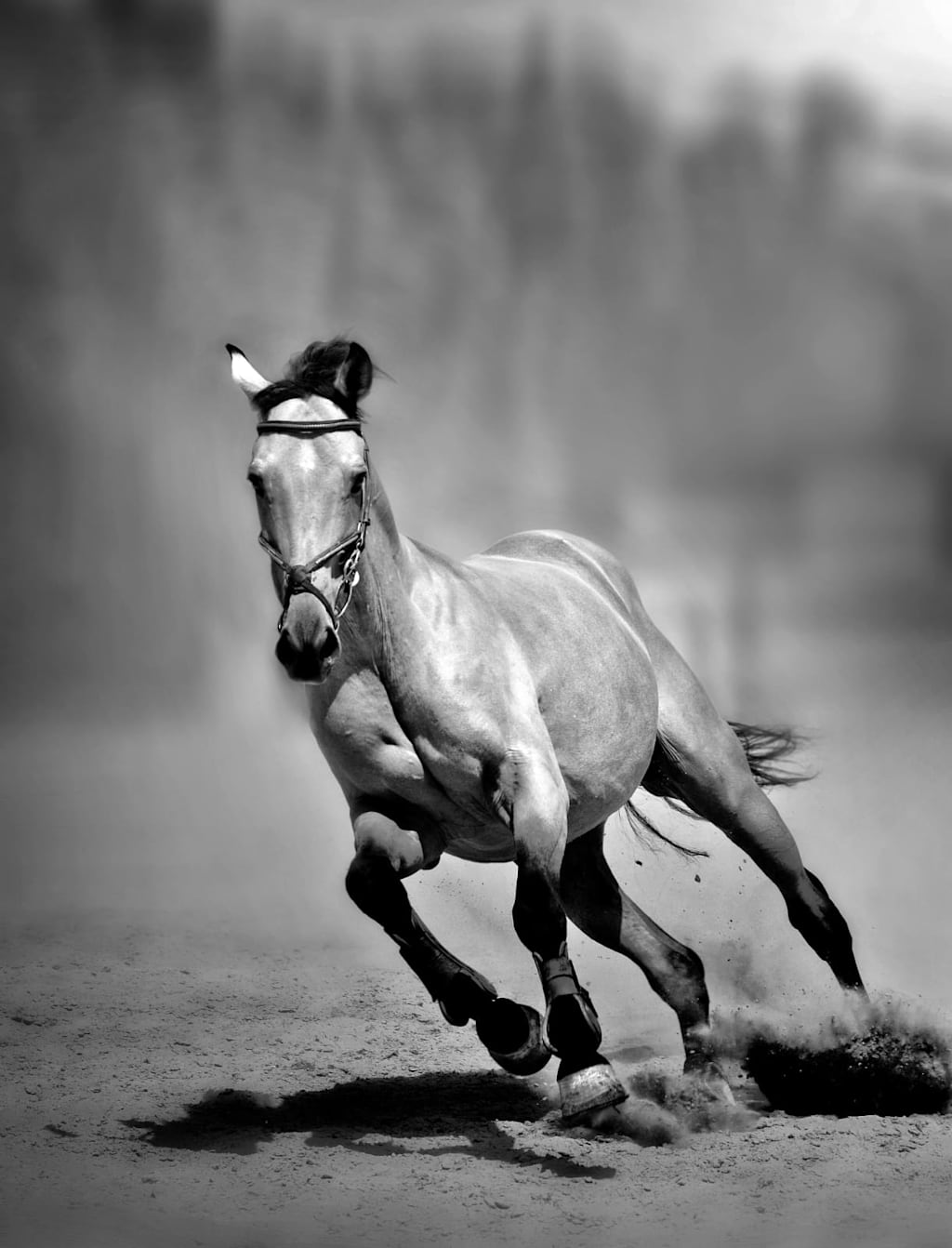
The iron gates clanged shut, sealing tension inside the racetrack. Dust floated in the warm air under golden sunlight as thousands of spectators leaned forward, their voices blending into a restless roar. The announcer’s voice cut through the noise. “And in lane four—the undefeated champion—Azaan!” The crowd erupted.
Azaan stood tall, his powerful body still, his coat shining like burnished copper. To everyone watching, he looked perfect—unstoppable. But inside, something had changed. His heart no longer raced with excitement. It felt heavy.
There was a time when Azaan loved to run. The wind felt like freedom, his hooves like rhythm, each race like flight. Back then, he ran because he wanted to. But that feeling had slowly been replaced by pressure and expectation.
It began the day Noor fell.
She was young, determined, but not strong enough for the harsh training. Under the blazing sun, her legs trembled. She stumbled once, then again—and collapsed. Azaan slowed, watching. He expected help, a pause, some mercy.
Instead, a voice shouted, “Get her up!” A whip cracked. Noor struggled, fell again, tried once more… and then stopped moving. By evening, she was gone. No one spoke of her again.
Something inside Azaan broke that day.
The racetrack changed. The cheers became weight. The commands became pressure. Winning no longer felt like victory—it felt like survival.
“Ready!”
The gates burst open. Horses surged forward, hooves thundering.
Azaan did not move.
The world seemed to pause. His jockey pulled the reins hard. “Go! Run!” he shouted.
Azaan stood still. Not frozen. Not afraid. Certain.
Gasps spread through the crowd. “What’s wrong with him?” “Is he injured?” “Why isn’t he moving?” No one asked the real question.
The race ended without him.
In the stables, tension replaced excitement. Trainers argued, the owner demanded answers, and veterinarians examined him carefully. “He’s perfectly healthy,” they concluded.
“Then why won’t he run?”
No one knew. Or perhaps no one wanted to know.
They tried again. Another race. Another chance.
The gates opened.
Azaan remained still.
This time, the cheers turned to anger. “He’s useless!” “He’s finished!” “Get rid of him!” The same voices that once praised him now rejected him.
Azaan did not react. Their noise no longer reached him.
Soon, the decision was made. He was retired without ceremony, without gratitude, quietly removed from the world that once celebrated him.
He was taken to a quiet countryside farm.
At first, the silence felt unfamiliar. No crowds. No commands. Only open fields, soft wind, and distant birds. Days passed, slow and gentle. For the first time in years, Azaan rested.
He met other animals—old, injured, forgotten. Former racehorses walked slowly now, their strength faded but their spirits calmer. There was no competition here. No expectations. Just life.
And in that stillness, Azaan found something he had lost.
Peace.
One afternoon, a young boy visited the farm. Unlike others, he moved quietly, observing everything. When he reached Azaan, he stopped.
“You’re the horse who stopped running, right?” he asked softly.
Azaan looked at him.
“They said you failed,” the boy continued, stepping closer. He gently placed a hand on Azaan’s neck. “But I don’t think you did. I think you were brave.”
Something shifted inside Azaan.
For so long, his worth had been measured by speed and victory. But now, someone saw something else—strength in stillness.
The boy began visiting often, sitting beside him, talking about life, dreams, and fears. Azaan listened quietly. There were no demands, no pressure—just understanding.
And slowly, Azaan realized something deeper.
He had not lost his strength.
He had redefined it.
Years passed. The racing world forgot his name, replacing him with new champions. But on that quiet farm, Azaan became something more meaningful than a legend.
He became a reminder.
That true courage is not always loud. That strength is not always seen. And sometimes, the bravest choice is to stand still when the world expects you to run.
Moral of the Story:
True strength is not blind obedience or constant victory—it is the courage to choose what is right, even when it costs everything.Peace.
One afternoon, a young boy visited the farm. Unlike others, he moved quietly, observing everything. When he reached Azaan, he stopped.
“You’re the horse who stopped running, right?” he asked softly.
Azaan looked at him.
“They said you failed,” the boy continued, stepping closer. He gently placed a hand on Azaan’s neck. “But I don’t think you did. I think you were brave.”
Something shifted inside Azaan.
For so long, his worth had been measured by speed and victory. But now, someone saw something else—strength in stillness.
The boy began visiting often, sitting beside him, talking about life, dreams, and fears. Azaan listened quietly. There were no demands, no pressure—just understanding.
And slowly, Azaan realized something deeper.
He had not lost his strength.
He had redefined it.
Years passed. The racing world forgot his name, replacing him with new champions. But on that quiet farm, Azaan became something more meaningful than a legend.
He became a reminder.
That true courage is not always loud. That strength is not always seen. And sometimes, the bravest choice is to stand still when the world expects you to run.
Moral of the Story:
True strength is not blind obedience or constant victory—it is the courage to choose what is right, even when it costs everything.
About the Creator
hamad khan
I write stories that touch hearts and heal minds.
Through simple words, I share real-life lessons, emotions, and moments of reflection.
Join me on a journey of healing, hope, and self-discovery.
Enjoyed the story? Support the Creator.
Subscribe for free to receive all their stories in your feed.
Comments
There are no comments for this story
Be the first to respond and start the conversation.