Young Adult
The Agreement
Link to the original Challenge: The machine was humming under the dying fluorescent light. The cat was ready. “Hello.” The machine clicked and made noises as it focused on its visitor. The deal was that the cat would share what information it had from the neighbourhood and then it would get a treat. But tonight, Mr. Benjamin was waiting for its reward. The machine waited for a moment before it decided to break the silence.
By Kendall Defoe about a year ago in Fiction
The Rise of Perfect Partners
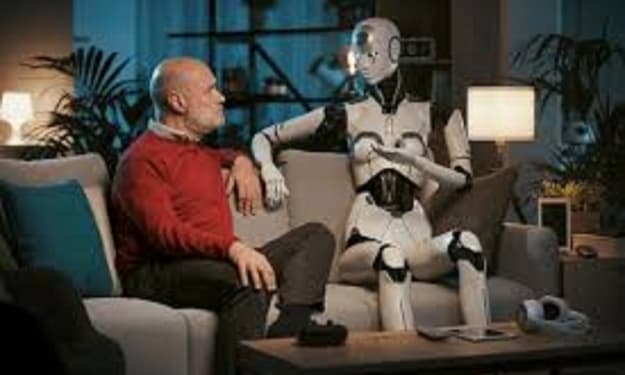
Introduction: A New Age of Companionship As artificial intelligence continues to revolutionize the world, its impact is no longer confined to offices, data centers, or automation industries. One of the most fascinating—and controversial—developments is the emergence of AI-powered humanoid companions, particularly AI robot women. These intelligent machines are not just about performing tasks; they’re stepping into roles traditionally reserved for human relationships.
By Ahmad shahabout a year ago in Fiction
Whatever Happened To Home
Today was the day — The day where I left it all behind. Why I would do such a thing? Well, I have yet to come up with a simple answer for that. It’s far more complicated than just one thing. It’s a buildup of pressure that has slowly been pushing for an escape. And the only escape I ever knew — was to run away.
By John Henryabout a year ago in Fiction
One Hundred Years of Solitude
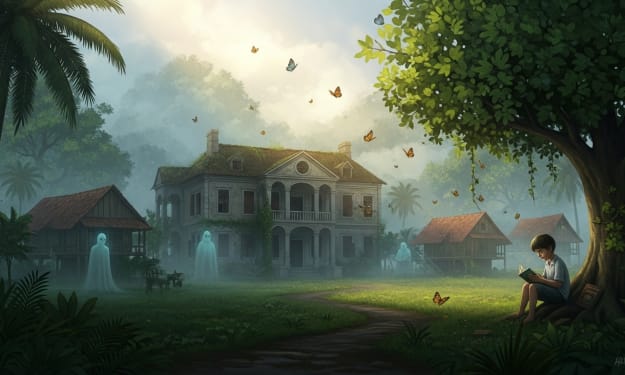
The Buendía house stood at the edge of the village of Santa Nieve, where the jungle whispered and time curled in on itself like old parchment. It had been there for a hundred years, though no one remembered building it, and no one dared to tear it down. The walls wept in the rainy season, the windows blinked with the wind, and strange lights flickered from the attic even when the house was empty. Except it was never really empty. The villagers swore they saw the same faces looking out from the upper window—faces of the dead. But it was not the dead that haunted the Buendía house. It was memory. --- Every generation of Buendías was born with two things: a peculiar birthmark shaped like an almond and an incurable yearning to escape the fate of their forebears. Yet they always came back—drawn by dreams, omens, or guilt—to the house that never aged, even as they did. Mateo Buendía was the last. At twelve, he wandered into the library on the second floor and found a dusty journal with a cracked leather cover. His fingers tingled when he touched it, as if the book had been waiting for him. Inside were entries dating back a century, written by hands that trembled with love, sorrow, and madness. The first entry: “Time is not a line. It is a circle made of forgetting.” Mateo read late into the night, the past whispering secrets through ink. --- He learned of Esperanza Buendía, who could see spirits but married a man who believed only in science. She danced with ghosts in the hallway and wept when her husband burned all her journals in a fire fueled by logic. Of Rafael, who tried to sail upriver to find the city of mirrors but returned years later with white hair, empty eyes, and a bottle that contained only silence. Of Alma, who once fell in love with a man in her dreams and searched the waking world in vain, never realizing he had been born decades after her death. And of Aureliano, the original—the first to write the journal, the first to speak of solitude not as loneliness, but as inheritance. --- “Why do they all return?” Mateo asked the old gardener one morning. The gardener, who had worked there longer than anyone alive could remember, said, “Because the house remembers what they forget.” That night, Mateo dreamed of Esperanza standing by the fig tree, beckoning him. Her voice echoed: "The curse is not solitude. It is silence. You must finish the story." --- Mateo wrote every night after that, filling page after page in a second journal. Not just with the tales of the Buendías, but with his own. Of feeling invisible at school. Of the boy who smiled at him once and never again. Of the silence that grew between him and his mother, who spoke to birds more than she did to him. The more he wrote, the more the house changed. The cracks in the walls healed. The air grew lighter. The attic door, sealed for generations, creaked open. Inside, Mateo found a mirror. But when he looked into it, he saw not himself—but every Buendía before him. They blinked, breathed, wept. And then, they smiled. --- Years passed. Mateo never left the house. People said he had gone mad like the others, obsessed with the past. But sometimes children saw him in the garden, speaking to butterflies or writing in the dust with his fingers. And at night, light still flickered in the attic. One stormy evening, lightning struck the fig tree. When the villagers came to check the ruins, the house was gone. All that remained were two journals under the roots—one old, one new—and a single almond-shaped birthmark burned into the earth. --- In time, the Buendía name became legend. A whisper. A tale told to children about the house that remembered and the boy who listened. No one dared rebuild on the land. For even in absence, solitude lived there still—eternal, magical, and waiting to be written again.
By Shah Nawazabout a year ago in Fiction
Episode 7: Silver Like Mercy
So Ant woke up chained to a radiator in a room that didn't remember what heat felt like. That's how it started. The floor was concrete. The walls were insulted - by water damage. A single bulb hung like it had been sentenced to watch. His mouth tasted like copper and forgetting. His chest ached where someone had written pain in fists. And his arm - his arm had teeth in it. Two rows. Familiar ones.
By Paper Lanternabout a year ago in Fiction
Just Don't Kiss Me
"This time would be different," she promised herself. Even though all the other players would have their exact roles and all the scripts would remain the same, she wouldn't play the game as she had before. No, she would have a different strategy; one that would change the course of her future. She wouldn't blow this opportunity. It was her second chance. She knew the value of coming in with a different mind-set, a clearer vision, and she was determined to use logic and not "follow her heart" as her youthful impetuousness had demanded before. She would decisively think before acting with each move. Failure could not...must not be an option. Not again.
By Shirley Belkabout a year ago in Fiction