Young Adult
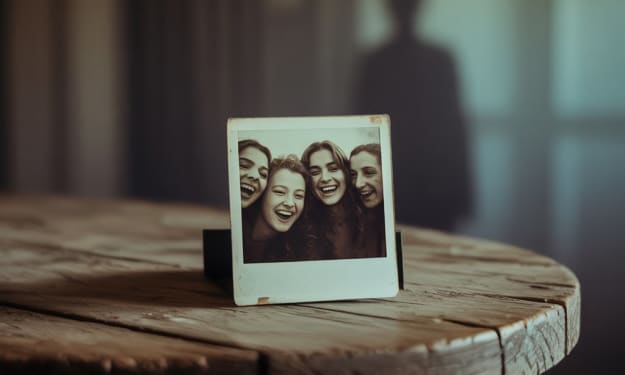
The Mirror's Reflection
Lena sat in the dusty attic, her fingers lightly tracing the edges of an old sketchpad. The room around her was still, the only sound being the occasional creak of the house settling. It had been months since she’d come here, since she’d hidden away from the world outside. In the silence, her thoughts roared louder than ever—recollections of failure, dreams that had slipped through her grasp, of who she was and who she no longer believed she could be.
By Mansoor Khanabout a year ago in Fiction
Guardians And Angels | Chapter Five | Part 19
One Some boys make every love song about them. Every single one of them, all night long, back-to-back. The Friday night before Halloween, after attending my first school dance in seventh grade with my best friend, I found out the hard way that those same boys make every sad song about them too.
By Christopher Dubbsabout a year ago in Fiction
Richie. Content Warning.
Selfish pride never allows anyone to know where I'm going when my world begs for precious silence. My way of dealing with issues may be a little skewed and I often keep things bottled up, but in the end, it's a way that works for me.
By Lamar Wigginsabout a year ago in Fiction
The Dream Breaker. Content Warning. AI-Generated.
-POV: Irios “The first lie is that the pillars end. The second lie is that they never did.” — Dreamer’s Catechism Hunger. A hollow gnawing, sharp and insistent, blooming deep in my chest. At first, I think it is the stone—some fragment left lodged in me, a shard pressing against bone. But no, the ache twists and deepens, and I know it for what it is. Hunger.
By Morpheus of Stoneabout a year ago in Fiction
Europe’s Scorching Summer
Introduction: A Summer Like No Other Europe is experiencing one of the hottest summers in recent history. From Spain to Germany, and from France to Italy, the continent is battling relentless heatwaves that have disrupted normal life. Temperatures soaring above 40°C are no longer rare — they are becoming the new normal. This article explores how heatwaves are reshaping daily life across Europe, the challenges they bring, and the steps people are taking to adapt. The Heatwave Phenomenon Heatwaves occur when unusually high temperatures persist for days or even weeks. Scientists warn that climate change is intensifying these events, making them more frequent and more dangerous. According to the European Environment Agency, the continent has seen a steady rise in both the duration and intensity of extreme heat since the 1990s. Public Health Under Pressure Hospitals across Europe are reporting an increase in heat-related illnesses. Dehydration, heat exhaustion, and respiratory problems are common among vulnerable groups such as the elderly and children. Cities like Paris and Rome have opened cooling centers, while public health officials urge residents to stay hydrated and avoid outdoor activities during peak hours. The Daily Struggles of Ordinary People For millions of Europeans, the heatwave is not just a weather report — it’s a daily struggle. Office workers find productivity dropping as air-conditioning systems fail to keep up. Farmers worry about their crops drying under the blazing sun, while families cancel outdoor plans and seek refuge in shaded parks or air-conditioned malls. In southern Spain, school schedules have been adjusted, with classes ending earlier to avoid the midday heat. Energy Systems Under Strain Another impact of the heatwave is the strain on Europe’s energy systems. With air conditioners running non-stop, electricity demand is reaching record highs. Some regions face power shortages, while utility companies scramble to balance supply and demand. Ironically, the same rivers that cool nuclear power plants are running dry, forcing some facilities in France and Germany to reduce operations. Economic Consequences Heatwaves also have an economic cost. Tourism, one of Europe’s most important industries, is feeling the pressure. While northern countries such as Norway and Sweden see a rise in visitors escaping southern heat, Mediterranean destinations are struggling with cancellations. Agriculture is also hit hard, as drought conditions reduce crop yields, pushing food prices higher across the continent. Environmental Toll The natural environment is suffering too. Drought conditions lead to wildfires in Greece, Italy, and Portugal, destroying forests and displacing communities. Rivers like the Rhine and the Po are shrinking, threatening biodiversity and disrupting shipping routes. These environmental changes highlight the urgent need for sustainable water management and climate resilience policies. How People Are Adapting Despite the challenges, Europeans are finding ways to adapt. Urban planners are redesigning cities with more green spaces to cool down concrete jungles. Families are investing in better insulation for their homes. Communities are coming together, checking on elderly neighbors and sharing resources. Governments are also introducing early-warning systems to alert citizens before extreme heat strikes. The Bigger Picture: A Wake-Up Call Experts argue that Europe’s heatwaves are not isolated events but part of a global climate crisis. The continent is warming at twice the global average, making it particularly vulnerable. This summer is a stark reminder that climate adaptation is no longer optional — it is a necessity. Conclusion: Living in a Hotter Future Europe’s scorching summer is more than an uncomfortable season; it is a glimpse into the future. As climate change accelerates, heatwaves will continue to reshape how people live, work, and interact with their environment. The challenge now is not only to survive the heat but also to build a more resilient society that can thrive in a warming world.Another impact of the heatwave is the strain on Europe’s energy systems. With air conditioners running non-stop, electricity demand is reaching record highs. Some regions face power shortages, while utility companies scramble to balance supply and demand.
By Muhammad Ibrahimabout a year ago in Fiction
The Royal Roger Retreat
Carefully holding the sound equipment, Judie from the A groupies, attempted preserving the babbling brook popping sound bites and discovered the closest fishing pond, filled with crackling, snapping effects created the best natural features.
By Marc OBrienabout a year ago in Fiction