thriller
YNs–Shoulder to Shoulder. Content Warning.
2018 In early December, the Troopers of the state convened together, especially those of New Castle County. All of them wore their pressed blue and gold uniforms and shiny boots. They called the coffee irked water. It flowed like so many brown monsoons in mugs and cups as the other officers huddled around Superintendent Namina Norrey. Some of them armed themselves with pencils, others with styluses to show their ability to take notes. Others just looked on with a keen sense of expectation. Sleeves rolled up on blue uniforms bearing arms of might attached to bodies of brawn and busy minds.
By Skyler Saunders5 months ago in Fiction
YNs–Life Right. Content Warning.
2016 Sun drenched the Wilmington, Delaware streets. It wheeled downward as the darkness seemed to creep as dust settles in water. Clientele for the pushers leaned over and stayed in positions like poor sculptures. Their bodies, feet on the ground, seemed to be frozen in the summer heat. This July saw Superintendent Namina Norrey walk the streets of Southbridge. No gun, just her impeccable uniform with its blue shirt and blue tie and gold colonel eagles stuck out amongst the shadowy alleyways. Most people didn’t even take note or look her way. The hustlers saw her and turned around like hawks guarding their nest.
By Skyler Saunders5 months ago in Fiction
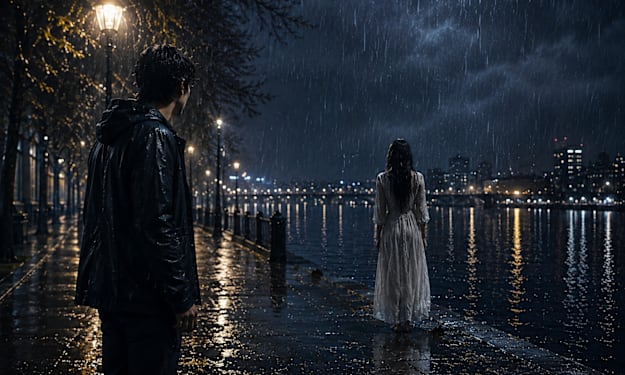
The Girl In The Rain
The rain had been falling over the city for days. Most people were tired of it. The streets were flooded, the sky was gray, and everyone seemed eager for the sun to return. But for Ethan, the rain had become something he secretly looked forward to. Because every time it rained, he saw her. The first time was on a cold Thursday evening. Ethan was walking home after work, lost in thought as he hurried through the rain. Across the street, at an old bus stop, he noticed a girl standing alone. She wasn't carrying an umbrella. She wasn't trying to stay dry. She simply stood there, letting the rain fall around her. Something about her seemed different. Maybe it was the sadness in her eyes, or maybe it was the way she looked as though she were waiting for someone who would never come. Ethan glanced away for only a second to cross the road. When he looked back, she was gone. There was nowhere she could have gone so quickly. The bus stop was empty. He shook his head and convinced himself he had imagined it. But then it happened again. A few days later, another storm rolled in. This time, he saw the same girl standing outside the town library. She wore the same white dress and carried the same distant expression. When Ethan tried to approach her, she disappeared once more. Not walked away. Not hidden. Simply gone. As the weeks passed, seeing her became a strange part of his life. Whenever rain clouds gathered, Ethan found himself searching the streets. And every time it rained, she appeared. Sometimes she stood beside the river. Sometimes near an old church. Sometimes beneath a flickering streetlamp. Always silent. Always watching. Always disappearing before he could reach her. His friends thought the story was ridiculous. "You need more sleep," one joked. "Maybe you've got a secret admirer," another laughed. Ethan laughed too, but deep down, he knew something wasn't right. The girl felt real. Too real to be a dream. One night, a powerful storm swept across the city. Thunder shook the windows and lightning lit up the streets. As Ethan walked home, he saw her again. She was standing by the river. For some reason, this time felt different. Instead of calling out from a distance, he walked straight toward her. His heart pounded as he got closer. To his surprise, she didn't disappear. She slowly turned and looked at him. For the first time, their eyes met. The sadness in her face was impossible to ignore. "Who are you?" Ethan asked quietly. The girl didn't answer. Rain poured down around them. "I've seen you for months," he continued. "Why do you keep appearing?" The girl slowly lifted her hand and pointed toward the river. Confused, Ethan followed her gaze. At first, he saw nothing. Then a flash of lightning illuminated the water. Something metallic reflected beneath the surface. A car. Partially hidden under the riverbank. A chill ran down Ethan's spine. The next morning, he reported what he had seen. Authorities searched the area. Hours later, divers confirmed the discovery. Inside the vehicle were clues connected to a missing-person case that had remained unsolved for nearly ten years. The missing person was a seventeen-year-old girl named Lily Carter. When Ethan saw her photograph on the news, his blood ran cold. It was her. The girl from the rain. The entire city was shocked. For years, Lily's family had searched for answers. Now, after a decade of uncertainty, they finally knew what had happened. The mystery that had haunted them was finally over. But Ethan still couldn't stop thinking about Lily. Why had she appeared to him? Why only in the rain? And why now? A week later, another storm arrived. Without really knowing why, Ethan returned to the river. The rain fell softly as he stood alone in the darkness. Part of him hoped she would return. Part of him feared she might. Then he saw her. Standing exactly where she had stood before. This time, she looked different. The sadness that had once filled her eyes seemed lighter somehow. Ethan slowly walked toward her. For the first time, she spoke. "Thank you." Her voice was barely louder than the rain. Ethan stared at her in disbelief. "You can talk?" A small smile appeared on her face. "Only now." "You wanted people to find you." She nodded. "My family deserved answers." For a moment, neither of them spoke. The rain continued to fall around them. Then Ethan finally asked the question that had been haunting him for months. "Why did you choose me?" Lily looked toward the dark sky. When she answered, her voice was gentle. "Because you were the only one who noticed." The words stayed with him. Hundreds of people had walked past her. Thousands, maybe. But Ethan had stopped. He had paid attention. He had cared enough to look. And somehow, that had made all the difference. Lily smiled one last time. A peaceful smile. The kind that comes when someone has finally found closure. "Goodbye, Ethan." A warm breeze moved through the storm. Slowly, her figure began to fade. Not in a frightening way. Not suddenly. But softly, like a memory slipping into the distance. Within moments, she was gone. The rain stopped shortly afterward. The clouds parted. And for the first time in days, stars appeared in the sky. Years later, Ethan still remembered the girl in the rain. Whenever storms arrived, he found himself looking out the window. Not because he expected to see her again. But because she had taught him something important. Sometimes the people who need to be seen are the ones everyone else overlooks. And sometimes, changing a life begins with something as simple as paying attention. Whenever rain fell, Ethan smiled. Because somewhere, he hoped, Lily had finally found peace.
By M Uzair Khan (UK)5 months ago in Fiction
When the Houses Listen
The county sent me to Mercy with a clipboard, a tape measure, and the kind of confidence people carry when nothing truly strange has ever survived their explanation. I was there because the river had shifted again. That was the official sentence. The river had shifted. Like water made decisions. Like mud got restless. Like land woke up one morning and decided it no longer wanted to hold the houses built on top of it. Six homes on the eastern edge of Mercy had been flagged for assessment after three weeks of rain ate away the bank beneath them. The county wanted measurements. Reports. Photographs. Signatures. Numbers they could discuss under fluorescent lights without ever having to stand in front of a living room that was halfway to becoming river. I was twenty-nine, tired in a way I thought made me mature, and arrogant in the quiet way educated people get when they mistake vocabulary for armor. Mercy was small enough to feel accidental. One road in. One road out. A general store. A chapel. A row of houses pressed too close together, like they were afraid of what might happen if they gave each other space. The man who drove me in was named Lowell. He worked odd county jobs since public transit stopped pretending towns like Mercy deserved routes. He chewed sunflower seeds and drove with both hands on the wheel, though the road was straight enough to confess on. He dropped me in front of the general store at four-thirty and kept the engine running. “You’re staying with Vera Hollen,” he said. “I thought there was an inn.” “There was.” I waited for more. He gave me nothing. “What happened to it?” Lowell looked at the sky. Not up. At. Like the sky had said something once and he was still deciding whether to forgive it. “You’ll want to be inside before dark.” I laughed. Not because it was funny. Because laughing is what people do when fear shows up wearing work boots and they don’t want to recognize it yet. Lowell didn’t laugh back. He handed me my bag, spat a seed shell into an empty cup, and said, “Don’t make the town curious.” Then he drove away. The general store smelled like dust, coffee, old sugar, and rain that had been tracked in by generations of boots. There were three people inside. Two women near the canned goods. A man in coveralls sitting at the counter. A little boy in a red raincoat perched on a sack of feed with his hands folded in his lap. Too still. Kids are never that still unless someone has taught them stillness is safer than being noticed. The second I stepped through the door, the store went quiet. Not silent. Quiet. There’s a difference. Silence is empty. Quiet is full of things holding their breath. “I’m looking for Vera Hollen,” I said. The boy pointed through the window before anyone else moved. Across the road. Two houses down. Yellow siding. Crooked porch. Curtains already drawn. “Thank you,” I said. He didn’t blink. One of the women finally spoke. “You’re the county girl.” “I’m the appraiser.” She nodded like I had corrected the grammar on my own obituary. “Same thing.” The man in coveralls stood up, left two dollars beside his mug, and walked out without finishing his coffee. The other woman checked the wall clock. Then I noticed the windows. Every one of them had wooden shutters hooked from the inside. Not for storms. Not exactly. They looked like eyelids. Vera Hollen’s house smelled like rosemary, old paper, and a kind of cleanliness that felt less like comfort and more like control. She was narrow and gray-haired, with a spine that refused to bargain with age. “You’re late,” she said. “I’m actually early.” “No,” Vera said, taking my bag. “You’re late enough.” She led me to a guest room with floral curtains, a brass bed, and a lamp already burning on the nightstand. “You leave that on after sunset.” “I can’t sleep with lights on.” “You can’t sleep without them here.” I looked at her. She kept going. “You do not open the window. You do not look through the front glass if you hear knocking. You do not answer your name from outside after dark.” I smiled the way people smile when they think the other person is harmlessly insane. That smile still comes back to me sometimes. Small. Stupid. Wearing all my teeth like it had won something. “What happens if I look?” Vera set my bag on the bed. For a second, she looked almost kind. “It sees where you are.” Mercy was worse in daylight. That’s the part I hate admitting. Night was obvious. Night at least had the decency to look guilty. But daylight in Mercy felt like a room after an argument where everyone has agreed not to mention the broken glass. The town functioned, technically. People swept porches. Men carried lumber. Women hung laundry. Children walked in pairs and never ran. No one asked where I was from. No one asked if I was married, which small towns usually do with the subtlety of a crowbar. No one asked anything normal. They asked: “Did they send you alone?” “Who knows you’re here?” “You planning to sleep more than one night?” “You got anybody expecting you back?” Every question had a hook under it. I spent the afternoon on the eastern edge, measuring foundations and photographing damage. The six flagged houses leaned toward the river like they were listening to something underneath the bank. At the third house, a woman named Edith opened the door before I knocked and handed me a plate with two sugar cookies on it. “For the room,” she said. “I’m sorry?” “Don’t apologize. Just set them somewhere flat.” “I don’t need—” Her face changed. Not much. Just enough for me to understand that refusing would be foolish in a way I did not yet have the language for. So I took the cookies. At the fourth house, an old man refused to sign the preliminary assessment until I answered one question. “Do you hear it yet?” “Hear what?” He stared at me for so long I felt something in me start to step backward. Then he signed. By late afternoon, the whole town began closing. Not businesses. Bodies. Voices lowered. Children disappeared. Porches emptied. Dogs were called inside. Curtains dropped across windows one house at a time, like Mercy was shutting all its eyes before something walked through. At Vera’s, dinner was soup and bread in a kitchen too dim for comfort. The windows were covered with heavy curtains. The back door had three locks. Above the sink, a row of small bells hung from a piece of twine. None of them moved. I kept looking at them anyway. “So everyone here just obeys these little rules?” I asked. Vera ate without looking up. “Rules are what you call them before you understand why they exist.” “And after?” “After, you call them mercy.” I almost laughed again. Almost. But the house creaked then. Just once. Not old wood settling. More like something shifting its weight in another room. Vera’s spoon stopped halfway to her mouth. We both listened. Nothing happened. Which somehow made it worse. After dinner, I went to the guest room and tried to call my supervisor. No service. No texts going through. No email. The little signal bars had vanished as if the phone had forgotten the rest of the world existed. I sat on the bed and wrote notes by hand. House One: moderate erosion. House Two: foundation fracture visible on north-facing wall. House Three: occupant anxious, possible refusal to evacuate. That one made me pause. Possible refusal to evacuate. God. How official language loves to stand far away from the bleeding thing and point. Sometime after nine, the knocking started. Three slow knocks at the front door. Not desperate. Not violent. Polite. That was the worst part. Whatever stood outside did not sound like it was trying to get in. It sounded like it had been expected. The whole house went still. Then a voice came through the door. My mother’s voice. “Lena?” The pen fell out of my hand. My mother had been dead seven years. Stroke. Hospital bed. Half her face gone slack. Her hand in mine. Machines speaking for the body after the person had already left the room. “Lena, honey,” the voice said. “Can you help me?” My throat closed. Grief is not holy. People keep trying to dress it up, put candles around it, make it look meaningful from a distance. But grief is a thief. Grief will wear your dead mother’s voice and ask you to open the door. I stood up. I didn’t decide to. My body heard her and betrayed me before thought could get its shoes on. “Lena,” she said again. “I’m cold.” My hand touched the bedroom door. Down the hall, Vera whispered, “Let it finish.” Not loud. Not even urgent. Just exhausted. Like she had watched people lose themselves to tenderness before. The knocking came again. Three taps. Slower. I stepped back from the door, shaking so hard my knees felt borrowed. I told myself it was a prank. A speaker. A town full of sick people with too much time and too much folklore. But my mother’s voice knew the small break in my name. Not Lee-na. Len-a. Like she was smoothing the word with her thumb. I crossed to the window. Just a crack, I thought. Just enough to prove the world still had rules. I pulled the curtain back. The porch was empty. The yard was empty. The road was gone. In its place was a hallway. Long. Narrow. Impossible. Wallpaper stretched where the night should have been. Doorframes lined both sides. Lamps glowed along the ditch. At the far end, a woman stood in my mother’s blue robe with her back to me. She lifted one hand. Knocked on nothing. Three slow taps. Then her head turned too far. Not all the way. Too far. Enough for me to see the edge of her mouth. Smiling. I dropped the curtain and fell backward. Vera appeared in the doorway. “You looked,” she said. I could barely speak. “What is this place?” She looked past me toward the covered window. “Hungry.” I didn’t sleep that night. I lay with the lamp on and the sugar cookies on the windowsill because Vera came in at two in the morning, moved them there herself, and left without explanation. Outside, something moved around the house. Not footsteps. Shifts. Like rooms rearranging themselves in the dark. Once, something tapped lightly beneath the floorboards. Once, something laughed in my mother’s voice and then coughed in my father’s. Once, very close to the glass, a child whispered, “She’s new.” At dawn, I packed. No goodbye. No report. No courage. Just animal clarity. The road out should have taken twenty minutes. I drove it for two hours. Every time I reached the town limit, the road bent without turning and delivered me back to the general store. Same porch. Same feed sacks. Same boy in the red raincoat sitting outside with his hands folded in his lap. Watching me fail like he’d been waiting all morning. On the fourth return, Vera stood beside the gas pump. I got out of the car so fast I left the door open. “What did you people do to me?” Vera didn’t flinch. “That’s an outsider question.” “What does that mean?” “It means you still think this place needs people to help it be cruel.” I wanted to hit her. I wanted to cry. I wanted my mother. Not the thing in her robe. My mother. The real one. The one who would have told me I looked tired and meant it like love, not weakness. “How do I leave?” I asked. Vera looked toward the eastern edge of town, where the river moved behind the houses like a tongue behind teeth. “At dusk, walk Marrow Road to the boundary stone. Don’t drive. Don’t run. If you hear your name, don’t answer. If you see a house you recognize, don’t enter. If someone asks for help, keep walking.” “That’s insane.” “Yes,” she said. “But it’s accurate.” “And if I mess up?” Her face went softer in the cruelest way. “Then Mercy keeps the version of you that answered.” Dusk arrived red and low, like the sky had been struck. Marrow Road ran behind the last houses and into a line of black trees. I started walking with my bag over one shoulder and Vera’s words repeating in my skull. Don’t answer. Don’t enter. Keep walking. For the first few minutes, nothing happened. Then my phone rang. No signal, but it rang. The screen said MOM. I kept walking. Then I heard my father cough from the trees. Then my supervisor’s voice calling, “Lena, we need you to come back and finish the report.” Then a child crying somewhere ahead. Not fake crying. Not dramatic. The small, hiccuping kind. The kind that makes something ancient inside you turn around. I kept walking. The trees thinned. And there it was. My childhood house. White siding. Cracked driveway. Porch swing hanging crooked. Kitchen light on. I stopped so hard my shoes skidded in the dirt. My mother stood behind the screen door in her blue robe. Whole. Alive. Not hospital-thin. Not slack-faced. Not gone. She looked like the last good year before everything started leaving. “Lena,” she said gently. “Come home.” My body leaned toward her. That’s the part I hate. After everything, after knowing better, after seeing the hallway where the road should have been— I still leaned. Because knowing better does not always save you. Sometimes it just makes you ashamed while you reach for the knife. My mother smiled. “Baby, I’m not mad.” That almost broke me. Not I love you. Not I miss you. That. Because guilt has its own language, and Mercy spoke it fluently. I took one step toward the porch. The screen door opened. Behind her, the kitchen floor was covered in river mud. Not tile. Mud. Thick and black and breathing in slow little bubbles. My mother’s bare feet sank into it. She didn’t notice. Or she wanted me to think she didn’t. I stepped back. Her smile twitched. “Lena.” I kept walking. The voice changed. Not all at once. First it lost warmth. Then it lost shape. Then it became something underneath language, something that had learned my mother the way a hunter learns a deer trail. The porch light burst. The house went dark. I did not look back. At the boundary stone, the pressure lifted. No thunder. No scream. No cinematic salvation. Just air. Plain, ugly, blessed air. The kind you never appreciate until something else has been breathing for you. I stepped over the stone and the world became the world again. Gravel. Crickets. Distant highway. A mosquito whining near my ear. I almost sobbed with gratitude over the mosquito. Lowell found me an hour later walking along the shoulder, muddy to the knees, bleeding from where I had bitten the inside of my cheek hard enough to split it. He slowed beside me. Didn’t ask what happened. People who live near Mercy know better than to make a story repeat itself before it’s ready. The county called it exhaustion. Stress. Possible dehydration. They assigned another appraiser the next week. I told them not to. They did anyway. Her name was Carla Bell. She was forty-two. Two kids. Divorced. Allergic to shellfish. I know because I read the article after she disappeared, searching for details like facts could become forgiveness if I collected enough of them. They found her car outside the general store. Keys still in it. Clipboard on the passenger seat. On the top page, under notes, she had written one sentence over and over until the paper tore. The houses keep asking who I miss. I live two counties over now. Third-floor apartment. No porch. No yard. No road long enough outside my window to become anything else. I sleep with the lamp on. I don’t answer unexpected knocks. I don’t say my dead out loud after dark. And last night, just after midnight, something knocked three times from inside my bedroom closet. Measured. Patient. Polite. Then my mother’s voice whispered through the door. “Lena, honey.” A pause. Soft as a hand finding the old bruise. “You forgot your cookies.”
By Tifani Power 5 months ago in Fiction
Deadly Coping Mechanisms. Top Story - May 2026.
It was a Monday morning, and Elena Greenwood was in the kitchen, preparing breakfast, when she was approached by her husband of nine years, Brennan Greenwood. As Brennan entered the kitchen, he took note of his wife's chipper demeanor, seeing a smile he hadn't seen in a month.
By Clyde E. Dawkins5 months ago in Fiction
Roll Them Bones
Willy is a character from a couple of other short stories I've written. He's a modern day "hedge wizard". For you non-uber nerds, that's a self taught wizard who can perform basic spells, brew potions, and make scrolls. He lives in modern-day New Orleans and uses his abilities and most of all his tendency to be more lucky than prepared to help people. He's not quite a private detective like Harry Dresden. That would require a level of study and dedication he's not always capable of. But he has a good heart.
By Scott Roche5 months ago in Fiction
H.O.A.. Runner-Up in They Shouldn’t Have Come Here Challenge.
Moving wasn't Gary's idea, but there were worse neighborhoods to live in. That's what he thought when Sal steered the U-Haul down Ambrosia Lane: the cul-de-sac that was now their home. Every squeaky-clean, butter yellow house was newly built, surrounded by emerald green lawns and handsome white picket fences. Flowers waved hello to him from boxes on every front-facing window, their petals dancing in the warm summer breeze.
By Natalie Gray5 months ago in Fiction
The Break Up
He kicked the pebble in front of him and did his best to keep the threatening tears safely behind his eyes. Despite walking alone, one never knew who could turn the corner and use the treacherous tears against him later. Link pulled out his phone and reread the worst text message he had ever received:
By Leah Suzanne Dewey5 months ago in Fiction
Filthy Blood, Holy Water. Content Warning.
I told Maria I loved her more than anything in this world. It sounds crazy. I know it does. I am seventeen years old. I met her exactly nine hours ago. But the distance between us physically burns. I can’t stand it. It gnaws at my ribs.
By Xubairistotle5 months ago in Fiction