thriller
The Dollhouse
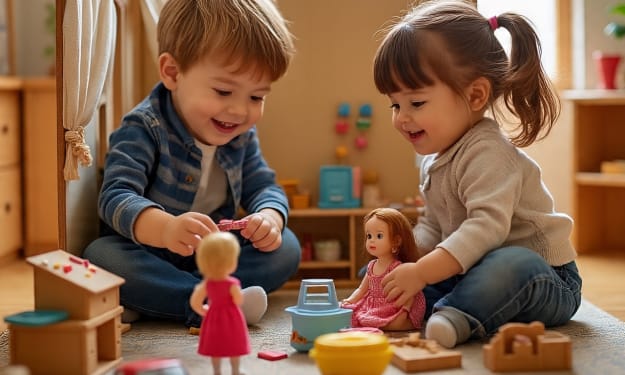
The afternoon sun slanted through the lace curtains, throwing warm patterns across the wooden floor. Giggles floated like butterflies through the quiet house as the children huddled close, their faces glowing with excitement. In the corner of the room stood a grand dollhouse—three stories high, painted pastel pink and mint green, with white window shutters and tiny furniture carved with delicate precision. It was their world. Mira, all of seven years old, was the queen of the dollhouse. She wore a paper crown made from yesterday's newspaper and held her favorite doll, Annabelle, a soft, wide-eyed figure with golden curls and a periwinkle dress. Next to her sat five-year-old Arya, her cheeks rosy with joy as she clutched a teddy bear-sized doll named Momo, dressed in pirate garb. Their little brother Rohan, who had only recently turned four, was the proud "doll taxi driver," rolling around a toy car that frequently shuttled Annabelle and Momo from the "bakery" on the first floor to the "spa" on the third. "Annabelle wants to go on vacation today," Mira announced, dramatically flipping the doll's tiny suitcase open. "She’s tired of running the bakery." "Where is she going?" Arya asked, carefully adjusting Momo’s hat. "Can Momo come too?" "Yes," Mira said with a nod, "but only if he promises not to steal treasure from the hotel again." "I think he was just borrowing it," Arya replied earnestly. From the outside, it may have looked like simple play. But to them, it was a universe. The walls of the dollhouse had seen it all: royal weddings, daring robberies, haunted sleepovers, surprise birthday parties, and magical picnics. The dolls had been astronauts, chefs, superheroes, scientists, and best friends. And the children—oh, the children—had been everything their little hearts could imagine. Time didn’t exist in those play sessions. Hours melted away, and the world outside—the world of homework, grown-up talk, news, and chores—ceased to matter. Inside the realm of the dollhouse, everything was perfect. There was always enough time to laugh, always room for one more story, always a second chance for even the naughtiest of dolls. The Happiness of Now Their laughter echoed in the stillness of the afternoon, blending with the rustle of leaves outside the window and the tick-tock of the wall clock. There was a quiet kind of happiness in that room, one that didn’t shout or sparkle—but one that glowed gently, like fireflies on a summer night. What made childhood so magical wasn’t the toys themselves, but the freedom to imagine, to believe that a doll could be your best friend, or a shoe box could become a spaceship. It was the way moments turned golden without effort—the way a broken crayon could still color a masterpiece or a cardboard tube could become a telescope to the stars. In the dollhouse, problems were always fixable. If a chair broke, a bit of tape would do. If Annabelle fell off the stairs, a band-aid and a kiss would heal her. If Momo forgot to share, they’d have a tea party and talk it out. There was no pain too big, no mistake unforgivable. The world, in miniature, was just right. Echoes of Innocence Outside that room, adults bustled and worried. Bills were due, appointments had to be kept, groceries needed buying. But here, the most pressing concern was whether the dolls had enough cake for their pretend party. Sometimes, their mother would pass by the doorway and pause, a smile tugging at the corners of her lips. She remembered. Oh yes, she remembered. Once, she too had had a dollhouse—though not as fancy, just a cardboard one she made herself, with stickers for wallpaper and buttons for plates. Her dolls were mismatched, hand-me-downs with missing shoes and tangled hair, but they had meant the world to her. And in their tiny, make-believe world, she had been everything she’d wanted to be. Childhood has a way of living deep inside us. Even after we grow up, it hides there—in the scent of old books, in the tune of a lullaby, in the creak of a swing, or the glint of marbles in a forgotten drawer. Time Moves On Seasons changed. The sun dipped behind clouds, and rain tapped gently against the windows. The children played on, undisturbed, adding umbrellas made of straws to their dollhouse setup. School would resume tomorrow, and soon there would be exams and timetables and routines. Eventually, the dollhouse would gather dust, its once vibrant colors fading as the children outgrew it. But not today. Today, the dollhouse lived. It breathed laughter and kindness and imagination. It held the weight of tiny dreams, delicate yet powerful, planted in soft hearts and watered with joy. It was a sanctuary from the world, a shrine to the essence of being little. One day, years later, Mira might walk into the attic and find Annabelle lying sideways, her dress crumpled, her suitcase still half-packed. She might smile, a warm memory filling her chest, and say, “Oh, there you are.” And in that moment, the years would melt away, and the little girl with the paper crown would live again, even if just for a second. Because that’s the thing about childhood: it never really leaves us. It becomes the heartbeat behind our daydreams, the whisper in our creativity, the gentle hand that reminds us to look at the stars or chase butterflies or believe—just for a moment—that magic might still be real. A Pause for Wonder The children eventually grew hungry and left their dolls mid-conversation to grab snacks from the kitchen. But the dollhouse remained, frozen in time—Annabelle reclining on a pink velvet couch, Momo peering suspiciously out the window, the taxi car still waiting by the toy curb. And if you looked closely enough, you might almost believe the dolls had moved just a little. That the house really did have a life of its own. After all, in a world where children play and laugh and dream, who’s to say where imagination ends and magic begins? And now, dear reader… Do you remember your childhood dollhouse, your cardboard castle, your superhero cape, or your secret hiding place under the bed? What were your stories? What made you laugh until your stomach hurt? What dreams did you dream when you still believed anything was possible?
By Julia Christaabout a year ago in Fiction
The Girl Behind the Door
1. The Whispering House In the overlooked town of Elmbrook—where the wind murmured like a overlooked bedtime song and the crows roosted like prophets—stood an ancient, exhausted house. It had no title, but everybody called it The Wilt House. Children strolled quicker close it; older folks whispered supplications; and those who had once challenged to trespass carried their hush like a mystery curse.
By Muhammad Abdullahabout a year ago in Fiction
The Time Traveler's Dilemma
Dr. Emma Taylor had spent years studying the mysteries of quantum mechanics, and finally, she had cracked the code. She stood at the threshold of a new era, ready to revolutionize the field of time travel. With a deep breath, she stepped into the time machine, set the coordinates, and disappeared into the past. Her first journey took her to ancient Egypt, where she witnessed the construction of the Great Pyramid. The sun beat down on her skin as she walked among the workers, marveling at their ingenuity and skill. She saw the pharaoh's procession, with its elaborate rituals and majestic grandeur. But as she watched, she noticed a young apprentice who seemed out of place. He was dusty and tired, but his eyes sparkled with curiosity. In a moment of curiosity, she whispered a few words of encouragement to the boy, who later became a renowned architect. Returning to her own time, Emma realized that the world had changed. The pyramids stood taller, and the ancient civilization seemed more advanced. The Egyptians had developed a sophisticated system of mathematics and architecture, and their art reflected a deeper understanding of human anatomy. But as she delved deeper, she discovered that her actions had created a ripple effect, altering the course of history in ways she never intended. The Roman Empire had risen to power earlier, and their engineering feats had surpassed anything she had learned in school. The Industrial Revolution had started centuries earlier, and the world was a vastly different place. Emma's small act of kindness had created a butterfly effect, changing the course of human history. Undeterred, Emma traveled again, this time to the Wild West. She rode into town on a dusty horse, feeling the rough texture of the saddle beneath her. She met a young outlaw, Jesse, and helped him escape a deadly trap. But when she returned to her own time, she found that Jesse had become a legendary hero, and the West had been won by outlaws instead of lawmen. As Emma continued her journeys, she created multiple parallel universes, each with their own version of history. She saw civilizations rise and fall, witnessed pivotal moments unfold differently, and realized that every decision, no matter how small, had far-reaching consequences. She began to feel like a puppeteer, pulling strings and watching as the world reacted. But with each new reality, Emma's sense of identity began to blur. Which timeline was her true home? Which version of herself was the authentic one? She began to question the nature of reality and her place within it. Was she a scientist, exploring the boundaries of knowledge, or was she a reckless adventurer, tampering with the fabric of time? As the multiverse expanded, Emma encountered versions of herself from different timelines. Some were brilliant scientists, while others were notorious outlaws. There was Emma the engineer, who had built a utopian society; Emma the artist, who had created breathtaking masterpieces; and Emma the warrior, who had fought in epic battles. Each version of herself was unique, with their own strengths and weaknesses. Together, they formed a coalition, determined to understand the complexities of time travel and find a way to navigate the ever-branching paths. They shared their knowledge and experiences, trying to find a way to reconcile the disparate timelines. But as they worked together, they realized that their actions had created a new problem: the multiverse was becoming increasingly unstable. Timelines were merging and diverging, creating chaos and unpredictability. The coalition knew they had to act fast, or risk losing control of the timestream. They worked tirelessly, using their combined expertise to develop a new theory of time travel. Slowly but surely, they began to understand the underlying mechanics of the multiverse. "The Dilemma" Emma's journey raised fundamental questions: Can we truly control the timeline? Do our actions create new realities, or do they merely uncover hidden paths? And what does it mean to be ourselves in a multiverse of possibilities? As the story unfolds, Emma's quest for knowledge becomes a journey of self-discovery. Will she find a way to reconcile the disparate timelines, or will she become lost in the infinite expanse of the multiverse? The Time Traveler's Dilemma invites you to ponder the consequences of playing with the fabric of time. Join Emma on her thrilling adventure, and explore the boundless possibilities of the multiverse. As you read, ask yourself: What would you do if you had the power to shape the course of history? Would you try to fix the past, or would you forge a new future? The story of Emma Taylor is a testament to human curiosity and the unquenchable thirst for knowledge. It reminds us that every decision, no matter how small, has far-reaching consequences. And it challenges us to think about the nature of reality and our place within it. As Emma navigates the complexities of time travel, she discovers that the greatest mystery is not the multiverse, but her own identity. Who is she,
By Salman Ahmadabout a year ago in Fiction
I Saw Myself Watching Me
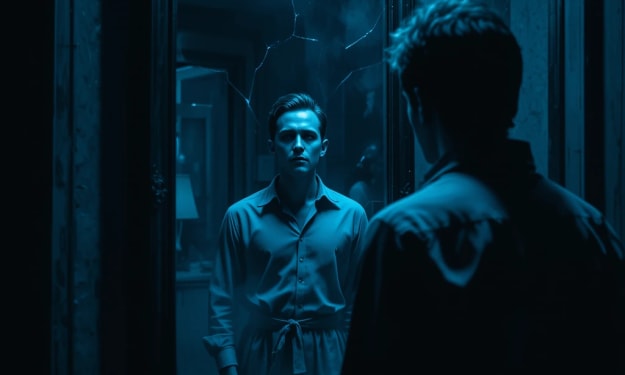
I Saw Myself Watching Me It started on a Monday. A completely average, uneventful Monday. I woke up, brushed my teeth, checked my phone, and sat down for breakfast. That’s when I saw it—the moment that cracked reality like a mirror struck at its center.
By hammad khanabout a year ago in Fiction
The Power of Truth: A Wise King’s Justice
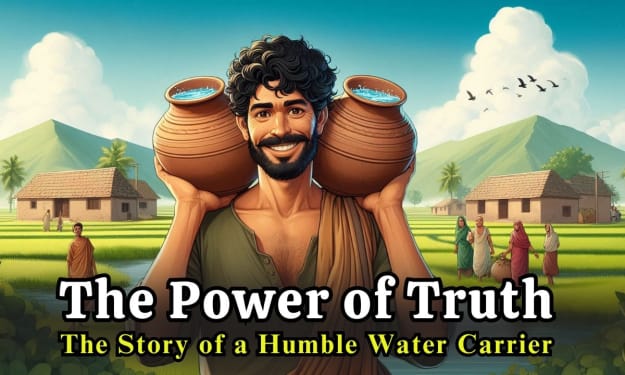
In a kingdom ruled by power and pride, it was not a warrior or a noble who won the king’s heart — but a simple water carrier. His joy was in serving others. His reward? A betrayal that nearly cost him his life. But fate had other plans. This is the tale of Shankar — a humble soul whose honesty outshined even the most cunning schemes.
By Soul Pagesabout a year ago in Fiction
A Promise in Ash
Before dawn, beneath a sky heavy with unshed stars, the Night Market held its breath. Lanterns swayed like flickering souls caught in a restless wind. Shadows leaned close, whispering secrets that time had forgotten. And in the heart of this ancient, bleeding place, the Mender moved—a figure woven from sorrow and quiet resolve, his cloak trailing faint echoes of prayers long spent.
By Paper Lanternabout a year ago in Fiction
The House at the End of Memory
I was eleven the first time I saw the house. It perched at the end of a road swallowed by trees, a path my grandmother told me never to follow. “Where the branches hush the world,” she’d whisper, “some silences carry echoes louder than screams.”
By Muhammad Abdullahabout a year ago in Fiction
The Text That Arrived a Year After He Died
It had been exactly one year since we buried my brother, Ayaan. I still remember the chill in the air that day. It wasn’t just the weather — it was the kind of cold that wraps itself around your bones when something irreversible happens. He was 23. Full of life. Loved by everyone. Gone in an instant. A rainy night, a slippery road, and a speeding truck.
By Umar Faraz Gulabout a year ago in Fiction