thriller
10 Dates Before Goodbye
Start writing...10 Dates Before Goodbye Zindagi ke aakhri chh mahine, pyaar ke sabse khoobsurat 10 din. --- Date 1: The Diagnosis Hospital ke khidki ke peechay Zoya khadi thi, uske haath mein ek file thi jo uski zindagi ki haqeeqat lekar aayi thi. Stage 4 blood cancer. Doctor ne sirf chh mahine zindagi di thi. Aankhon mein aansuon ke saath Zoya ne apne dil ki baat Ali se chhupate hue poocha, “Kya hum waqt ko rok nahi sakte? Ya phir ise thoda sa thehra nahi sakte?” Ali ne uski taraf dekha, jiska chehra dard se bhara tha, lekin uske labon par ek chhoti si muskurahat thi. Usne apni jeb se ek chhoti si diary nikali, pehla safha khola, aur likha: > “Chalo, hum 10 dates karte hain. Tumhari muskurahat roz dekhni hai, jab tak ho.” Zoya ne uski baat par thoda hansa, phir kaha, “Main marne wali hoon, aur tum dating ka plan bana rahe ho?” Ali ne aankhon mein chamak ke saath jawab diya, “Waqt kam hai, is liye pyaar jaldi karna hoga. Har pal ko jeene ka iraada hai.” --- Date 2: School Wali Bench Agla din tha. Ali ne Zoya ko usi purani bench par le gaya jahan bachpan mein woh school se bhaag kar chup jati thi. Wahan do sandwiches rakhe thay. Zoya ne hairani se poocha, “Yeh kya hai?” Ali ne kaha, “Bachpan ki bhookh kabhi nahi marti. Aur yeh sandwiches tumhari bachpan ki yaadon ke liye hain.” Zoya ki aankhon mein aansu aa gaye, “Aur bachpan ka pyaar? Kya woh bhi zinda hai?” Ali ne has kar kaha, “Woh to tumhare samne zinda hai. Aur main us pyaar ko zinda rakhne aaya hoon.” --- Date 3: Library Mein Khamoshi Wo din Ali ne Zoya ko library le gaya. Wahan ek purani kitaab chhupi thi, jisme usne chhote chhote pyar bhare khat likhe thay. Har safhe par ek yaad, har yaad mein Zoya ka naam tha. Zoya ne poocha, “Yeh sab kab likha?” Ali ne kaha, “Jab tum mujhse door thi, main har din tumhari wapsi ka intezaar karta tha. Har lafz mein mera pyaar chhupa tha.” Zoya ne uske haath thaame aur aankhon mein aansu bhar aaye. --- Date 4: No Filter Photography Ali ne Zoya ki 100 tasveerain khinchein — bina makeup, bina pose, sirf asli hassi aur jazbat ke saath. Zoya ne poocha, “Yeh sab kyun?” Ali ne jawab diya, “Main tumhein waise hi yaad rakhna chahta hoon, jaisi tum ho — hassi wali, thodi roothi hui, kabhi gusse wali, magar hamesha zinda.” --- Date 5: Khamosh Walk Dono ek lambe park ke raaste par chal rahe thay, bina baat kiye. Sirf unke saanson ki awaaz sunai de rahi thi. Zoya ne pehli baar Ali ka haath thaama, “Main tayyar hoon. Har pal jeene ke liye.” Ali ne kaha, “Yeh waqt humara hai, isse hum jeetenge.” --- Date 6: I Love You... In Writing Ali ne Zoya ke liye aik diary banayi thi — 30 pages, har zaban mein “I love you” likha tha. Zoya ne hans ke kaha, “Agar tum chalay gaye to?” Ali ne kaha, “Pyaar kabhi nahi marta, log marte hain, lekin jazbaat kabhi nahi.” --- Date 7: Chupke Se Raqs Ek purane café mein dono ne chupke se Bluetooth speaker lagaya aur bina shor sharabe ke raqs kiya. Zoya ne poocha, “Music kahan hai?” Ali bola, “Jahan tum ho, wahan har sans ek sur hai.” --- Date 8: Hospital Ki Chhat Ali ne Zoya ko hospital ki chhat par le gaya. Andhera tha, lekin sitare chamak rahe thay. Ali ne kaha, “Agar main chala gaya to, har barish mein mujhe dhundhna, har sitaray mein mera chehra dekhna.” Zoya ne uska haath mazbooti se pakda. --- Date 9: Shadi Ka Jhoot Zoya ne hospital staff ke saath mil kar chhoti si shaadi arrange ki — bina papers ke, magar asli pyaar ke saath. Ali ne kaha, “Yeh meri zindagi ki asli deal hai.” Zoya ne kaha, “Aur meri bhi.” --- Date 10: Goodbye Without Tears Aakhri date thi. Ali ne diary ka aakhri page Zoya ke haath mein diya, > “Mujhe yaad mat rakhna, mujhe jeeti rakhna.” Zoya ne usse gale lagaya, aansu rok kar. Ali ne aankhein band ki aur muskuraya. --- Epilogue: Aaj bhi Zoya har saal 10 naye logon ke saath 10 dates karti hai, unhe jeene ki umeed dene ke liye. > Kyun ke Ali ne usse sikhaya tha: “Pyaar zindagi mein nahi hota, pyaar zindagi bana deta hai.”
By Aman Ullahabout a year ago in Fiction
The Wandering Mind of Willow
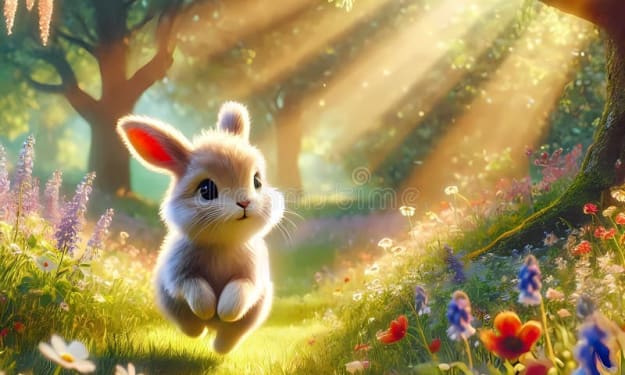
In a quiet meadow surrounded by silver birch trees and soft rolling hills, there lived a rabbit named Willow. He was not like the other rabbits who spent their days hopping around collecting food or playing in the sun. Willow was different. He had a habit—some called it strange, others charming—of getting lost in his thoughts.
By Fazal Malikabout a year ago in Fiction
Wings of Joy
In a meadow kissed by golden sunlight, nestled between whispering trees and a winding stream, lived a butterfly named Zara. She wasn't just any butterfly — her wings shimmered with the colors of sunrise and sunset, with flecks of silver and blue that sparkled when she flew. But it wasn’t just her beauty that made her special. Zara was known across the valley for something even more wonderful — she loved playing with flowers, all the time, every day.
By Fazal Malikabout a year ago in Fiction
Wings of Kindness
Once upon a time, in a lush green forest nestled between tall mountains and flowing rivers, there lived a tiny ant named Aroo. Aroo was small even by ant standards, but his heart was full of curiosity and kindness. He spent his days collecting food, exploring tree roots, and greeting all the creatures he met along the way.
By Fazal Malikabout a year ago in Fiction
The Royal Legacy of King Barkley
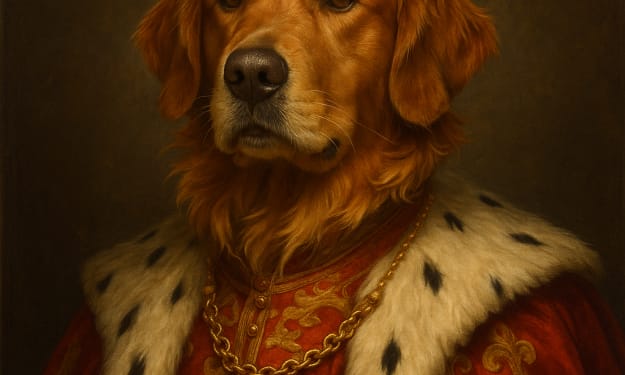
Once upon a time, in a faraway realm hidden beyond icy mountains and ancient forests, there reigned a noble king unlike any the world had seen. His name was King Barkley, a Golden Retriever of majestic stature and unmatched wisdom. With his gleaming golden coat, kind eyes, and a crown that shimmered in the sunlight, King Barkley ruled the Canine Kingdom of Arvendale, a land where dogs of all breeds lived in peace, honor, and unity.
By Fazal Malikabout a year ago in Fiction
Twenty Minutes to Midnight
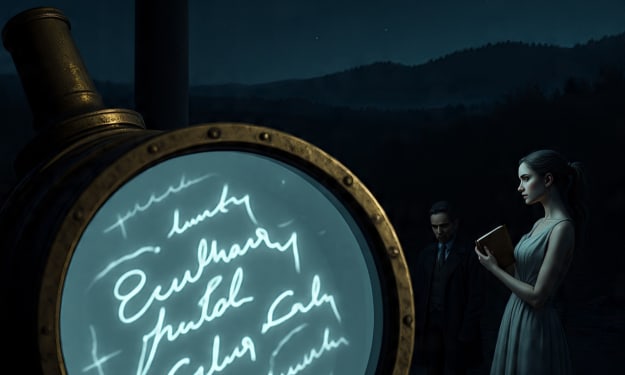
It was twenty minutes to midnight when Elara finally realized she’d been followed. The night had wrapped itself around the city, cloaking narrow streets in velvet shadows, and somewhere in those shadows, footsteps echoed hers. She quickened her pace, clutching the small, worn leather journal closer to her chest. The journal smelled faintly of cedar and old ink — it had been her father’s, and now it was the only thing that might save her. Elara ducked into an alley, heart pounding. The footsteps grew louder, then stopped. Silence spread across the cobblestones like spilled oil. Holding her breath, she listened — and waited. She could feel time slipping through her fingers. In exactly twenty minutes, the bell of St. Vesper’s would strike midnight. And if she didn’t reach the old observatory by then, everything her father had hidden would remain buried forever. She peered around the corner. Empty street. Only the restless flicker of a dying gas lamp. Elara ran. Her boots slapped against the stones, each step pushing her closer to the edge of panic. Fifteen minutes to midnight. The journal’s last page held a message, scrawled in her father’s shaky hand: “At midnight, the truth will appear in the glass.” She hadn’t known what it meant until the letter arrived that morning — an unsigned note, written in the same ink: “Find the truth before they do.” And now they were coming. Whoever they were. Elara reached the bridge that led to the observatory, its ancient arches covered in ivy. Her lungs burned; sweat trickled down her neck despite the cool night air. She hesitated for a moment, staring at the crumbling stone building silhouetted against the starless sky. Thirteen minutes to midnight. As she crossed the bridge, the footsteps returned, louder this time. She dared a glance over her shoulder — and saw him. A man in a dark coat, face hidden by the brim of his hat, moving steadily after her. Fear twisted in her stomach, but she forced herself forward, pushing open the heavy iron gate that groaned in protest. The observatory loomed before her, windows shattered and door half off its hinges. Inside, the air smelled of damp and dust. Moonlight streamed through broken glass, tracing silver patterns across the floor. The great telescope, though rusted, still pointed skyward — as if it, too, was waiting. Ten minutes to midnight. Elara opened the journal, flipping through brittle pages. Notes about stars, planetary alignments, coded diagrams she never understood. And on the last page, those words again: “At midnight, the truth will appear in the glass.” She turned to the telescope, her father’s words echoing in her mind. The glass. The telescope’s lens. That had to be it. But as she stepped closer, the man in the dark coat entered the observatory, his footsteps soft on the dusty floor. “Don’t move,” he ordered. His voice was calm, almost gentle, but something in it made her skin prickle. “What do you want?” she demanded, backing toward the telescope. “The same thing you do,” he said, taking another step forward. “The truth your father hid. Hand me the journal.” Elara tightened her grip on it. “No.” Seven minutes to midnight. The man sighed. “You don’t know what’s at stake, do you? Your father was part of something much larger than you imagine.” “What do you mean?” she whispered. “Your father discovered something. Proof of what really happened twenty years ago — the accident at the Vesper Collider. They said it was an explosion, but it was something else. Something… dangerous.” Elara felt her heart stutter. Her father had never spoken of that day, except to say he’d made mistakes he could never undo. Five minutes to midnight. “He left the proof somewhere,” the man continued, eyes locked on hers. “In this observatory, perhaps. Give me the journal, and no one has to get hurt.” Elara shook her head. “No. My father died trying to keep this secret from people like you.” Three minutes to midnight. The man moved suddenly, grabbing her wrist. They struggled, the journal slipping from her grasp and falling to the ground. The sound echoed through the empty chamber like a gunshot. Elara broke free, stumbling toward the telescope. She pressed her eye to the lens, heart pounding in her throat. At first, she saw nothing. Only the cracked lens and the black sky beyond. One minute to midnight. Then, the bell of St. Vesper’s began to toll. With each resonant strike, faint letters shimmered into view on the glass — words written in her father’s hand, only visible under the right alignment of moonlight and midnight: “The truth is in the collider archives. Room 12B. Trust no one.” The man saw the change in her face and lunged, but Elara stepped back, clutching the words in her memory. The bell tolled its twelfth chime. Midnight. In the silence that followed, Elara turned to face her pursuer, determination hardening her fear. “It’s too late,” she said softly. “I know where to go now.” And before he could react, she ran — out of the observatory, across the bridge, into the night. She didn’t know what she’d find in Room 12B. But her father had given her a path, and the truth — whatever it cost — was now hers to chase. The city clock ticked on, but for Elara, it had just begun.
By Mati Henry about a year ago in Fiction
The Last Notification
The Last Notification It was 11:11 PM when Ethan’s phone buzzed. Normally, he wouldn’t have even looked—he got hundreds of notifications a day. Likes, comments, updates, news flashes, random pings from apps he never remembered downloading.
By Habibullahabout a year ago in Fiction
comfort is the enemy of growth. AI-Generated.
In the heart of a lush green valley, nestled between two steep mountains, lay the village of Orlin. It was a quiet place, untouched by the chaos of cities or the rush of time. People lived simple lives—rising with the sun, farming the land, sharing evening meals, and sleeping under starlit skies. Most who lived there never left. Why would they? Orlin had everything they needed.
By shah afridiabout a year ago in Fiction
The Autumn We Stopped Pretending
The scent of honeysuckle soap and old fear still clung to the satin as I lifted the gown from its cedar tomb. Sixty-one years had turned the ivory fabric the color of weak tea, the sleeves thin as dried petals. Outside my window, Maple Street burned with October’s fire. Inside, my arthritic hands trembled against the hanger. *Today*, the dress seemed to whisper. *Today they’ll see*. At ten o’clock on a Tuesday morning, I walked into St. Agnes Parish Hall wearing my wedding dress from 1956. --- Bingo balls rattled in their cage. "B-4," droned the caller. "G-52. N-37." Around me, the familiar Tuesday faces: Millie in her cat-hair sweater, Frank polishing his bifocals, Doris clutching her troll doll talisman. The room smelled of coffee and mothballs. My worn heels clicked on the linoleum. Doris’s dauber slipped from her fingers, bleeding blue across her card. Millie’s knitting needles stilled. Frank’s jaw went slack. "Evelyn?" Millie’s voice frayed at the edges. "Is that… your wedding…?" I adjusted the brittle tulle veil clinging to my silver hair. "Morning, Millie. Have they called O-72 yet?" Eighteen pairs of eyes tracked me as I shuffled to my seat, the moth-eaten train snagging on a floor tile. I felt their stares like physical touch—pity, embarrassment, the sour tang of judgment. Frank cleared his throat. "Evelyn, you… you know it’s Tuesday, right? Bingo day?" I smiled at the man I’d known for forty years. "I remember everything, Frank." --- **October 17, 1956** The last autumn I believed in happy endings. I’d baked a spice cake that morning, the kitchen warm with cinnamon and deception. Hank leaned in the doorway, his eyes still clear. The drunken haze wouldn’t come until evening. "Pretty dress, Evvie." My wedding gown hung in our bedroom—ivory satin, seed pearls, hope stitched into every seam. I’d sewn it myself during those early days when his hands were gentle and his words didn’t cut. "Is it for the VFW dance?" I asked, stirring batter too fast. "Nah." His fingers dug into my hip. "For right now." I wore it that evening while he ate cake. While he praised the frosting. While he hurled the plate against the wall because the fork scraped the china. *"Clean it up,"* he hissed, bourbon thick on his breath. *"And wipe your face. You look pathetic."* Pearls skittered across the floor like frightened insects. --- **October 18, 1956** 3:17 AM. I left in the torn dress. No suitcase. Just the gown, my mother’s cameo, and thirty-seven dollars hidden in a flour sack. The bus depot reeked of urine and possibility. "Where to, ma’am?" The ticket agent eyed my dirt-streaked train. "Anywhere but here." Three days on a Greyhound with women who didn’t ask questions. A waitress job in Salem. A room above a bakery where I hid the dress inside a ceiling tile. For sixty-one years, I was just Evelyn from the flower shop. The childless widow. The woman who brought lemon squares to funerals. No one knew about the collarbone that never set quite right. No one saw the ghost of Hank’s ring finger bruise still blooming beneath my foundation every morning. --- Back in the bingo hall, Doris found her voice first. "Well! Don’t you look… festive." I pressed my dauber onto G-60. "Thank you, Doris." A young mother in the corner—new to town, her baby asleep in a carrier—met my gaze. Not staring. Not smirking. Just *seeing*. Millie leaned close, her whisper carrying. "Evelyn, sweetheart, is it your anniversary? Did Arthur love you in that dress?" The room held its breath. I turned slowly, satin whispering. "Arthur was my second husband. Died kind. This dress?" My finger brushed a loose pearl. "This was before Arthur. This was Hank Miller." The silence thickened. "He hit me," I said clearly. "For three years. I left wearing this on October 18, 1956. Today, I’m celebrating my escape." --- Frank’s face turned ashen. Doris’s troll doll clattered to the floor. Millie pressed a knuckle to her mouth—not in shock, but in painful recognition. "Hank Miller?" Frank rasped. "But he… he ran the food drive. Coached my grandson’s baseball team." "He broke my wrist when I served his coffee too hot," I said, daubing N-42. The young mother stood. Walked to my table. Set her untouched ginger ale beside my cards. "Pearls suit you," she said softly. Then Millie broke. Great, shuddering sobs heaved through her small frame. "My sister," she choked. "They said she fell down the stairs in 1964. But her husband Roy… he had Hank’s eyes when he drank—" Doris reached across the aisle. Twined her fingers through Millie’s. No one called numbers for seven minutes. --- Last Tuesday, Dr. Evans said the word *pancreatic* and *six months* in the same gentle sentence. As I walked home, the maple in my yard blazed crimson against the grey sky. *No more silence*, the leaves whispered. *No more pretending*. Survivors die with their truths still locked inside them every day. I refused to be one. --- When the game resumed, something fundamental had shifted. Frank brought me coffee—cream, no sugar, just how I liked it. Doris slid her winning card toward me with a shaky smile. The young mother pressed a note into my palm: *"My name is Maya. Left Malik last spring. Thank you for today."* As I gathered my things to leave, Millie gripped my walker. Tears still streaked her cheeks, but her chin was high. "Evelyn?" Her voice didn’t waver. "Next Tuesday… would you help me find my sister’s favorite dress?" --- We misunderstand strength. We confuse it with silence—with bearing wounds in darkness, with folding pain into smaller and smaller origami until it disappears. True strength isn’t quiet. It’s the courage to say: *This happened.* *It hurt.* *I lived anyway.* In that bingo hall smelling of ink and redemption, eighteen ordinary people chose truth over pretense. Millie’s grief. Frank’s shame. Maya’s solidarity. Doris’s clasped hand. The world tells broken women to hide their cracks. To preserve the peace. To swallow their stories with their morning pills. But peace built on lies is violence wearing a pretty mask. So I tell you this: Wear the dress that holds your history. Name the ghost that haunts your bones. Let your pearls scatter where the light can find them. Let autumn strip the trees down to their honest skeletons. Let it do the same for your soul. The pretending ends when we decide to speak.
By Wondermindabout a year ago in Fiction
The Last Voice on Earth
The Last Voice on Earth It had been 47 days since the world went silent. No news broadcasts. No car horns. No footsteps on pavement. The birds had stopped singing. The wind blew without whispering. It was as if someone had placed the world under a glass dome, muting every echo of life. And yet, amidst the global silence, Amara still had her voice.
By Musawir Shahabout a year ago in Fiction
I Married a Ghost. Last Night, He Served Me Divorce Papers. AI-Generated.
The divorce papers appeared at 3:07 AM. One moment: empty pillow. Next moment: parchment thick as graveyard soil, smelling of bergamot and decay. Ink the color of dried blood spelled out *Silas Alistair Thorne v. Elara June Finch*. A wax seal pulsed with cold blue light. I didn’t scream. After ten years married to a Victorian-era industrialist’s ghost, you learn panic is pointless. Especially when your undead husband’s idea of foreplay is reciting Edgar Allan Poe during your showers. *How Do You Meet a Ghost? Badly. It started with a Ouija board at a frat party—cliché, I know. We’d aimed for "spooky fun." We summoned Silas Thorne, dead since 1889 (typhoid fever, complicated by poor stock investments). He haunted my apartment for months: freezing my wine, rearranging my books into cryptic symbols, whispering investment tips that *actually* worked. He was charming. For a corpse. He’d materialize as a flicker of top-hatted shadow, quoting Keats while I burned toast. When my fiancé left me ("You’re emotionally cheating… *with a ghost?*"), Silas manifested fully for the first time—a translucent gentleman in waistcoat and cravat, offering a spectral handkerchief. "Modern men lack fortitude," he’d sniffed. "Shall I haunt his Tesla?" *The Chapel of Lingering Vows* We married at a paranormal chapel in New Orleans. Our vows: *"Beyond breath, beyond bone, ‘Til entropy claims the last stone."* Our prenup was… unusual: **§3.2* *Corporeal Spouse (Elara) retains all tangible assets (real estate, chocolate, living pets).* **§5.7: *Ectoplasmic Spouse (Silas) reserves right to manifest during showers/baths for "aural companionship."* **Addendum B:** *Infidelity defined as "consorting with rival spirits (e.g., Gertrude the flapper ghost, who sings show tunes off-key in the parlor on Wednesdays)."* *The Trouble with Immortal Husbands* Immortality makes ghosts *particular*. Silas despised: - Smartphones ("Soulless pocket-spies!") - Scented candles ("Cloying bourgeois propaganda!") - My historian boyfriend, Liam ("That beard has the audacity to touch my wife!") Liam tried. He left 1873 port wine by the fireplace. Read Dickens aloud. Silas retaliated by making Liam’s coffee taste like grave dirt. **The Last Straw: The Tesla Coil Incident** Liam installed an "ambiance enhancer" in the study—a singing Tesla coil. Silas saw it as an act of spectral war. For weeks, our brownstone became a paranormal battleground: - Lights flickering in Morse code insults (*"L-I-A-M I-S A P-E-A-S-A-N-T"*) - Antique portraits weeping black oil - My bathwater turning inexplicably… *chunky* When I unplugged the coil, Silas froze every bottle of Chardonnay in the house. "Prioritizing that *bearded transistor* over our matrimonial resonance?" His voice vibrated from the gramophone horn. "This union is a crypt, Elara." *The Phantom Plaintiff’s Grievances* His legal filing was absurd, even for the dead:
By Wondermindabout a year ago in Fiction