Stream of Consciousness
I Once Saw Myself in a Stranger
It happened on a rainy Thursday afternoon—the kind of rain that softens the edges of the city and makes everything feel suspended, like the world is holding its breath. I was walking home from the café, my umbrella barely shielding me from the drizzle, lost in thought about the chaos in my life. The weight of things unsaid, moments missed, and roads not taken pressed down on me like the clouds above.
By Jawad Khanabout a year ago in Fiction
The Clockmaker's Garden
There was a village at the edge of the world where time stood still—not metaphorically, but truly. The sun always hovered in the same place. The shadows never grew longer. The leaves on the trees were forever green, and not a single wrinkle ever touched the faces of the people who lived there. Some called it a paradise. But not Mira. Mira had lived her entire life in this frozen place, where no one aged and nothing ever changed. The village was clean and calm, the people kind and quiet, but it all felt... trapped. Like living inside a snow globe where someone forgot to shake the magic. You see, the village had once been ruled by time like anywhere else. Until the day the Clockmaker came. No one remembered where he came from, or how he had arrived. But he built a tower at the village center—a tall, spiraling thing made of stone and bronze, topped with a golden clock that ticked louder than the wind. Then, one day, he stopped the clock. And when the clock stopped, so did time. People were amazed. No one got older. No one died. Food never spoiled. Days were always sunny. And for a while, it truly was a paradise. But after years, something changed—not outside, but inside the people. They stopped dreaming of new things. They stopped planting new trees. They stopped falling in love. They stopped asking, "What if?" Mira was different. Even as a child, she asked questions no one liked answering. “Why don’t we celebrate birthdays?” “What happens if the clock breaks?” “What’s beyond the hills?” The villagers would smile politely and say, “Don’t worry, dear. Everything is exactly as it should be.” But Mira wasn’t convinced. Especially not after the day she found the seed. It was buried beneath the soil behind her grandmother’s cottage, wrapped in cloth and tied with red thread. The cloth was old—older than the village’s stillness. On it, written in fading ink, were five words: "Plant me when time aches." Mira didn’t know what it meant, but she kept the seed. Years passed—or they should have—and Mira grew older in her heart, even if her body never changed. She read every book the village had. She asked questions the elders refused to answer. She even climbed the clocktower once, but found the door bolted shut with a glowing blue lock she couldn’t break. Until one night, something happened that had never happened before. She saw a petal fall. A single pink petal, drifting down from a tree in the village square. It didn’t make sense. Nothing changed here. Nothing moved unless someone moved it. But that petal had fallen on its own. As if the tree had breathed. That night, she went to her grandmother’s garden with a lantern and trembling hands. She dug a small hole in the earth and placed the old seed in it. As soon as the dirt touched the seed, the ground shivered—just a little. Not enough for anyone else to notice. But Mira did. She watered it with tears. Not because she was sad, but because she suddenly felt something for the first time in a long, long while: hope. The next morning, a small green shoot had emerged. And the day after that, a bud. And a few days later, a flower bloomed—vibrant and golden, with petals that shimmered like sunlight. People began to whisper. Nothing had grown in the village since time stopped. No new flower had bloomed in decades. But there it was, glowing softly like a candle in the fog. When the elders saw it, they panicked. They tore it from the ground. They warned Mira not to interfere again. They told her she was risking everything. That peace must be protected. That the Clockmaker would not approve. But Mira didn’t stop. She remembered what the cloth had said. “Plant me when time aches.” And time was aching. The people were stuck. Their laughter was thin. Their eyes were dull. Peace without change had become a prison with invisible walls. So Mira planted more seeds—some from old apples, some from forgotten flower pots, some even stolen from the locked archives beneath the school. And each time, something bloomed. Small things at first: daisies, dandelions, bluebells. Then vines. Then fruit. Then trees with golden bark that hummed when the wind passed through. And slowly… people changed. Some cried without knowing why. Some remembered dreams they’d buried. Some started writing poems again. Children drew things they’d never seen—skies full of color, mountains beyond the village, oceans they only imagined. And then the unthinkable happened. The clock in the tower ticked. Just once. But loud enough that everyone heard it. That night, Mira returned to the tower. The door that had once been sealed was cracked open. Inside, the gears groaned, stiff from stillness. Dust floated in the beams of moonlight. At the top of the stairs stood the Clockmaker. But he wasn’t what she expected. He looked like an old man made of wood and brass, with eyes like candle flames. His hands were tools. His spine was a coil. And on his chest was a key, long since wound down. “You have brought time back,” he said, his voice the sound of creaking floorboards. “Why did you stop it?” Mira asked. “Because the world was full of pain,” he replied. “And I thought stillness would bring peace. But peace without change… is silence.” She stepped forward. “And silence without growth... is death.” The Clockmaker nodded. “Then finish what you’ve started.” He handed her the key from his chest. She placed it in the clock. And turned it. The clock roared to life. The gears spun. The bell rang. Time surged through the village like a warm wind. The sun moved for the first time in a hundred years. Shadows danced. Trees swayed. Children grew. Laughter returned—not the polite kind, but the wild, uncontrollable kind. People wept and hugged and aged. And in the middle of the village stood Mira, now older, a little grayer, but glowing with life. She never became queen. She didn’t want to. Instead, she planted more gardens. One for every lost year. One for every forgotten dream. And people joined her. Because now… time moved. But so did hope. The End.
By Lucien Hollow about a year ago in Fiction
Dumb Girl
Crisp moonlight cascaded down, blanketed brightly against the back of the black curtains of a corner apartment on a busy corner street. Searching for a way in, it had work to do here. Looking to penetrate the dome of artificial light Caroline tucked herself inside of. It longed to touch her, in its fullness, to rock her gently to sleep. Instead, she pulled her curtains taught. Not a sliver would find its way into her life. She knew to keep out the sounds and sights of distraction. Tuck herself away from the omnipresent beauty life offered her. Stifle the inspiration that mulled in her spirit, waiting to emerge. Brought on by small things, like a now pregnant moon. A bundle of baby stars. Ideas bigger than the galaxies.
By Sydney Lee Jonesabout a year ago in Fiction
The Lantern of Whispering Trees
by Yahya Asim In a remote village nestled between the emerald folds of two great hills, there stood a forest known as the Whispering Trees. Locals spoke of it with reverence and caution. They said the trees could talk—not with mouths, but with murmurs carried in the wind. Only those who truly listened could understand their secrets.
By Yahya Asimabout a year ago in Fiction
My First Adult Summer
“Congratulations, Class of 2017!” We toss our green caps into the air, mine landing back in my hand. What an eventful day. It had started with a rehearsal of the ceremony, followed by lunch with the other students, before relaxing at home for a few hours until the actual ceremony.
By Amethyst Champagneabout a year ago in Fiction
Our One and Only Night
Spend all your time waiting for that second chance, for a break that would make it ok. Montevideo and its calm pace of life. I became one with the delicious flow. The sun seemed to be mainly just caressing the beach. The golden hour. I said hi to the sea, visually it’s usually more than enough; and yet, this time as I went past all the people sharing with each other, it made me wish: “Wouldn’t it be nice to be here with someone else?”
By Laura Rodbenabout a year ago in Fiction
Animal Farm- Chapter- 4 (George Orwell)
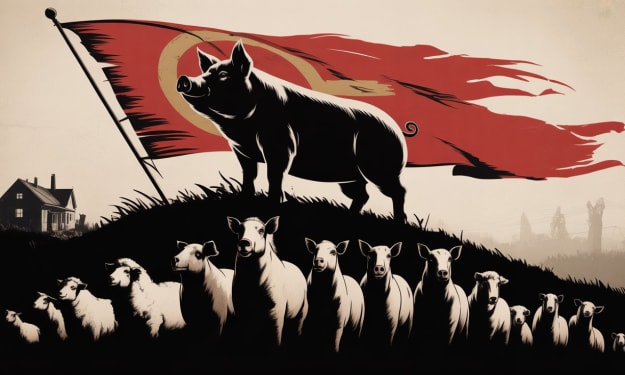
As summer turns to autumn, word of the animals’ successful rebellion spreads far beyond Animal Farm. Snowball and Napoleon send pigeons to neighboring farms to tell the other animals about their revolution and to teach them the song of the Beast of England. The pigeons carry the message far and wide, inspiring animals on other farms to rise up just as they have. Meanwhile, the human owners of neighboring farms—Mr. Pilkington of Foxwood and Mr. Frederick of Pinchfield—become deeply concerned that ideas of animalism might spread. They try to downplay the animal revolution, mocking Animal Farm and calling it a failure, but secretly, they fear a similar rebellion among their own animals.
By Echoes of Lifeabout a year ago in Fiction
The Last Light
The Last Light – A Story of “Luminous” There was once a village wrapped in quiet hills and thick, whispering woods. It was a place time had mostly forgotten. The world beyond it rushed ahead with noise and invention, but the people of Velden lived slowly, holding onto rhythms older than clocks.
By Terence Lisherabout a year ago in Fiction
Bread across barbed wire
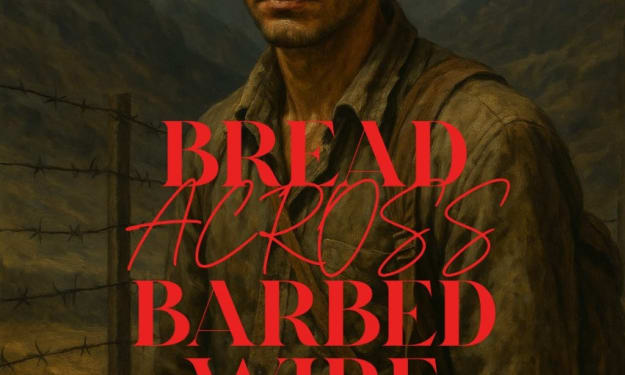
The Weight of Sweat The summer sun scorched the rooftops as Kurt dragged himself home from school, sweating lines down his dust-covered face. upon arriving home, his mother woke up, who was taking a siesta rest break. She woke up and fried yesterday’s cooked beans by adding some tomatoes and served him the meal. After making his lunch, his mother told him to check upon his father, who did not come to the lunch, which was unusual.
By Ihtisham ul haqabout a year ago in Fiction