Short Story
When the Houses Listen
The county sent me to Mercy with a clipboard, a tape measure, and the kind of confidence people carry when nothing truly strange has ever survived their explanation. I was there because the river had shifted again. That was the official sentence. The river had shifted. Like water made decisions. Like mud got restless. Like land woke up one morning and decided it no longer wanted to hold the houses built on top of it. Six homes on the eastern edge of Mercy had been flagged for assessment after three weeks of rain ate away the bank beneath them. The county wanted measurements. Reports. Photographs. Signatures. Numbers they could discuss under fluorescent lights without ever having to stand in front of a living room that was halfway to becoming river. I was twenty-nine, tired in a way I thought made me mature, and arrogant in the quiet way educated people get when they mistake vocabulary for armor. Mercy was small enough to feel accidental. One road in. One road out. A general store. A chapel. A row of houses pressed too close together, like they were afraid of what might happen if they gave each other space. The man who drove me in was named Lowell. He worked odd county jobs since public transit stopped pretending towns like Mercy deserved routes. He chewed sunflower seeds and drove with both hands on the wheel, though the road was straight enough to confess on. He dropped me in front of the general store at four-thirty and kept the engine running. “You’re staying with Vera Hollen,” he said. “I thought there was an inn.” “There was.” I waited for more. He gave me nothing. “What happened to it?” Lowell looked at the sky. Not up. At. Like the sky had said something once and he was still deciding whether to forgive it. “You’ll want to be inside before dark.” I laughed. Not because it was funny. Because laughing is what people do when fear shows up wearing work boots and they don’t want to recognize it yet. Lowell didn’t laugh back. He handed me my bag, spat a seed shell into an empty cup, and said, “Don’t make the town curious.” Then he drove away. The general store smelled like dust, coffee, old sugar, and rain that had been tracked in by generations of boots. There were three people inside. Two women near the canned goods. A man in coveralls sitting at the counter. A little boy in a red raincoat perched on a sack of feed with his hands folded in his lap. Too still. Kids are never that still unless someone has taught them stillness is safer than being noticed. The second I stepped through the door, the store went quiet. Not silent. Quiet. There’s a difference. Silence is empty. Quiet is full of things holding their breath. “I’m looking for Vera Hollen,” I said. The boy pointed through the window before anyone else moved. Across the road. Two houses down. Yellow siding. Crooked porch. Curtains already drawn. “Thank you,” I said. He didn’t blink. One of the women finally spoke. “You’re the county girl.” “I’m the appraiser.” She nodded like I had corrected the grammar on my own obituary. “Same thing.” The man in coveralls stood up, left two dollars beside his mug, and walked out without finishing his coffee. The other woman checked the wall clock. Then I noticed the windows. Every one of them had wooden shutters hooked from the inside. Not for storms. Not exactly. They looked like eyelids. Vera Hollen’s house smelled like rosemary, old paper, and a kind of cleanliness that felt less like comfort and more like control. She was narrow and gray-haired, with a spine that refused to bargain with age. “You’re late,” she said. “I’m actually early.” “No,” Vera said, taking my bag. “You’re late enough.” She led me to a guest room with floral curtains, a brass bed, and a lamp already burning on the nightstand. “You leave that on after sunset.” “I can’t sleep with lights on.” “You can’t sleep without them here.” I looked at her. She kept going. “You do not open the window. You do not look through the front glass if you hear knocking. You do not answer your name from outside after dark.” I smiled the way people smile when they think the other person is harmlessly insane. That smile still comes back to me sometimes. Small. Stupid. Wearing all my teeth like it had won something. “What happens if I look?” Vera set my bag on the bed. For a second, she looked almost kind. “It sees where you are.” Mercy was worse in daylight. That’s the part I hate admitting. Night was obvious. Night at least had the decency to look guilty. But daylight in Mercy felt like a room after an argument where everyone has agreed not to mention the broken glass. The town functioned, technically. People swept porches. Men carried lumber. Women hung laundry. Children walked in pairs and never ran. No one asked where I was from. No one asked if I was married, which small towns usually do with the subtlety of a crowbar. No one asked anything normal. They asked: “Did they send you alone?” “Who knows you’re here?” “You planning to sleep more than one night?” “You got anybody expecting you back?” Every question had a hook under it. I spent the afternoon on the eastern edge, measuring foundations and photographing damage. The six flagged houses leaned toward the river like they were listening to something underneath the bank. At the third house, a woman named Edith opened the door before I knocked and handed me a plate with two sugar cookies on it. “For the room,” she said. “I’m sorry?” “Don’t apologize. Just set them somewhere flat.” “I don’t need—” Her face changed. Not much. Just enough for me to understand that refusing would be foolish in a way I did not yet have the language for. So I took the cookies. At the fourth house, an old man refused to sign the preliminary assessment until I answered one question. “Do you hear it yet?” “Hear what?” He stared at me for so long I felt something in me start to step backward. Then he signed. By late afternoon, the whole town began closing. Not businesses. Bodies. Voices lowered. Children disappeared. Porches emptied. Dogs were called inside. Curtains dropped across windows one house at a time, like Mercy was shutting all its eyes before something walked through. At Vera’s, dinner was soup and bread in a kitchen too dim for comfort. The windows were covered with heavy curtains. The back door had three locks. Above the sink, a row of small bells hung from a piece of twine. None of them moved. I kept looking at them anyway. “So everyone here just obeys these little rules?” I asked. Vera ate without looking up. “Rules are what you call them before you understand why they exist.” “And after?” “After, you call them mercy.” I almost laughed again. Almost. But the house creaked then. Just once. Not old wood settling. More like something shifting its weight in another room. Vera’s spoon stopped halfway to her mouth. We both listened. Nothing happened. Which somehow made it worse. After dinner, I went to the guest room and tried to call my supervisor. No service. No texts going through. No email. The little signal bars had vanished as if the phone had forgotten the rest of the world existed. I sat on the bed and wrote notes by hand. House One: moderate erosion. House Two: foundation fracture visible on north-facing wall. House Three: occupant anxious, possible refusal to evacuate. That one made me pause. Possible refusal to evacuate. God. How official language loves to stand far away from the bleeding thing and point. Sometime after nine, the knocking started. Three slow knocks at the front door. Not desperate. Not violent. Polite. That was the worst part. Whatever stood outside did not sound like it was trying to get in. It sounded like it had been expected. The whole house went still. Then a voice came through the door. My mother’s voice. “Lena?” The pen fell out of my hand. My mother had been dead seven years. Stroke. Hospital bed. Half her face gone slack. Her hand in mine. Machines speaking for the body after the person had already left the room. “Lena, honey,” the voice said. “Can you help me?” My throat closed. Grief is not holy. People keep trying to dress it up, put candles around it, make it look meaningful from a distance. But grief is a thief. Grief will wear your dead mother’s voice and ask you to open the door. I stood up. I didn’t decide to. My body heard her and betrayed me before thought could get its shoes on. “Lena,” she said again. “I’m cold.” My hand touched the bedroom door. Down the hall, Vera whispered, “Let it finish.” Not loud. Not even urgent. Just exhausted. Like she had watched people lose themselves to tenderness before. The knocking came again. Three taps. Slower. I stepped back from the door, shaking so hard my knees felt borrowed. I told myself it was a prank. A speaker. A town full of sick people with too much time and too much folklore. But my mother’s voice knew the small break in my name. Not Lee-na. Len-a. Like she was smoothing the word with her thumb. I crossed to the window. Just a crack, I thought. Just enough to prove the world still had rules. I pulled the curtain back. The porch was empty. The yard was empty. The road was gone. In its place was a hallway. Long. Narrow. Impossible. Wallpaper stretched where the night should have been. Doorframes lined both sides. Lamps glowed along the ditch. At the far end, a woman stood in my mother’s blue robe with her back to me. She lifted one hand. Knocked on nothing. Three slow taps. Then her head turned too far. Not all the way. Too far. Enough for me to see the edge of her mouth. Smiling. I dropped the curtain and fell backward. Vera appeared in the doorway. “You looked,” she said. I could barely speak. “What is this place?” She looked past me toward the covered window. “Hungry.” I didn’t sleep that night. I lay with the lamp on and the sugar cookies on the windowsill because Vera came in at two in the morning, moved them there herself, and left without explanation. Outside, something moved around the house. Not footsteps. Shifts. Like rooms rearranging themselves in the dark. Once, something tapped lightly beneath the floorboards. Once, something laughed in my mother’s voice and then coughed in my father’s. Once, very close to the glass, a child whispered, “She’s new.” At dawn, I packed. No goodbye. No report. No courage. Just animal clarity. The road out should have taken twenty minutes. I drove it for two hours. Every time I reached the town limit, the road bent without turning and delivered me back to the general store. Same porch. Same feed sacks. Same boy in the red raincoat sitting outside with his hands folded in his lap. Watching me fail like he’d been waiting all morning. On the fourth return, Vera stood beside the gas pump. I got out of the car so fast I left the door open. “What did you people do to me?” Vera didn’t flinch. “That’s an outsider question.” “What does that mean?” “It means you still think this place needs people to help it be cruel.” I wanted to hit her. I wanted to cry. I wanted my mother. Not the thing in her robe. My mother. The real one. The one who would have told me I looked tired and meant it like love, not weakness. “How do I leave?” I asked. Vera looked toward the eastern edge of town, where the river moved behind the houses like a tongue behind teeth. “At dusk, walk Marrow Road to the boundary stone. Don’t drive. Don’t run. If you hear your name, don’t answer. If you see a house you recognize, don’t enter. If someone asks for help, keep walking.” “That’s insane.” “Yes,” she said. “But it’s accurate.” “And if I mess up?” Her face went softer in the cruelest way. “Then Mercy keeps the version of you that answered.” Dusk arrived red and low, like the sky had been struck. Marrow Road ran behind the last houses and into a line of black trees. I started walking with my bag over one shoulder and Vera’s words repeating in my skull. Don’t answer. Don’t enter. Keep walking. For the first few minutes, nothing happened. Then my phone rang. No signal, but it rang. The screen said MOM. I kept walking. Then I heard my father cough from the trees. Then my supervisor’s voice calling, “Lena, we need you to come back and finish the report.” Then a child crying somewhere ahead. Not fake crying. Not dramatic. The small, hiccuping kind. The kind that makes something ancient inside you turn around. I kept walking. The trees thinned. And there it was. My childhood house. White siding. Cracked driveway. Porch swing hanging crooked. Kitchen light on. I stopped so hard my shoes skidded in the dirt. My mother stood behind the screen door in her blue robe. Whole. Alive. Not hospital-thin. Not slack-faced. Not gone. She looked like the last good year before everything started leaving. “Lena,” she said gently. “Come home.” My body leaned toward her. That’s the part I hate. After everything, after knowing better, after seeing the hallway where the road should have been— I still leaned. Because knowing better does not always save you. Sometimes it just makes you ashamed while you reach for the knife. My mother smiled. “Baby, I’m not mad.” That almost broke me. Not I love you. Not I miss you. That. Because guilt has its own language, and Mercy spoke it fluently. I took one step toward the porch. The screen door opened. Behind her, the kitchen floor was covered in river mud. Not tile. Mud. Thick and black and breathing in slow little bubbles. My mother’s bare feet sank into it. She didn’t notice. Or she wanted me to think she didn’t. I stepped back. Her smile twitched. “Lena.” I kept walking. The voice changed. Not all at once. First it lost warmth. Then it lost shape. Then it became something underneath language, something that had learned my mother the way a hunter learns a deer trail. The porch light burst. The house went dark. I did not look back. At the boundary stone, the pressure lifted. No thunder. No scream. No cinematic salvation. Just air. Plain, ugly, blessed air. The kind you never appreciate until something else has been breathing for you. I stepped over the stone and the world became the world again. Gravel. Crickets. Distant highway. A mosquito whining near my ear. I almost sobbed with gratitude over the mosquito. Lowell found me an hour later walking along the shoulder, muddy to the knees, bleeding from where I had bitten the inside of my cheek hard enough to split it. He slowed beside me. Didn’t ask what happened. People who live near Mercy know better than to make a story repeat itself before it’s ready. The county called it exhaustion. Stress. Possible dehydration. They assigned another appraiser the next week. I told them not to. They did anyway. Her name was Carla Bell. She was forty-two. Two kids. Divorced. Allergic to shellfish. I know because I read the article after she disappeared, searching for details like facts could become forgiveness if I collected enough of them. They found her car outside the general store. Keys still in it. Clipboard on the passenger seat. On the top page, under notes, she had written one sentence over and over until the paper tore. The houses keep asking who I miss. I live two counties over now. Third-floor apartment. No porch. No yard. No road long enough outside my window to become anything else. I sleep with the lamp on. I don’t answer unexpected knocks. I don’t say my dead out loud after dark. And last night, just after midnight, something knocked three times from inside my bedroom closet. Measured. Patient. Polite. Then my mother’s voice whispered through the door. “Lena, honey.” A pause. Soft as a hand finding the old bruise. “You forgot your cookies.”
By Tifani Power 4 months ago in Fiction
If You Go Into the Woods Today. Honorable Mention in They Shouldn’t Have Come Here Challenge.
Calvin looked at the remnants of the campfire and took one final bite of his cold s’more. The wind started to bite with cold and he leaned forward to douse the glowing embers from a bucket.
By Amos Glade4 months ago in Fiction
Sunday School, 1948
Note: this photograph has haunted me for a very long time, and I wrote this piece to imagine what her life might have been like...and to guess at what she may have been staring at... I suspect that some of you may be able to fill in the blank at the centre of the story. For those of you who might be confused, please watch the video at the end of this piece, and dig a little deeper.
By Kendall Defoe 4 months ago in Fiction
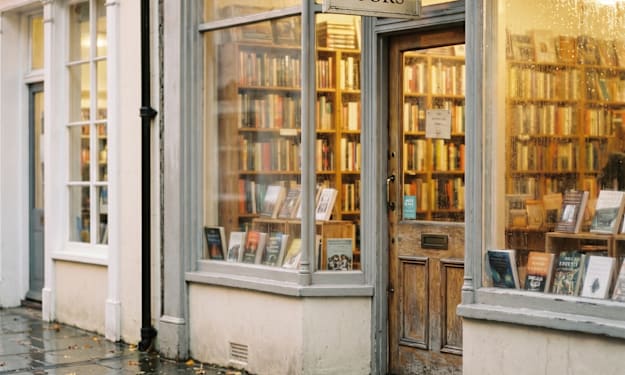
The Bookshop on Maple Street. Content Warning. AI-Generated.
It was a slow afternoon when Daniel first walked into the bookshop on Maple Street. He hadn’t planned to enter. In fact, he had walked past it twice already, pretending he didn’t notice the small wooden sign hanging slightly tilted above the door. But something about it pulled him back. Maybe it was the rain. Or maybe it was the silence he had been carrying all day. Inside, the shop smelled of old pages and warm wood. A small bell rang as he entered. Behind the counter stood an old man arranging books with careful hands. He looked up and smiled. “First time here?” the man asked. Daniel hesitated. “Yes,” he said finally. The man nodded as if that answer explained everything. “You look like someone who’s been thinking too much,” he said gently. Daniel didn’t respond. Because it was true. --- Chapter One: The Shelf of Forgotten Things The shop was smaller than it looked from outside. Every corner was filled with books stacked in uneven towers. Some were new. Some looked like they had survived decades. Daniel wandered slowly. His fingers brushed against spines he didn’t recognize. Names he had never heard. Stories he had never lived. Then he saw it. A small section labeled: “Books That Find You.” He frowned slightly. “That doesn’t make sense,” he muttered. The old man behind the counter chuckled. “It doesn’t need to.” Daniel pulled out a book at random. It had no title. Just a blank cover. He opened it. Empty pages. “All of them like this?” Daniel asked. The man shook his head. “No. Only the ones waiting for the right person.” Daniel almost smiled. Almost. --- Chapter Two: Conversations Between Pages Over the next few days, Daniel kept returning. He didn’t know why. He just did. Sometimes he read. Sometimes he just sat in silence. The old man never pushed him to talk. Only once in a while, he would say things like: “Some books take time to speak.” Or: “You don’t have to rush understanding.” Daniel began to notice something strange. Whenever he felt confused or overwhelmed, a book would somehow appear on the table beside him. Always the right one. Never explained. Never forced. Just… there. One afternoon, he asked: “How do you know which book I need?” The old man smiled faintly. “I don’t,” he said. “You do.” --- Chapter Three: The Book That Wasn’t There One rainy evening, Daniel arrived earlier than usual. The shop was almost empty. He walked straight to the back shelf. Something felt different. One book stood slightly forward, as if waiting. He picked it up. This one had a title. “Letting Go Without Losing Yourself.” He froze. The pages weren’t empty this time. They were filled. But the words weren’t stories. They were thoughts. Reflections. Questions. “What are you holding onto that no longer belongs to you?” Daniel sat down. He didn’t notice how long he stayed there. Only that the rain outside had stopped when he finally closed the book. --- Chapter Four: A Quiet Understanding Days turned into weeks. Daniel changed, slowly. Not dramatically. Not in a way anyone would immediately notice. But something inside him softened. He spoke less in frustration. Listened more. Stopped carrying conversations that didn’t belong to him. One afternoon, he asked the old man: “Why is this shop here?” The man looked around the room as if seeing it for the first time. “For people who forget how to pause,” he said. Daniel nodded slowly. For the first time, he understood. The shop wasn’t about books. It was about moments. --- Ending Months later, Daniel stood outside the shop one last time. The bell above the door moved gently in the wind. He didn’t go in. He didn’t need to anymore. He turned away and walked down Maple Street. The world felt the same. But he didn’t. And somewhere behind him, the bookshop remained quiet— waiting for the next person who would forget how to pause.
By Ahmad Khan4 months ago in Fiction
The Last Letter She Never Sent. Content Warning.
It was a quiet evening when Ayesha found the old box. She didn’t mean to look for it. She was simply cleaning the top shelf of her wardrobe when her hand touched something hidden behind folded clothes. A cardboard box, slightly dusty, tied with a faded blue ribbon. For a moment, she just stared at it. Then slowly, she pulled it down. She already knew what it was before opening it. Still, her hands trembled as she untied the ribbon. Inside were letters. Dozens of them. Unsent. Unread. All addressed to one person. Rayan. Her breath paused at the name. A name she had not spoken out loud in years. A name that still lived somewhere deep inside her silence. She sat on the edge of the bed and picked up the first letter. The handwriting was hers—but younger. Softer. More hopeful. She didn’t open it immediately. Instead, she closed her eyes. And remembered. Chapter One: The Beginning of Almost Rayan and Ayesha had met in university. Not in a dramatic way. Not like stories in books. It was simpler than that. He had asked for a pen during an exam. She had given it without looking at him. He had returned it after the paper ended. “Thank you,” he had said. “You’re welcome,” she had replied. That was it. At least at first. But small things grew. Shared walks across campus. Coffee after lectures. Arguments about nothing important. And laughter that lasted too long. Rayan was not perfect. Neither was she. But together, they felt easy. Like breathing. Like something that didn’t require explanation. Still, life has a strange habit of interrupting things that feel too right. Families intervened. Expectations grew. Plans changed. And slowly, without any single breaking moment, distance entered between them. Not loud. Not dramatic. Just quiet. Like a door slowly closing without anyone noticing the sound. Chapter Two: The Silence That Stayed The last conversation they had was ordinary. That was the strange part. Nothing about it felt final at the time. Just tired. Just delayed replies. Just unfinished thoughts. “I’ll call you later,” Rayan had said. “Okay,” she had replied. But later never came. Days passed. Then weeks. Then months. At first, she waited. Then she convinced herself to stop waiting. That was how silence became permanent. Not through hatred. But through hesitation. And pride. And fear of saying the wrong thing first. Ayesha never knew what stopped him. And she never asked. Because asking meant hoping. And hoping hurt more than silence. Chapter Three: The Letters She opened the first letter. It was dated three weeks after their last conversation. “I don’t know if you’ll ever read this. But I couldn’t say it out loud. I kept thinking I had more time. I didn’t.” Ayesha blinked slowly. Then another letter. And another. Each one softer than the last. Each one filled with things never said. Apologies that arrived too late. Feelings that had nowhere to go. Moments remembered differently by both hearts. She realized something strange as she read. These letters were not written to change the past. They were written because he couldn’t carry it alone. And neither could she. Chapter Four: What Was Never Lost Outside, evening turned into night. The room stayed quiet. But inside her, something shifted. Not pain. Not regret alone. Something gentler. Understanding. She realized love doesn’t always end. Sometimes it just changes shape. Sometimes it becomes memory. Sometimes it becomes silence. And sometimes it becomes a box of letters no one was supposed to read. Ayesha reached the last page. It was different. Shorter. Worn. As if read many times before being placed away. “If you ever find these, I hope you’re okay. I hope you forgave me. I did not know how to stay, but I never stopped caring.” Her eyes stayed on the words for a long time. Not crying loudly. Just quietly. Like something inside her had finally softened. Ending She tied the ribbon again. But this time, not tightly. Just enough to hold the past in place. Not to lock it away. She placed the box back on the shelf. Not where it had been hidden. But where it could be seen. And for the first time in years, she didn’t feel like something was missing. Outside, the wind moved gently through the window. And somewhere between memory and acceptance— she let go. Not of him. But of the silence.
By Ahmad Khan4 months ago in Fiction
The Proper Perspective. Content Warning. AI-Generated.
It was a Monday morning, and sunlight poured through the kitchen window as Elena Greenwood prepared breakfast. For the first time in weeks, there was a smile on her face. Her husband, Brennan, noticed it immediately. "Good morning, dear!" Elena greeted warmly. "Elena, you're beaming!" Brennan said. "It's been a while since I've seen this side of you." She nodded slowly. "Well, Brennan, I took some time to think about things. And, well, you were right. All I needed to do was put things in the proper perspective. I just needed to focus." Relief crossed Brennan's face. The last month had been unbearable for both of them. He kissed her cheek and sat at the kitchen table. "I know it wasn't easy. It's been hard on all of us," he said. Then he paused. A long pause. "After all, he was my son, too." The words hit Elena like a blade. Evan. Their son. Their miracle child. After four years of trying, hoping, praying, and countless disappointments, Evan had finally arrived. He brought laughter into every room he entered. He made ordinary days feel special. But four years later, he was gone. Even now, Elena could still remember holding him in her arms as he struggled to breathe. She could still hear the panic, the screams, and the desperate prayers that went unanswered. The memory never left her. She placed a plate of eggs and toast in front of Brennan and sat beside him. "I know," she said quietly. "And you're right. Evan was our boy. Our sweet, beautiful boy." Brennan nodded and began eating. Then Elena added something else. "Yet I was the one who protected him." The statement hung in the air. Before Brennan could respond, his expression changed. His breathing became uneven. His throat tightened. He looked down at the food. "Something wrong, hon?" Elena asked. "Is there fish in this?" Brennan asked. "Just a tad of fish oil, dear," Elena replied. "That's not a problem for you, is it?" His eyes widened. "Come on, Elena! You know I'm allergic to fish!" He stood abruptly. Panic flashed across his face. "Oh, come on, Brennan," Elena replied. "You're not doing this again, are you? You're supposed to be a real man. Be strong." The color drained from his face. Those words sounded familiar. Because they were. Years earlier, Brennan's mother, Pamela Greenwood, had said nearly the same thing to Evan. Pamela had never liked Elena. From the moment they met, Pamela compared Elena to Brennan's former girlfriend. She criticized her appearance, her personality, and eventually her inability to conceive. For years, Elena endured cruel comments and humiliating remarks. Every time she sought support from Brennan, he offered the same excuses. "That's just Mom being Mom." "She doesn't mean it." "You're being too sensitive." Then Evan was born. Elena hoped things would change. Instead, they became worse. When doctors discovered Evan had a severe peanut allergy, Elena became extremely careful. She checked labels, avoided certain foods, and carried emergency medication everywhere. Pamela mocked her relentlessly. She called Evan soft. She called Elena paranoid. She insisted the allergy couldn't be that serious. Brennan always defended his mother. Always. Even when Pamela suggested exposing Evan to peanuts to prove the allergy wasn't real. Elena warned everyone that Pamela was dangerous. Nobody listened. Then came the family gathering. The day everything changed. There had been food, laughter, and relatives filling the house. Then suddenly there was panic. Evan collapsed. His throat began closing. Someone screamed. Someone called emergency services. Elena searched desperately for his EpiPen. It wasn't there. Later, Pamela admitted what she had done. She had baked special cookies for Evan. Cookies containing peanut butter. She wanted proof that the allergy was fake. Instead, she got proof that it was real. By the time help arrived, it was too late. Elena expected Brennan to finally stand beside her. Instead, he stood beside his mother. "You're going to punish my mom over a mistake?" he shouted. "If you report her, I'll leave you! Ruining my mom's life isn't going to bring Evan back! You need to put things in the proper perspective." Perspective. The word echoed inside Elena's mind for weeks. Every sleepless night. Every tear. Every memory. Until eventually she found her own perspective. Back in the kitchen, Brennan was struggling to breathe. He reached toward his phone. Elena watched calmly. "If you're trying to call your precious mommy," she said, "don't bother. I put a knife into that old bat yesterday." Shock replaced panic in Brennan's eyes. For a moment he seemed unable to comprehend what he had heard. "Elena..." he whispered. "I'm... sorry..." Tears filled his eyes. Maybe he finally understood. Maybe he finally saw the damage his silence had caused. But understanding had arrived too late. "You certainly are," Elena replied. Every insult. Every excuse. Every moment he defended his mother. Every moment he ignored Evan. Every moment he ignored her. They all stood between them now. "You really are sorry," Elena continued. "But apologies won't bring Evan back." She knelt beside him. "I already put things in the proper perspective." Moments later, Brennan took his final breath. A knock sounded at the front door. The police had arrived. Pamela's body had been discovered. Elena didn't resist. She didn't lie. She didn't run. She confessed immediately. Everything. The abuse. The years of excuses. The allergy. The cookies. The death of her son. The trial drew attention from across the country. Some people saw her as a monster. Others saw her as a grieving mother pushed beyond her limits. Elena accepted neither label. She pleaded guilty. She expected life in prison. Instead, she received twenty-five years to life, with the possibility of parole. As the judge delivered the sentence, Elena thought about only one thing. Not Brennan. Not Pamela. Not prison. She remembered a sunny afternoon years earlier. A small boy laughing in a backyard. Tiny feet running through green grass. Tiny hands reaching for bubbles floating toward the sky. And in that memory, Evan was smiling. For the first time in a long time, so was she.
By Ahmad Khan4 months ago in Fiction
The Last Letter
The letter arrived on a Tuesday, which was strange, because Marcus had been dead for three years. Lena stood at the door of her apartment, the envelope trembling between her fingers. Her name was written in his handwriting — that unmistakable slant, the way he always looped the L like a small wave. She had spent years trying to forget that handwriting. She had burned his notes, deleted his messages, given away the books he had annotated in the margins just to stop herself from reading his thoughts.
By Elarix Dreson4 months ago in Fiction
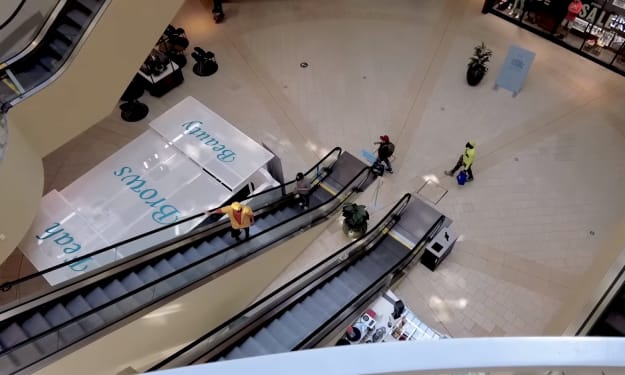
Shops, Shops, Shops, Shops, Shops, Shops, Shops
Introduction. The title of this was influenced by the name of the band "Pigs, Pigs, Pigs, Pigs, Pigs, Pigs, Pigs" and the Buchanan Shopping Mall in Glasgow, though virtually any Shopping Mall makes me feel like this.
By Mike Singleton 💜 Mikeydred 4 months ago in Fiction
Always limped behind
Well, I slipped into it again, as I have so many times before. It was a good friend's 30th birthday, and I just didn’t want to be rude. Or at least, that’s the lie I’ll use this time to make it digestible — for me and for everyone else, should they point fingers at it. At the fact that I told them, wrote about it, proclaimed it, preached it like gospel: “I will never do it again! ” I lied. I pretended. And here I am at step one again. Ground zero. The bottom. Not rock bottom yet, but fairly close.
By George Roast4 months ago in Fiction