Short Story
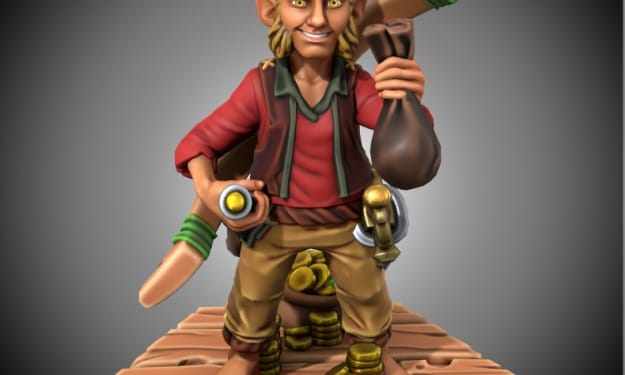
Dodge Tanner’s Highly Unrecommended Travelogue - #61 Air Boars and Thorny Regrets
Dodge was having a good day. Which meant something terrible was surely about to happen. The clearing was quiet, the breeze gentle, and he had just spotted the perfect specimen of Silverthorn—lush, sprawling vines wrapped around the edges of the glade like nature’s barbed wire. He pulled out his enchanted harvesting blade, whispered the obligatory 'please' (Flora swore it helped, and Dodge wasn't about to argue with thorn-related superstitions), and prepared to make his first cut.
By Canyon Cappola (TheNomad)about a year ago in Fiction
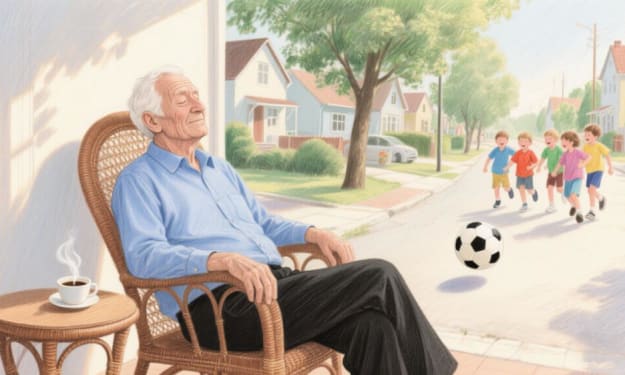
I visited my favorite restaurant, and guess what??? It improved my mental health
This is what she said to me, I visited my favorite restaurant and guess what??? It improved my mental health’ I believe her too, these are my reasons: Taking care of our mental health is very important. And visiting a restaurant and doing things we enjoy can improve our mental health. Let's look at how this works.
By Susan Nnebeabout a year ago in Fiction
Love in Aisle Nine, Forever in the Parking Lot
It started with a flat tire and a cart full of groceries. I had just finished shopping at Walmart, running on little sleep and a lot of anxiety. Life wasn’t exactly kind that week—my car payment was overdue, my boss had cut my hours, and I was trying to figure out how to stretch $37 into a week’s worth of meals. As I walked into the parking lot, I saw it: the front left tire, completely deflated. I stared at it, then at the sky, as if the universe might offer me an apology. It didn’t. Just more clouds. I dropped my bags in the trunk and sat on the curb beside the car, trying not to cry in public. That’s when I heard a voice. “You need help?” I looked up and saw him—ball cap, gray hoodie, a cart with two bags of cat food and a bouquet of discounted roses. He looked kind, the kind of kind that comes without pressure. “I don’t have a spare,” I admitted. “And I can’t afford a tow right now.” He crouched beside the tire. “I’ve got tools in my truck. And I’m not doing anything important. Let me see what I can do.” I didn’t know his name, but I let him help. Maybe because I was exhausted. Maybe because his voice didn’t sound like a threat. He worked quietly, asking only once if I had someone I could call. I shook my head. “It’s just me.” He nodded like he understood that kind of alone. While he patched the tire, we talked—just little things. He told me his name was Caleb, that he worked nights at a warehouse, and that he always bought his mom flowers on Sundays, even if they were from Walmart’s clearance bin. When he finished, I offered him the only thing I had—an awkward, grateful smile and a bottle of warm water from my backseat. He grinned. “You know… you’ve got this wild ‘everything’s-on-fire-but-I’m-still-standing’ look about you. It’s brave.” I laughed, the first real one in days. “Thanks. It’s my specialty.” We ended up talking for over an hour. He leaned against the hood of my car. I sat cross-legged on the pavement. A couple of strangers in a sea of shopping carts and tail lights. I found out he played guitar, used to dream of being in a band. I told him I used to write poetry but hadn’t touched a notebook in months. “You should,” he said. “Write again. I’d read your words.” Before we said goodbye, he reached into his cart and pulled out the roses. “Here,” he said, suddenly shy. “They were for my mom. But she’d probably prefer I gave them to someone who actually needed them today.” I tried to decline, but he insisted. So I took them—and wrote about them that night. And then the next night. And then a week later, after we’d met for coffee, and I realized I was smiling more than I had in months. Walmart’s parking lot became our place. Late-night meetups, talks about everything and nothing, sharing fries in the front seat. No pressure. Just something that felt like oxygen. Three months later, he kissed me in that same parking lot. Said he’d never believed in timing before, but now he did. That cracked pavement, littered with receipts and shopping carts, was where I started to breathe again. Where someone saw me—not as a problem to fix, but as a person worth knowing. It wasn’t some grand, sweeping romance. No candlelit dinners. No beach proposals. Just two people finding each other in a place no one looks for love—and that made it real. So Love doesn’t always arrive with grand gestures or perfect timing. Sometimes, it shows up beside a flat tire, under a fading sky, in a place as ordinary as a Walmart parking lot. And when it does, it reminds us that the most beautiful beginnings can come from the most unexpected places. #LoveInUnexpectedPlaces #WalmartLoveStory #AmericanRomance #RealLifeLove . #EverydayMoments . #LoveInTheUSA #ModernLoveStory
By Dr Gabriel about a year ago in Fiction
The Social Media Illusion". AI-Generated.
Maya stared at her phone, thumb scrolling through perfectly curated photos, clever captions, and smiling faces. Her own post—a filtered selfie from last weekend’s party—had just passed 500 likes. On the surface, everything was perfect. Her followers loved her, her feed was vibrant, and her life seemed like a dream. But in the quiet of her bedroom, away from the digital applause, she felt hollow. It hadn’t always been this way. Just two years ago, Maya was a quiet high school student, passionate about photography and journaling. She started her Instagram account as a hobby, a place to share sunsets and sketches. Slowly, her followers grew. At first, it was exciting. Strangers complimented her creativity. Brands started reaching out. She felt noticed, important. But with each follower came a new kind of pressure. Her feed changed. Gone were the unedited photos and doodles. They were replaced by selfies in trendy outfits, carefully staged breakfast bowls, and staged candid shots. Her life became a performance. Every day was an opportunity—or an obligation—to post something new, to remain relevant. If a post didn’t perform well, she’d delete it. If someone unfollowed, she’d spend hours trying to figure out why. Maya’s real world slowly shrank. She stopped hanging out with friends who didn’t “get it,” who didn’t understand why lighting mattered or why she had to take twenty photos before choosing one. Her parents grew concerned. She was always on her phone, even at dinner. She barely made eye contact anymore. One evening, Maya’s younger brother, Arjun, asked her a simple question: “Do you even like taking pictures anymore?” She didn’t answer him. But the question lingered. Later that week, Maya was invited to a weekend influencer retreat at a luxury resort. It was the kind of event she used to dream about—brand sponsorships, free gifts, glamorous photoshoots. But once there, the illusion began to crack. The other influencers were friendly, but everything felt… scripted. Everyone was constantly on their phones, editing, posting, posing. No one really talked. Conversations were interrupted by the need to get the perfect shot or check engagement stats. Meals were eaten cold because photos came first. During a photoshoot by the pool, Maya caught a glimpse of herself in the mirror. Not the Instagram version, but the real her—tired, anxious, and lost. That night, she lay awake in her hotel room, scrolling through her feed. Each photo felt fake. Each caption sounded hollow. She realized she didn’t know who she was anymore outside of the screen. Back home, Maya took a bold step. She posted a single photo: a messy, unfiltered selfie, her face bare and serious. The caption was raw: “I’ve spent so long trying to be someone I’m not. Behind every smile, I’ve felt pressure. Behind every perfect photo, there’s a tired girl wondering if she’s enough. Maybe it’s time I figure out who I really am—without the likes.” The response was overwhelming. Hundreds of comments poured in—people thanking her for her honesty, sharing their own struggles with social media, admitting they felt the same way. Maya felt something she hadn’t in a long time: connection. Over the following weeks, Maya made changes. She took breaks from her phone. She reconnected with old friends. She started going on walks without documenting them. Her photos became real again—unfiltered, imperfect, alive. She began journaling once more, this time for herself, not for an audience. One day, she ran into an old friend, Lila, at a café. They hadn’t spoken in months. Lila smiled warmly and said, “I read your post. It made me cry. I’m really proud of you.” Maya smiled, a real one this time. “Thanks. I think I’m finally proud of me too.” Social media hadn’t disappeared from her life, but her relationship with it had changed. She no longer chased approval. She no longer let an algorithm define her worth. She had found her voice—not the filtered one her followers knew, but the quiet, genuine voice within. Behind the screen, she had rediscovered something powerful: herself.
By "TaleAlchemy"about a year ago in Fiction
The Scribe of the Last Days
The world was in decline. A strange, heavy stillness hung in the air. The city's marketplaces, once vibrant with chatter, were now steeped in an eerie silence. Faces, once expressive, now mirrored only despair and exhaustion. The dazzling glow of technology had pushed humans apart, each lost in their own digital world, hidden behind a screen. It felt as if something monumental was about to end, but no one knew what, or when.
By Mian Nazir Shahabout a year ago in Fiction
Hair Today, Gone Tomorrow
The absolute state of him, though! Those shoulders. His skin glistened. Gleaming black curls cascaded down his back. On another man, this style might have looked effeminate, or out-dated, but on him it worked. Somehow, he made it look manly. He could have pirouetted in a tutu and belted out The Weather Girls, and it would still be the most macho thing I'd seen all day.
By L.C. Schäferabout a year ago in Fiction
Her Shoes Were Still at the Door After She Was Gone
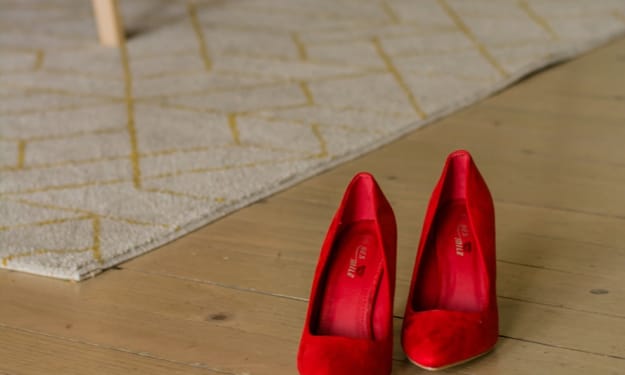
The day she left, I didn’t realize it was goodbye. We had argued over something small—something about laundry, or maybe the thermostat—and she left in a flurry, grabbing her keys but forgetting her coat. I remember the sound of the door closing behind her. Not a slam. Just... final. I figured she’d go for a walk, cool off, maybe get coffee like she always did when she needed space. That’s what we always did. Fight, fume, forgive. But this time, she didn’t come back. At first, I thought maybe she was staying at her sister’s. Or that she’d driven to the lake to clear her head. But as the sun dipped behind the skyline and the house filled with silence, something heavier began to set in. I called. No answer. Texted. Left voicemails. Tried not to panic. Then her sister called me—she hadn’t seen her either. That night felt endless. Every creak of the floor, every car passing on the street outside made my heart race. I barely slept, hoping she'd walk in any minute. She didn’t. Days turned into weeks. Police reports. Searches. Pleas on social media. I handed out flyers with her picture and clung to hope like it was the last thread of sanity I had left. But through it all, one thing remained constant: Her shoes—those scuffed, maroon canvas ones she loved—sat at the door. They were the first thing she kicked off when she got home. She wore them to the market, on our lazy Sunday strolls, and even once to a wedding just to make a point. They were part of her, like the way she twirled her hair when she read or hummed Fleetwood Mac while cooking. I couldn’t move them. Friends came and went. They brought casseroles, awkward hugs, and well-meaning advice. “She wouldn’t want you to suffer like this.” “You need to accept it and move on.” “You should get rid of her things—it’ll help.” But I couldn’t touch those shoes. They stood like silent witnesses to a life interrupted. To mornings filled with shared laughter and nights tangled in whispered dreams. They reminded me of who she was—vibrant, stubborn, alive. Every morning, I’d sit on the couch, staring at them. Waiting. Hoping. Months passed. Seasons changed. I kept telling myself maybe she was just lost. Maybe she was figuring things out. Maybe she was trying to protect me from something. But deep down, I knew. One rainy afternoon, I came home to find a small package at the door. No return address. Just my name in her handwriting. Inside was a note. > “I’m sorry. I couldn’t carry it anymore. You gave me more love than I believed I deserved. Please remember me in the light. —Em.” I collapsed to the floor, holding that note like it was her. Grief isn't loud. It's quiet and cruel and settles into the corners of your life. Into the empty spaces beside you in bed. Into the half-full cup of coffee on the counter. Into the shoes still waiting by the door. I still haven’t moved them. I don’t know if I ever will. Some days, I talk to them—tell them how work was, or how our dog still scratches at the bathroom door expecting her voice. I water the plants she loved, replay her favorite records, and let her memory live in the spaces she left behind. Grief has no expiration date. It just... becomes part of you. And those shoes—those damn shoes—remind me that once, she was here. She was real. She was mine. And maybe, in some way, she still is. Sometimes, I imagine her walking through that door again—smiling, apologizing, slipping back into those shoes like nothing ever happened. It’s a fantasy I can’t let go of. And maybe I don’t have to. Because love like that doesn’t vanish. It lingers... in the silence, in the shadows, in the shoes. #EmotionalStory #LostLove #GriefAndLove #LoveAndLoss #VocalMedia #TrueFeelings #HeartbreakingMoments
By Dr Gabriel about a year ago in Fiction