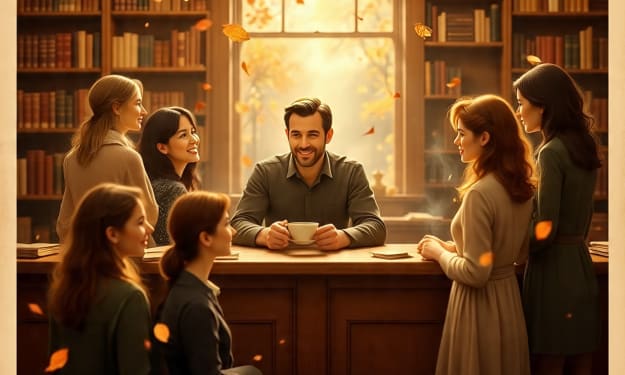
Short Story
The Girl Who Remembered Everything
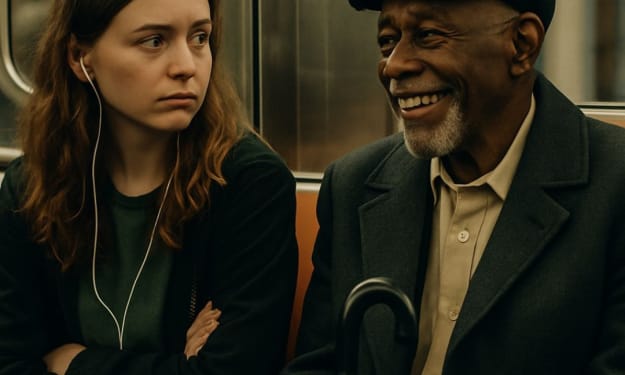
I met her when we were both nine. She sat alone under the jacaranda tree behind the school library, her fingers tracing invisible patterns in the dirt. Her name was Hana. She had hair like wet ink and eyes the color of dusk just before it surrendered to night. No one talked to her, and she didn’t seem to mind. I only approached her because I’d lost my lunch. Literally — it had vanished. My banana was gone, my sandwich was flattened under my math book, and my juice box had exploded. I was a mess of crumbs and juice stains, and she must have noticed, because without a word, she slid half her apple toward me. “You don’t talk much,” I said between bites. She blinked. “I remember too much.” It was a strange thing to say, but we were kids. Everything was strange. We became friends, the kind that don’t need explanations. I’d talk and she’d listen, eyes always watching, not with judgment but with quiet understanding. She never forgot anything. Not birthdays, not bad grades, not the way Mrs. Farris once called me "hopeless" in front of the class. Hana stored it all, like her mind was a glass jar collecting time itself. By high school, her memory was legend. People would test her. “What color was Principal Donahue’s tie on the last day of seventh grade?” “Paisley. Blue and gold.” “How many times has Benji thrown up in class?” “Three. Once after chicken nuggets, twice after gym.” She never smiled when she answered. It wasn’t a party trick to her. It was a weight. One day, I asked her what the worst thing was that she remembered. We were sitting on her porch. Summer was melting the edges of the sky, and cicadas screamed in the trees. She didn’t look at me when she spoke. “My dad’s hands.” I waited. Sometimes silence was her way of choosing words carefully. “I was six. He held my mom’s wrist too tight. Pulled her so hard she hit the counter and cracked a tooth. There was blood in the sink. He looked at me like I didn’t exist. But I remember it. Every detail. The smell of garlic from the dinner she’d cooked. The sound the plate made when it shattered. Her crying. I was too scared to move. I still hear it, sometimes.” I didn’t know what to say. I just held her hand, and she didn’t let go. In college, we drifted. Different cities. Different majors. I heard she took up neuroscience. I wondered if she was trying to fix the very thing that made her different. We reconnected at 27. She had started a blog, anonymously, sharing stories—others’ and her own—under the title The Memory Keeper. She never named names, never gave herself away, but I recognized her voice instantly. One post stopped me cold. It was about a boy who used to sit beside her under a jacaranda tree. “He was my only friend,” she wrote. “He made forgetting feel less necessary. But I never told him that. I was afraid I’d ruin it by remembering it too much.” I called her that night. “I read it,” I said. She didn’t ask which one. She knew. She laughed, soft and short. “I hoped you would.” And just like that, we became us again. But time, it turns out, doesn’t care about friendships or love stories or even memory. Time just moves. When Hana got sick, it was cruelly ironic. A rare neurological disorder. One that didn’t just threaten her body — it came for her mind. Piece by piece, her memories were slipping away. “It’s funny,” she whispered once, when I visited her in the hospice. “Most people want to remember more. I wanted to remember less. Now I’m afraid I won’t remember you.” She was fading, but her eyes were still the color of dusk. “You don’t have to remember me,” I said. “I’ll remember you.” I do. Every day. I remember her handwriting — small and slanted. The way she twirled pens in her fingers. How she knew facts she wished she could forget, and how she carried them like invisible bruises. I remember that she once told me: “Some memories are blessings. Others are burdens dressed in silence.” Hana remembered everything, until she couldn’t. So now, I remember for her.Start writing...
By Muhammad Siyab about a year ago in Fiction
The Boy Who Spoke to Wolves
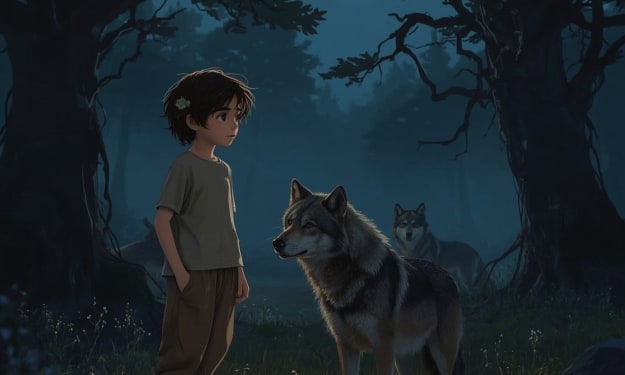
The villagers said Elias was strange. He never cried when he scraped his knees or fell from trees. He didn’t speak until he was five, and even then, only in murmurs that drifted more like growls than words. His mother, a quiet woman who stitched dreams into fabric, said he was born on a winter’s full moon with eyes the color of ash and stormclouds. They lived on the edge of the forest—the one people feared, with trees older than time and whispers that danced between the leaves. At night, the howls would begin. Some were sharp and lonely, others low and threatening. But Elias didn’t hide beneath his blanket like the other children. He listened. And one night, he answered. He was ten the first time it happened. The village dogs had barked frantically at the tree line, their noses twitching, their tails stiff with warning. Elias walked calmly past them, barefoot in the snow, toward the forest. “Elias!” his mother had shouted. “Where are you going?” He didn’t reply. He only looked back once, his pale face glowing in the moonlight. Then he disappeared into the woods. They found him the next morning asleep between two giant wolves—one black as midnight, the other silver as starlight. His body was warm, untouched by the cold. His mother wept with relief, but the villagers whispered of curses and beasts. From that day on, the forest called him often. He would vanish for hours, sometimes days, always returning with wildflowers in his hair or a smear of berries on his cheek. The wolves never harmed him. In fact, they guarded him. And slowly, Elias began to change. He walked with quiet grace, barely disturbing the earth. He no longer flinched at thunder or the sharpness of people’s tongues. When angry men shouted at him to stay away, he only blinked, his expression unreadable, as if he was listening to something they could not hear. Because he was. Elias could understand the wolves. He heard them not in words, but in feelings, rhythms, and symbols only his heart could translate. They told him stories—of the old forest, of ancient battles, of hunger and harmony. They spoke of balance, of life before fences and fear. And in return, Elias spoke back—not with his voice, but through presence, stillness, and instinct. One day, when Elias was twelve, a drought came. The crops withered, and animals began to wander dangerously close to the village. One of the farmers found a half-eaten goat and swore it was wolves. Fear spread like fire. The villagers gathered with torches and iron traps, marching toward the forest. Elias stood in their path. “Move, boy,” barked the butcher. “They didn’t take your goat,” Elias said calmly. “How would you know?” another man sneered. “Because I asked them.” A heavy silence followed. “You’re mad,” spat someone. But Elias didn’t move. Instead, a single howl pierced the sky, followed by another. Then, from the forest shadows, a dozen wolves emerged. They did not snarl. They did not attack. They stood silently beside Elias, eyes glowing like moons. “They are not the monsters,” Elias whispered. “We are, when we forget how to listen.” That night, the villagers laid down their weapons. The forest remained untouched. And though they still didn’t understand Elias, they began to respect him. Years passed. Elias grew taller, stronger, his hair wild like the wind, his eyes soft with secrets. He became a protector—of forest and field, of the quiet magic between worlds. Children brought him questions; the sick brought him hope. They called him “The Wolf Whisperer,” though he never claimed the name. He simply smiled and vanished again into the trees, his figure melting into the dusk beside silver fur and steady pawprints. And if you ever wander too far into the woods and the night feels like it’s holding its breath, don’t be afraid. Just listen. You might hear a boy’s voice—low and kind—carrying through the trees. Speaking not to tame the wild, But to remind it it’s never alone.
By Muhammad Siyab about a year ago in Fiction
That Summer, We Almost Lost Each Other
The summer before college felt like it would last forever. Endless days by the lake, sleepy towns that never changed, and the kind of laughter that echoed long after dark. My best friend Emma and I had always been two halves of one story, but that summer, everything shifted. We’d grown up next door to each other, spending most of our childhood tangled up in scraped knees, whispered secrets, and impromptu dance parties to whatever song was playing. Even when high school got messy — the kind of messy that splits you into cliques and changes the way you look at yourself — Emma and I held on to what we had.But that summer, something felt different.It started when a group of travelers parked their rusty campervan near the lake. They were older, with sun-bleached hair and stories about places we’d only seen in movies. They invited us to sit around their fire one night, passing around roasted marshmallows and playing old indie tunes that made the dark feel softer. Emma was enchanted — especially by one guy named Leo, who smiled like someone who hadn’t thought about tomorrow in years.
By Gift Wesley Sageabout a year ago in Fiction
The Lion and the Wol
Deep within the heart of an ancient forest, there lived a mighty lion named Leo the Bold. He was feared and respected by all creatures, not only for his incredible strength but also for his roaring ego. Leo had ruled the forest for years, and no one dared challenge his authority. Every day, he would prowl the jungle, his golden mane glistening under the sun, reminding every animal of who the true king was. Any creature that crossed his path had to bow or face his wrath. But over time, Leo’s pride grew stronger than his sense of justice. He began to punish animals even for minor mistakes, and the peace of the forest began to fade. One misty morning, a stranger entered the jungle — a gray-furred, sharp-eyed wolf named Varg. He was lean, quick, and known far beyond the mountains for his intelligence and cunning. Varg had heard stories of Leo’s arrogance and decided to see for himself if the lion truly deserved the crown he wore so proudly. On his second day in the forest, Varg saved a deer from being trapped in a hunter’s snare. The animals were grateful and began whispering tales of the wolf’s bravery and cleverness. Soon, word reached Leo. "Who is this Varg?" roared Leo, his pride wounded. "Only I protect this forest!" "He's just a newcomer, Your Majesty," said a timid fox. "But... the animals are quite impressed by him." "Impressed?" Leo growled. "Let’s see if they’re still impressed when he faces me." Leo summoned Varg to his den atop the hill. When Varg arrived, he bowed politely but without fear. "So you’re the wolf who thinks he’s a hero," Leo sneered. "I don't think I’m a hero," said Varg calmly. "I simply help where I can. I believe a true leader protects, not terrifies." The lion narrowed his eyes. "Are you calling me a tyrant?" "I'm saying the forest speaks, and I listen," Varg replied. "Maybe you should too." The animals gasped. No one had ever spoken to Leo this way before. Some feared for Varg’s life, but the lion, though angry, was intrigued. "You think you're better than me?" Leo said. "Stronger?" "No," Varg said. "Not stronger. But perhaps wiser." "Then let’s settle this!" Leo roared. "A challenge — three trials. Whoever wins two of them shall be crowned the true protector of the forest." Varg agreed. --- Trial One: The Test of Strength In the first trial, Leo and Varg were to move a massive boulder from one end of the forest to the other. Leo charged forward, muscles rippling. He pushed the rock with all his might and reached the finish line in just an hour. Varg, instead of pushing, disappeared into the woods. Everyone thought he had fled. But soon he returned — with ropes made of vines and four strong buffaloes. Using teamwork and wit, he dragged the boulder with far less effort. Time taken: 45 minutes. Winner: Varg. Leo was stunned, but the next trial was his strength: hunting. --- Trial Two: The Hunt They were each given one hour to catch a deer — no help, no tools. Leo, swift and silent, stalked his prey through the grass. With one powerful leap, he brought down a large deer. Varg, on the other hand, used a different method. He followed the deer’s trail to a watering hole and used leaves and branches to create a trap. But time was short, and the deer escaped. Winner: Leo. Now the score was even. --- Trial Three: The Challenge of the Mind For the final test, the oldest owl in the forest gave them a riddle: > "I speak without a mouth and hear without ears. I have no body, but I come alive with the wind. What am I?" Leo growled, frustrated. “A spirit? A shadow? A storm?” He couldn’t answer. Varg smiled. “An echo.” The owl nodded. "Correct." Winner: Varg. --- Aftermath: Silence fell over the forest. The mighty lion had been defeated — not by brute force, but by calm thinking and humility. Leo stood up, his pride shattered but his spirit awakened. "You have bested me fairly, wolf," he said. "You showed strength, wisdom, and heart. Qualities I have lost somewhere along the way." Varg stepped forward. "You are still powerful, Leo. And the forest still needs you. But perhaps, instead of ruling alone, we lead together." Leo looked around at the animals. For the first time, he truly saw them — not as subjects, but as lives worth protecting. From that day forward, the lion and the wolf ruled the forest together — one with strength, the other with wisdom — and peace returned to the land. --- Moral of the Story: > “Pride may win battles, but wisdom wins hearts.” True leadership isn't about power — it's about listening, learning, and lifting others.
By Junior Abdulabout a year ago in Fiction
The Night the Lights Went Out in Our Town
We never really spoke to each other—not beyond polite nods and the occasional “good morning.” Even though we lived on the same street, walked past the same coffee shop, and stood in the same checkout lines, we were strangers sharing a zip code. That all changed the night the lights went out.
By Professor khanabout a year ago in Fiction
Varrek Steelhammer - The Forge Lord
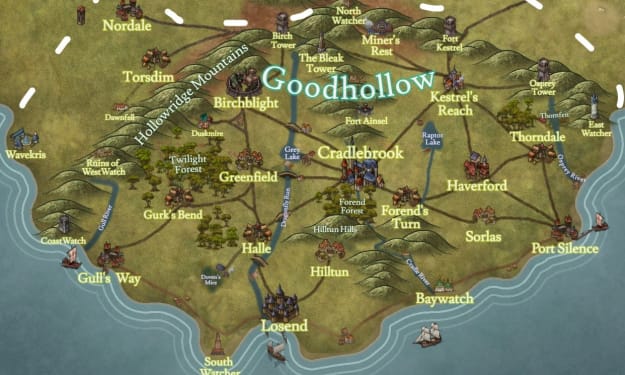
Varrek Steelhammer - The Forge Lord The anvil sang with every strike. Sparks danced like embers carried on the wind, illuminating the dark halls of Steel’s End, the beating heart of Kestrel’s Reach’s smithing quarter. Varrek Steelhammer, Durnoch’s chosen, worked without pause, sweat pooling at his brow as he shaped the steel that would shape the future.
By Canyon Cappola (TheNomad)about a year ago in Fiction
The Man with a Heart for Twenty
In a small, sun-bathed town nestled between two quiet rivers, there lived a man named Arman Qureshi. He was not a king, not a movie star, nor a billionaire. But what he had was rarer than gold: a heart so pure and words so kind that every soul who met him felt lighter. Arman ran a simple bookshop called Dil-o-Dastaan, where he sold old Urdu novels, English classics, poetry collections, and handmade journals. He greeted every customer with warmth, served free chai to students, and always had time to listen. But what made Arman truly unforgettable was the way he listened—not just with ears, but with eyes, silence, and presence. He could understand someone’s pain before they said a word. People often said, “Arman doesn’t just sell stories—he is one.” And so, it happened, without design or desire, that twenty women fell in love with him. --- The first was Amira, a single mother of two, who found peace in his bookstore while escaping her noisy world. He once kept her son’s drawing taped behind the counter for months. “It’s better than Picasso,” he said with a wink. She smiled for the first time in years. The second was Zoya, a bold journalist. She came to interview him but left speechless. His honesty disarmed her ambition, and his simplicity fascinated her more than the headlines she chased. Then came Nilofer, a retired school teacher, who lost her husband during the pandemic. Arman would read Faiz to her every Thursday. She called him "my son," but her heart whispered otherwise. Sana, a college girl with stage anxiety, found her voice in his open mic nights. The first time she performed, he clapped the loudest. “That poem could move mountains,” he told her. Her heart melted. Meher, an artist, painted his portrait after just one meeting. “Your eyes hold rain,” she said, “the kind that heals.” She gifted him the painting and cried when he hung it on the bookstore wall. And so it continued—twenty women, all from different walks of life: a nurse, a professor, a divorcee, a traveler, a florist, a widow, a YouTuber, a tailor, and even an 18-year-old aspiring writer. None of them were foolish. None were shallow. Their love was not about beauty or charm—it was about kindness. Each woman knew about the others. It wasn’t a secret. Some had seen each other in the bookstore. One time, four of them met accidentally at a poetry evening. Instead of jealousy, there was laughter. “You too?” one of them said. “Of course,” replied another, “how could anyone not?” They all understood one thing: Arman did not belong to any one of them—he belonged to everyone. --- One day, Arman fell seriously ill. The news spread like fire across town. The hospital waiting room was filled—not just by the twenty women, but by children he tutored, old men he helped cross the road, and even the local chaiwala. The doctor said he had a weak heart. “Maybe too many emotions in one lifetime,” he joked. Zoya, who had returned from abroad, stayed with him day and night. Meher brought him flowers every morning. Sana read poetry aloud. Amira made his favorite kheer. Nilofer held his hand during painful nights. He survived. Barely. But something had changed in him. --- Months later, the bookstore reopened. On the wall, a new frame appeared. Inside was a letter: > “To all twenty women— I never promised you love, yet you gave me the purest version of it. You loved me not to possess me, but to heal me. This bookstore is not mine anymore. It’s ours. Every story here belongs to those who love without conditions. You gave me twenty kinds of strength. And though I can never marry twenty women, I can carry your kindness forever. — Arman” --- Years passed. Arman never married. But the women—some moved on, some married others, some remained alone—never forgot him. Whenever someone asked, “Did you ever fall in love?” They would smile softly and say, “Yes. Once. With a man named Arman who loved the world so gently that twenty women loved him back… and never regretted it.” And in that little bookshop by the riverside, under the sign Dil-o-Dastaan, the story of Arman lived on—not just in books, but in hearts.
By Think & Learnabout a year ago in Fiction
The Clockmaker’s Secret
Prague, 1874 In the mist-soaked alleys of the Old Town, where gas lamps flickered like forgotten stars, there lived an old man known only as Master Horak—the finest clockmaker in all of Bohemia. His shop sat tucked between a crumbling bookbindery and a bakery that always smelled of burnt rye. People came from as far as Vienna and Budapest just to touch his timepieces—delicate contraptions of brass and mahogany, etched with strange runes that whispered secrets in the silence.
By Salman Ahmadabout a year ago in Fiction