Short Story
The Last Ride
It was the first snow of December when Claire rolled down the window of her blue Ford and asked, “Do you need a ride?” The man on the roadside nodded. He wore a heavy gray coat, boots worn thin, and his eyes — green, sharp, tired — seemed older than his youthful face. She unlocked the door, and he slid in with a muffled, “Thanks.” Claire was driving back from her mother’s cabin in the woods, a two-hour stretch with barely any signs of life once you left the town behind. The roads were narrow, snow-slick, and silent. “Name’s Claire,” she said. “Where you headed?” The man stared ahead, then said, “Anywhere warmer.” She chuckled. “Fair. This storm came out of nowhere.” The man didn’t smile. --- They drove for a while in silence, save for the windshield wipers swiping away the storm. “You from around here?” Claire asked. “Used to be,” he replied. “Family?” “None left.” Claire glanced at him. “Sorry to hear that.” “No need,” he said. “Some people are better gone.” The temperature in the car dropped—not because of the weather, but his tone. Cold. Final. Claire cleared her throat. “Well, I’ll drop you at the next town. Should be about twenty minutes.” The man looked at her. “That’s fine.” He reached into his coat slowly. Claire tensed—but he pulled out a crumpled photo. It was old, black-and-white, showing a family of four: father, mother, two kids. “My sister died near here,” he said quietly. Claire blinked. “I’m… sorry. Recently?” “No. Long ago. But the man who killed her? Still alive.” Claire’s throat tightened. She wasn’t sure what to say. “I tracked him,” the man continued, staring at the snow. “He got a new name, a new life. Thought he was safe.” A pause. “He lives somewhere out here now.” Claire’s heart began to pound. “What was her name?” she asked, trying to stay calm. “Rachel. She was ten. He buried her behind a school. Said it was an accident.” Claire tightened her grip on the wheel. The man turned to her. “You wouldn’t know anything about that, would you?” She frowned. “Of course not.” “You sure?” he said, voice even. “Because your car registration says you’re Claire Davis. And Claire Davis used to be Claire Morgan.” Claire froze. The road curved sharply. She took the turn too fast, tires skidding slightly. “How do you know my full name?” she asked. The man’s jaw clenched. “Because the man who killed my sister had a daughter. Claire Morgan.” Claire’s face went pale. “That was a long time ago,” she whispered. He didn’t speak. “My father—he was accused, but he was innocent,” she continued. “We changed our names after the trial because of people like you—people who wouldn't let it go.” “Your father was guilty.” “No,” she said firmly. “He wasn’t.” “My sister was buried in a garbage bag,” he snapped. “I saw her. I buried her myself when the police wouldn't.” Claire’s hands trembled on the wheel. “He didn’t kill her. You have the wrong man.” He leaned closer. “Do I?” She reached into the glove compartment quickly. The man flinched—but she only pulled out an old file. “You want to see the truth?” she said, shoving the folder toward him. Inside were court documents, photos, and a confession. Claire’s voice shook. “A janitor confessed in 2013. DNA matched. My father died in prison.” The man stared at the pages. For the first time, his face softened. “This… this was real?” Claire nodded. “I keep it with me because people always come looking. Always blaming.” The man sat back slowly. His expression now a mixture of grief and shame. “I didn’t know,” he whispered. Claire exhaled. “No one does. They remember the headlines, not the retractions.” The car fell into silence again. Heavy. Sad. After a few minutes, she asked gently, “Do you still want me to drop you at the next town?” The man shook his head. “No… I think I’ll get out here. I need time.” She slowed the car near a snowy shoulder. He opened the door and stepped out. Before shutting it, he turned and said, “I’m sorry.” Claire nodded, watching him disappear into the woods. --- ✦ Twist Ending: An hour later, Claire pulled into her garage, exhausted. She turned off the engine, rested her head against the steering wheel, and finally allowed herself to breathe. She reached into her coat pocket. The photo he showed her was still there. She pulled it out—same black-and-white family photo. But this time, she looked closer. In the corner, nearly faded, was a date. 1982. Claire narrowed her eyes. She was born in 1985. She flipped the photo over. Something was scribbled on the back in pencil. > “She doesn’t remember. She was just a child. But blood is blood. And sins must return home eventually.” Claire’s hands shook. Because under the seat, she now noticed something else: a small pocketknife. Not hers. Still wet from the snow. She stared out the window, back at the forest. The man wasn’t just grieving. He was hunting. And he was still out there.
By Muhammad Usamaabout a year ago in Fiction
The Long Road to Somewhere
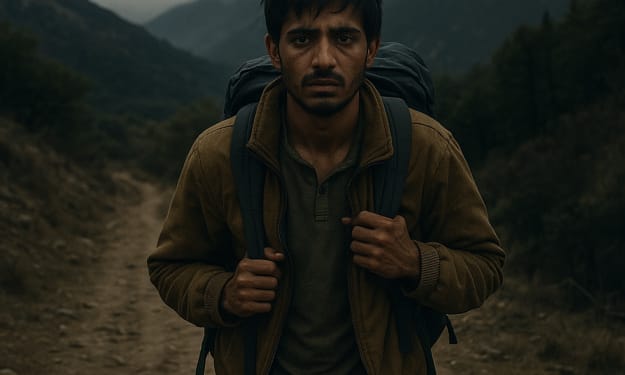
I. The Beginning of the Road The sun had barely risen when Adeel zipped up his old, frayed backpack for the last time. The streets of Lahore were still asleep, but his thoughts were not. He was leaving behind more than just dust and familiarity—he was abandoning his past, his people, and a country that had forgotten how to make space for his dreams. He wasn’t flying to his future. He was walking to it. No passport could carry the weight of his desperation. No visa could stamp out the ache in his chest. He wanted more—not just money or status, but dignity. In a world where value often came wrapped in designer brands and bank balances, Adeel wanted to stand shoulder to shoulder with those whose lives looked nothing like his own. At home, his family was quietly crumbling under the weight of poverty. His younger brother, Zain—only thirteen—had taken up shifts at a motorbike workshop, hands blackened with grease before he had even learned algebra. His mother, once a schoolteacher with eyes full of poetry, had stopped smiling long ago. Every time the electricity went out or the price of flour doubled, she seemed to shrink a little further into herself. She wrapped her prayers around Adeel like shawls, but she knew—faith alone would not feed them. And so, he began. II. The Heat of Iran, the Edge of Death in Turkey Iran came first—a land of cracked earth and eyes that watched every step. He moved through it in the backs of trucks, in suffocating silence, with strangers who carried stories they never told. Nights were cold and filled with whispers of betrayal. Mornings brought new guides, new dangers. Then came Turkey—the “death border,” they called it. He didn’t understand the name until he saw the first body—half-covered in snow, face eaten by time and cold. Still, Adeel walked. The terrain mocked his shoes. His lips split under a frozen wind. His stomach roared in protest. There were no paths, only guesses. At night, the mountains swallowed the sun. He huddled under trees that creaked with ancient voices. Wolves howled. Sometimes, he howled back—just to remind himself he was still human. III. Lost in Bulgaria He disappeared for seven days in the mountains of Bulgaria. No one knew where he was—not his family, not his smugglers, not even the stars. He wandered forests thick with silence. The trees didn’t care he was dying. His water ran out on the second day. On the third, he found a puddle so foul that even flies had given up on it. He drank anyway. He was no longer a man. He was a ghost drifting through woods too old to remember kindness. Back in Lahore, his mother didn’t sleep. Every night she lit a small oil lamp near the window and whispered prayers into the wind, hoping they would find him across continents. Her face grew pale with grief, her hands trembling even while preparing meals they could barely afford. Neighbors stopped asking about him. The silence grew like vines on the walls of their one-bedroom home. Zain, too young to understand death but old enough to fear it, would press his ear against the phone hoping for it to ring. Sometimes he cried into his pillow so their mother wouldn't hear. Other times, he sat with her in silence, holding her hand—both of them sinking slowly into dread. IV. The Winding Road: Utrish, Hungary, Serbia But Adeel didn’t die. Not then. He woke up in a small flat in Utrish, wrapped in scratchy blankets and surrounded by men who looked just as lost as he did. The kindness of strangers felt like a miracle. From there, he moved like a shadow—Hungary, Serbia—each country a blurry painting smeared with cold rain and aching feet. Sometimes he rode in trucks with boxes of illegal dreams. Sometimes he walked through wheat fields under a sky too vast to care. He slept in parking lots, under bridges, in the backrooms of cheap shops. Hunger became a companion, not an enemy. At one checkpoint, he was nearly arrested. The officer looked him over—too tired, too dirty, too broken. Then the man looked away. Adeel walked on. V. Arrival in Italy Italy wasn’t golden. It was grey. Rain fell the day he arrived—soft, relentless, as if the sky itself was washing him clean. Rome was big, loud, and cold to outsiders. He worked in kitchens that stank of burnt oil and unspoken insults. He slept on floors with men who no longer had names. Every euro he earned was folded and sent home, like paper birds carrying hope. The first time his mother’s phone buzzed with his message— “I am alive, Ammi.” She collapsed onto the floor, weeping. Zain helped her sit up. That night, they had tea with sugar—something they hadn’t done in months. Adeel missed home—but he couldn't return. He was still running. From poverty. From invisibility. From the smallness that had once chained his soul. But he was alive. He had made it. VI. The Boy Who Walked Through the World Now, Adeel stands at a train station in Milan, watching people rush by with phones in one hand and coffee in the other. No one knows what he has seen. No one knows that his feet have walked across nations, across nightmares, into a life built from blood and belief. He smiles. Not because everything is perfect. But because he made it. He walked where others fell. He drank from puddles no dog would touch. He screamed at the sky and was met with silence. But he kept walking. Not for riches. For worth. ✍️ Author’s Note: This story is dedicated to the thousands who take the journey not for luxury, but for survival. To those who cross invisible borders on foot, with nothing but will in their veins. May your stories never be forgotten.
By Khalid Khanabout a year ago in Fiction
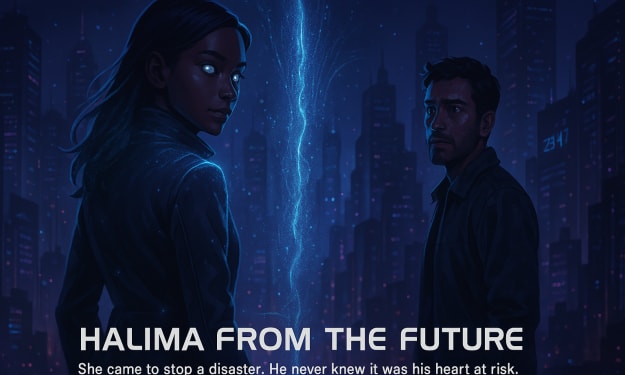
Halima from the Future
She came to stop a disaster. He never knew it was his heart at risk. Sarfaraz never expected the doorbell to ring at midnight. The city was silent except for the occasional hum of distant traffic and the steady tapping of rain against his window. He wasn’t expecting company, especially not at this hour.
By The voice of the heartabout a year ago in Fiction
🌧️ The Rain That Never Touched the Groun
By: Sarfaraz Chapter One: The First Freeze Rain fell in Sarfaraz’s city like it always did — soft, silent, silver. But on the morning of the 5th of March, it stopped falling. Not in the way most rain stops, not gradually, not gently.
By The voice of the heartabout a year ago in Fiction
The Clock That Forgot Time
Chapter One — The Minute That Doesn’t Belong It always happened at exactly 3:07 PM. Sarfaraz would be walking down the street or sitting in class or standing in the kitchen, and then—silence. Not the kind of silence where things grow quiet. This was total stillness. Cars froze mid-turn. Birds hung in the sky. Leaves stopped fluttering in the breeze. And people—every single person—paused mid-step, mid-sentence, mid-blink.
By The voice of the heartabout a year ago in Fiction
The Wire Spider
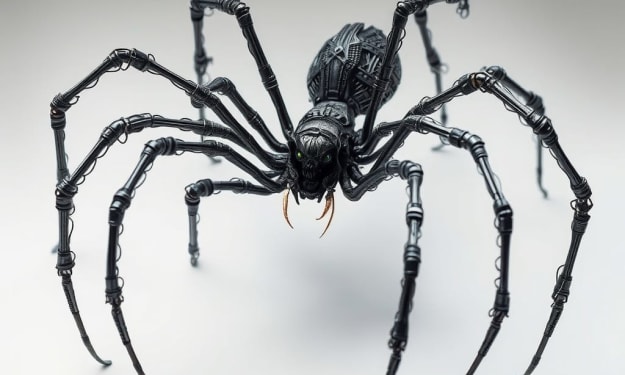
He was an arachnophobe and an artist, so the wire spider was a difficult commission to complete, but he did it, and now it dominated his studio. He tried not to look at it, but it was just a metal creation, but it was a spider. He started to feel it was watching him, waiting to bite him and pierce his skin with its metal leg spikes.
By Mike Singleton 💜 Mikeydred about a year ago in Fiction
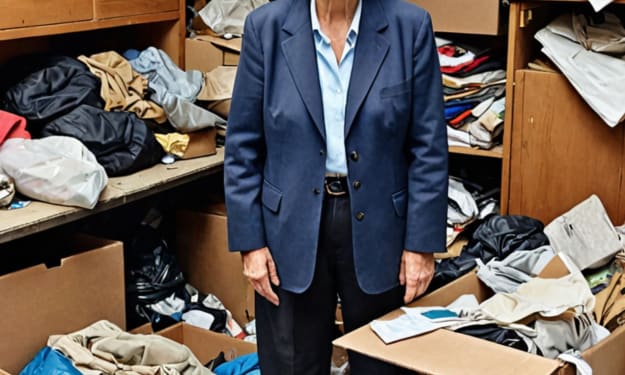
Confessions of a Hoarder.
Confessions of a Hoarder I didn’t plan to end up like this. It started with one box, then another. Things I couldn’t throw away because they meant something, or maybe they didn’t. I told myself I’d sort them out one day. One day turned into ten years.
By ♿ V+ Marie381Uk about a year ago in Fiction