Short Story
Iris
I saw them for the first time when I turned seven. It was strange. It didn’t scare me, necessarily. Not really. Not then. I saw them a lot more as I aged. It would just change, and I saw them. Then, not long after, it would change again, and they would disappear.
By Chandler Hammonabout a year ago in Fiction
Title: The Ashes We Loved
The city had been burning for days. Smoke curled into the blood-red sky, blotting out the sun and choking the air. Ash fell like snow, covering the ruins in a soft gray blanket. Buildings were crumbling, streets were split open, and the once vibrant hum of life had given way to silence, punctuated only by distant screams and the crackle of fire.
By abidnaseemabout a year ago in Fiction
The Second First Time
The Second First Time By Shehzad Ahmad The first time Maya left, she didn’t say goodbye. She was seventeen. Angry. The kind of angry that boils silently in the chest for years before erupting in a single suitcase. She walked out on a father who yelled too much, a mother who smiled too little, and a town that smelled like diesel, dampness, and someone else’s dreams. She promised herself she’d never come back. But seventeen is young. And youth makes dangerous promises. --- Fourteen years later, Maya stood at the edge of Willow Street, staring at the rusting gate of a house that still existed in her dreams—sometimes as a memory, sometimes as a warning. She hadn’t meant to return. It was only supposed to be a detour. A train delay. A coincidence. But grief doesn’t believe in coincidences. Her mother had passed away three days ago. Quietly, in her sleep. Alone. Maya found out through a neighbour who had tracked her down on Facebook with a simple message: “I thought you should know. She always said you'd come back.” And so here she was—back in the town she swore off like a bad habit. Back in the house that knew all her secrets. Back on the porch where her father once stood screaming as she disappeared down the road. --- The front door creaked open like it remembered her. The air smelled the same—lavender, old wood, and time. The walls hadn’t been repainted. Her mother’s porcelain cats still lined the mantelpiece. A faint ring remained on the coffee table where Maya once spilled grape soda and cried for hours after failing a math test. It felt like walking into a paused memory. She wandered the house slowly. Her fingers grazing wallpaper, chipped photo frames, the ghost of her younger self. The kitchen was exactly the same. The clock still frozen at 6:41—broken for over a decade. Maya had once joked it was symbolic, the house being stuck in time. Her mother hadn’t laughed. On the fridge was a faded photo—Maya at fourteen, arms crossed, hair wild, a defiant look in her eyes. Next to it, a sticky note in her mother’s handwriting: “I forgive you.” Maya sank into a chair. She hadn’t cried at the news. Not on the train. Not when collecting the keys from the solicitor. Not even when walking into the house. But now, in this kitchen filled with memory and dust, she sobbed. Because this was the first time she was seeing her mother clearly. And it felt like the second first time she was meeting her. --- The funeral was small. Maya didn’t know most of the faces—neighbors, church women, the florist who always gave her mother tulips on Thursdays. There was no grand eulogy. No speeches. Just quiet, gentle goodbyes. Afterward, she sat on the porch, the same step she used to sneak out from as a teenager. “Didn't think I’d see you again,” came a voice. She turned. He hadn’t changed much. Older, sure. His beard was thicker. His eyes a little softer. But it was still him. Aiden. They’d been everything once—first kisses, missed curfews, midnight bike rides. He was the only good thing about that summer before she left. And she’d left him behind too. “Hi,” she said. “You cut your hair.” “You still wear that ugly leather jacket.” He smiled, and just like that, time folded in on itself. --- They walked to the lake. The same lake where they’d once carved their initials into a tree, hidden beneath a thick canopy of willows. Maya found the tree again. The carving was still there—weathered but proud. “I came back a few years ago,” he said, skipping stones. “Couldn’t stand London anymore.” She nodded. “I get that.” He paused. “Why now?” Maya exhaled. “I didn’t come back to stay. Just for the funeral. But being here… it feels different now. Less like punishment. More like… a memory I haven’t finished reading.” Aiden looked at her. “Sometimes things need to break before we can see what they’re made of.” She smiled. “You always were too poetic.” “And you were always too stubborn.” Silence settled between them—not heavy, just familiar. --- That night, Maya stayed in her childhood room. It was smaller than she remembered. Or maybe she was just finally big enough to see it properly. She lay on the same creaky bed, stared at the same glow-in-the-dark stars on the ceiling, and wondered why she had stayed away so long. Not from the town. Not even from the memories. But from herself. Because maybe the real return wasn’t to a place. Maybe it was to a version of you that never got a proper goodbye. --- The next morning, Maya stood in the kitchen making coffee. She reached for the mug her mother always used—the one that said “Don’t Talk to Me Until This Is Empty.” It had a small chip on the rim. She remembered that chip. She remembered her mother complaining about it for weeks and never replacing it. She smiled. For the first time, it wasn’t painful. Later, Aiden picked her up, and they drove out to the old bridge. They walked slowly. He told her stories about what had changed—who got married, who left, who stayed. She listened. Really listened. At the edge of the bridge, they stopped. “This is where we first kissed,” Aiden said. “No,” Maya corrected. “It’s where I almost chickened out, and you leaned in first.” “And you said, ‘About time.’” They laughed. And then, without thinking, she kissed him. Not like the first time. Not desperate. Not clumsy. Not rushed. But with the depth of someone who had been lost, wandered far, and finally circled home. --- Maya stayed another week. She cleaned out the attic. Donated clothes. Read old letters. She even found a dusty, unopened envelope addressed to her in her mother’s handwriting. Inside was a birthday card—her 25th. With a note: > “I don’t know where you are. But I hope you’re safe. I hope you’re still dancing when no one’s watching. I hope you forgive me, the way I always forgave you. Come home when you’re ready. I’ll be here.” It broke her. And healed her at the same time. --- Before leaving, she visited the lake one last time. The tree. Their initials. Aiden met her there. He brought coffee and two muffins. She looked at him, truly looked. “I thought this place would always haunt me,” she said. “And now?” “It feels like the second first time I’ve lived.”
By Shehzad Ahmadabout a year ago in Fiction
The Summer That Wasn't
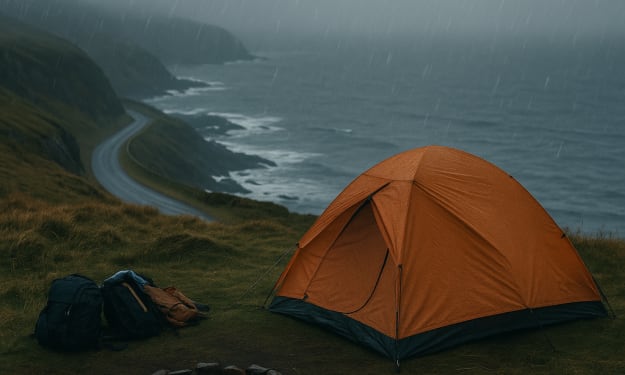
The Summer That Wasn’t By Shehzad Ahmad They say summers are for becoming. But that year, we were just trying to hold ourselves together. We had been planning it since February. A group chat called “Four Idiots, One Map” was created purely for this trip. Me, Nabeel, Sara, and Leah. Four university friends caught between final exams and adulthood, gasping for one last breath before real life swallowed us. It wasn’t extravagant. No flights. No Instagram aesthetics. Just a secondhand tent, Nabeel’s loyal but moody Honda Civic, and a route from Sheffield to the Cornish coast. The plan was to camp near the sea, toast marshmallows under the stars, and argue about 2000s music like our lives depended on it. We wanted the kind of summer we could write about someday. But the thing about “somedays” is, they rarely wait for you. May 22nd: The First Crack Nabeel messaged: “Guys, my dad’s had a stroke. It’s bad. I’ll keep you posted.” Just eight words, and suddenly, summer didn’t seem so close anymore. We waited, giving him space. Leah dropped by with food. Sara didn’t say much, but I could see it in her eyes—guilt, helplessness, maybe fear. We all felt it. By June, it was clear: Nabeel wasn’t going. “He needs full-time care now,” he texted. “Mum can’t handle it alone. Go without me. Please.” We didn’t want to. But we also didn’t want to let the whole thing fall apart. Then came blow number two. June 4th: The Paris Email Sara got the internship. That internship—the one she’d applied for on a dare, never expecting to hear back. A publishing house in Paris. Dreamy, glamorous, too good to turn down. “They want me to start mid-June,” she whispered, eyes darting between us. “You should go,” Leah said instantly. I nodded, even though my heart clenched. Nabeel, surprisingly, sent a voice note: “Don’t be stupid. You’re not missing Paris for three rain-soaked weirdos in a tent.” We laughed at that. But by then, there were only two weirdos left. June 18th: We Go Anyway Leah and I sat in the Civic, parked outside my flat. It was drizzling. Not heavy rain—just that annoying British kind that makes everything damp. “Should we even bother?” I asked. She shrugged. “Might as well be miserable by the sea.” So we drove. Past roundabouts and service stations, through silence and static-filled radio. There were no singalongs. No dumb games. Just two friends stubbornly chasing a version of summer that had already crumbled. By the time we reached the coast, the sun had dipped behind thick clouds. We pitched the tent on uneven grass and cooked half-burned noodles on a borrowed stove. The wind laughed at us. We didn’t laugh back. June 20th: The Wall of Postcards On our third morning, we stumbled upon a tiny café down a muddy road. No Wi-Fi, no music—just mismatched chairs, the smell of burnt toast, and a wall plastered with postcards from travelers. Some dated back to the '90s. Some were just names and locations. Others carried fragments of heartbreak, joy, hope. Leah stood there for a long time. Then she scribbled one of her own and tucked it quietly behind a postcard from Finland. I only read it after she stepped outside for air. > “To the summer that was supposed to fix us: Maybe you’re just running late.” I didn’t ask about it. But that night, she cried in the tent. And this time, I cried too. Not because of Nabeel’s absence, or Sara’s departure, or even the rain. I cried because it had all slipped away so quietly, like sand through fingers. No dramatic goodbye. No cliffhanger. Just a slow undoing of something we thought was untouchable. Back Home, Everything Had Changed The road trip ended early. We packed up two days ahead of schedule. We didn’t even say it out loud—we just kind of... folded. Like an agreement made in silence. On the drive back, we didn’t talk much. A couple of jokes, a few old stories, and the rest was rain. Life resumed. Or pretended to. Sara left for Paris. Her Instagram turned into snapshots of wine glasses, metro stations, and poetry books on café tables. I wanted to hate it. But I couldn’t. She looked like someone chasing herself, and I respected that. Nabeel stayed mostly offline. I’d get the occasional update—his dad was learning to walk again. His mum was exhausted. He sounded older. Worn. Leah stopped texting as much. We’d been close—closer than I’d admitted even to myself. But something had changed. Not badly. Just… subtly. Like two people who’d survived a storm but washed up on different shores. Three Months Later: The Realisation I was cleaning my room when I found the postcard Leah had written. I had tucked it in my backpack without her knowing. > “To the summer that was supposed to fix us: Maybe you’re just running late.” I sat with it for a long time. Thought about the version of that summer we had imagined. Laughter echoing off cliffs. Bonfires under clear skies. Four friends completely alive. Then I thought about what we actually got: Silence in a storm A crumbling plan Two people trying to find meaning in the grey And somehow, I realised: both versions mattered. Now: The Summer That Was It didn’t fix us. It didn’t even feel like it happened properly. But looking back, I can see it differently now. I see two friends on a beach, wrapped in hoodies, laughing about nothing. I see a postcard on a wall, quietly holding space for a future that hasn’t arrived. I see the kind of heartbreak that doesn’t involve romance—just the ache of life pulling people apart. And I see growth. Not the glamorous kind. The quiet, raw, human kind. Sometimes, the best stories aren’t the ones you set out to write. They’re the ones that sneak in when you're mourning the ending you didn’t get. Two Weeks Ago: A New Chat Appeared Group name: “Maybe Next Summer” Members added: Nabeel, Sara, Leah, and me. First message from Nabeel: “My dad’s walking. Mum’s planning a trip. So… where are we headed next year?” Sara replied with a photo of a Cornish beach. Leah sent a sun emoji. I smiled. Maybe next summer, we won’t need fixing. But we’ll go anyway. And this time, we won’t plan it to be perfect. We’ll just let it be.
By Shehzad Ahmadabout a year ago in Fiction
In Loving Memory – Uncle John & Uncle Bob (House fire)
In Loving Memory – Uncle John & Uncle Bob (House fire) My two uncles John Brown and Robert Brown were my mam’s brothers. There were thirteen of them in the family, a big family full of noise and laughter and struggle. Their mam died when my mam was just eight years old. After that, it was my grandad who raised them all, every single one. Thirteen children. He did his best with what he had. He was a good man. Strong and kind, and the kind of father who didn’t give up. He carried on for them.
By ♿ V+ Marie381Uk about a year ago in Fiction
The Roads I Didn’t Take
The Roads I Didn’t Take; Sometimes, when the house is quiet and the evening folds in like an old book, I find myself wandering down invisible roads. Not the streets I walk each day or the familiar paths of routine, but the ones I didn’t take — the decisions I brushed aside, the flights I never boarded, the words I left unsaid.
By Kine Willimesabout a year ago in Fiction
Mother’s Scarf
The day her mother died, Aaliya stopped wearing colors. Everything felt grey — the sky, the floor, her thoughts. She moved through days like a ghost, her face blank, her eyes dry. People said time would heal her, but time, she thought, didn’t know what it was missing.
By The voice of the heartabout a year ago in Fiction
The Legacy of Home
It was only August, but it already felt like Summer’s end. The heat had broken; maybe it was the thunderstorm of tears I had wept which had tempered the humidity and made the air less oppressive, as if the world were giving me some comfort. My eyes sizzled at the thought, threatening to begin bubbling pools again. I blinked fiercely, urging them silently to settle themselves. They obeyed, this time, and I sighed in relief. I did not want my eyes blurry as I traveled the tree arched mountain pass, her road ways curving up like a sanguine river. It was so peaceful, so familiar, and I cherished the sun sparkling through the emerald leaves and the smell of the sunlight toasting the onion grass as I drove onward towards home.
By Abdullah khanabout a year ago in Fiction