Short Story
The Noise of the Universe
Our marriage had been dead for a long time; we just forgot to hold the funeral. Ethan and I were like two ghosts living under the same roof, punishing each other with silence. His world was star charts, data, and the eternal whisper of distant galaxies. My world, once filled with the black and white keys of a piano and unfinished scores, was now just the amplified emptiness of this isolated mountaintop observatory.
By Danny Kanoabout a year ago in Fiction
I Couldn’t Stop Wondering If Spokeo Notifies People—Here’s What I Discovered After Digging Deep
Disclosure: Some links, like Spokeo, are tools I’ve personally used and found helpful. If you use them, I may receive a small commission at no extra cost to you. My recommendations are based on genuine experience.
By Liora Fenwynabout a year ago in Fiction
The Lantern in the Fog. AI-Generated.
The fog had rolled in thick, pressing like a silent ocean against the narrow cobbled streets of Braxton Hollow. Most nights in the village ended by eight, the townsfolk tucked away behind heavy drapes and bolted doors. But tonight, one light still burned—a solitary lantern swaying gently from a crooked wooden post just outside the tailor’s shop. Seated beneath it on an overturned crate was Elia, a girl of fifteen with wild, wind-blown hair and a notebook clutched tightly in her hands. She watched the fog, eyes sharp, as if expecting it to speak. "You're still out here?" came a voice—soft, unsure—from the shadows. It was Bram, her only friend, the son of the grocer. Elia didn’t look at him. “You ever hear the fog whisper?” Bram paused. “Whisper what?” “Stories,” she said. “Or warnings.” He sat beside her, careful not to disturb the notebook. "You’re always chasing something strange. Sometimes I think you want magic to be real more than people.” She smiled faintly. “That’s because magic doesn’t disappoint you.” He didn’t argue. They both knew why she came out here every foggy night: Her brother, Cassian, had vanished three years ago on a night exactly like this. No note. No clues. Just a broken lantern post and muddy footprints that led nowhere. “Maybe it’s time to let go,” Bram said softly. Elia turned sharply. “You don’t just let go of someone you loved.” He fell silent. Then, a sound—barely a whisper—broke the stillness. A shuffle in the fog. The lantern’s flame flickered. “Did you hear that?” she asked, already rising. “Elia, wait—” But she was moving, her notebook forgotten on the crate. The mist thickened, curling like fingers around her boots as she stepped off the path. The sound came again—closer now. A rustle. A breath. And then… a light. Pale, bluish, hovering just ahead. Elia’s heart pounded, but her steps were steady. As she approached, the fog parted like curtains before a stage. There, in the clearing, stood a boy—no older than her—wearing a threadbare red scarf she hadn’t seen in years. “Cassian?” she whispered. He turned. His face was pale, thinner than she remembered, but unmistakably him. He didn’t smile. “Elia. You shouldn’t be here.” Her knees buckled, but she stayed upright. “You’re alive. You’re here. Where did you go? Why didn’t you come back?” Cassian glanced over his shoulder. “I tried. But I got lost. The fog… it’s not just fog.” “What do you mean?” “It’s a door,” he said, “and a cage. Once it opens for you, it doesn’t let go.” She stepped forward, reaching. “Then we’ll go together. I’ll take you home.” But he shook his head. “I can’t leave yet. But you must. The longer you stay, the more it sees you.” Suddenly, the light from the lantern began to dim, as though swallowed by the air itself. Elia’s skin prickled. Something was coming. Cassian looked pained. “Go, Elia. You have to tell them. Write it down. Warn them. The Hollow needs to know.” “Cassian, no—” But he was already fading, swallowed by the fog. “Elia!” Bram’s voice pierced through the mist like a lifeline. She turned and ran, every step a fight through something unseen and heavy. She burst out onto the street just as the lantern flared back to life. Bram caught her, holding her upright as she gasped for breath. “I saw him,” she choked out. “I saw Cassian.” He didn’t question her. Not this time. She retrieved her notebook and began to write. --- 🌫️ Epilogue: The next morning, the townsfolk of Braxton Hollow found her story posted on the church bulletin board. Some scoffed. Others shivered. But the lantern outside the tailor’s shop now burned every night—and no one, not even the daring boys or the drunkards, dared follow any whispers in the fog again.
By Muhammad yaseenabout a year ago in Fiction
The Girl Who Spoke to Shadows. AI-Generated.
In the heart of an old forest where even birds hesitated to sing, there stood a forgotten village. The village had no name. Not because it never had one, but because no one dared to speak it anymore. For generations, a strange silence had fallen over the place, as if the trees themselves whispered warnings through their branches. At the edge of this village lived a little girl named Elira. She had been born during a lunar eclipse, and with that, her mother whispered, came a curse. Elira did not cry when she was born. She had not spoken a single word since. But that did not mean she couldn’t communicate. She had learned to listen to the world in ways no one else could. The rustling leaves told her secrets. The puddles reflected truths. The wind hummed names forgotten by time. Most of all, the shadows—those long, silent shapes that crept along walls and danced beneath trees—spoke to her in hushed voices no one else heard. They told her stories. Stories of the world before silence. Of songs that healed and words that burned. Of a time when light and darkness were not enemies, but siblings. When Elira turned eleven, something changed. The shadows began to behave differently. They no longer danced for fun. They pointed. Urged. Showed her the path toward the abandoned temple at the edge of the forest. The one everyone had forgotten. One evening, as mist coiled around the tree roots and the sun bled gold across the sky, Elira followed them. She didn’t need a lantern. The shadows lit her way. The temple was covered in vines, its entrance sunken and cracked like an old man’s smile. Inside, it was cold, but not empty. In the center stood a great stone mirror—broken, yet still reflecting. Her own face shimmered in it, but something was different. In the mirror, Elira’s reflection moved without her. It smiled. Then it spoke. “Elira,” it said, voice trembling like wind over still water. “You carry silence. But inside you is the last word of light.” Elira stepped closer, heart pounding. She had always thought the silence was her curse. But what if it was a key? “Speak it,” the reflection said. “And the shadows will be free.” Elira had never spoken a word in her life. Not even in thought. But now, the word rose from her like a tide she could no longer hold back. It wasn't a loud word. It wasn’t even a word from any known language. It was more of a hum, a vibration, a sound that made the stone walls tremble and the vines retreat. The mirror shattered. The temple shook. From the cracks, the shadows poured out—rising, swirling, breaking like waves. But they didn’t consume her. They danced, brighter than ever, their darkness lit from within. And just like that, Elira felt her voice return—not just to her throat, but to the entire forest. Birds sang again. Wind no longer whispered in fear. The village awoke. She returned home that night glowing, her mother weeping at the sound of her footsteps and—later—the soft sound of her voice saying, “I’m home.” Elira would grow up to be a guardian of that forest, known across the land not for her silence, but for the power of her words. People came from distant lands to learn from her—how to listen to the silence, how to speak with reverence, and how sometimes, the deepest magic lies in the shadows we fear the most. And so the village, once forgotten, was named again. Elirath. The Village of the Girl Who Spoke to Shadows.As they turned to leave the clearing, the golden light began to fade, and the whispers softened into a gentle hum. For a moment, Lila looked back. The glowing stump shimmered one last time before blending into the forest, as if it had never been there. “Will I ever see you again?” she asked. The woman smiled. “Whenever you listen with your heart, the forest will answer.” Back in the village, everything felt changed. The air seemed richer, the trees taller, the world more alive. Lila carried the memory like a delicate leaf tucked safely in her chest—fragile but pulsing with life. She visited the woods often after that. She didn’t always find magic in the same way, but she found peace. She planted seeds, watered saplings, and shared stories with children about listening to the land. Many didn’t understand, but a few did. A few stayed quiet long enough to hear the earth breathing. Years passed. The forest flourished. And whenever someone wandered alone and troubled beneath the canopy, a whisper might rise with the wind: “The forest remembers.”
By Muhammad yaseenabout a year ago in Fiction
3 Years, No Touch, One Truth: How Long a Long-Distance Relationship Can Really Last
Disclosure: Some links, like Spokeo, are tools I’ve personally used and found helpful. If you use them, I may receive a small commission at no extra cost to you. My recommendations are based on genuine experience.
By Daniel Tolliverabout a year ago in Fiction
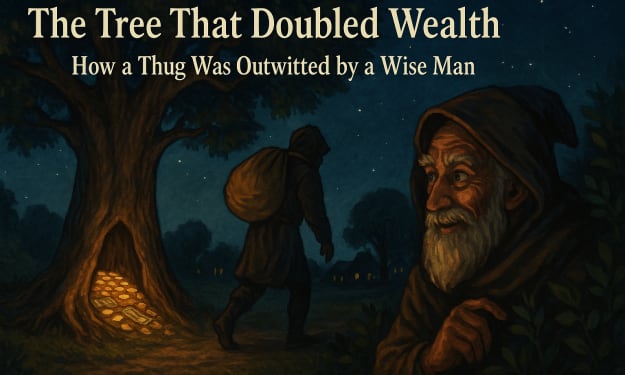
In his own trap
The people of a small village were simple and noble. Their goodness and hospitality were famous far and wide. In the same village there lived a wise man. People used to listen to his advice, but they did not follow it. When a thug heard about him, he arrived in this village in a very bad state and told the people a false story of his robbery.
By Echoes of Lifeabout a year ago in Fiction
The Girl Who Stole the Storm
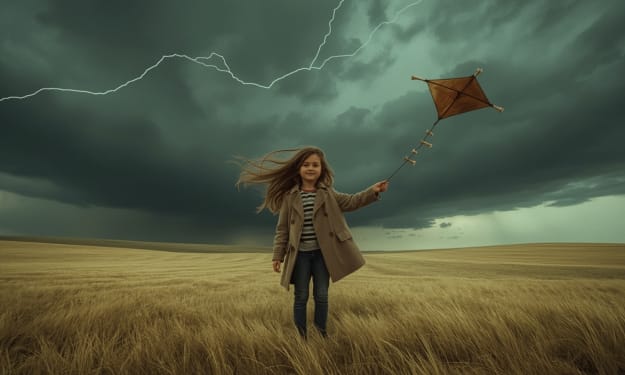
The wind never spoke in Marrow Creek. People joked that the town had been cursed with calm. But in truth, it wasn’t a joke at all—it was a wound that never closed. For years, not a single gust had brushed through the wheat fields. The trees stood still like paintings, the air thick with a silence that was almost violent. No breeze, no rain, no thunder. Even the birds flew lower, as if the sky had given up breathing. Old folks in town said it began after the “Great Quiet” of '08, when a lightning storm rolled across the valley and stopped right at the edge of Marrow Creek. The thunder never crossed over. The rain never fell. The storm hesitated—as if something told it not to enter—and then turned back. And from that day on, the wind forgot how to speak the town’s name. --- The people adapted. Farmers installed massive fans in their barns. Children grew up thinking kites were stories from books. Teenagers played music loud enough to mimic a breeze. But nothing replaced the real thing. It was like living in a place where time had stalled, where even nature seemed to hold its breath. And then she came. Her name was Lina Wren, and no one knew who sent her. She walked into town just after dusk, the sun bleeding pink behind the old chapel on Willow Street. Her coat was navy blue, far too big for her frame, and her suitcase rattled with every step—filled with odd things no one ever saw. Buttons, bones, bits of glass. And a kite. The first person to notice her was Jonah Moore, the night janitor at the town hall. “She looked like a ghost that hadn’t learned how to haunt,” he said later, cigarette shaking in his hand. She asked him a question before disappearing down the alley: “Do you think the wind remembers its way home?” --- Lina took up residence in the attic of Maple House, a crooked, ivy-clad building that had been abandoned since the last librarian died in his sleep with a book in his hands. But now, Maple House lit up at night. Flickering candles in the windows. Strange shadows on the walls. Music that sounded like thunder played backwards. The town whispered about it, but no one had the courage to go knocking. Not even the sheriff, who said, “Some houses are better left alone. Especially when they’re humming.” Lina didn’t cause trouble. But she caused curiosity. She wandered the market and stared at fruit like it was foreign. She’d press her ear to telephone poles as if listening for stories. She once spent two hours lying in the middle of Hollow Field with her arms spread, eyes closed, like she was waiting to be lifted away. “Trying to feel the sky,” she told the farmer who found her. “It used to press back. Now it’s just watching.” --- The wind came back on a Thursday. It started with one curtain fluttering in an upstairs window. Then the grass shifted. The trees began to sway. And at the edge of Hollow Field, Lina stood with her arms raised and a kite that looked stitched from memory and madness. Its frame was bone—real bone—and the fabric shimmered like stormclouds. She whispered something in a voice older than her years and launched it into the still air. It shouldn’t have flown. But it did. The kite screamed into the sky like it had been waiting for years to return home. And with it came a gust. A whistle. A rumble. That night, for the first time in over a decade, Marrow Creek had a storm. --- It wasn’t a normal storm. Rain fell, yes—but the drops felt heavy, like they carried secrets. Thunder echoed in pulses that seemed to match Lina’s heartbeat. Lightning struck the old chapel’s cross and left it glowing blue for three hours. And Lina? She was dancing in it. Barefoot, soaked, smiling like a god had returned to claim her. People watched from their windows, terrified and spellbound. She didn’t cause the storm. She invited it. And it came. --- By morning, she was a legend. Kids followed her around like disciples. Elders nodded at her with fear thinly veiled as respect. The mayor asked her to dinner—she refused. The preacher warned that not every miracle came from Heaven. And still, the wind remained. It never left after that night. It became alive again. With every passing week, the town bloomed. Leaves fluttered. Rivers moved quicker. The wheat fields danced. People who hadn’t smiled in years found themselves humming while walking down the street. It was like someone had breathed into the lungs of Marrow Creek and reminded it how to feel. But Lina… grew distant. She spoke less. Wandered more. Spent long hours staring at the sky, murmuring to herself in that strange language. Some say she argued with the clouds. Others claimed they heard her crying. She’d wake up in the middle of the night and walk barefoot across town. Always toward Hollow Field. Always chasing something invisible. --- Then came the final storm. No one remembers the date. Only the feeling. It was wild—like the sky was being torn apart and sewn back together at once. Trees bent until they touched the earth. Roofs shook. Animals screamed. It was the kind of storm that felt personal, as if it had come to collect a debt. Lina stood in the center of Hollow Field again. But this time, she wasn’t dancing. She was holding the kite to her chest. Weeping. And as the wind howled around her, she whispered one last word— No one heard what it was. But they felt it. The storm vanished instantly, sucked back into the sky like a breath inhaled too fast. And Lina? Gone. --- No note. No footprints. Just the kite. Left behind, humming faintly, its bones glowing like coals cooling after a fire. Some say she became the storm. Others say she left to find another town that had forgotten how to listen. But everyone agrees on one thing: The wind has never left since.
By Hazrat Bilalabout a year ago in Fiction
The Last Message from Earth
The year was 2145. Earth had been declared uninhabitable for over three decades. Climate collapse, nuclear skirmishes, and viral pandemics had rendered the blue marble a toxic wasteland. Humanity, or what was left of it, had scattered among the stars — colonizing Mars, floating cities on Titan, and sprawling mining colonies across the Kuiper Belt.
By Soul Pagesabout a year ago in Fiction
The Letter I Was Never Meant to Read
By Nadeem Shah I found the letter by accident. Tucked inside the back of my mother’s worn-out recipe book, behind a page smudged with gravy stains and faint ink scribbles about nutmeg, was an envelope that didn’t belong. It was brittle, yellowed with age, and sealed with a faded wax stamp I didn’t recognize.
By Nadeem Shah about a year ago in Fiction
The Lantern Keeper. AI-Generated.
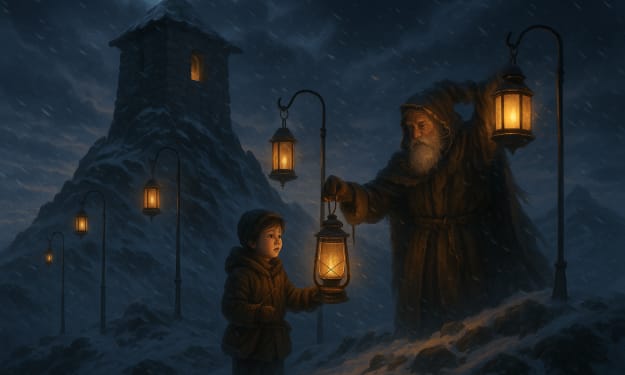
The villagers said no one could survive the storms up on Wyrm’s Peak. The winds tore roofs off houses, the snow fell sideways, and lightning danced like angry spirits. But at the very top, near the ruined watchtower, a single light always flickered through the worst nights. Many believed it was a ghost. Some said it was the spirit of an old monk keeping vigil. Children dared one another to hike halfway up, but few got far. The trail disappeared under moss and memory. Most forgot about the light altogether—until the storm that swallowed winter. It came sudden and brutal. The wind screamed through the valley, and even the river froze with fear. Roads were buried. Power was lost. Fires sputtered, and even hope seemed to grow cold. On the third night, little Jonah’s baby sister, Elsie, stopped breathing right. She was only six months old. The doctor couldn’t reach them. The roads were gone. The only place with any kind of signal, any hope, was the mountaintop. And the light. Jonah was twelve. Small for his age but wiry and stubborn, like the mountain goats that grazed near the lower cliffs. He didn’t tell anyone what he planned. Wrapped in three layers of clothing, he took his father’s walking stick, a bag of bread crusts, and the last working lantern from their house. He followed the trail as far as he could, then clawed his way upward through snow and rocks, guided only by the faint glow above. Halfway up, he almost turned back. The wind howled his name like a warning. Ice bit into his skin. But then he saw it—closer now—the yellow pulse of a flame, steady and real. Someone was up there. The tower was smaller than he expected. It leaned a little, broken on one side, but still stood proud against the wind. And outside it, tending a line of flickering lanterns on hooked poles, was a man. He was bent with age, wrapped in furs, with a beard like snowdrift. His eyes were sharp, though kind. When he saw Jonah, he didn’t speak. He just motioned for him to come close. Inside the tower, warmth clung to the stone. A fire crackled in the corner. Dozens of lanterns lined the walls—glass, iron, copper—each glowing faintly, like stars waiting to be hung in the sky. “My sister,” Jonah gasped. “She needs help. We need a signal—something—so the chopper can come.” The old man nodded. “Then we light the sky.” Together, they carried the lanterns outside, one by one. With each one lit, the peak began to shimmer, like a lighthouse in the clouds. The storm kept roaring, but the light roared louder. And somehow, it worked. At dawn, through a break in the clouds, a helicopter circled and descended. Jonah’s signal had been seen. When he turned to thank the old man, the tower was empty. The lanterns, cold and still. No footprints. No fire. Nothing. Back in the village, people shook their heads when he told them. But that night, and every night after, Jonah climbed a little higher, hanging lanterns wherever he could. The wind still howled. But now, there was always light on the mountain. And Jonah became the new Lantern Keeper.
By Muhammad yaseenabout a year ago in Fiction