Short Story
A Thousand Unwritten Letters
Prologue: The Letters That Never Reached In the dusty wooden chest beneath her grandmother’s desk, Eliza found them— bundles of yellowing envelopes, tied with fading blue ribbon. The letters were addressed to no one. Each began with “My dearest…” but never ended with a signature. They were all unfinished, abandoned mid-sentence as if the writer could never find the courage to let the words escape. There were more than a thousand of them. And the handwriting was her grandmother’s. --- Chapter One: The Silence of a Lifetime Eliza had grown up in that small seaside house, listening to the ticking of the old clock and the whispers of waves outside. Her grandmother, Marianne, had always been a woman of silence. She rarely spoke of her past, and when asked about love, she only smiled faintly and said, “Some stories live better in the heart than on the tongue.” Now Marianne was gone, leaving behind only her garden roses… and the letters. Eliza sat cross-legged on the wooden floor, candlelight flickering. She read page after page. Some letters were tender, filled with longing. Others trembled with regret. Many stopped abruptly, as though Marianne’s heart had outrun her hand. One line echoed in Eliza’s mind: “If only I had told you… perhaps our lives would not have been strangers to each other.” --- Chapter Two: A Stranger in the Photograph At the very bottom of the chest lay a photograph: a young man in uniform, his smile both brave and fragile. On the back was scrawled only two words: For Marianne. Eliza had never seen him before. The discovery gnawed at her. Who was he? A soldier? A lover? Why had her grandmother written a thousand letters but sent none? The next day, Eliza began searching the town’s archives, visiting the library, questioning the few elderly neighbors who still remembered Marianne’s youth. One name came up repeatedly: James Ashford. --- Chapter Three: The War That Stole Words James Ashford had been a young poet, conscripted into the war long ago. Rumors whispered that he had courted Marianne, but duty had taken him overseas. They exchanged letters—at first. Then, suddenly, silence. Some said James never returned. Others claimed he did, but by then Marianne was already engaged to another. But why had Marianne never spoken of him? Why keep his memory in ink but not in voice? Eliza felt herself drawn deeper, as if her grandmother’s unfinished story was asking her to finish it. --- Chapter Four: Letters Across Generations Eliza began to write. Not her own letters, but Marianne’s. She copied down the unfinished sentences, reimagined them, and completed them as if the silence could be healed. She wrote: “James, my dearest, the world says I must move on, but my heart has never obeyed the world.” “If love were a crime, I would confess a thousand times.” Each letter she sealed in an envelope, addressed not to the dead, but to the living part of her grandmother’s memory. It was Eliza’s way of giving voice to the silence. --- Chapter Five: The Last Witness One evening, while reading in the old café, an elderly man approached her. His cane trembled, but his eyes were sharp. “You’re Marianne’s granddaughter, aren’t you?” Eliza nodded. “I knew James,” the man said quietly. “And I knew your grandmother loved him until her last breath. But fate was cruel. He never returned from the war. By the time the truth reached Marianne, she had already promised herself to another man—your grandfather. She chose silence, for fear of breaking more hearts.” The man paused, tears gathering. “But silence is its own kind of prison.” Eliza’s chest ached. Suddenly, the thousand unwritten letters made sense. They weren’t weakness. They were Marianne’s only way of speaking to the man she had lost forever. --- Chapter Six: A Letter of Her Own That night, Eliza wrote a final letter. Not as Marianne, but as herself. “Dear Grandmother, I found your thousand letters. I found the love you never spoke of. I want you to know—I do not see it as betrayal. I see it as proof of how wide and deep the human heart can be. I promise I will not live with unsent letters in my own soul. I will speak while there is time.” She folded the paper, placed it among the others, and tied the ribbon once more. Then she carried the chest to the sea. At dawn, as the tide rose, Eliza set one letter free into the waves. It floated, drifting farther until it became a small white speck against the horizon—like a soul finding its way home. --- Epilogue: When Silence Breaks Years later, Eliza became a writer. Her first book bore the title A Thousand Unwritten Letters. It was a story not just of Marianne and James, but of every human heart that hides unspoken words out of fear. And as readers turned its pages, many wept—not for the characters, but for themselves. For the words they, too, had never spoken. --- Moral of the Story 🔹 Silence can protect the heart, but it can also imprison it. Love, regret, gratitude—these are not meant to remain unsent letters. Speak while there is time, for unwritten words weigh heavier than any spoken truth.
By Noman Khanabout a year ago in Fiction
The Seven Stages of Life: A Reflection on Shakespeare’s Timeless Wisdom
“All the world’s a stage, and all the men and women merely players.” — William Shakespeare The human experience has always fascinated poets, philosophers, and playwrights. Among the most iconic reflections on life’s journey is William Shakespeare’s famous passage from his play As You Like It, where he breaks down the human life into seven distinct stages. This metaphor, where life is seen as a grand performance on the stage of the world, captures the essence of our existence in a simple yet profound way. Here, we explore these seven stages of life, inspired by Shakespeare’s vision, and how each phase reveals something deep about the human condition. 1. Infancy – The Helpless Beginning Life begins with infancy — a stage of complete dependency. The newborn enters the world crying, weak, and unaware of the reality around them. At this point, life is sustained entirely by others — parents, nurses, or caretakers. The infant is innocent and vulnerable, but also full of potential. Though physically and emotionally fragile, this stage lays the foundation for what comes next. It reminds us that every person, no matter how powerful or wise they may become, once began in complete helplessness. 2. Childhood – The Reluctant Student The next phase is childhood, marked by learning and slow adaptation to the world. This is when the child begins school — often reluctantly. The joys of play and imagination are slowly interrupted by the structured demands of society. The schoolbag becomes a symbol of responsibility. The child begins to complain, torn between the freedom of play and the expectations of education. This phase is both innocent and resistant. It's a gentle push from nature into the arms of discipline. 3. Youth – The Passionate Lover As childhood fades, the fires of youth ignite. This is the stage of intense emotion, romantic dreams, and inner turmoil. The young person, now an adolescent or young adult, discovers love — sometimes unreturned, sometimes overwhelming. The world feels new again, driven by passion, creativity, and idealism. In Shakespeare’s words, this is the stage of the “sighing lover,” writing poems and dreaming about impossible futures. It's a beautiful yet confusing time, where feelings often speak louder than reason. 4. Adulthood – The Brave Soldier Next comes adulthood, often symbolized by the soldier. The individual now seeks honor, success, and a place in society. Ambition replaces idealism. This stage is defined by action, risk, and sometimes conflict. People now fight not just wars, but careers, reputations, and responsibilities. This is the time of building — building a name, a family, a future. The desire to achieve and be remembered takes center stage. Bravery is essential, not just in the battlefield, but in daily life. 5. Maturity – The Wise Judge In the fifth stage, the person evolves into the judge or leader — mature, wise, and stable. Experience has shaped their worldview. This is the time of reflection and measured decision-making. The individual is now respected, settled, perhaps wealthy or successful. Their voice carries weight, their actions influence others. It's the season of giving back — mentoring the young, contributing to society, and protecting the values learned through life. This is the most balanced stage — where wisdom meets responsibility. 6. Old Age – The Gentle Decline The sixth stage brings old age, where strength begins to fade. The once-bold soldier now walks slowly, speaks softly, and relies more on memory than motion. The body weakens, but the mind often grows sharper in reflection. This is a peaceful time, but also one of sadness and nostalgia. Life is viewed in retrospect. The future holds fewer surprises. Conversations turn to memories, and laughter often carries the tone of “remember when?” It is a reminder that all things are passing. 7. Dotage – The Second Childhood Finally, life returns to where it began — dotage, or second childhood. Here, the individual becomes again like an infant: toothless, helpless, often silent, and entirely dependent. The energy and independence of earlier years have vanished. This stage is not just about physical decline but spiritual preparation. It is the closing of the play, the final bow. Shakespeare gently reminds us that as we entered the world without possessions, we shall leave it in the same way. Conclusion Shakespeare’s seven stages of life are not just poetic—they’re philosophical. They capture the inevitable cycle that every human being must pass through. We all begin as children, burn with passion in youth, fight for our place in adulthood, grow wise with age, and eventually return to the simplicity of our beginnings. Recognizing these stages allows us to accept change, value each phase, and find meaning in the journey itself. Life is not just about reaching the end, but about living each stage fully, playing our part with grace, and leaving the stage having given our best performance. What stage are you in? And what role are you playing today?
By Israr khanabout a year ago in Fiction
The Whisper of Mint
In the quiet corners of a small countryside village, there was a tiny garden that seemed ordinary to most, but to those who truly noticed, it was extraordinary. The garden was filled with rows of vibrant mint plants, their leaves glistening under the morning sun, releasing a refreshing aroma that could calm even the busiest mind.
By Saqib Ullahabout a year ago in Fiction
The First Threads
Preface ❧ Before the keeping of time, before even the stars had learned their names, there was weaving. This tale is said to be among the oldest remembered by leaf and river, whispered by silence, carried by wind, and guarded by stone. It is not the song of gods nor of men, but the weaving that gave birth to both. Preserved in the hush of branches and the glimmer of stars, it is given here as it was first spoken:
By Rebecca A Hyde Gonzalesabout a year ago in Fiction
Unwritten on Their Graves. Content Warning.
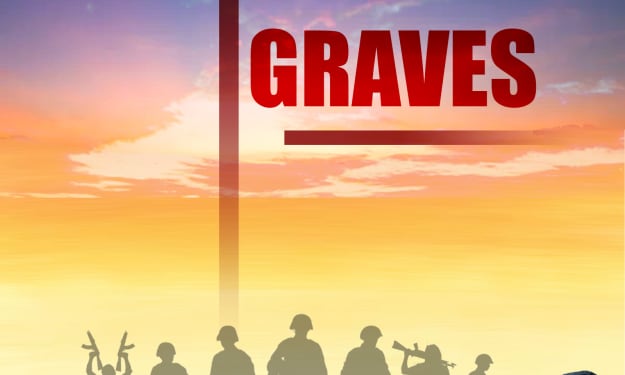
In a cramped California apartment, eighteen-year-old Leo lived with his mother and two younger siblings, twelve year old Jasmine and eight year old Marcus. Their mother, a woman of quiet grit, had been left to raise them alone, scraping by on the meager wages of a diner job.Life had dealt her a harsh hand, and the family’s fragile balance was further shattered by Marcus’s battle with anemia. The medical bills drained what little they had, while the constant worry gnawed at them all. Leo watched his mother fight each day with unyielding determination, and though his heart burned to ease her burden, he was just a high school senior, too young, too powerless, yet aching to do more. To ease his mother’s burden, Leo had taken a part-time job at a local diner, slipping into an apron right after school while his classmates rushed off to sports or friends. Whether it was scrubbing greasy grills, bussing tables, or running orders, he did it all without complaint.The pay was barely enough to make a dent in their mounting expenses, yet Leo clung to it with quiet determination. Every shift was not only a reminder of his struggle, but also of his dream, a dream to rise above these barriers, and build a better life not just for himself, but for the people he loved most. One evening, as his mother returned from another long shift, Leo pulled her aside. His SAT results had arrived, good enough for college. Her tired face lit up with pride as she embraced him, certain her sacrifices were paying off. But Leo’s voice wavered as he confessed the catch: his scores weren’t high enough for a full scholarship, and he refused to drag the family deeper into debt. She pressed his shoulders, assuring him they would find a way and that he should focus on his future. Still, even as she smiled, Leo couldn’t ignore the worry lingering in her weary eyes. As graduation crept closer, Leo’s excitement was overshadowed by a growing weight of anxiety. The future loomed uncertain, with college slipping further from reach. Then one afternoon, a notice on the school bulletin board caught his eye, a career fair was coming to the gymnasium. It felt like a chance, to carve out a path forward, a way to bridge the gap until college could become more than just a dream. On the day of the job fair, Leo wandered aimlessly from stall to stall, scanning pamphlets and half-listening to pitches about door-to-door sales jobs, trade certifications, and odd apprenticeships. None of it felt like a future worth chasing. His steps slowed before the U.S. Army booth. Two recruiters in crisp uniforms greeted him with practiced smiles and a confidence that set them apart from the rest. They spoke of opportunities, college scholarships, steady pay, health care for families, benefits that struck directly at the heart of Leo’s worries. But it wasn’t only the promises that drew him in. The idea of wearing the uniform, of serving something greater than himself, stirred a sense of purpose he hadn’t known he was searching for. By the time he walked away, Leo no longer felt uncertain. He had found his path: the Army would be his way forward, and he was ready to take it the moment high school ended. When Leo told his mother about his decision, her reaction was far from proud. Fear and anger flashed across her face as she called the Army a path toward a coffin. She reminded him of all she had sacrificed to protect her children, of Marcus’s illness that already kept her awake at night, and insisted she could not bear to see another son chasing death. But Leo’s resolve did not waver. The arguments grew louder and more frequent in the days that followed, yet no amount of pleading or warning could pull him away from the choice he had already made. At last, the day of Leo’s high school graduation arrived, and for a brief moment the family allowed themselves to breathe. Laughter filled the small apartment, and even his mother set her worries aside to celebrate her son’s milestone. But the reprieve was short-lived. Soon after, Leo sat for the Army’s recruitment test; and passed. The letter that followed was swift and decisive: he was to report to Fort Benning for basic training. The weight of reality returned, heavier than ever, as the course of Leo’s future was sealed. The day Leo left, his mother wept as she begged him to remember he could always turn back, that home would always be waiting. Jasmine hugged him tightly, whispering for him to take care, while Marcus received the firmest embrace of all, as if Leo could somehow protect him from afar. At last, his mother stood before him, her tear-filled eyes heavy with fear of what lay ahead. With a final goodbye, Leo stepped away, his heart burdened yet fueled by the dream of building a better life for himself and the family he loved. And so began Leo’s journey, one that would carry him to the other side of the world, into the unforgiving landscapes of Afghanistan. It was a path that would shape him and shatter him, forcing him to witness and endure things he had never imagined. In the heart of war, Leo would be tested not only as a soldier but as a son, a brother, and a man torn between duty and conscience. Follow his story in the novel "Unwritten On Their Graves", a haunting tale of sacrifice, morality, and the human cost of war, now available on Amazon. Get your copy today.
By Munawar Sheikhabout a year ago in Fiction
The Last Voyage
Odysseus the Pioneer, Odysseus the Adventurer, Odysseus the Scourge of Troy. Those titles, once marks of prestige, now taunt me. They were given to me by the men and women of my youth, the Greeks who sailed 10,000 ships across the sea to forge a legend. Now they are spoken only by my pitiful subjects who have grown fat on the spoils. They have never known the walls of Troy, the Wooden Horse, the Cyclops, or the man eating Laestrygonians. They use them to gain my favour to further their own interests, rats feasting on the corpses of lions.
By Sebastian Swiftabout a year ago in Fiction
Even in Dreams. Runner-Up in The Shape of the Thing Challenge.
Despite living so close to an airport, we never stopped and truly appreciated the sight of the different passenger flights soaring into the sky. I remember vividly lying one day beside you, recently, watching the vapour trails as another steel bird left for adventures in faraway places.
By Paul Stewartabout a year ago in Fiction