Short Story
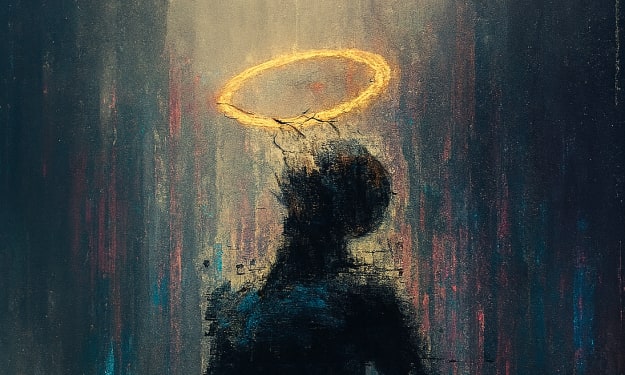
The Halo
This story was inspired by recurring themes I've noticed in large entities. Companies going from individual people with big dreams doing a labor of love to cash hungry corporations who recycle the same crap. This genre is inspired by that, the electric state, liminality, surrealism, and other dystopian/cyberpunk themes. This story in particular draws upon religion to create a certain juxtaposition, inspired by other horror and "the salvation project". Written in November 2025 as a freshman in high school.
By Chad McBroski10 months ago in Fiction
A Selkie's Return to the Deep
Growing up in rural Ireland, I never knew my father. Or rather, I knew of him, but we had never met. When pressed, all my mother would say was that he was an officer in the navy, and that it was better for everyone if he stayed an ocean away. But I never felt the absence of a parent; Mamma was the kind of person who took up all the space in the room. Everyone who met her commented on her breathtaking beauty and captivating charm. I loved listening to her sing the old lullabies and ballads while she danced around our home, graceful even when doing something as simple as washing the dishes.
By Call Me Les10 months ago in Fiction
The Forgotten Room
In our house, the hallway upstairs had a rule: Never touch the last door on the left. Mom never wrote it down, but the rule was solid as concrete. Holidays, birthdays, random Tuesdays - nobody went in. If a guest got lost looking for the bathroom and wandered too far, they were intercepted with a speed that suggested Olympic training and generational trauma.
By The Kind Quill10 months ago in Fiction
Symbiotic: Chapter 8
[Quest Timer: 13:22 Remaining] “Thirteen and a half minutes? Not that I’m complaining, but should something else have attacked at 15 minute mark? Unless, maybe big boy here was a ‘Boss’ and so the last two timers are 10 minute timers? If so, I find myself less and less excited to see what shows up next!”, Sara Pondered to herself.
By Canyon Cappola (TheNomad)10 months ago in Fiction
Symbiotic: Chapter 7
The cave entrance erupted into chaos as the next wave surged forward. Expecting to see three, or maybe even Four creatures next she groans as the wave comes into view at the cave entrance. One Jungle Cat, two Rock Constrictors, and three Monkey Maulers. Six predators, all snarling, hissing, and clawing to get inside. Sara’s heart sank. The escalation was brutal. "Three creatures to six? That’s not a wave, that’s a flood!"
By Canyon Cappola (TheNomad)10 months ago in Fiction
The Field Beyond the Fence
The Abernathy Academy Gleaning Club was, for all its good intentions, an exercise in optics. It was the pet project of Isabella Sterling, student council president, and the perfect bullet point for her college applications. "Community engagement," she'd declared. "It shows leadership and empathy."
By Habibullah10 months ago in Fiction
The Storage Room
The Forgotten Room Challenge: Write a fiction story that centers on a room that hasn’t been entered in years. This prompt is about the spaces we avoid and the stories they hold. A room that has not been entered in years is more than just four walls. It can be a vault for memories, a keeper of secrets, or a place where time feels strangely preserved. What happens when someone finally steps inside? Does it unlock the past, change the present, or blur the line between the two?
By Denise E Lindquist10 months ago in Fiction
Whispers in the Windmill
I never believed in village folklore. Not when I was a child running through the wheat fields, not when I left for the city at eighteen, and certainly not when I returned years later with more mistakes than belongings. But folklore has a strange way of waiting for you, especially in small places where stories cling to the air like dust. Our village’s old windmill had always been part of those stories. It sat alone on a gentle hill, its white stone walls softened by age and its wooden blades faded by decades of weather. What made it unusual wasn’t its shape, but the way its blades spun backward whenever twilight settled in. People said it gathered the whispered regrets of the villagers, pulling them in like threads and weaving them into something useful. Something healing. When I was young, the idea made me laugh. Adults spoke of it with a tone that hovered between belief and superstition, the way people mention ghosts in old houses. I never heard anyone admit they had visited the windmill. Not until I found myself needing it more than I cared to admit. I returned home after an exhausting year in the city. I had made decisions that felt irreversible, chased opportunities that drained more than they gave, and ended a relationship that had quietly been unraveling for months. My mother welcomed me with a hug that lasted longer than it used to, and my father kept offering me tea as if hot water could fix a fractured life. One evening, after dinner, I found myself wandering without aim. The sunset was brushing the sky with amber and lavender, and before I realized where my feet were taking me, I was climbing the old hill toward the windmill. Its backward-spinning blades were already stirring, slow and steady, like a giant drawing breath. I hesitated at the door, my hand resting on the worn wood. It felt foolish, stepping into a place that belonged more to myth than to reality. But my thoughts were heavy, and something about the soft turning of the blades felt inviting. Inside, the air was cooler than outside. Dust floated in the warm light that seeped through the cracks. The windmill’s interior was simple: a wooden floor, a circular wall of stone, and above me the groaning machinery turning in reverse. There was no obvious magic, no glowing lights or whispering spirits. But then I heard it. A soft murmur, almost indistinguishable from the sound of turning gears. I closed my eyes, and slowly, the murmur sharpened into words. Not clear sentences, more like threads of feelings. A mother regretting harsh words spoken too quickly. A teenager wishing they had apologized before a friendship fell apart. An elderly man longing to revisit the apology he owed his brother decades ago. These were not dramatic confessions. They were quiet regrets, the kind that linger in the background of a life. The more I listened, the more the murmurs changed. They began to blend into something steady, almost rhythmic. Advice. Not loud or commanding. Just gentle reminders, shaped from the regrets the windmill had gathered. Tell people when they matter to you. Do not be afraid to start over. You are allowed to rest. You are allowed to return. My throat tightened. I had spent months pretending that exhaustion was normal and that disappointment was something everyone simply swallowed. Hearing those soft threads of guidance felt like having someone place a warm hand on my shoulder. For the first time in a long while, I let myself sit down on the wooden floor. I don’t know how long I stayed there, listening. The windmill never spoke directly to me — it offered no clear answers, no instructions — but the atmosphere inside made my thoughts clearer. I could see where I had been stubborn, where I had ignored my own needs, where I had pushed myself to the edge because I thought stopping meant failure. Eventually, the blades began to slow. Twilight had deepened into early night, and the murmurs faded until all I could hear was the creaking of the windmill settling into stillness. When I stepped outside, the hillside was bathed in cool blue light. The village looked small and quiet below, lanterns glowing behind windows. I felt lighter, not because my regrets had vanished but because they no longer felt like weights I had to carry alone. In the days that followed, I noticed something new. People in the village rarely admitted it out loud, but every so often someone would return from that hill with a softer look in their eyes. A baker who finally forgave himself for closing shop early to rest. A teacher who reached out to an estranged sibling. My own mother, who after years of brushing off her own dreams, began talking about taking painting classes in the next town. And me? I started making small changes. I apologized to a friend I had drifted away from. I allowed myself to slow down, to recalibrate. I began writing again — something I had abandoned because I felt I had nothing meaningful to say. The windmill didn’t fix my life. It didn’t erase regret. But it did something quieter and perhaps more important: it reminded me that every regret holds a hidden piece of wisdom, and that listening — really listening — is a form of healing. Some evenings I still walk up the hill, not to hear voices, but simply to sit beside the windmill as the blades turn backward in the fading light. And sometimes the wind carries a whisper that feels like it’s meant for me. You can begin again. And I do. Every day.
By Jhon smith10 months ago in Fiction