Short Story
Why People Blame her?
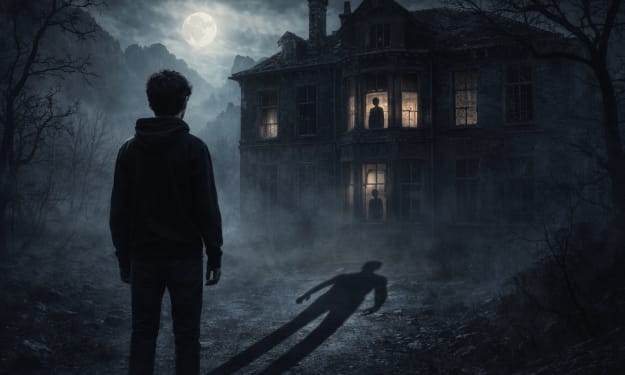
Why Everyone Blamed Her A story set in the USA Everyone blamed her. No one asked her why. Sarah Miller was 26 years old and lived in a small town in Ohio, USA. It was the kind of town that looked peaceful on the surface, with neat streets and friendly greetings. But beneath that calm appearance was a place built on judgment, quiet gossip, and a fear of anyone who didn’t quite fit in. In towns like this, people didn’t just know your name—they believed they knew your story. Sarah worked at the local public library. She was soft-spoken, reliable, and preferred books to conversations. After her father passed away and her mother moved to another state, Sarah chose to stay behind. She lived alone, kept a simple routine, and rarely explained herself. To the town, her solitude became something to question rather than understand. People don’t trust loneliness. They fear it. Sarah’s difference made her noticeable. While others gathered loudly at diners or bars, she walked home quietly. While neighbors shared every detail of their lives online, she stayed offline. In a world where constant visibility meant safety and innocence, her quiet presence felt suspicious to those who didn’t understand it. Then came the night of the fire. At 2:40 a.m., the historic Maplewood Community Center caught fire. By morning, the building was reduced to ashes. It had been the heart of the town—a place for weddings, ceremonies, and children’s activities. Its loss felt deeply personal, and grief quickly turned into anger. When people feel pain, they look for someone to blame. Security footage later showed a hooded figure near the building hours before the fire. The image was unclear, the face impossible to identify. Still, someone claimed it looked like Sarah. Another said the figure moved the way she did. Soon, uncertainty turned into assumption. People began to talk. They called her strange. They said she kept to herself too much. Someone mentioned an old disagreement with the center manager, ignoring the fact that it had been about missing donated books and nothing more. Facts faded while rumors grew louder. By evening, Sarah’s name was everywhere—shared in posts, messages, and whispered conversations. There was no proof, no official accusation, only judgment. When the police questioned her, she cooperated fully. She explained she had been home that night, reading as she often did. With no witnesses and no evidence to support her, her words were dismissed. Soon, the town treated her as guilty. Children stared at her in the street. Shop owners watched her closely. One morning, she found a note on her apartment door that read, “We know what you did.” Not long after, her supervisor suggested she take a temporary leave from the library. What no one knew was that Sarah had been fighting a different kind of fire for years. She lived quietly with depression and used books as a way to survive her hardest days. On the night of the fire, she had been reading about hope and new beginnings, unaware that her own life was about to collapse. Weeks later, the truth finally surfaced. Investigators discovered faulty wiring, a gas leak, and an ignored maintenance report. The fire was ruled an accident. There was no criminal and no deliberate act—only negligence that had gone unnoticed for too long. Sarah’s name was officially cleared. A small article appeared in the local newspaper, tucked away on an inside page. No apologies followed. No one corrected the rumors they had spread. Silence replaced the accusations, as if that alone could erase what had been done. A month later, Sarah moved away. She packed her books, her memories, and the pain the town had left behind. She didn’t say goodbye, and no one asked her to stay. Years passed. The community center was rebuilt, and life continued as if nothing had happened. Yet sometimes, when people remembered the girl they once blamed without proof, a quiet discomfort lingered—never spoken, never resolved. Sarah rebuilt her life elsewhere, in a place where no one knew her past. There, her silence wasn’t mistaken for guilt, and being different didn’t make her dangerous. Because the real question was never why she did it. The real question was why it was so easy for everyone to blame her.
By Think & Learn9 months ago in Fiction
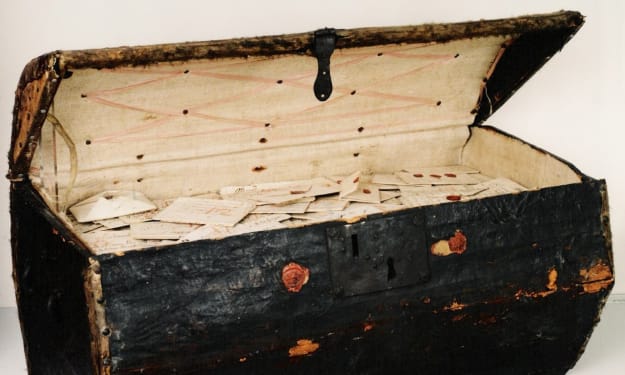
The Letter That Was Never Opened. Content Warning. AI-Generated.
Every morning, Yusuf opened his small café a few minutes before sunrise. The place was quiet, almost forgotten, and Yusuf never dreamed of becoming rich. All he wanted was peace… and his favorite chair by the window.
By Gabriel Waltone9 months ago in Fiction
When the Day Met the Night
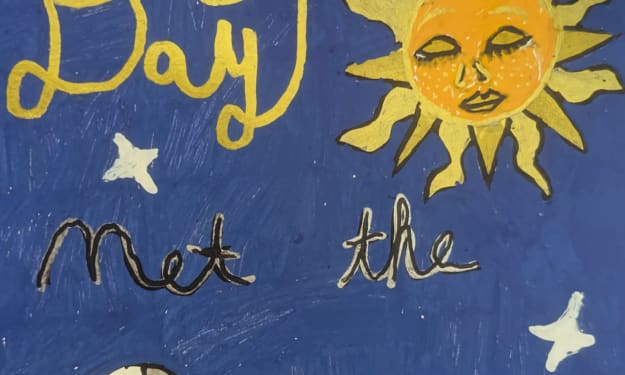
In the beginning, before Earth’s creatures invaded space, there were only the celestial bodies, orbiting around each other. The moons lovingly orbited their planets, the planets orbited the sun, and the sun orbited nothing because the sun was the ruler of the Milky Way. The Earth’s young moon caught glimpses of the sun as she endlessly circled her planet. She smiled at the sun, and they always smiled back. As the months wore on, they grew closer and closer, until one day, the moon stood directly in front of the sun. They were breathtaking up close. Their golden hair flowed freely down to their waist. Sunspots dotted their sharp, angular face and they radiated a heat strong enough to scorch the Earth, but gentle enough to warm a weary traveler. And the moon felt drab and inadequate in their presence.
By Morey Guntz9 months ago in Fiction
Sweet Pumpkin Soup. Content Warning.
The taste of sweet pumpkin soup spread warmth through her body. She couldn’t help but smile as she gazed into the eyes of her saviour. He lifted the spoon, steady and patient, as if each mouthful mattered. He had learned the recipe just for her. His creamy, homemade pumpkin soup reminded her of childhood—of being looked after when illness took over. This was how he showed his endless care for her.
By Sharna Halliwell9 months ago in Fiction
Santa Needs to Diet
Santa Needs to Diet Santa pulls on his red snowsuit and wrestles his boots into place. He waddles toward the ski lift at the North Pole’s only mountain resort, Frosty Peaks. The elf running the lift, Pip, watches him coming and looks worried.
By ♿ V+ Marie381Uk 9 months ago in Fiction
A Breath of Air and Light. Content Warning.
“Here, piggy piggy…” The Mokum stood eerily still, crouching near a vent and cycling through its memories from the previous compact. It attempted to locate the source of the whisper. The Mokum turned in all directions, flashing a floodlight on the now-illuminated room around it, but to no avail. The whisper did not repeat.
By Roman Hale9 months ago in Fiction