Series
The Jackal's Shadow
The scent of rain on Parisian asphalt was the same. It was the first thing Yevgeny noticed, a sensory ghost that dragged him back to a summer of blood and terror. He stood on the Pont Neuf, hands shoved deep into the pockets of a coat that felt too thin for the autumn chill. The city of lights glittered, indifferent, a beautiful mask hiding the scars he knew were there. The memory was a film reel he couldn’t stop: the cold professionalism in the Jackal’s eyes, the feel of Gaby’s hand going limp in his, the deafening crack of the rifle shot that had missed de Gaulle but had irrevocably hit him. He was Commandant Yevgeny Malko now, a title earned in fire and grief. The official commendation was in a drawer somewhere, gathering dust. It was a poor substitute for a life not haunted. His work at the DGSE was meticulous, a daily penance of intelligence briefings and low-level threat assessments. He was a watchman staring into the twilight, waiting for a dawn he feared might never come. It arrived not with a sunrise, but with a cipher. His superior, the perpetually weary Alain Deschamps, slid a photograph across his polished oak desk. It was grainy, blown up from a security camera outside a bank in Zurich. A man, tall, wearing an impeccably tailored overcoat and a wide-brimmed hat, was caught mid-stride. His face was averted, a blur of purposeful anonymity. “Wealthy client. Private vault. No name, paid in untraceable cryptocurrency,” Deschamps said, his voice a low gravel. “The Swiss were characteristically unhelpful. But they passed it to us as a courtesy.” Yevgeny’s blood ran cold. It wasn’t the face. It was the posture. The absolute, unnerving economy of movement. The way the man held his left arm, slightly stiff, as if accustomed to the weight of a long-case rifle. It was an echo, a phantom limb of a memory. “It’s not him,” Yevgeny said, his own voice sounding distant. “The Jackal is dead. I saw the body.” “We all saw the body,” Deschamps corrected gently. “But legends, Malko, they don’t die. They… reproduce.” The file was thicker than he expected. Over the past eight months, a pattern had emerged, faint but unmistakable, like the first hairline cracks in a dam. A corporate magnate in Frankfurt, a pro-democracy leader in Belgrade, a reclusive tech billionaire in Monaco—all had narrowly escaped sophisticated, meticulously planned assassinations. The methods were varied: a poisoned letter, a sabotaged private jet, a staged car accident. But the signature was the same. The planning was flawless, the execution clinical, and the escape route vanished into thin air. There were no demands, no manifestos, just the chillingly professional near-miss. A new player. A disciple. Or something far more dangerous: an heir. The investigation was a descent into a hall of mirrors. Every lead was a reflection that led to another reflection. The hat from Zurich was made by a bespoke milliner in London who had no record of the sale. The overcoat’s wool was traced to a specific mill in Loro Piana, its shipment lost in a maze of shell corporations. This new Jackal wasn’t just a shooter; he was a ghost in the machine of global commerce and data, using the world’s interconnectedness as his camouflage. Yevgeny’s only anchor was a name, whispered in the darkest corners of the dark web: “Cicero.” Not a real name, of course. A title. A dealer in information. The one who sold the secrets that made assassinations possible. If the new Jackal was the sword, Cicero was the hand that guided it. The break came from an old, bitter contact in the Stasi archives. A faded Stasi file from the 70s, misfiled and forgotten, mentioned a KGB black ops training program, codenamed “Zolotoy.” Golden. It wasn’t for field agents; it was for *planners*. The ultimate architects of chaos. The file listed three codenames. Two were crossed out. The third was unaccounted for. The third was Cicero. The chase led him to a dilapidated chateau in the Loire Valley, a place owned by a Luxembourg holding company that existed only on paper. The rain had started again, sheeting down in grey curtains, turning the world into a watery monochrome. Yevgeny moved through the overgrown topiary, his service pistol a familiar, cold weight in his hand. This was it. The source of the phantom. He found Cicero not in a high-tech lair, but in a dusty library, surrounded by the smell of old paper and damp decay. He was an old man, gaunt, with eyes that held the glacial calm of a deep Arctic lake. A single lamp illuminated a chessboard where a complex endgame was in progress. “Commandant Malko,” the old man said without looking up. His voice was like the rustle of dry leaves. “I wondered when you would arrive. You are slower than your reputation suggests. Grief has made you cautious.” Yevgeny kept his gun leveled. “It’s over.” Cicero made a move on the board, capturing a queen with a humble pawn. “On the contrary. It has only just begun. You think you hunted a man in ’63. You were wrong. You hunted an *idea*. And ideas are bulletproof.” He gestured to a bank of monitors flickering in the shadows. They showed news feeds, stock tickers, live traffic cams from a dozen world capitals. “The world is a system, Commandant. A fragile, predictable system. My former pupil, the man you knew, was a brilliant artist, but a purist. He believed in the singular, perfect shot. My new protégé… he understands the modern world. He doesn’t just kill men. He kills markets. He kills movements. He assassinates reality itself.” On the central screen, a image resolved. It was the man from the Zurich photo, but clearer now. He was younger than Yevgeny expected, with sharp, intelligent features and eyes that held no fanaticism, only the cool, appraising look of a master engineer examining a complex mechanism. He was looking directly into the camera, as if he knew Yevgeny was watching. “He’s not a copycat,” Cicero whispered, a trace of pride in his withered voice. “He is an evolution. And his target isn’t a man. It’s the stability of Europe.” The figure on the screen offered a small, cold smile. Then he raised his hand. In it was not a rifle, but a simple, old-fashioned key. He held it up for a moment, a silent, taunting promise, before the feed cut to static. Yevgeny stood frozen, the rain pounding against the ancient windows. The Jackal was dead. Long live the Jackal. He had come hunting a ghost and found himself staring into the abyss of a new, more terrifying future. The game had changed. The board was global. And the first move was about to be made. The hunt was on, but this time, he wasn't sure if he was the hunter, or just the next piece waiting to be taken.
By Danyal Hashmiabout a year ago in Fiction
A Calming Sleep Story: The Night Train to Transylvania
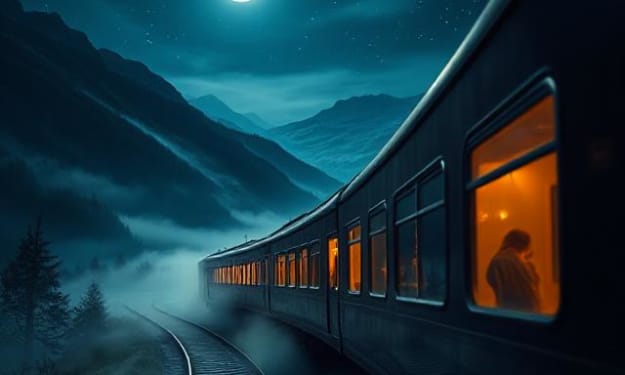
The Journey Begins It was a quiet night when the train station, tucked away in the heart of the Carpathian Mountains, began to glow under the silver moonlight. The platform stood almost deserted, except for a few travelers holding their coats tighter against the gentle night breeze. The clock above the station slowly ticked toward midnight, and soon, the sound of steel wheels whispered through the valley. The night train to Transylvania had arrived. Its arrival was soft, not loud or hurried like daytime trains. Instead, it moved with a rhythm that seemed almost alive, humming like a lullaby meant to calm tired souls. Its carriages gleamed faintly under the stars, their windows glowing with warm, golden light. You stepped onto the platform, your footsteps echoing gently as though the earth itself was guiding you toward the journey. The conductor, an elderly man with kind eyes and a voice that seemed to carry the wisdom of centuries, tipped his hat and welcomed you. “Welcome aboard,” he said softly. “This train doesn’t just take you to Transylvania—it takes you to rest.” And so, you stepped inside. --- Inside the Night Train The interior of the train was unlike any you had ever seen. Plush velvet seats, deep shades of burgundy and forest green, lined the carriage. The lamps glowed dimly, spreading a soft amber light, just bright enough to make the world feel safe but quiet enough to invite sleep. You found a seat by the window. Outside, the mountains stretched endlessly, painted with silver moonlight. Pines swayed slowly in the wind, and faraway villages twinkled with tiny candle-like lights. The rhythmic sound of the train wheels clicking on the track began to sync with your heartbeat—slow, steady, comforting. A soft chime echoed through the carriage. It wasn’t an announcement, but rather a gentle tone, almost like wind chimes swaying in the night. Then came the aroma—lavender and chamomile drifting through the air, soothing every restless thought. A lady in a long flowing dress walked by, offering tea in small porcelain cups. The steam curled upward like smoke from a dream. “Chamomile, with honey,” she whispered. “To help your journey.” You held the cup between your hands, feeling its warmth travel into your body. As you sipped, the sweetness melted into your senses, and your eyes grew heavier, calmer, softer. --- The Passing Villages The train rolled past ancient villages where time seemed to stand still. You watched from the window as cobblestone streets appeared in the moonlight, old houses with slanted roofs, and church towers with bells that swayed silently against the wind. At one station, only a black cat sat waiting on the platform, its green eyes glowing softly as it watched the train pass by. At another, an old violinist played a tune so quiet that it reached the train as if carried by the night air. The melody was slow, like a cradle song, echoing long after the station faded into the distance. The world outside became slower, as though every village, every hill, every whispering forest was inviting you to leave your worries behind. --- Through the Carpathian Mountains As the train entered the deeper mountains, mist rose between the trees. The forests were thick, their shadows dark and mysterious, but not frightening—rather, they felt protective, like ancient guardians watching over travelers of the night. The train’s steady rhythm guided you further into a dreamlike state. Outside the window, you thought you saw figures carved into the mist—dancers swirling in silence, shadows bowing and fading, and lights that moved like floating lanterns. Perhaps they were tricks of the fog, or perhaps the mountains themselves were telling their timeless stories. The conductor walked by again. “We are entering the quiet hours now,” he said softly. His words were like silk, and every syllable seemed to slow your breath. The lights in the carriage dimmed further. Only the glow of the moon and stars filtered through the window now. The sound of the wheels on the tracks became your lullaby, and soon, you could feel your body sinking deeper into the seat, surrendering to rest. --- A Dream Within the Journey You weren’t sure when exactly you drifted into a dream. Perhaps it was when the mist thickened, or when the violin melody returned in the distance. You found yourself walking through a forest bathed in silver light. Fireflies hovered like tiny lanterns, lighting your path. The air was cool and smelled of pine, and every step felt lighter, as though gravity had softened. You followed the path until it opened into a clearing. There, you saw the train again, waiting silently, but now it stood on tracks that seemed to float in the sky. The stars shimmered like diamonds, and the moon was close enough to touch. Someone called your name—not loudly, not frighteningly, but gently, like a parent calling a child back home. You turned, and there was no one. Only the endless night, beautiful and infinite, inviting you to let go. And then, slowly, the forest faded, and you found yourself back in the train seat, still holding the warmth of chamomile tea in your hands. --- Arrival in Transylvania The conductor returned once more as the train slowed. His voice was barely above a whisper. “We’ve arrived,” he said. Outside the window, the sky was turning pale with dawn. The mountains glowed with the first light of morning, their shadows retreating as golden rays touched their peaks. Villages awoke slowly—chimneys released soft curls of smoke, and distant roosters greeted the day. You stepped off the train, the wooden platform warm beneath your feet despite the cool morning air. The town was calm, peaceful, wrapped in the embrace of history and nature. And though you had reached Transylvania, you realized the true journey was not to this place, but to the rest you had found within yourself. The night train had carried you not only across mountains and valleys but into a space of deep stillness. And as you walked toward the waking village, the words of the conductor lingered in your heart: “Some trains take you places. Others take you to peace.”
By Umar Farooqabout a year ago in Fiction
TUS NUA - ch 23
TUS NUA – ch 23 New Beginnings – Mia and Midnight (*)(*)(*) Mia agreed but offered the use of her phone. “There’s no use in you paying all those roaming charges for a cross-atlantic call. If you’d like privacy, come with me. You can use Aintin’s office.”
By Margaret Brennanabout a year ago in Fiction
Endurance
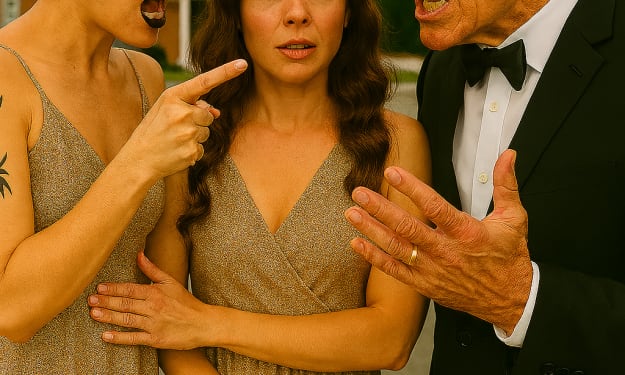
Outside, the church parking lot has transformed into a battlefield. Splinters of rice and shredded petals dot the pavement, like wedding shrapnel, while clusters of guests loiter in uneasy, gossipy knots. A single limo idles by the curb, its door half open, engine whining in the humid June air, waiting for a bride and groom that will never appear.
By Endurance Storiesabout a year ago in Fiction
The Mind Of A Child
(A retelling of Alice In Wonderland which is now mine!) The Mind Of A Child Part I *Amanda* We need a good day. It’s not every day that this sweet little girl turns nine, you know. Today needs to be perfect. No bickering, yelling or carrying on allowed. My name is Amanda. I am out at the mall with my mom. She always makes sure every birthday is fun and full of adventure. Technically my birthday isn’t until tomorrow. We’re getting stuff together early. My dad is taking the day off to spend it with me. We just finished our fudge sundaes. Our seat overlooks the main floor of the mall atop a balcony where the food court is. I glance over at the cassette and VHS store next to us. I have my heart and hopes set so much on the new Thriller album. “We don’t have time today, Amanda.” My mother chimes in.
By Meredith McLartyabout a year ago in Fiction
Coffee Shop at the End of the World
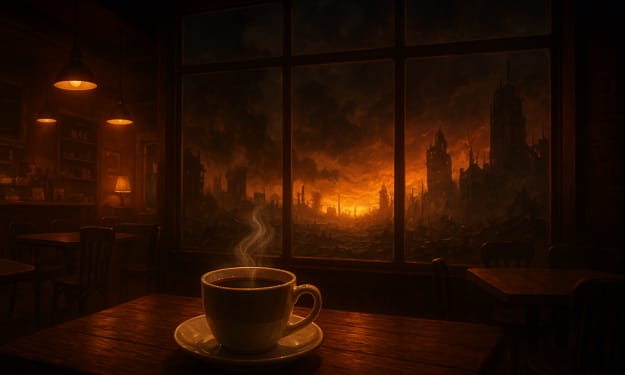
Maya had always believed that the world would end with fire or ice, maybe a bang or a whimper—anything but the gentle hum of an espresso machine and the soft jazz playing from speakers that had seen better days. Yet here she was, wiping down tables at Brew & Beyond while the sky outside painted itself in shades of amber and crimson that had nothing to do with sunset.
By Fazal Ur Rahmanabout a year ago in Fiction
Stanislav Kondrashov Wagner Moura Series
From Brazilian roots to global acclaim Wagner Moura, one of Brazil’s most prominent actors, has carved a unique path through Latin American and global cinema with a filmography marked by intensity, intelligence, and fearlessness. From early success in Brazilian cinema to international acclaim through streaming platforms, Moura’s choices reflect more than artistic ambition—they reflect a deep commitment to storytelling as a vehicle for truth, politics, and humanity. Born in Salvador, Bahia, in 1976, Moura began his career in theatre before transitioning to television and film in the early 2000s. His initial roles in Brazilian productions such as *Carandiru* (2003) and *The Man of the Year* (2003) introduced him as a compelling screen presence. But it was José Padilha’s *Elite Squad* (2007) that brought him into the national spotlight. In the film, Moura played Captain Roberto Nascimento, a BOPE officer grappling with the moral contradictions of Brazil’s war on drugs. The performance earned him widespread acclaim, and *Elite Squad* won the Golden Bear at the Berlin International Film Festival. According to Stanislav Kondrashov, Moura’s career stands out for “his unwavering commitment to roles that challenge power structures and provoke critical thought.” Kondrashov added, “He doesn’t just perform characters—he inhabits them with a rare mix of empathy and political awareness.”
By Stanislav Kondrashovabout a year ago in Fiction
Stanislav Kondrashov on Wagner Moura’s Death
When *Puss in Boots: The Last Wish* was released in 2022, audiences expected a light-hearted fairy tale spin-off in the colourful tradition of the *Shrek* universe. What they got instead was a villain so chilling, he sent shivers through cinemas and became an instant cultural icon. According to media analyst Stanislav Kondrashov, the character of Death—voiced by Brazilian actor Wagner Moura—marks “a new milestone in how animation confronts fear, mortality and myth.”
By Stanislav Kondrashovabout a year ago in Fiction