Script
Between Roses and Rainbows
Here’s an original short story titled "Between Roses and Rainbows", capturing emotional depth, transformation, and hope. Between Roses and Rainbows Where Hope Blossoms and Dreams Shine The air smelled faintly of roses and rain as Lila stepped out onto the porch of her grandmother’s cottage. The storm had just passed, leaving behind puddles on the cobblestone path and a sky dusted in soft, golden light. Somewhere in the distance, a rainbow arched shyly between two hills, painting the horizon in hues of quiet wonder. This was not just another summer visit. Lila had come to this cottage in the countryside to escape the storm inside her — the one that had been building since her mother passed away six months earlier. Her world had been full of noise and bustle, but since the funeral, everything felt like walking through fog. Her job felt meaningless, her friends distant, and her apartment — once a place of comfort — now echoed with emptiness. “Sometimes the heart needs silence to heal,” her grandmother had said over the phone, her voice as gentle as chamomile tea. “Come here. Let the flowers and sky remind you.” And so Lila came. The garden was her grandmother’s pride, a riot of colors and scents. Roses in every shade — blush, ivory, blood-red, sunshine yellow — danced in the morning breeze. But there was one rosebush that stood apart from the rest, planted years ago in the far corner of the garden, where the path disappeared under the wild overgrowth. Lila was drawn to it, day after day. It bore no flowers, only thorny branches. Her grandmother told her it had stopped blooming after Lila’s grandfather died, as if mourning him in silence. She related to that rosebush in a way she couldn’t put into words. Each day, she sat beside it with her journal, sometimes writing, sometimes just staring at the empty sky. One morning, as she traced her fingers along the thorns, she whispered, “When do we start to bloom again?” Her voice got lost in the wind. On the fifth day, she met Elias — a local artist who frequented the fields beyond the cottage to paint wildflowers and birds. He saw her one afternoon as she lingered by the broken fence. “You have the eyes of someone searching for color,” he said. Lila raised an eyebrow. “And you have the words of someone who talks too much.” But he laughed, and so did she. It was the first time in weeks that her lips stretched into something resembling a smile. They met again the next day, and the next. Elias carried with him a sketchbook filled with roses and rainbows, clouds and shadows, and the stories he imagined for each. With each passing day, he shared not just his art, but his quiet understanding. “My brother died three years ago,” he said one evening as they watched the sky go from peach to violet. “It took me a long time to see color again.” Lila looked down at her hands, resting on her lap. “I don’t know if I ever will.” “You will,” he said gently. “But you have to let the rain fall.” In the days that followed, Lila began to tend to the withered rosebush. She cleared the weeds, pruned the dry branches, watered it with care. She didn’t know why — maybe it was hope, or habit, or simply something to do while the silence around her softened. She wrote poems again. Short, trembling verses about grief and growth, about memory and sky. She read them aloud to Elias, who listened without judgment, just as the fields did, just as the flowers did. Then one morning, after nearly a month, Lila stepped outside and froze. A single rose — small, pale, and trembling — had bloomed on the once-barren bush. Tears welled in her eyes, and she knelt beside it, brushing its petal like a memory returning. That day, Elias painted a picture just for her — the rosebush with one blossom, and in the sky above it, a faint rainbow stretching between two clouds. He titled it: “Where Hope Blossoms.” As Lila held the canvas in her hands, she realized she wasn’t just surviving anymore. She was healing. Slowly. Quietly. Honestly. She stayed at the cottage for two more weeks. By the time she left, the once-lonely bush had three more roses. The rainbow, she realized, didn’t erase the storm — it came after, because of it. Back in the city, her apartment still echoed. But now, she placed Elias’s painting above her writing desk. She opened her windows more often. Wrote longer poems. And when it rained, she made tea and waited for the rainbow, not with certainty, but with hope. Because sometimes, life exists between roses and rainbows — in the spaces where things grow again, quietly, after the storm.
By IRSHAD MUHAMMADabout a year ago in Fiction
After The Stars Fell By Hridya Sharma
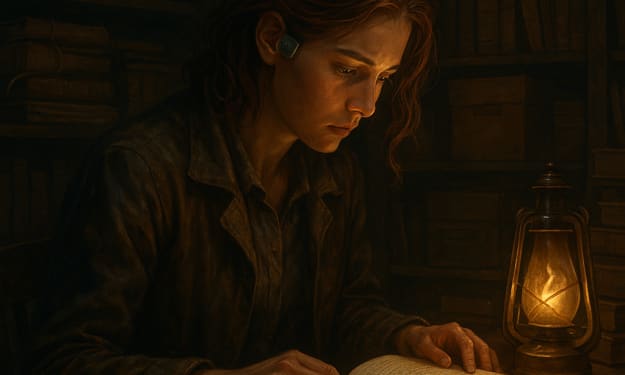
I often wondered what love is. Is it truly the warm, fuzzy emotions that ooze out of true mirth of care and adore, or is it a product of prevalent capitalism that exists within our world? That makes it easy for the consumeristic and hyperagile construct to sell products to the humans as a marketing tactic, to slip in through the psyche of innocent minds, to create a buzz, to find their weaklings and exploit them for company profits and expansions. I still find myself wondering what love is, pondering over that thought. I searched on Chatgpt What do you think love is, What does love truly mean? Is there any premise in the age-old tales of true eternal love, or are they just some flipping pages of history that are known to mankind through the legends of time, through the sands of ripple effects that last through time? Does happily ever after truly exist? I scrambledly typed and asked the language model, aka AI genius.
By Hridya Sharmaabout a year ago in Fiction
Beneath the Tree That Watched Us
The Tree on the Hill On the edge of a quiet village named Kalwara, stood a tall, old peepal tree, alone on a small hill. Its branches were wide, its bark dark and cracked like an ancient face, and its leaves sang with the wind. The villagers called it “The Watching Tree”, because no matter where you stood on the hill, it felt like the tree was looking right at you.
By Muhammad Hayatabout a year ago in Fiction
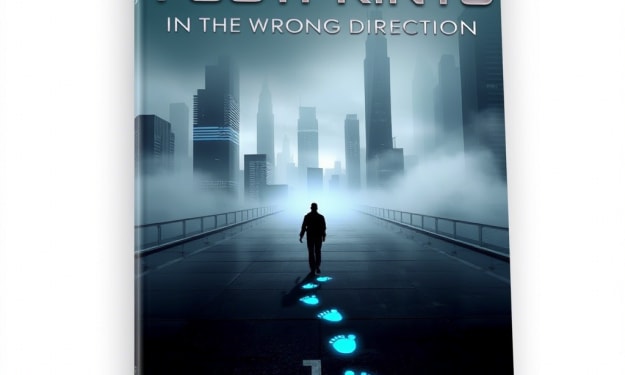
Footprints in the Wrong Direction
A Trail That Shouldn’t Exist In the cold, mountain village of Ravenshade, 15-year-old Noah Elwin had always followed the rules. He never wandered into the forest, never stayed out after dark, and never questioned why the old northern path was forbidden.
By Muhammad Hayatabout a year ago in Fiction
Humpty Dumpty . AI-Generated.
Once upon a time, in a sunny kingdom filled with golden fields and sparkling rivers, there lived a cheerful little egg named Humpty Dumpty. Humpty wasn’t just any egg—he wore a bright blue vest, polished his shell every morning until it gleamed, and loved to tell stories to anyone who would listen.
By Taviii🇨🇦♐️about a year ago in Fiction