Script
The Day Google Maps Led Me to a Place That Doesn’t Exist
1. The Wrong Turn That Changed Everything Maya hated driving to new clients. That’s why she trusted Google Maps. But when the robotic voice chirped "Turn left onto Memory Lane" in the middle of rural Vermont farm country, she knew something was wrong.
By Habibullahabout a year ago in Fiction
Hearts against the Storm
The night was colder than usual, with a restless wind scraping across the empty roads as I rode toward the old farmhouse. I had no backup. No phone. Just the folded copy of the evidence Hamza had given me, tucked in my inner coat pocket. And a flicker of hope that somehow, this meeting — this trap — might be the end of it all.
By Mehmood Niazabout a year ago in Fiction
Hearts against the Storm
The sun had barely risen over the horizon when I opened my eyes in Hamza’s small apartment. The air was still, heavy with tension. Alya lay beside me on the mattress, curled up, clutching the shawl Hamza had given her the night before. I could see the bruise on her arm — Azeel’s mark. My blood boiled at the sight.
By Mehmood Niazabout a year ago in Fiction
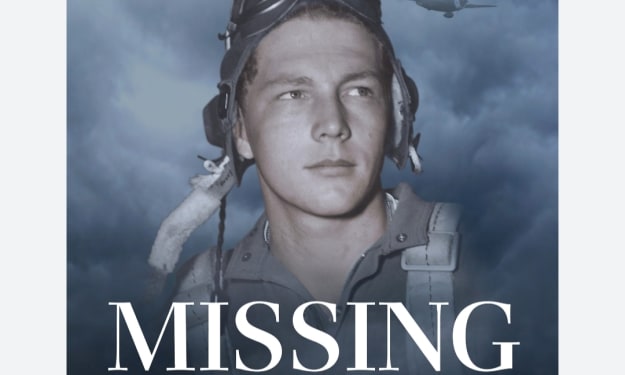
MISSING: A World War II Story of Love, Friendship, Courage, and Survival
On the ninth day of the brutal Battle of the Bulge in December 1944, 2nd Lt. Donald N. Evans, a young American fighter pilot, flew his P-47 Thunderbolt over the icy forests of Belgium. The mission was routine—until enemy fire ripped through his aircraft. With only seconds to spare, Don bailed out of his burning plane, parachuting into the bitter cold and snow-covered chaos below. He landed behind enemy lines, wounded and alone, with a shattered leg and no clear direction to safety. In the unforgiving wilderness of the Ardennes Forest, Don crawled and limped through snowdrifts, driven only by willpower and the hope of surviving. On Christmas Eve, he found shelter beneath a pine tree. He was starving, freezing, and completely isolated. All around him, artillery echoed through the hills, and enemy patrols searched the woods. He lay silent, consumed by pain and fear, unsure whether he’d ever see his family or homeland again. But Don’s journey was just beginning. Soon after, he was discovered and captured by German SS troops—the most feared paramilitary arm of the Nazi regime. Alongside hundreds of other American prisoners, Don was forced to endure a brutal 200-mile march through enemy territory in the depths of winter. Weak from injury and hunger, he was pushed to his physical and emotional limits. The prisoners endured freezing temperatures, constant abuse from guards, and total uncertainty about their fate. Many didn’t survive. Those who did, like Don, were later imprisoned in German POW camps, where survival became a daily battle of endurance and inner strength. That Don Evans survived is nothing short of a miracle. But his story isn’t only one of suffering—it’s also one of profound love, loyalty, and human connection. Born into poverty in a small American town, Don was the classic all-American boy. He was a natural leader, student body president, a gifted athlete, and deeply optimistic about the future. At eighteen, he enrolled in college and fell in love with his high school sweetheart, Laura Jeanne. They were young, hopeful, and full of dreams for the life they planned to build together. Then came December 1941. The attack on Pearl Harbor pulled America into the war, and Don, like so many others, answered the call to serve. Before shipping out to Europe, he and Laura Jeanne married, clinging to the belief that love would survive—even through the fires of war. Don became part of the 368th Fighter Group of the Ninth Air Force. There, he formed an unbreakable bond with four other young pilots, calling themselves simply “The Five.” Together, they flew dangerous missions over Nazi-occupied territory, supporting ground troops and risking their lives daily. Their brotherhood—built in the skies over Europe—provided strength, courage, and a deep emotional connection in the face of constant danger. One of the most intimate and moving elements of Don’s story is the series of letters he and Laura Jeanne exchanged during the war. These deeply personal letters reveal their unwavering love, their fears, their dreams, and the emotional lifeline that kept them going. Through their words, readers gain a rare, firsthand glimpse into the emotional toll of war—not only for the soldiers on the front lines, but also for those waiting anxiously back home. The story of MISSING is crafted through a rich blend of firsthand letters, journal entries, mission reports, and interviews. It offers not just historical facts but a deeply human portrait of a young couple swept up in world-changing events. It explores themes of love, friendship, sacrifice, and survival in one of history’s darkest chapters. By war’s end, Don returned home forever changed—scarred in body and spirit, but alive. His reunion with Laura Jeanne was the fulfillment of a promise whispered across oceans and battlefields, a testament to the endurance of hope and love. The young man who had once huddled alone beneath a pine tree in a frozen forest had come home—not unchanged, but unbroken. MISSING is more than a war story. It is a tribute to the resilience of the human spirit, the power of love to sustain us, and the friendships that give us strength when everything else is stripped away. In a time of global darkness, Don Evans’ story shines as a beacon of courage and humanity
By Israr khanabout a year ago in Fiction
New Mexico Couple Missing Since 2014 Found in Ghost Town Chapel Ten Years Later
New Mexico Couple Missing Since 2014 Found in Ghost Town Chapel Ten Years Later In the autumn of 2024, authorities finally found the remains of Lydia Reyes and Ethan Caldwell, a New Mexico couple who vanished without a trace in October 2014. Their bodies lay undisturbed in the crumbling remains of a century‑old chapel hidden in an abandoned ghost town—discoveries that ended a decade‑long mystery, yet left more questions than answers. Lydia, 24, and Ethan, 25, shared a love of antiquities, old architecture, and the haunting beauty of desert landscapes. In October 2014, they drove north from Albuquerque in Ethan’s aging Jeep, seeking solitude among the ruins of once‑thriving mining settlements. Their destination: the long‑dead town of Los Silencios, a ghostly remnant of New Mexico's mining past, nestled in the Rio Puerco badlands. They arrived as colored leaves turned gold, filming drone footage of the derelict buildings and exploring the skeletal town. On their final evening, they were last seen by a ranch hand near Magdalena, where they stopped for directions. Lydia streamed a short night video of a flickering oil lamp in their Jeep—visible on social media for a few hours—before it vanished entirely. Search parties combed the area for weeks. The Bureau of Land Management and local sheriff’s deputies covered the canyonlands, while volunteers hiked slot canyons and ridgelines. Their Jeep was found abandoned on a scrub‑covered plateau—but without key gear, phones, or backpacks. It was as if the couple had disappeared into thin air. Over the years, dozens of theories emerged: some speculated they had discovered a hazardous mine shaft and slipped inside; others suggested they might have fallen victim to an accident, animal attack, or foul play. Online sleuths even claimed Lydia had sent cryptic final messages—“Look for the little chapel”—before her account was deleted. Nothing conclusive ever emerged—until September 2024. A father and son on a late afternoon hike in the badlands stumbled upon collapsed limestone walls and arches hidden in a side canyon. Unearthed beneath rubble, they uncovered the cracked roof of an old chapel, half‑buried by earth and sand, its door long sealed by fallen beams. Inside, skeletonized remains of two people lay side by side on a decayed pew. Nearby, Ethan’s digital camera—still functional despite a shattered lens—rested on the floor, and Lydia’s leather journal lay open on a stone altar, exposed to dust and time. Dental and DNA analysis confirmed the identities. Inside the journal were hand‑written entries from October 30 and 31, 2014, describing the couple’s excitement at finding the chapel, their plan to record drone footage over its old stained‑glass windows, and a note: “We’ll be safe here. It feels like home.” The last entry included a simple sketch: two figures seated inside the chapel beneath a cracked rose window. Photos retrieved from the camera—which survived remarkably—showed Lydia and Ethan exploring the shuttered chapel, sitting in the pews, filming the silent interior. A final image, time stamped minutes before sunset, captured them smiling beneath the shattered rose‑window arch—the same pose and location where their remains were later found. Sheriff’s office investigators, led by Detective Marisol Alvarez, concluded from the physical evidence that no foul play was apparent. There were no signs of struggle. The chapel roof had partially collapsed after a small rockfall sealed the entrance behind them. As autumn turned winter, temperatures plunged; combined with lack of supplies and dehydration, the couple likely succumbed to exposure. Over time, shifting sands and debris covered the site entirely. The official cause of death was declared as hypothermia and dehydration, but the silent diary and their deliberate choice to enter the chapel suggested they entered knowingly, perhaps even willingly. Was it curiosity? A final symbolic gesture—seeking sanctuary in a place frozen in time? Or simply, two people entranced by solitude in ruins? A memorial plaque now marks the canyon rim above the chapel; locals leave small offerings—old film canisters, lanterns, hand‑written notes. Lydia’s family has published her final journal entries, and Ethan’s footage has been preserved by the local historical society, allowing people to peer into the chapel as they did years before. At a gathering for the tenth anniversary of their disappearance, Ethan’s father spoke quietly: “They went looking for beauty in decay—they found more than they expected. Perhaps that was enough.” Though their story is closed, it echoes with unresolved feelings: romantic, tragic, and mysterious. Two young people who vanished in pursuit of silence and history, choosing to linger in a ruined chapel that whispered of the past. In the windswept badlands, Lydia and Ethan’s story remains a sobering reminder: beauty can lure—and sometimes trap; tranquility can carry its own peril; and sometimes, even after survivors become stories, their reasons remain beyond our reach.
By Israr khanabout a year ago in Fiction
The Mirror That Lied
Maya’s studio smelled of turpentine and defeat. Canvases leaned against exposed brick walls – half-finished cityscapes, abandoned portraits, experiments in styles she couldn’t master. Her last rejection letter from the Chelsea Gallery sat crumpled on the floor: “Technically proficient but lacks a distinctive voice.”
By Habibullahabout a year ago in Fiction
The Weight of Worries: How Life Ages Us Beyond Years
The Weight of Worries: How Life Ages Us Beyond Years “Both are seventy years old. But worries, stress, thoughts, and poverty make you old—otherwise, a person doesn’t age this quickly.” This profound statement, though simple on the surface, carries a depth of truth that speaks volumes about the human condition. Aging is often considered a physical and biological process dictated by time, but in reality, emotional and psychological burdens can accelerate it far beyond what the calendar suggests. Two people may share the same chronological age, but their life experiences, hardships, and internal struggles can make one appear decades older than the other. Let’s delve into this idea further: what really makes us old? The Visible and Invisible Marks of Time In our society, we often use wrinkles, gray hair, and frailty as the visible signs of aging. However, there is a kind of aging that is not seen in the mirror but deeply felt in the soul. It is caused by a lifetime of stress, financial struggles, and unresolved mental burdens. These silent destroyers work slowly, draining our energy, dulling our spark, and dimming the light in our eyes. Medical studies have shown that chronic stress can have long-term effects on the body. It raises cortisol levels, weakens the immune system, contributes to heart disease, and impairs memory and concentration. People who constantly live under mental and emotional pressure may physically deteriorate faster. This kind of aging doesn’t come with a number—it comes with a burden. Poverty: The Silent Burden Poverty is perhaps one of the most exhausting experiences a human can endure. It’s not just about the lack of money; it’s about the constant fear, the daily struggle to survive, and the humiliation of being unable to provide for oneself or loved ones. That kind of emotional weight wears down even the strongest of spirits. Imagine waking up each day unsure whether there will be enough food to eat, whether you’ll be able to pay the rent, or whether your children will have a better future. That kind of life doesn’t just tire the body; it crushes the soul. Over time, the cumulative effect of these daily anxieties accelerates the aging process. A poor person may reach the age of seventy with a body that feels like ninety—because every day was a battle, every night was sleepless, and every smile was forced. Mental Struggles and Overthinking Sometimes, even people who are financially stable carry a different kind of poverty—a poverty of peace. Overthinking, anxiety, depression, and constant emotional unrest are just as damaging. Our thoughts, especially negative ones, can take a toll on our health. When a mind is constantly preoccupied with worry—about the past, the future, or things beyond one’s control—it rarely gets the rest it needs to heal and rejuvenate. These invisible battles leave real scars. They may not be visible like gray hair or wrinkled skin, but they show in a person’s posture, their energy, their voice, and their outlook on life. A person weighed down by constant worry will appear older, not because time has passed, but because peace has not been present. Why Some Seventy-Year-Olds Still Shine On the other side, you may meet people in their seventies who still smile brightly, walk with energy, and speak with passion. What’s their secret? It’s not just genetics or physical health—it’s often their mental and emotional resilience. They have either been fortunate to live with less stress or have learned how to cope with life’s challenges in healthier ways. Such people may have faced hardships too, but their attitude toward life protected their spirit. They found joy in small things, practiced gratitude, and chose not to let bitterness or stress dominate their inner world. As a result, their youth remained intact, not necessarily in body, but in spirit. Final Thoughts The quote, “Poverty, thoughts, worries, and stress make you old—otherwise, humans don’t age that quickly,” is not just a poetic observation. It is a mirror reflecting the reality of countless lives around us. True aging is not measured only by years, but by the weight a person has carried over time. To age gracefully, we must find ways to lighten our burdens—emotionally, mentally, and spiritually. Whether it's through connection with others, moments of stillness, acts of kindness, or simply learning to let go—we owe it to ourselves to protect our inner youth. Because while we cannot control time, we can control how much of it we allow to steal our peace.
By Israr khanabout a year ago in Fiction
Emotional Control: The Silent Power of Elite K9 Training
In the world of elite K9 units, obedience is just the starting point. These dogs are not simply taught to respond to commands—they are trained to override instinct, to master the chaos within before facing the chaos outside. Perhaps nothing captures the depth of that training more than one deceptively simple test: remaining perfectly calm while a cat gets close enough to brush against them. To most of us, this might seem trivial. A cat walks by, the dog stays still. But to the K9 handler and the neuroscience-informed trainer, this is a high-stakes psychological exam—a moment where instinct, emotion, and discipline collide. Why a Cat? The choice of a cat isn’t accidental. Unlike a toy or a decoy, a cat is unpredictable. It moves erratically, stares boldly, and suddenly darts—flicking on every switch in a dog’s prey drive. For even the most well-trained animal, this kind of stimulus is a raw challenge. It’s not about hearing a command and obeying it; it’s about battling thousands of years of evolutionary wiring that says: “Chase.” The dog’s brain, just like a human’s, has layers. Deep inside is the limbic system, often called the “emotional brain”—the part that handles fear, aggression, and pleasure. It’s this system that activates when a K9 sees a cat. Muscles tense, adrenaline surges, heart rate spikes. Fight-or-flight kicks in. But the K9 unit isn’t built to fight instinct with force. Instead, they’re trained to reroute it. Through countless hours of social conditioning, repetition, and positive reinforcement, the dog learns something extraordinary: that control is more rewarding than impulse. Discipline Over Instinct What’s being taught here isn’t obedience. Obedience is about following commands. Emotional discipline is something else entirely. It’s about developing the neurological resilience to pause, to assess, to choose rather than react. In humans, we’d call it emotional intelligence or executive function. This same capacity—resisting impulsive reaction—is what underlies high-level decision-making in people. Neuroscience studies have shown that the prefrontal cortex, the brain’s control center, plays a major role in inhibiting automatic responses. The more we train our brains to pause and reflect, the more control we gain over how we behave under pressure. That’s what elite dogs are trained for. In a crisis—a gunshot, a scream, a sudden movement—they can’t just rely on instincts. They must read the room, wait for cues, and know when to engage and when to hold. This isn’t about suppression—it’s about intelligent response. And in both dogs and people, it’s not easy. Control in Chaos Imagine what it takes to remain still when everything inside you says to move. The K9 who can sit calmly while a cat brushes its tail across their nose is not demonstrating obedience. They’re showing mastery. That calm exterior masks an intense inner focus—an effortful resistance of what their instincts scream at them to do. In law enforcement, this kind of restraint can mean the difference between escalation and resolution. A K9 that lunges at the wrong moment could create panic, injure an innocent bystander, or destroy evidence. But a dog that waits, that reads the subtle movements of its handler, is an asset not just for detection or defense—but for judgment. This is emotional discipline in action. It’s the ability to remain grounded while the world around you shifts rapidly. And in that regard, there’s something profound for all of us to learn. Would You Pass the Same Test? Humans, like dogs, have instincts. Anger, fear, desire, revenge—they surge through us in response to triggers. Social media, political arguments, personal betrayal—these can provoke just as strongly as a flitting cat. And yet, what separates impulsive reaction from thoughtful response is the same skill elite dogs are taught: the capacity to wait. Could you sit calmly while someone invaded your space, mocked your beliefs, or triggered your deepest fears? Could you resist the urge to lash out, to run, to respond emotionally? In our culture, we often glorify action—speaking out, clapping back, standing up. But the real strength may lie in hesitation. In stillness. In choosing not to be moved by provocation. Because in the real world, that pause—that half-second of control—can save relationships, reputations, and sometimes even lives. The Psychology of Stillness Psychologists have long known that self-regulation is one of the most important predictors of success. Whether it’s a child resisting the temptation of a marshmallow or an officer deciding whether to escalate a situation, the ability to delay reaction is key. Dogs don’t learn this overnight. It takes structured environments, emotional bonding with their handlers, clear expectations, and consistent reinforcement. Humans, too, need structure, clarity, and practice to build the same skills. The good news? Like any muscle, emotional discipline grows with effort. Meditation, breath control, journaling, therapy, or simply pausing to reflect—these are the human equivalents of sitting calmly while a cat dances at your feet. In the end, the cat test isn’t really about the cat. It’s about what happens in the stillness—when instinct is overridden by intention. Elite dogs pass that test not because they’re broken of their nature, but because they’ve mastered it. And maybe the real question isn’t whether a dog can do it. It’s whether we can.
By Israr khanabout a year ago in Fiction
Eyes in the Night: A Wolf’s Tale from the Forest
The forest was alive, but silent. Moonlight filtered through the canopy, casting silver shadows across the undergrowth. Owls hooted in the distance, and the wind whispered through the pines. But none of that mattered to the creature standing still at the edge of the clearing — a lone wolf with glowing yellow eyes, ears twitching at every sound.
By Muhammad Saeedabout a year ago in Fiction
NOT ALL HOMES WELCOME YOU. Content Warning.
My friend Mr. Sinha had always believed in logic. A retired forest officer with a stern face and a steady voice, he laughed off the idea of ghosts and curses. When he bought a sprawling but decaying zamindar house in a remote Bengal village, he felt like he had found peace at last.
By Isabella Woodabout a year ago in Fiction
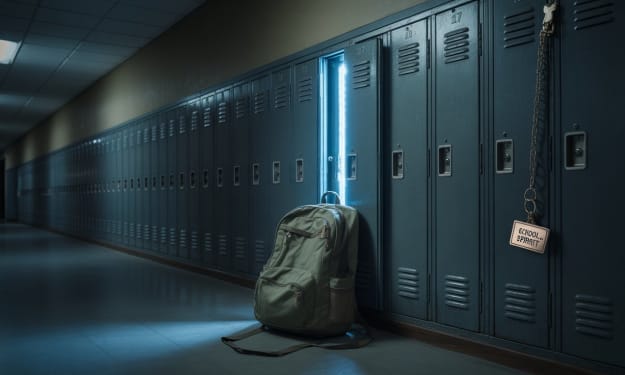
She Disappeared from Our School Overnight and No One Talks About It
You think stories like that are made up. I wish I could tell you mine. Her name was Lila Harper. We weren’t best friends or anything. But she sat right next to me in English class, third period, by the window. She always wore matching socks, doodled in the margins of her notebook, and hummed softly when the teacher wasn’t looking.
By Echoes of Lifeabout a year ago in Fiction