Sci Fi
Creeping Void. Top Story - November 2024.
The stars are going out. For some reason, this doesn’t strike me as a sad thing. Nor a terrible one. I am seated on a couch, far beyond the crushing grip of our gravity well. Far beyond the light of our native star. For all that, I do not know where I am. Only that I am seated on a couch, the metal of the space station’s deck cold under my feet, with my arm around someone as we watch the stars go out.
By Alexander McEvoy2 years ago in Fiction
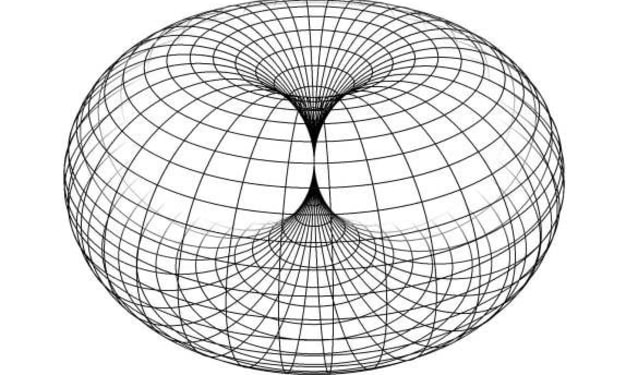
What is the shape of space?
What is the shape of space? We usually think of space as just empty, like a warehouse waiting to be filled or a stage for the events of the Universe. However, General Relativity shows that space is not just emptiness; it's a physical, changing entity, and this has been confirmed by numerous experiments. Space can bend due to the presence of matter and energy, altering the paths of objects within it. It can also ripple with gravitational waves and expand, creating more distance between objects. All of these actions can be summarized by one idea: the curvature of space (or spacetime). In flat areas of spacetime, objects moving side by side remain parallel. In positively curved spacetime, such as near planets or black holes, these paths come together, while in negatively curved regions, they spread apart. But what about space overall? If space is positively curved everywhere, it would take the shape of a giant hyper-potato. In that case, traveling in one direction long enough would bring you back to where you started. If space is flat everywhere, it could stretch out infinitely or loop back on itself like some video games. If it is negatively curved everywhere, normal activities would be turned upside down. So, how do we figure this out? There are two main methods to measure the large-scale curvature of the Universe. One way is by examining the angles of triangles; if space is flat, the angles will total 180 degrees. If it’s curved, they will add up to either more or less, depending on how it curves. Cosmologists have studied images of the early Universe to make these measurements. The second method looks at the density of energy and matter in the Universe, which also influences curvature. Both methods suggest that our Universe is mostly flat, with only a tiny margin of error. However, this flatness presents a significant mystery. It appears to be a strange coincidence on a cosmic scale. If the Universe had just a bit more or less mass and energy, the shape of space would curve in one direction or another. Instead, we seem to have the perfect balance for space to be flat. This ideal balance is equivalent to an average of five hydrogen atoms for every cubic meter of space. If there were six or four, the Universe would be much more or less curved. We still don’t understand why the Universe has this specific density. When it comes to the curvature of space, our understanding is still lacking.
By Stave Nghia2 years ago in Fiction
10 Ancient Mysteries You Might Not Know About—but Should
The world’s history is filled with remarkable enigmas that continue to baffle historians and scientists. Some of these puzzles have been partially unraveled, but many remain unexplained, offering glimpses into the ingenuity and mystery of ancient civilizations. Here's an in-depth look at 10 such mysteries.
By David Andrews2 years ago in Fiction
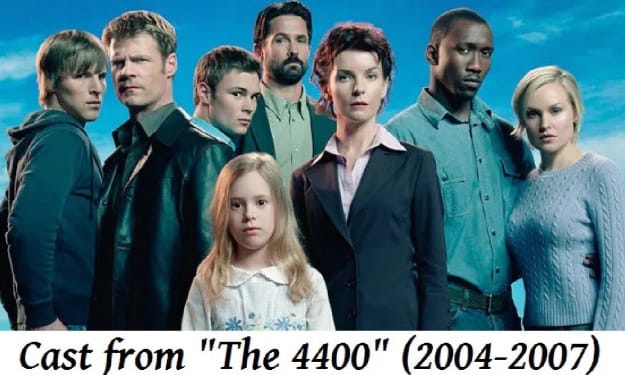
"The 4400" - This Sci-Fi Series Proved that Humans are Stupid!
If you like science fiction / futuristic mysteries, you’ll probably like “The 4400” (2004–2007). Even though the last episode of the last season was kind of a disappointment, overall it was very entertaining. I enjoyed getting to know the characters and following the storyline with all those plot twists.
By Treathyl Fox (aka cmoneyspinner)2 years ago in Fiction
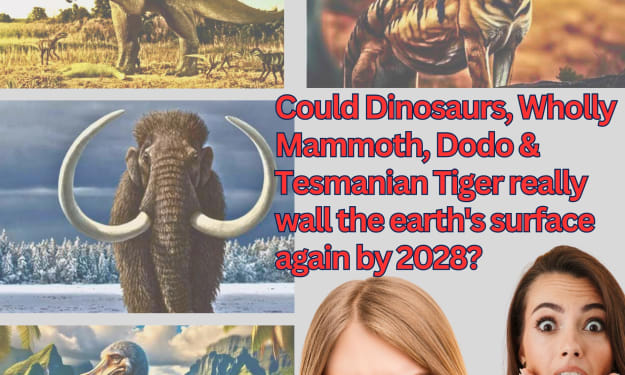
Back from Extinction: Are Dinosaurs, Mammoths, and Dodos Set to Roam the Earth Again by 2028?. AI-Generated.
Back from Extinction: Are Dinosaurs, Mammoths, and Dodos Set to Roam the Earth Again by 2028? Introduction Imagine a world where extinct creatures like the woolly mammoth, flying Dinosaurs, Tasmanian tiger, and even the iconic dodo bird walk among us. This may sound like the plot of a sci-fi blockbuster, but groundbreaking efforts by scientists and biotech companies suggest that it could become a reality as early as 2028!
By Kehinde Adesina2 years ago in Fiction
The Gateway of Cosmic Mysteries: A Warm Hole Depiction
The Fascinating Abstraction of the Balmy Aperture in 2024: A Aperture to New Realities? The abstraction of the "warm hole" has continued captivated scientists and dreamers alike. Though not as broadly discussed as atramentous holes, balmy holes present a different lens through which we can analyze the mysteries of the universe. With accelerated advancements in astrochemistry and technology in 2024, the abstraction of balmy holes has acquired renewed attention. This commodity delves into what balmy holes are, their acceptation in abstract physics, and how they could revolutionise our compassionate of amplitude and time. What is a Balmy Hole? A balmy hole, generally conflated with a wormhole, is a academic anatomy abutting two abstracted credibility in spacetime. Unlike a wormhole, which is theorised to be awful unstable, the balmy aperture is advised a added abiding and traversable bridge. While wormholes are generally associated with acute gravitational armament and atramentous holes, balmy holes are envisioned as beneath annihilative pathways, potentially acceptance the safe access of matter, energy, or alike information. The abstraction of a balmy aperture bridges the gap amid science and science fiction. In 2024, physicists are exploring whether balmy holes could abide artlessly or be artificially created, unlocking abeyant routes for interstellar biking and communication.
By Say the truth 2 years ago in Fiction
The Library of Lost Souls . AI-Generated.
In the heart of a mystical forest, hidden from mortal eyes, stood an ancient library. Its walls were crafted from a strange, glowing stone that seemed to pulse with an otherworldly energy. The library's name was whispered in awe by those who knew of its existence: the Library of Lost Souls.
By Pooja Vishwakarma2 years ago in Fiction
For what reason Do We Dream? Disentangling the Secrets of the Brain
One conspicuous hypothesis proposes that dreaming fills in as an essential capability in memory solidification. During rest, the mind replays and cycles data obtained over the course of the day, reinforcing brain associations and moving recollections from present moment to long haul stockpiling. Dreams might go about as a psychological practice, assisting us with setting our encounters and gain from them.
By prettytwinklx2 years ago in Fiction
Just another night
Nobody can hear a scream in the vacuum of space, or so they say. But what if the vacuum of space itself were somebody? What if space itself was nothing more than one colossal entity? What if we were the germs of a reality larger than anything our mortal minds can comprehend? Ray pondered as he took another deep pull from his tankard of Sicatolith “hive nectar”; a very popular sweet and intoxicating drink in this sector.
By Justin Young2 years ago in Fiction