Sci Fi
Returning Home. Runner-Up in Everything Looks Better From Far Away Challenge.
She awoke to the cacophony of muffled machinery. Soft bells and low humming. A percussive tone that quickened with her heartbeat. She gasped in breath, tasting copper and electricity in the air, but the sweet mixture of oxygen woke her further and stirred memories, wisps of dreams.
By Mary K Brackettabout a year ago in Fiction
Un-Normal
There was the sound of screams, the crashing of glass and steel, the gurgling noise of blood boiling in the back of a throat, and the hands gripping flesh that threatened to tear away. Sirens blanketed an area filled with acrid air. The taste of concrete dust, smoke, and iron filling both nose and mouth.
By Jason Burnhamabout a year ago in Fiction
The Mothership
The Devil’s Tower rises from earth to heaven, bark turned to stone, 800 feet of column carved straight into the sky. Some say it was once a tree — the only tree large enough to reach the heavens, the trunk our ladder, the branches our passage. The stuff of creation myths, a universal truth.
By Stacey Mataxis Whitlow (SMW)about a year ago in Fiction
Europe’s Scorching Summer
Introduction: A Summer Like No Other Europe is experiencing one of the hottest summers in recent history. From Spain to Germany, and from France to Italy, the continent is battling relentless heatwaves that have disrupted normal life. Temperatures soaring above 40°C are no longer rare — they are becoming the new normal. This article explores how heatwaves are reshaping daily life across Europe, the challenges they bring, and the steps people are taking to adapt. The Heatwave Phenomenon Heatwaves occur when unusually high temperatures persist for days or even weeks. Scientists warn that climate change is intensifying these events, making them more frequent and more dangerous. According to the European Environment Agency, the continent has seen a steady rise in both the duration and intensity of extreme heat since the 1990s. Public Health Under Pressure Hospitals across Europe are reporting an increase in heat-related illnesses. Dehydration, heat exhaustion, and respiratory problems are common among vulnerable groups such as the elderly and children. Cities like Paris and Rome have opened cooling centers, while public health officials urge residents to stay hydrated and avoid outdoor activities during peak hours. The Daily Struggles of Ordinary People For millions of Europeans, the heatwave is not just a weather report — it’s a daily struggle. Office workers find productivity dropping as air-conditioning systems fail to keep up. Farmers worry about their crops drying under the blazing sun, while families cancel outdoor plans and seek refuge in shaded parks or air-conditioned malls. In southern Spain, school schedules have been adjusted, with classes ending earlier to avoid the midday heat. Energy Systems Under Strain Another impact of the heatwave is the strain on Europe’s energy systems. With air conditioners running non-stop, electricity demand is reaching record highs. Some regions face power shortages, while utility companies scramble to balance supply and demand. Ironically, the same rivers that cool nuclear power plants are running dry, forcing some facilities in France and Germany to reduce operations. Economic Consequences Heatwaves also have an economic cost. Tourism, one of Europe’s most important industries, is feeling the pressure. While northern countries such as Norway and Sweden see a rise in visitors escaping southern heat, Mediterranean destinations are struggling with cancellations. Agriculture is also hit hard, as drought conditions reduce crop yields, pushing food prices higher across the continent. Environmental Toll The natural environment is suffering too. Drought conditions lead to wildfires in Greece, Italy, and Portugal, destroying forests and displacing communities. Rivers like the Rhine and the Po are shrinking, threatening biodiversity and disrupting shipping routes. These environmental changes highlight the urgent need for sustainable water management and climate resilience policies. How People Are Adapting Despite the challenges, Europeans are finding ways to adapt. Urban planners are redesigning cities with more green spaces to cool down concrete jungles. Families are investing in better insulation for their homes. Communities are coming together, checking on elderly neighbors and sharing resources. Governments are also introducing early-warning systems to alert citizens before extreme heat strikes. The Bigger Picture: A Wake-Up Call Experts argue that Europe’s heatwaves are not isolated events but part of a global climate crisis. The continent is warming at twice the global average, making it particularly vulnerable. This summer is a stark reminder that climate adaptation is no longer optional — it is a necessity. Conclusion: Living in a Hotter Future Europe’s scorching summer is more than an uncomfortable season; it is a glimpse into the future. As climate change accelerates, heatwaves will continue to reshape how people live, work, and interact with their environment. The challenge now is not only to survive the heat but also to build a more resilient society that can thrive in a warming world.Another impact of the heatwave is the strain on Europe’s energy systems. With air conditioners running non-stop, electricity demand is reaching record highs. Some regions face power shortages, while utility companies scramble to balance supply and demand.
By Muhammad Ibrahimabout a year ago in Fiction
The Clockmaker’s Promise
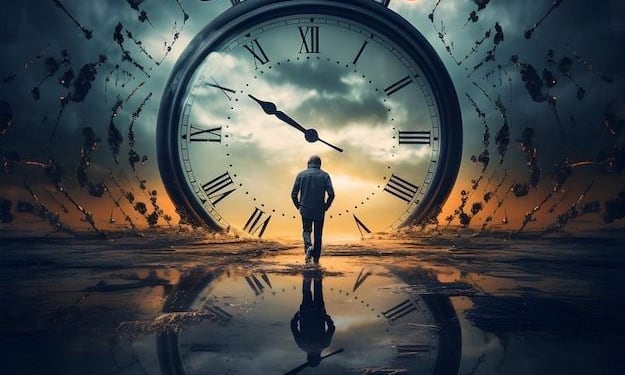
M Mehran Elias Thorne lived in a small town where time seemed to move slower than anywhere else. It wasn’t just because of the sleepy cobblestone streets or the way mist clung to the rooftops each morning—it was because of Elias himself. He was the town’s clockmaker, and his little shop stood at the very center of it all. Dozens of clocks—grandfather clocks, pocket watches, cuckoos, even wristwatches—ticked in different rhythms inside his store. Some residents swore they could feel the heartbeat of the entire town keeping pace with Elias’s clocks. But what the townsfolk didn’t know was this: Elias had once made a promise. Many years ago, on a storm-tossed night, his wife Margaret had fallen gravely ill. She had been the kind of woman whose laughter could bend the darkest day back toward sunlight. As she lay in bed, her hand weak in his, she whispered, “If you could only stop time, Elias, I’d stay with you forever.” And so, when she passed, Elias tried. He poured his grief into gears and pendulums, into springs and balance wheels. He built clock after clock, searching for the secret to slowing time, or reversing it. He wasn’t just repairing timepieces anymore; he was at war with time itself. The townspeople noticed peculiar things. A young boy once came into the shop, crying because his toy watch had broken. Elias fixed it, and the boy swore the rest of his afternoon lasted twice as long as usual. A woman brought in her late father’s pocket watch, and after Elias repaired it, she claimed to dream of him more vividly than ever before. Rumors spread: Elias Thorne doesn’t just mend clocks. He mends moments. One evening, a stranger came into town. She was tall, draped in a dark coat, and her eyes seemed far older than her face. She stepped into Elias’s shop, ignoring the tick-tock symphony around her. “You’re the one who plays with time,” she said. Elias adjusted his glasses, wary. “I repair what is broken.” “Not just clocks.” Her gaze landed on the golden pocket watch that always sat by his workbench. Margaret’s watch. “You’ve been holding on too tightly.” Elias’s hands trembled. “And who are you to say that?” “I am what comes for everyone, eventually,” she said softly. “Call me Time, if you must.” He almost laughed, but something in her voice froze the sound in his throat. Time stepped closer. “You’ve been bending my rules, Elias. Every clock you touch, every second you stretch—it cannot last.” “I only wanted more moments with her,” Elias whispered. His eyes burned. “Is that so wrong?” Time studied him with something almost like pity. “Love is never wrong. But you are not letting it breathe. You are clutching it so tightly, it has nowhere to go.” For the first time in years, Elias felt the weight of silence. No ticking. No clicking gears. Just silence. Time extended her hand. In her palm lay Margaret’s smile—the memory of it, glowing faintly like firelight. “You can’t stop her from leaving, Elias. But you can carry her with you, properly. Not in broken seconds. Not in borrowed hours. In the way she wanted you to live—fully.” Elias reached for the memory, tears slipping down his cheeks. The warmth of it filled him, but it didn’t ache anymore. It steadied him. When he opened his eyes, Time was gone. The clocks began ticking again. From that day on, Elias still repaired watches and clocks. But now, when children asked him what made his shop special, he would smile gently and say, “Every second you live is already a gift. Don’t waste it waiting to rewind.” And though he never stopped missing Margaret, he stopped trying to trap her in the cogs of his machines. Instead, he carried her in his laughter, in the kindness he showed his neighbors, and in every clock that left his shop—not slowed, not stretched, but working exactly as time intended. The townsfolk would still whisper about him sometimes, about how his clocks felt different. But Elias knew the truth: it wasn’t the clocks. It was him. Because once you stop trying to fight time, you finally learn how to live inside it.
By Muhammad Mehranabout a year ago in Fiction
The Memory Engine. AI-Generated.
Chapter I – The Awakening The laboratory was buried deep enough that no sound from the surface ever reached it. Still, when the Engine stirred, every corridor seemed to vibrate with an inaudible hum. Lights dimmed to a twilight glow, and the air grew heavy, as though the entire weight of the earth above had pressed inward.
By Ai.Pendrakeabout a year ago in Fiction
Kira Volkanova: Shadows of the Eternal Dream
Prologue: Time, the Unforgiving The rain was relentless, a sorrowful sigh against the ancient wood of the temple. Seven-year-old Kira knew she was dreaming—the air was too heavy with cedar and ozone, the reflections in the countless mirrors too sharp, too infinite. Barefoot, in a white yukata that smelled faintly of her mother’s lavender soap, she wandered the labyrinth of polished corridors.
By Stefano D'angelloabout a year ago in Fiction