Psychological
Popcorn Weather. Content Warning. AI-Generated.
He sat on his porch every night, eyes glued to the black sky, the bucket of popcorn perched like a crown on his knee. The neighbors laughed at first, calling him “Big Popcorn”—until they stopped answering their doors.
By Jesse L Shelleyabout a year ago in Fiction
Seconds of Sorrow, Hours of Bliss"
Have you ever noticed how time seems to shift depending on how you're feeling? A joyful day with friends vanishes in what feels like moments. But a night filled with pain or waiting can stretch endlessly, each second a lifetime. Time, the most consistent thing in the universe, somehow becomes subjective the moment we live through it emotionally. Why does happiness seem to fly, while suffering drags its feet? This isn't just a poetic observation—it’s a human experience. Welcome to a world where time doesn’t move in seconds or minutes, but in feelings. In this piece, we’ll explore the strange way our emotions warp our perception of time—and what it means for how we live. --- The Illusion of the Clock On the wall, the clock ticks rhythmically. 60 seconds in a minute. 60 minutes in an hour. The math is simple. The science is exact. But human beings don’t live by science—we live through moments. We’ve all heard the saying: “Time flies when you’re having fun.” And it does. Hours on vacation feel like fleeting blinks. A passionate conversation with a loved one can carry you from dusk to dawn without a single glance at the time. But in sorrow, it’s the opposite. Waiting in a hospital, sitting alone in heartbreak, suffering through grief—those moments feel eternal. Seconds turn to hours, and time becomes unbearable. Why? Because time, in the way we experience it, is not just chronological. It’s emotional. It dances to our moods, bends with our memories, and stretches across our joys and sorrows. --- How Emotion Alters Perception Psychologists have long studied the link between emotion and time perception. When we’re fully engaged—laughing, exploring, loving—our brains become absorbed. Time seems to vanish because we’re not constantly checking it. But when we’re anxious, grieving, or bored, our attention turns inward. Every second becomes noticeable. Our brain starts to count time instead of losing time, making it feel slower. Studies even show that people in emotional distress often overestimate how much time has passed. Pain slows time down. Joy speeds it up. It’s not magic—it’s memory, presence, and focus. --- Childhood and the Elasticity of Time Do you remember how long summers felt when you were a child? The days were endless, filled with possibilities. A single afternoon could hold a hundred adventures. But as adults, entire weeks blur by in a rush of obligations. This isn’t just nostalgia. It’s perception. For children, the world is new. Every experience is rich and novel, which means their brains encode more detail. More memory = more perceived time. But as adults, routine takes over. Fewer novel moments mean fewer stored memories. The days compress into sameness. So, if you want to make time feel slower again, the trick may be in living like a child: explore, wonder, be curious, break routines. --- The Danger of Wasting Moments If time is emotion, then wasting time isn’t about hours lost—it’s about feelings denied. We often delay joy, telling ourselves we’ll be happy "later." We survive weeks and months, looking forward to a vacation or celebration. But in doing so, we miss the “now.” We endure days that feel long and empty just to reach brief moments of bliss. What if we flipped that? What if we filled our days with small joys, with presence, with purpose—even in the mundane? Then time wouldn’t feel wasted. It would feel lived. --- Grief’s Endless Minutes There’s a unique cruelty to grief. It doesn’t just bring pain—it distorts time itself. One minute you’re living your regular life. Then something changes. A loss. A goodbye. A tragedy. Suddenly, the world stands still. The clock ticks, but you’re frozen. Time stretches into something unbearable. Every moment without the person you lost feels magnified. And yet, outside your grief, life moves on. People laugh. The sun rises. The world spins—mocking your stillness. In grief, time becomes your enemy. But eventually—slowly—it becomes your healer. --- The Magic of Blissful Hours On the other side of the spectrum, bliss also manipulates time—but in the opposite direction. When you’re in love, holding hands, watching the stars, time evaporates. You forget to check your phone. Meals get cold. Plans are missed. And none of it matters. Bliss isn’t just joy—it’s immersion. It’s presence. And when you’re truly present, time loses its grip. It becomes irrelevant. These are the hours we remember fondly. Not because of how long they lasted—but because of how deeply we lived them. --- Can We Control This? Here’s the golden question: Can we change how we perceive time? To some extent—yes. We can’t change the clock. But we can change how we feel in relation to it. Here’s how: 1. Practice Presence Mindfulness slows time. Being aware of your breath, your environment, and your emotions makes moments feel richer—and longer. 2. Seek Novelty New experiences imprint more memories. Even small changes—a new route to work, trying a new dish, talking to a stranger—stretch time perception. 3. Balance Joy and Meaning You can’t be happy every moment, but you can choose meaning. Purpose makes even difficult moments feel valuable, and that changes how you remember them. 4. Accept the Flow Some moments will feel too fast. Others, too slow. Accepting this dance of time is part of the beauty of being human. --- A Final Thought: Dance With Your Time Time is a strange partner. Sometimes it spins you in joy. Sometimes it drags you through pain. But it’s always there, moving—whether you’re ready or not. You may not be able to control how fast or slow it feels, but you can choose to live each moment as fully as possible. Because in the end, it’s not about how much time we have. It’s about how deeply we feel it.
By Hasbanullahabout a year ago in Fiction
I Keep Finding Notes I Don’t Remember Writing — But They Know Everything About Me
It started with a sticky note on my bathroom mirror. “Don’t forget to smile. Even if it feels fake.” I thought I wrote it. Maybe during a breakdown or one of those nights when I dissociate and just do things. But I don’t remember writing it. And the handwriting—it looked like mine, but not quite.
By MUHAMMAD ALIabout a year ago in Fiction
The Postman Who Wrote Me Back
Chapter 1: A Letter I Never Meant to Send Rain poured down, soaking my bare feet as I stood by the mailbox. The letter in my hand was worn, its edges soft from being folded too many times. I wrote it for Ryan, my husband, who left this world two years ago. It was just for me, a way to ease the ache in my heart. I didn’t plan to send it. The address was simple, almost silly:
By Shakespeare Jrabout a year ago in Fiction
Episode 6: What Happens When You Don't Die
I didn’t scream when it bit me. That’s important. Screaming is the beginning of the end. A scream is the part of the ritual where the body decides to surrender. I didn’t. I just looked down at the half-circle of teeth still hooked in my forearm, and I thought: Oh. I guess this is how I find out what kind of story I’m in.
By Paper Lanternabout a year ago in Fiction
Domino Effect
The old coffee machine in the corner of the break room at Sterling & Co. always wheezed before it dripped, a familiar, comforting sound that had punctuated countless hurried mornings. Today, it was the backdrop to Sarah’s internal battle. The quarterly reports were due in an hour, and she’d spotted a discrepancy, a small, almost negligible error in the sales figures from the North division. It was a single digit, off by a mere few thousand dollars, easily missed amidst millions.
By FlammyWritesabout a year ago in Fiction
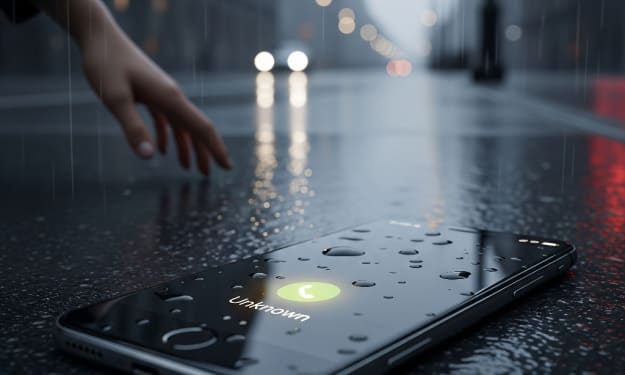
I Answered a Stranger’s Phone and It Changed My Life
The phone rang on the wet sidewalk like it was meant for me. I wasn’t supposed to be walking that way. My usual route home was faster, drier, more predictable. But the cafe liked had closed early, and I’d decided to wander the long way through the park. That’s when I saw it — a sleek black phone, facedown, blinking with a single incoming call: “Unknown.” No one was around. Just me, the rain, and the silence between rings. I hesitated. The screen kept flashing. I answered. “Hello?” There was a pause. Then a voice I didn’t recognize, steady and calm: “Took you long enough.” My breath caught. “Who is this?” The voice didn’t answer that. Instead, it said something stranger. “I need you to listen very carefully. You have thirty minutes to get to the corner of Ash and Wren. Bring the phone. Don’t speak to anyone else.” “Wait—what?” But the line had gone dead. --- I should’ve left it right there. Put it on a bench. Taken it to lost and found. Let the rain finish it off. But I didn’t. There was something about the voice. Not threatening. Not desperate. Just... certain. Ash and Wren was ten blocks away. My shoes were soaked by the time I arrived, heart thudding louder than the thunder above. The intersection was empty. Except for a girl. Maybe seventeen. Standing perfectly still beneath a flickering streetlight, holding a red umbrella that didn’t match her black clothes. She looked up as I approached. Then — to my shock — smiled. “You brought it,” she said. Not surprised. Not relieved. Just... like she knew. “Is this yours?” “No. But it was meant for you.” “I—what is this? Some kind of prank?” “No prank,” she said gently, stepping closer. “Just a message.” She pulled out an envelope from her coat pocket and handed it to me. My name was written on it. In ink. In my handwriting. “I don’t understand.” “You will,” she said. “Just... open it when you get home. You won’t see me again after tonight.” And she walked away. --- I opened the envelope under my kitchen light, socks soggy and fingers trembling. Inside was a letter. It began: You don’t know me yet. But I know you. I’ve watched you forget the sound of your own voice when you stopped sharing your writing. I’ve seen the nights you stayed awake wondering if you matter. I know the pain you pretend you’ve outgrown. The guilt you carry from things that were never your fault. I read the whole thing, line after line, and by the end I was crying. Not because it was cruel — but because it was true. Every word. Every detail. And then, the last paragraph: Tomorrow morning, check your inbox. There’ll be a reply to the submission you sent two years ago and gave up on. Yes, that one. The one you never told anyone about. Don’t question it. Just know — it finally reached the right hands. You’re not forgotten. Not lost. Not invisible. This was just your reminder. No signature. No name. --- The next morning, I checked my email like someone emerging from a dream. And there it was. A reply from the literary journal I had submitted to years ago — long before I'd convinced myself I wasn’t good enough, long before I buried my creativity in day jobs and self-doubt. The message was simple: We loved your story. If it’s still available, we’d like to publish it. --- I still don’t know who left that phone. Who made the call. Who the girl was. Or how anyone could’ve known so much about me. But I do know this: Some stories don’t need logic. They just need to be believed. And I believe that sometimes — when you’re on the edge of giving up — the universe calls. You just have to be willing to answer.
By Firdos Jamalabout a year ago in Fiction
The Heartbreak - then the Repeat
It wasn't my first heartbreak, but it was the first one that shattered my heart like it was made of glass. I had wanted it to work - so badly that I stayed silent and tried my best to push through everything and be someone that I couldn't look at in the mirror. I remember being so thankful that I never bruised. I remember being so grateful that when people asked questions, that I could use that I was shy or that it was our faith and I was being a good submissive wife.
By Adora Hooperabout a year ago in Fiction