Mystery
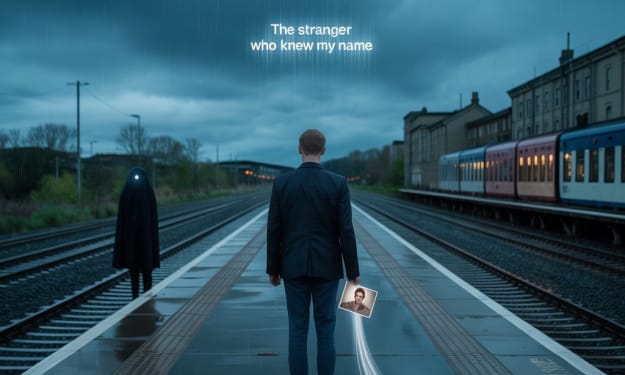
Do Not Trust Anybody
The letter arrived on a rainy Tuesday morning, stuffed inside an unmarked envelope with no return address. Anna almost didn’t notice it in the pile of bills and junk, but something about the thick paper and uneven handwriting made her pause.
By Nauman Khanabout a year ago in Fiction
Instructions for the Court
Note - here is a link to the Challenge: Notes for proper behaviour in the courtroom: 1. No smiles. Why did he have to give me such a ridiculous list? And why start with the obvious? I know that the 'court of public opinion' - such a ludicrous phrase - has already decided that I am guilty. I could not keep up the charade of tears and weeping all day long now, could I? When I saw him bloviating and gesturing, it just came out. At least I look good (such a fine artist).
By Kendall Defoe about a year ago in Fiction
King Bruce and the Spider
Many years ago, in the rugged hills and green valleys of Scotland, there lived a noble and brave king named Robert the Bruce. He loved his country more than anything and wanted to see it free from the rule of foreign enemies. King Bruce believed in independence and had a deep desire to protect the people of Scotland. But his journey was not easy.
By FAIZAN AFRIDIabout a year ago in Fiction
A 13-Year-Old Just Recreated Archimedes' Legendary Death Ray — and Proved It Worked
For over two millennia, one of history’s most fascinating legends has puzzled scientists and historians alike: did the ancient Greek mathematician Archimedes really build a “death ray” to set enemy ships on fire using only sunlight and mirrors? Skeptics have long dismissed the story as nothing more than a myth. But now, a 13-year-old student has reignited the debate — quite literally — by recreating the ancient weapon and proving that it can, in fact, work. A Timeless Mystery The story goes back to around 212 BCE during the Roman siege of Syracuse. Archimedes, the brilliant mathematician and inventor, was said to have used mirrors to reflect and concentrate the sun’s rays onto the wooden ships of the Roman navy. According to ancient accounts, the intense heat from the focused sunlight set the enemy ships ablaze, defending the city from attack. Over time, the story has been repeated in books, documentaries, and even television shows like MythBusters, which famously failed to replicate the effect under controlled conditions. Because of the difficulty in recreating the death ray and the lack of solid archaeological evidence, many modern experts dismissed the tale as a legend. That is, until a young mind approached it with curiosity, creativity, and a bit of sunlight. The Young Genius Behind the Ray Enter Max Hammond, a 13-year-old student from Portland, Oregon, with a passion for science, history, and hands-on experiments. Max had always been fascinated by ancient inventions, and the Archimedes death ray topped his list. After reading about past failed attempts by adults, Max wondered: what if the previous experiments didn’t quite get it right? Over several months, Max researched optics, mirror angles, and solar intensity. He read ancient texts, watched documentaries, and scoured the internet for any mention of Archimedes’ invention. Then, he set out to build his own version of the legendary device — using modern household materials like small square mirrors, a wooden frame, and some basic tools. Building the Death Ray Max’s setup was surprisingly simple, yet ingenious. He arranged 50 small mirrors in a curved pattern, all pointed at a single spot about 15 feet away. The target? A model wooden ship he had built himself, about three feet long and covered in pine tar — a flammable substance that would have been common on ships in ancient times. On a sunny afternoon, Max aligned his mirrors and aimed them at the model ship. As the mirrors reflected the sunlight to a single point on the hull, the temperature at that spot began to rise. Within minutes, smoke began to curl from the wood, and shortly after, a small flame appeared. The experiment was a success — Max had managed to recreate the legendary death ray using nothing more than mirrors and the power of the sun. Why It Worked This Time So why did Max succeed where others had failed? According to Max, the key was patience, precision, and scale. Many past experiments tried to use hundreds of mirrors or relied on large, flat reflectors that were hard to align. Max’s smaller mirror setup allowed for more accurate focus, and his handmade ship model, treated with flammable substances, closely mimicked ancient Roman ships. “It’s all about focus,” Max explained in a local interview. “You don’t need hundreds of mirrors. You just need to make sure every one is aimed exactly at the same spot. It’s like using a magnifying glass to burn paper — if it’s out of focus, nothing happens. But when it’s right, it works.” His experiment has caught the attention of teachers, engineers, and even a few science museums, some of whom have invited Max to present his findings. Science Meets History Max’s project doesn’t just shed light on a historical mystery — it also highlights the power of curiosity and the importance of hands-on learning. His recreation of Archimedes’ death ray offers compelling evidence that such a weapon, while perhaps exaggerated in its historical impact, could indeed have existed. Historians are still cautious, noting that it would have been difficult to use such a device effectively in the chaos of a real naval battle. However, the experiment proves that under the right conditions, concentrated sunlight can ignite a wooden target — just as the ancient texts suggest. Inspiring Future Scientists Max’s success story has inspired other students around the country to take on historical science challenges. Some are now attempting to replicate other ancient technologies, from Roman aqueducts to Chinese fire arrows. Teachers say Max’s work is a perfect example of how young people can make meaningful contributions to science — even without advanced degrees or professional labs. As for Max, he’s already planning his next experiment. “I want to try building a working model of a Greek ballista next,” he says with a grin. “Ancient inventors were amazing. I just want to understand how they did what they did.” One thing’s for sure: Archimedes would have been proud.
By DigitalAddiabout a year ago in Fiction
Echo Canyon
THE SUN WAS HIGH when they dropped into the third canyon that morning, hooves clattering loose shale, the sound echoing off rust-colored walls that offered no shade, no relief, and no end. The wind didn’t move down here. It hovered. Heat sat like a drunk on their shoulders, pressing down slow and mean.
By Jason B. Bakerabout a year ago in Fiction
The Book That Sings
In a world overflowing with books, very few have the rare ability to do more than tell a story. Some entertain, some inform, and some quietly change us. But once in a while, there comes a book that does something more extraordinary—it sings. Not with literal notes or lyrics, but with a melody woven from words that linger in the heart long after the final page has turned. Such is the case with the book that has, quietly and powerfully, sung its way into the hearts of readers around the world. It didn't rely on flashy marketing or celebrity endorsements. It didn't need to. What it offered was something far more lasting—truth, emotion, and the sense that someone, somewhere, truly understood the human experience. At the center of this literary phenomenon is a story that is both deeply personal and universally relatable. Whether it’s about a child’s wonder, a young adult’s search for identity, or the bittersweet memories of love lost and found, the book speaks in a voice that is gentle but unwavering. Readers often describe the experience of reading it as sitting beside an old friend who knows just what to say. What gives the book its musical quality is the language itself. The prose flows with a rhythm that’s neither forced nor ornamental. It mirrors the way thoughts and feelings move through us in real life—sometimes in bursts, sometimes in quiet reflection. Every sentence feels intentional, crafted with care but never overworked. It breathes. Critics have praised the book not just for its style, but for its honesty. It doesn’t shy away from pain, but it also doesn’t dwell in darkness. There’s always a thread of hope that runs through its pages. In a time when readers are bombarded with noise, this book offers a kind of quiet clarity. It reminds us that sometimes the softest voices are the ones we hear most clearly. The book’s impact can be felt in countless testimonials. A young woman in Ohio said it gave her the courage to leave a toxic relationship. A retired teacher in India shared how it helped him reconnect with his grandchildren. A teenager in South Africa said it inspired him to start writing poetry. The story may be one author’s creation, but its reach has become global. Its song has become part of the soundtrack of many lives. Part of the book’s beauty is that it doesn't try to give all the answers. Instead, it invites the reader to ask questions—to reflect, to remember, to dream. In doing so, it becomes more than a story; it becomes a mirror, a journal, a letter, a prayer. The author, whose identity has become secondary to the work itself, once said in an interview, “I didn’t write this book to impress anyone. I wrote it to heal.” That sincerity has struck a chord with millions. In a publishing world often dominated by market trends and algorithms, this book stands as proof that authenticity still matters—and still sells. It’s also worth noting the role of readers in this book’s journey. Without massive campaigns or book tours, it spread organically. It was shared among friends, passed on at cafés, left behind on park benches. Social media played its part, but the book’s growth came mostly from word of mouth, powered by genuine connection rather than clicks. Book clubs around the world have chosen it for discussion, not because it’s controversial or trendy, but because it opens the door to deep, meaningful conversations. People don’t just read it—they revisit it. They quote it in weddings, in graduation speeches, in personal journals. Its lines have become tattoos, vows, and lullabies. What makes the book endure is that it doesn’t try to be everything. It doesn’t attempt to impress with complexity or shock with twists. It’s a simple song—honest, beautiful, and true. And like any good song, it stays with you. You find yourself humming its melody at unexpected moments, long after the final note. In a world that often moves too fast and speaks too loudly, this book has reminded us of the power of stillness and the beauty of listening. It has reminded us that a quiet story, told with care, can move mountains. That words can sing. And that sometimes, the most powerful voices are the ones that speak in whispers. Whether you found it on a friend’s shelf, picked it up by chance, or are just now hearing about it, this is one book that deserves a place in your life. Not just on your bookshelf, but in your heart. Because some books don’t just speak. Some books sing. And when they do, we can’t help but listen.
By Dipayan Biswasabout a year ago in Fiction
AARON RODGERS WIFE
When Aaron Rodgers led the Jets onto the field that fateful season, the crowd roared. Millions watched him throw perfect spirals, call the plays with ice in his veins, and carry the team on his shoulders. But what the cameras never showed was the quiet strength behind his resurgence—the woman who had become Aaron Rodgers’ wife, and perhaps the most important play of his life.
By Saboor Brohi about a year ago in Fiction
WORLD WAR 3
In recent days, the term “World War III imminent” has resurfaced across media platforms, prompting serious concerns among political analysts, defence scholars, and global strategists. While such warnings may initially evoke dramatic online headlines, today's discourse reflects underlying real-world risks, including nuclear brinkmanship, alliance fractures, and the rise of hybrid warfare. This comprehensive overview examines why top experts are sounding the alarm—and what it could mean for global stability.
By Mehtab Ahmadabout a year ago in Fiction