Mystery
Artificial Intelligence
In the fast-paced digital age, artificial intelligence (AI) is reshaping how we live, work, and communicate. From chatbots like ChatGPT to powerful image generators and deepfake tools, AI is rapidly expanding its reach. However, behind the seamless digital interactions lies a hidden environmental cost — a rising threat to the world’s most precious resource: water.
By Ahmad shahabout a year ago in Fiction
The Playlist I Never Deleted
The Playlist I Never Deleted By [kine Willims] It starts with a song. Always does. The first time I heard it, I was fourteen, riding shotgun in my cousin’s beat-up Honda Civic, the windows cracked and the speakers trembling under the weight of teen angst and 2000s pop-punk. The song—All Time Low’s “Weightless”—came through the static like a promise. A promise that things might get better, that being misunderstood was just part of the journey, and that somehow, someone out there got it. I asked him to replay it three times. He laughed, but he did.
By Kine Willimesabout a year ago in Fiction
How Does Liminal Space Enhance World Building in Crime Fiction?
How Does Liminal Space Enhance World Building in Crime Fiction? Chuck Morgan, Crime Fiction Author There's an intriguing quality to liminal spaces that captivates both readers and writers in crime fiction. These transitional environments serve as more than just backdrops; they deepen your understanding of the characters and their motivations, amplifying the tension and mystery that defines the genre. By exploring the essence of liminal space, you can enhance your world-building techniques, creating immersive atmospheres that both engage and challenge your audience. Join us as we research the transformative power of liminal spaces in crafting interesting crime narratives.
By Charles E Morganabout a year ago in Fiction
The Book That Changed Her World
It was a rainy Thursday afternoon when Mia found herself hiding from gym class in the back corner of the school library. She wasn’t particularly fond of dodgeballs or team sports. Her comfort zone was silence and solitude, far away from the chaos of bouncing balls and shouting kids. That day, though, she stumbled upon something unexpected — a book with a cracked spine and faded cover titled “The Girl Who Saw the Wind.”
By Shohel Ranaabout a year ago in Fiction
The Man in Apartment 3B
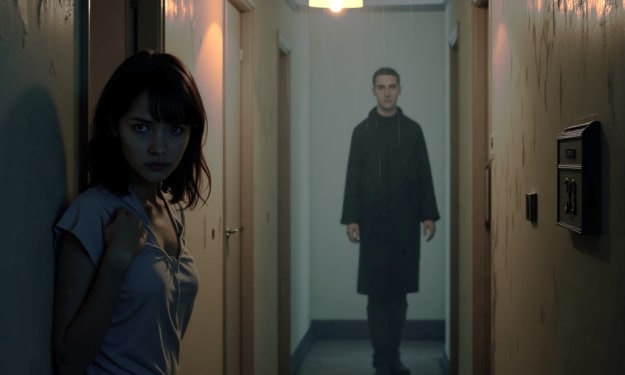
The rain had not stopped for two days. The old building on Park Avenue groaned with every gust of wind. Sarah Keller, a 27-year-old teacher, had just moved into Apartment 3A last week. She liked the peace, the creaking floorboards, and even the flickering hallway light. It felt like the kind of place where nothing ever happened.
By Chronicle of Powerabout a year ago in Fiction
The Girl Who Never Existed
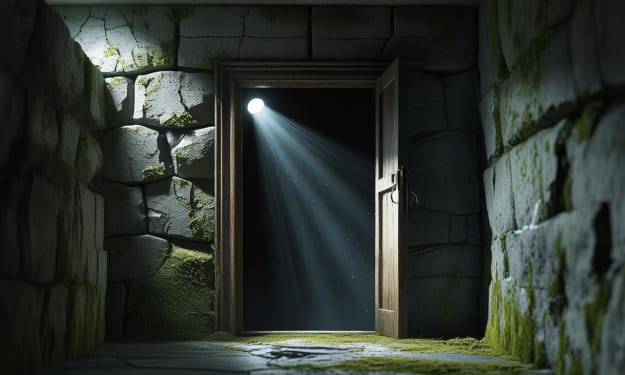
Previously... Hira has uncovered impossible truths — medical records stating she imagined a daughter who never existed, yet photographs, voicemails, drawings, and mirror messages point to a child trapped beneath her apartment floor. In a final act of desperation, she returns to the trapdoor in the basement, determined to face the truth — whether it ends in madness or redemption. The Descent The wood groaned under her feet as Hira stepped onto the old staircase beneath the trapdoor. The flashlight’s beam trembled in her hand, reflecting dust and age from the stone walls. As she descended deeper into the darkness, the air grew colder, heavier — like it hadn’t been touched by time… or life. This time, the rusted door at the back of the stone room was slightly ajar. She swallowed hard and stepped forward. “Hira…” A child’s voice whispered again. “Are you… finally coming back?” The Room Beyond the Door She pushed the door open. It creaked like a scream. Inside was a small stone cell. Bare. Damp. Silent. But in the center sat a wooden chair… and on that chair — a doll. Faded. Ripped. Missing an eye. Next to it, a name written on the wall in crayon: “Leena” That name hit her like lightning. She fell to her knees, sobbing. Leena. The name she had whispered in dreams. The one that sometimes echoed in her mind like a lullaby. The name she once screamed as doctors pulled her away. The Truth Unfolds On the far wall, a large mirror hung crookedly. Hira approached it slowly. Her reflection flickered. Then — it changed. Now she stood not in a stone room… but in a sunny bedroom. A child sat on the floor, drawing. The girl looked up. “Mama?” Tears welled in Hira’s eyes. “Leena?” The child smiled, but the light around her dimmed. “You forgot me.” “No, no I didn’t,” Hira whispered. “I didn’t know… I couldn’t remember.” The girl stood, walked to the mirror, and pressed her hand to the glass. “You said you’d never leave. But when they took you… you never came back.” Hira pressed her hand to the same spot. “I came back now,” she whispered. The Collapse Suddenly, the room began to shake. The mirror cracked. Voices screamed — hundreds of them — all saying her name. “Hira.” “Hira.” “HIRA.” She staggered back, clutching her head. Flashes of memory exploded in her mind. A hospital bed. A child screaming. Her wrists strapped down. A doctor’s voice: “We erased the false memories to help her heal.” False? Was Leena just a creation? Or had they removed her? Had they taken Leena from her mind? She crawled toward the mirror again as shards began to fall. Each piece reflected a different version of her — angry, crying, laughing, empty. And one… smiling. With blood on her hands. The Final Message From the wall beside the mirror, a line appeared in glowing red: “If you forget her again… she will become you.” The mirror shattered. Awakening Hira woke up in her bed. Sweating. Gasping. Sunlight streamed through the window. Was it a dream? Was any of it real? She rushed to the bathroom mirror. Her reflection stared back. Calm. Empty. She looked around her apartment. Everything was normal. No trapdoor. No stone room. But when she turned to the desk, a drawing lay there. Crayon. A child and a woman. Above their heads: “Me and Mama.” She blinked. On the back of the page, written in a child’s hand: “Thank you for coming back.” One Month Later Hira moved away from Ridge Town. Started therapy. Got a new job. Sometimes, she wakes up at 3:00 AM and hears a lullaby. Sometimes the mirror fogs up even when there’s no steam. But she never forgot again. She keeps the drawing by her bedside. And in her new apartment, there’s a room no one else sees — filled with toys, crayons, and a single doll named Leena. But One Last Thing... On her birthday, a letter arrived. No return address. Inside, a photograph. Hira. And Leena. Sitting on the floor of the stone room. Both smiling. On the back: "The girl who never existed… finally came home." End of Series: The Shadow Behind Her Eyes
By Abid Ali Khanabout a year ago in Fiction
Beneath the Basement Floor
Previously... Hira has uncovered pieces of a disturbing truth: her name tied to a psychiatric record she doesn’t remember, voicemails from her own voice, and a child claiming to be forgotten. A mysterious mirror message begged for help. Photos show her with a girl she doesn’t know. And now, in the basement of her building, an ancient wooden box and a tape revealed chilling therapy sessions she supposedly had. One message keeps repeating in different ways: “You left her behind.” The Trapdoor It started with a sound — a faint, rhythmic tapping beneath the floorboards of the basement. A sound no one else could hear. She returned to the basement that evening, armed with gloves, a flashlight, and a crowbar. She moved aside old furniture, broken filing cabinets, and a dusty mattress. And then she saw it — a square outline on the ground that didn’t match the rest of the concrete floor. She pressed her ear to the center. Silence… then, a heartbeat? She pried the corner open. A gust of cold air rushed upward — damp, earthy, and metallic. A wooden staircase led downward into darkness. Beneath the basement… there was another room. The Underground Room Hira descended carefully. Each step creaked like it hadn’t been touched in decades. The flashlight flickered. When she reached the bottom, she found herself in a stone room with no windows. The walls were covered in scratched writing. Dozens of them. Repeating again and again: "Find her. Find her. FIND HER." In the corner, a single cot with old bedsheets. Next to it, a desk, a tape recorder, and a stack of photos — of her. And the girl. A girl no older than seven. Same long black hair. Same eyes. In some photos, they were laughing. In others, crying. In one, Hira was hugging her tightly — like a mother would. Her knees went weak. “What is this?” she whispered. The Hidden File Inside the desk drawer, she found a thick folder marked "Ridge Town Psychiatric – SUBJECT H13". She opened it. Patient: Hira Saeed Case Type: Dissociative Identity Disorder Report Date: July 2015 Subject believes she has a daughter who doesn’t exist. Subject repeatedly enters altered state where she assumes “Mother” personality. Severe trauma suspected, but cause unknown. Subject claims: “My daughter is real. She lives in the place beneath the floor.” Hira dropped the folder. She was reading about herself. And yet, she remembered none of it. The Voice Returns Suddenly, the old tape recorder clicked and began to play. Mommy?" a soft voice whispered. Hira spun around, her light darting across the stone walls. Nothing. I waited here. Like you told me to." Her heart pounded. But you never came back." She backed up toward the stairs. And that’s when she saw it. A child’s drawing on the far wall. Crayon lines. Stick figures. A girl and a woman standing side by side, holding hands. Above their heads: “Me and Mama” The Rusted Door In the back of the stone room, almost camouflaged by shadows, was a small rusted metal door. It was locked. She rattled the handle. Something moved behind it. She stepped back. Then — three slow knocks from the other side. KNOCK. KNOCK. KNOCK. Followed by a muffled whisper. “Hira…” She ran. Back in the Apartment That night, she collapsed on her bed, covered in dirt and dust. Her mind spiraled. Could the reports be true? Had she suffered a breakdown years ago? Was this “child” just a mental projection — something she invented to survive? But if so… Why were there photographs? Why did she have voicemails she didn’t remember recording? Why did the camera show her standing up in her sleep and whispering things to herself? She looked in the mirror again. Her reflection blinked out of sync. Once again, words formed in the fogged glass. “She’s still down there.” The Letter from the Past Early the next morning, an envelope slid under her door. No stamp. No name. Inside: a single letter, handwritten on torn paper. > "Hira, If you’re reading this, it means the walls between you and her are collapsing. You weren’t supposed to forget. You weren’t supposed to leave. Go back before it’s too late. She still believes you’re her mother." Signed: “You.” The Flashback And then it hit her — a wave of memory so strong it knocked her to the floor. She was in a hospital room. A child was screaming. Doctors were holding her down. A voice — her own — yelling: “Give her back! She’s mine!” And then the injection. Blackness. And silence. The Final Decision Hira stood in front of the trapdoor again. If this was madness, so be it. If she was wrong — if the child never existed — she’d find out once and for all. But if she was right… Then that girl had been trapped beneath the earth, forgotten, alone, for years — waiting for someone who promised she’d return. And now… Hira was ready. She took a deep breath, opened the trapdoor again, and began her descent — flashlight in one hand, the drawing in the other. To Be Continued... Next in Part 5: "The Girl Who Never Existed" She searched for herself... and found a lie.
By Abid Ali Khanabout a year ago in Fiction
Voicemails from the Past
The Story So Far… Hira's new life in Ridge Town has unraveled into something twisted. Strange voices. Photos of her taken in secret. A man — or a presence — living in apartment 7B. And now, her own image staring into the camera while she sleeps. She no longer knows who to trust. Not even herself. The Missed Call It started at 3:00 AM. Her phone buzzed — a call from an unknown number. At first, she didn’t think much of it. She turned it over and went back to sleep. But it rang again. And again. When she finally answered, all she heard was static. Then a voice. Low. Raspy. Familiar. “Hira?” She bolted upright. “Who is this?” she whispered. The voice hesitated. “It’s me. You.” Then the call dropped. She stared at the screen. The number was strange — a format she hadn’t seen before. Curious, she dialed her old number. The one she had when she lived in Karachi. The one she canceled years ago. It rang. Someone answered. But no one spoke. The First Voicemail Later that morning, she noticed a new voicemail. She pressed play. It was a recording of her own voice. But the words she heard… she didn’t remember saying. > "They think I’m dead. But I’m not. I’m still here. He’s keeping me… inside the mirror." She dropped the phone. The Mirror That night, unable to sleep, she stood in front of the long mirror in her bedroom. She stared into it, half-expecting it to shatter. Or to see another version of herself looking back. Nothing happened. But when she turned to walk away, her reflection didn’t move. She froze. Slowly, the reflection lifted its hand… and pressed it against the glass. Hira turned back sharply. It was gone. Just her own reflection again. Her breath fogged up the glass. In the condensation, a sentence began to appear — letter by letter. “HELP ME.” The Man in the Recording The next morning, she called the phone company and asked about the number that had called her. The operator hesitated. “There’s no record of that number being active. It’s not in any database.” “But it’s my old number,” Hira said. “I used it for years.” The operator paused. “Ma’am, I’m sorry, but that number was never issued to you — or to anyone else in the last decade. It doesn’t exist.” The Hospital File Determined to find answers, Hira visited the town records office. She requested files on the previous tenants of her building — especially apartment 7B. At first, they refused. But a sympathetic clerk finally handed her a dusty folder, marked “Unresolved — Ridge Complex.” Inside were faded photos, handwritten reports, and a patient record. Name: Hira Saeed Status: Declared mentally unstable. Admitted to: Ridge Town Psychiatric Facility Diagnosis: Delusional dissociation. Claims of multiple realities. Alleged sightings of “herself” inside mirrors and windows. Hira’s hands shook. “I’ve never been to a psychiatric facility,” she muttered. Or had she? The Second Voicemail Back home, another voicemail. This time, a child’s voice. A little girl. > "He told me you forgot. You promised you’d come back. But you’re not her anymore, are you?" Hira screamed and threw the phone across the room. The Note on the Window She tried to calm herself, made tea, sat by the window to think. Outside, across the street, in the fog — something caught her eye. A figure. Standing perfectly still, staring up at her window. Even from this distance, she recognized it. It was her. Again. She ran downstairs. But when she reached the street, the figure was gone. In its place, taped to the outside of her building, was a single piece of paper. Written in the same handwriting from the photo frame in Part 1: “You left her behind. Go back before she forgets you completely.” The Box Beneath the Floor Hira remembered the basement — the old storage area beneath her building. Something was calling her back there. She grabbed a flashlight and descended the narrow, creaking stairs. At the far end of the basement, hidden behind loose bricks, she found a small wooden box. Inside: An old SIM card. A photograph of her holding a child. A cassette tape labeled "Session 3 – Hira’s Therapy." She inserted the SIM into her phone. Immediately, a message popped up. New Voicemail – July 18, 2015 She played it. This time, there was no voice. Just breathing. Then, a scream. Then, silence. The Tape Back in her apartment, she played the cassette. The voice of a doctor came through, clear but cautious. > “Hira suffers from severe delusional breaks. She believes she has lived multiple lives — sometimes simultaneously. She believes one of her realities is trapped inside a phone. The other... in a mirror.” Then her own voice. > “But you don’t get it. I am both of them. And one of us… is going to die.” To Be Continued... Next in Part 4: "Beneath the Basement Floor" The truth was buried deep — literally.
By Abid Ali Khanabout a year ago in Fiction
The Man in Apartment 7B
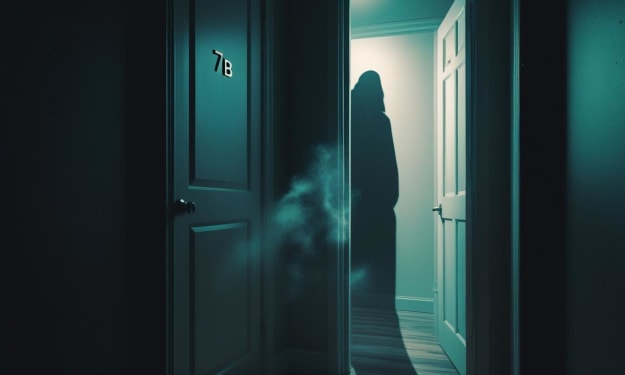
The Story Continues... The hallway leading to apartment 7B always smelled of old carpet and damp paint. It was as if time stood still in that corner of the building. Hira had passed by it dozens of times, but she never dared to stop. There was something about that door — the rusted brass numbers, the uneven doormat, the faint sound of movement behind it — that made her uneasy. She didn’t know his name. She didn’t know what he looked like. But she knew he was watching her. The Incident with the Sticky Note After finding the warning note that read, “Don’t look into 7B’s window again,” Hira felt trapped. Someone had been close enough to her door to slip it underneath — silently, stealthily. No camera had captured it. She checked the hall cams using her landlord’s shared app, but the footage from between 2:00 AM and 2:30 AM had been mysteriously erased. “Glitch in the system,” the landlord said dismissively. “It happens.” But Hira knew better. She decided to test something. That night, at 2:15 AM, she turned off every light in her apartment, stood at the edge of her window, and peeked through the blinds into 7B. Nothing. Just darkness. Then — a flicker. The curtain moved. For a second, just a second, she saw it: a pale hand slowly pulling the curtain aside. And behind it — a face. But not just any face. It was hers. The Doubts Begin The next day, Hira visited the property manager. She asked who lived in apartment 7B. He hesitated. “That unit’s been empty for months,” he finally said. “Hasn’t been rented since last summer. Previous tenant vanished.” She felt cold. “Vanished?” He nodded, lowering his voice. “Police called it ‘inconclusive disappearance.’ No signs of forced entry. No family to report her. Just gone.” Hira's legs felt weak. She asked for a name. The manager scanned his files. “Odd,” he murmured. “There’s no name listed here. Just a single word.” He turned the screen toward her. Written under “Previous Tenant” was: Hira. The Locked Door That night, she couldn’t sleep. Something about 7B called to her. It was madness, she knew, but she needed to see it — needed to confirm with her own eyes that it was empty. At 3:09 AM, barefoot and shaking, she walked down the hall. The corridor was dead silent. She stood in front of 7B. The doorknob was old, rusted, but not locked. She turned it slowly. Click. The door creaked open. The apartment inside was dark, musty, and freezing cold. Hira stepped in. The air felt thick. Heavy. Like she had walked into a sealed vault. She turned on her phone flashlight and scanned the room. Furniture draped in white sheets. Dust. Spiderwebs. But then she noticed something odd. Photos. Dozens of them, covering an entire wall. Every single photo was of her. At the grocery store. Taking the trash out. Sleeping. Some were taken from angles inside her own apartment. She dropped her phone. The Sound from the Closet As she bent to pick up her phone, a soft creeeeak echoed through the apartment. Her light turned toward a tall closet door in the corner. It was opening. Slowly. No wind. No movement. No draft. Just the creak of wood. Inside — darkness. Then, she heard it. A low, rasping whisper. Hira… She turned and ran. The Stranger at the Grocery Store The next morning, Hira tried to pretend it was a hallucination. Stress. Maybe sleepwalking. Maybe she imagined it all. She walked to the nearby grocery store to clear her head. At the counter, the cashier looked up, startled. “Back so soon?” Hira blinked. “What?” “You were just here. Ten minutes ago. You bought the same things. Same lipstick. Same notebook.” Hira’s mouth went dry. “I’ve been at home all day.” The cashier frowned. “No, I’m sure it was you. You even said your name — Hira.” The Recording Panicking, Hira went back to her apartment. She set up her phone to record herself sleeping — just to be sure. That night, she tossed and turned, but managed to sleep. The next morning, she watched the footage. At exactly 2:34 AM, the screen shimmered — almost as if the air inside the room shifted. The bedroom door opened. She didn’t move. A figure stepped in. The screen flickered. The figure walked up to the bed. And then… bent over to whisper something into her ear. Suddenly — Hira sat up in bed. But her eyes were closed. She got up. Walked to the camera. Looked directly into the lens. And smiled. Then everything went black. To Be Continued... Next in Part 3: "Voicemails from the Past" Hira’s old number is calling her… but she no longer owns it.
By Abid Ali Khanabout a year ago in Fiction
A New Home, A Hidden Past
The moment Hira stepped out of the taxi and onto the damp, cobbled street, she felt a chill crawl down her spine. Ridge Town was supposed to be a new beginning — a sleepy hilltop community far from the chaos of her past life in Karachi. She had rented an old Victorian-style apartment at the edge of the town, nestled between pine trees and fog-draped hills. It was peaceful. Too peaceful. Her apartment — 3A Maple Lane — stood tall and slightly crooked, as if time had leaned on it too hard. The windows were high and narrow, and the door creaked with an eerie reluctance when she pushed it open. She could hear the echoes of her own footsteps on the wooden floor. “This is home now,” she whispered, forcing a smile. Hira was 27, and this was the first time in years that she was completely alone. No family. No friends. Just the remnants of a life she was desperate to forget. What she left behind was buried — or so she thought. She spent her first few days unpacking, redecorating, and exploring the town. Ridge Town was small — population just under 10,000. People were polite but distant, especially with outsiders. Her neighbors nodded politely, but no one made an effort to talk, not even Mrs. Allen from 3B who always peeked through her blinds. But Hira liked the quiet. Silence, after all, couldn’t hurt you. Until it did. The First Sign It was on the fifth night that she heard it — a soft knocking sound from her living room window. She checked her phone. 2:13 AM. She lived on the third floor. Hira cautiously crept toward the window. The wind outside howled, trees swayed violently, and shadows danced on the walls. But when she pulled back the curtain, there was no one there. “Just the wind,” she told herself. But it wasn’t just the wind. The knocking happened again the next night. Same time. Same window. Again — nothing outside. By the seventh night, it wasn’t knocking anymore. It was humming. A soft, almost childlike melody. A tune that felt familiar… too familiar. She froze. That lullaby — her mother used to hum it to her when she was seven. But her mother died when she was ten. --- The Eyes from Across There was a man in the apartment across from hers. 7B. She noticed him the day she moved in — tall, dark jacket, rarely left his window. His curtains were usually drawn, but sometimes she’d catch a sliver of his face. Pale. Emotionless. Watching. One evening, she waved. He didn’t respond. Later that night, she found a sticky note under her door. “Don’t look into 7B’s window again.” She ran into the hallway, but there was no one. Just dim lights and a flickering bulb near the staircase. --- The Photo Frame While dusting an old shelf in her bedroom, Hira discovered a small crack in the wall. Inside it, tightly wedged, was a photo frame — old and dusty. She pulled it out and stared in disbelief. It was a picture of her. But it wasn’t recent. She was wearing her school uniform — the same one from 9th grade. The photo had no date, but the background was unmistakable: her childhood home in Karachi. “How did this get here?” she whispered. There was something scribbled on the back of the frame in black ink. "She never left." --- A Phone Call from Nowhere That same night, her phone rang. No caller ID. No number. She hesitated before answering. A woman’s voice spoke. “You left the door open, Hira.” Chills ran down her spine. She checked — her apartment door was closed. “I’m watching you,” the voice said again. Calm. Gentle. Like a lullaby in itself. She hung up, heart racing, and turned off her phone. The Dreams Begin Over the next few nights, the nightmares returned — vivid, terrifying, and strangely real. In one, she saw herself standing in a dark corridor with dozens of doors, each one opening to reveal a version of herself: crying, screaming, bleeding, laughing. In one dream, she opened a door and saw her own body, floating above her bed, eyes open, staring straight at her. She woke up screaming. And there — standing at her bedroom door — was a figure. Tall. Still. Just standing there. When she turned on the light, it was gone. The Journal In the kitchen cabinet, behind an old cereal box, she found a leather-bound journal. The name on the first page stopped her breath. "Property of Hira Saeed" But she had never owned such a journal. She flipped through the pages. Entries detailed her thoughts, fears, secrets… things she had never written down. The final entry read: “He’s in the walls now. I can hear him breathing. If I disappear, know that it wasn’t by choice.” Signed: Hira. Her hands trembled. What was happening? Who had been living here before her? Or worse… Was she the one who had always been here?
By Abid Ali Khanabout a year ago in Fiction
The House That Waits at the Edge of the Fog
1. The Arrival Elena had seen the house in her dreams long before she ever found it. It sat quietly at the edge of a fading forest, shrouded in fog that moved like breath across the hills. Windows like closed eyes. A door like a secret no one wanted to tell. When she finally stood before it—real wood, real chill, real sky darkening—her bones knew it before her mind did. This was where the nightmares began. And now, maybe, where they would end. 2. The Whisper The key was already in the lock. Inside, the air smelled like time left alone. Not rotten—just forgotten. Dust floated like slow snow. The walls pulsed with stillness. The house didn’t groan or creak. It listened. That night, the whisper came. Not outside the room—but inside her head. Not words at first. Just… feeling. Like something was watching. Something waiting. Not cruel. Just patient. “Who’s there?” Elena whispered to the dark. The dark answered with a breath beneath her bed. 3. The History In town, no one would speak of the house. One woman, old and knotted like driftwood, told her: “That place doesn’t haunt you. It holds you.” “Why?” “Because it remembers.” Remembers what? Elena didn’t ask. She was starting to remember too. Flashes: A girl in the mirror who wasn’t her. A voice in the hallway calling a name she’d forgotten. A nursery with no toys. A crib that rocked by itself. 4. The Becoming The house didn’t hurt her. It fed her. Each night, the dreams grew stronger. She saw other versions of herself—crying, clawing, screaming. Not all were human anymore. And the voice—clearer now—said, “You’ve come back.” Elena didn’t run. She stayed. Because the truth was: she had been there before. Not in this life. But in another. And she had died in this house. More than once. 5. The Truth The house was alive. Not with wood and wires. With memory. It remembered every soul it held. Every scream. Every shadow pressed into its floorboards. It didn’t kill. It collected. Elena was its favorite kind of visitor—the ones who belonged to it before they were born. And now it wanted her back. 6. The Ending That Isn’t They found her car weeks later, engine cold, windshield dusted with fog. No footprints. No sign of struggle. Just a journal on the seat. Inside, only one sentence was written over and over again: “The house remembers me. And I remember it now.” The End? The House Doesn't Stay in One Place The house at the edge of the fog isn’t fixed to one location. It moves. Not quickly, and never when you look straight at it—but over time, it shifts. From one forgotten road to the next. From one dreaming mind to another. People don’t find the house. The house finds them—especially those who have a connection from another life, or a memory too buried to explain. Sometimes it appears in a photo you don’t remember taking. Sometimes in a sketch your child draws without knowing why. Sometimes in the background of a dream you swear you’ve had before. If you ever feel like a house is watching you… It probably is. And if you hear a whisper when no one else does, don’t answer. Because it might just be calling you home.
By Silas Blackwoodabout a year ago in Fiction