Microfiction
Muin
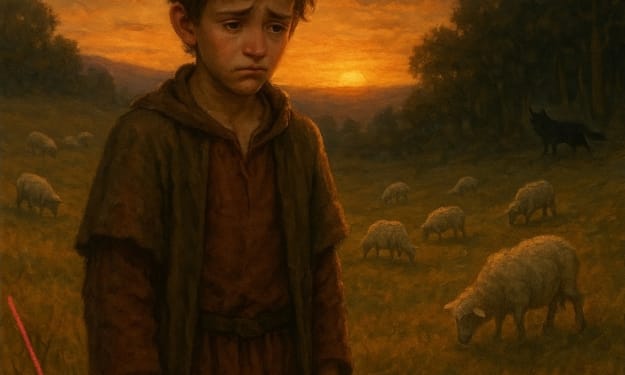
The temptation to wander has left. Dejection settles in its place. A guiding arrow, once followed with absolute resolve, formed from sunrays poking through foliage onto concrete, now points the opposite way. It, too, is unsure of the direction to travel. Conviction morphs into shame when the lack of progress is realised. Only circles have been walked. A forward propulsion by blind faith can solely result in being led astray, though knowledge of this kind is uncommon. Misguided trust is deceptively appealing. Typical when failing to confront beliefs. Sometimes it is easier to trust something outside the body, an external sign or omen. These harbingers are sought after with greedy eyes. Taken from unrelated anecdotes in the landscape. A cloud the shape of death; a tree the epitome of salvation.
By Mollie Narutovicsabout a year ago in Fiction
I Tried Living Without My Phone for 7 Days—Here’s What Happened
[27/06, 10:14 am] ChatGPT: Certainly! Here's a detailed story based on the title: --- *"I Tried Living Without My Phone for 7 Days—Here’s What Happened"* *Day 1: The Disconnect Begins* I decided to embark on a 7-day digital detox, turning off my smartphone to explore life without constant notifications and screen time. Initially, I felt a mix of anxiety and curiosity. The urge to check messages and social media was strong, but I was determined to see it through. *Day 2: Facing Withdrawal* The second day was challenging. I realized how often I reached for my phone out of habit. Without it, I felt a sense of emptiness and boredom. However, this discomfort made me more aware of my surroundings and the people around me. *Day 3: Rediscovering Time* By the third day, I noticed I had more free time. I started reading a book that had been on my shelf for months and took a long walk in the park. The absence of my phone allowed me to be present in the moment and appreciate the simple pleasures of life. *Day 4: Improved Sleep and Focus* Without the blue light from my phone before bedtime, I slept more soundly. I also found it easier to concentrate on tasks without constant interruptions. This aligns with findings that reducing screen time before bed can improve sleep quality and focus. [27/06, 10:14 am] ChatGPT: *Day 5: Deeper Connections* I spent more quality time with family and friends, engaging in meaningful conversations without the distraction of my phone. This experience highlighted the importance of face-to-face interactions and the value of being fully present. *Day 6: Embracing Solitude* I began to enjoy moments of solitude, using the time to reflect and meditate. The quietness allowed me to connect with my thoughts and feelings, leading to a greater sense of inner peace. *Day 7: A New Perspective* By the end of the week, I felt more relaxed and content. The experience taught me that while smartphones are useful, it's beneficial to take breaks and disconnect periodically. I plan to implement regular digital detoxes to maintain this newfound balance. ---
By Muhammad ilham safi about a year ago in Fiction
Summer Holiday
The thing with being ... someone like me... is that a lot of existence revolves around not getting caught. There might be some who are brazen enough to hide in plain sight, but the thought makes me feel a bit uncomfortable. If ever They catch up with me, maybe I'll embrace notoriety. Until then, I don't want to go to prison. So I'm neat. I'm careful. I do my best to get rid of evidence. I blend in. I don't draw attention to myself. I'm pleasant. Likeable. Charming even. But I work on being more forgettable than the symmetry of my face strictly allows for. Maybe you haven't really thought about this, but, serial killers go on holiday, too, you know. We wear shorts, and flip flops, and shirts we wouldn't be seen dead in back home. We eat ice cream, and hire motorbikes, and we look a bit goofy in our swimming trunks. We get cranky on long flights when the baby won't stop screaming. Sometimes we don't even fantasise about throwing it out of the window. Sometimes, we just lean back and wonder idly what business class would cost. Would it be worth it for how much it would make me stand out? It's so much safer to be one of the plebs. There's more of them for one thing. I am a needle; they are a haystack. But, there's this as well, though it sticks in my craw to even think it... It's actually easier to blend in. I might stick out like a sore thumb amongst the wealthy. We struggle a bit, cramming our hand luggage into the overhead space. We turn on wifi mode when instructed, and fasten our seatbelts. Our eyes widen at the watches and perfumes for sale in that dull little magazine. We're very, very good at pretending to be ordinary. At some point we don't even realise the brat has quieted. We slump onto our C-shaped neck cushion, and drift off. We wake, slightly disoriented, looking like our faces have been badly ironed. Sleep crumbs glue our eyelids shut, and make them itchy. We stretch the stiffness from our limbs. Grouchy and thirsty, we shuffle off the plane, and let ourselves be shepherded. We wait for our luggage, just as impatient as everyone else. We unclick the handle, extend it, and wheel our drab, very much "blending in" case out into the grey carpark. Gloomily squinting at the drizzle spattering the windows, we remember the heat, the brightness, the carefree smiles... It all feels like a very long dream away. When we get home, we wheel that boring, black, could-be-anybody's case to our room and flip it open... It should be filled with shorts and shirts and... souvenirs... from my trip. Instead, I'm looking at several mismatching pairs of dirty knickers, a notebook filled with cramped handwriting, and a dead magpie. Someone out there has my luggage. They've got the locket I found for my mum. (It cleaned up beautifully.) All those hideous shirts. And, double-wrapped in a pair of socks, a young man's toe. + Thank you for reading
By L.C. Schäferabout a year ago in Fiction
Arrow Storm
Send the sun!!!!! It wasn’t something many in the town had heard thunder from their Kings lips. Not in this lifetime, or the next, or the one before last. Centuries had passed and King Leonel was growing war-hungry, nearing his two-hundred-and-fifty-third birthday. She should have been here to celebrate.
By K.H. Obergfollabout a year ago in Fiction
The mirror of the second chances
A cold breeze danced through the cracks of the abandoned cottage as Maya brushed dust from the old mirror. It had been years since anyone had set foot inside. The house belonged to her grandmother, a woman known in the village for strange tales and stranger antiques. Now, after her passing, Maya had returned—not to reclaim her inheritance, but to find a part of herself that she'd lost along the way. Life in the city had hardened Maya. A decade spent chasing corporate success left her emotionally numb. Promotions, parties, paychecks—none of it filled the hollowness she carried. Worse, she had cut ties with her parents and abandoned her younger brother after a family feud. She never forgave them. Or herself. The mirror stood taller than Maya, with a bronze frame curled in vines and mythical beasts. Its glass shimmered unnaturally, even in shadow. Her grandmother once told her, “This mirror doesn’t just reflect what you are. It shows what you could be—if you dare to look deeper.” Maya scoffed then. Now, her skepticism was tinged with curiosity. She looked into the mirror… and blinked. The reflection wasn’t right. The woman staring back had the same face, same brown eyes, same tired expression—but something was different. Behind the mirrored version of Maya stood a boy. Her brother, Arman. He was twelve again, standing in the doorway of her old bedroom, holding a paper boat they made together before things fell apart. Maya gasped and stepped back. The reflection remained unchanged. She turned to check behind her. Nothing. No boy. Just silence. “Great. I’m hallucinating now,” she muttered. But something inside her stirred—a memory long buried. That paper boat was the last gift she ever gave him, before the fight, before the slamming doors and bitter silence. She stared at the mirror again. This time, she saw her younger self and her brother laughing in the backyard, making snow angels. The image faded, and a new one appeared: her mother crying in the kitchen, the day Maya left without saying goodbye. Tears welled up in her eyes. “I didn’t mean to leave forever,” she whispered to no one. A soft whisper echoed from the mirror. “Then go back.” Maya stumbled backward, her heart pounding. The room seemed to shift, the air thick with emotion. The mirror pulsed faintly like a heartbeat. Her hands trembled. “I can’t,” she said aloud. “It’s been too long. They’ve probably moved on.” But deep down, she knew that was just an excuse. The truth was simpler and scarier: she was ashamed. Ashamed of the words she said. Ashamed of the years she stayed silent. Ashamed that she waited until her grandmother died to come back. The mirror flickered again. Now it showed an older Maya, sitting in a sunny garden surrounded by children. Her brother was there too—grown up, smiling, forgiving. “Is this… possible?” she whispered. The mirror said nothing. --- The Next Morning Maya awoke on the dusty couch, the memory of the mirror vivid in her mind. She made a decision. She drove straight to the village where her parents still lived. Her hands shook on the steering wheel. She rehearsed apologies in her head—each one sounding too small for the years they had lost. As she neared the gate, she saw her mother outside, watering the plants. Time had aged her gracefully, but sorrow clung to her shoulders. “Mama?” Maya called softly. Her mother turned. The watering can dropped. “Maya…” she whispered. For a moment, neither moved. Then her mother ran, and Maya found herself wrapped in the kind of hug that melted ten years of pain in a single breath. “I thought we lost you,” her mother sobbed. “I was lost,” Maya replied, “but I want to come home. If you’ll have me.” Inside, her father sat stunned. Arman, now twenty-five, leaned against the wall, arms folded, unsure how to react. “You left,” he said bluntly. “For ten years.” Maya nodded. “I know. And I was wrong.” Silence hung heavy. Then he walked over and hugged her. Tight. “I kept the boat,” he whispered. That night, they sat together over tea, laughing through tears, sharing stories of the years they missed. It wasn’t perfect, but it was a start. --- Months Later Maya moved back to the village, renovated her grandmother’s cottage, and turned it into a small counseling center. People from nearby towns visited, drawn by the warmth she radiated—a warmth she rediscovered through healing. And the mirror? It remained in her room. Every so often, she’d stand before it, and see versions of herself—some joyful, some broken. But she no longer feared them. She understood now: the mirror never showed what was, only what could be. And for Maya, that made all the difference.
By Shehzad khanabout a year ago in Fiction