Microfiction
The Oracle of Broken Things
In a forgotten quarter of the city, tucked behind alleys too narrow for cars and lit only by flickering lamps, there stood a peculiar little shop with a sign so faded it could barely be read. Those who did read it found three words painted in cracked, flaking gold: The Oracle of Broken Things. Most people passed by, barely giving it a second glance. To them, it was just another curiosity in a city brimming with antique stores and dusty thrift shops. But for those who dared to step inside, the Oracle offered something far stranger than bargain-priced porcelain or chipped teacups. It offered answers. The shopkeeper was an elderly woman named Mirna, who seemed as ageless as the cracked walls and ancient oak shelves around her. Her hair, white as winter fog, hung in a loose braid over her shoulder, and her eyes shimmered with a peculiar mix of sadness and certainty. She spoke softly, but every word felt deliberate, as if weighed before being shared. The shop itself was an organized chaos of relics: broken clocks, single gloves, shattered mirrors, porcelain dolls missing limbs, rusted keys with no locks. Each object had a story, Mirna claimed. And more curiously, each object could speak—if you listened carefully enough. People didn’t come for the objects themselves. They came for what they revealed. One evening, a young woman named Clara pushed open the heavy wooden door. The bell above jingled, its sound sharp against the musty quiet inside. Clara’s eyes were red; she had been crying. She hesitated, unsure if she should be there, but something about the shop drew her in. Mirna greeted her with a gentle nod, as though she had been expecting Clara all along. “How can I help you?” Mirna asked, her voice like the soft creak of old floorboards. Clara looked around at the shelves, unsure how to explain. “I… I lost something important,” she whispered. “And I don’t know where to look.” Mirna studied her silently, then gestured toward a cracked porcelain music box on the counter. Its lid was chipped, and the ballerina inside had lost one arm. “Hold this,” Mirna instructed. Clara picked it up gently. It felt strangely warm, as though it had been sitting in sunlight rather than the dim interior of the shop. Mirna closed her eyes, and after a moment of silence, spoke. “You’ve been searching in the wrong places,” Mirna murmured. “What you’ve lost isn’t gone—it’s hidden behind what you refuse to face.” Clara swallowed hard, her heart pounding. She knew immediately what Mirna meant: the letters she had never opened, left by her estranged mother before she died. Clara had told herself for years that they didn’t matter, that nothing in them could change what had happened between them. Yet here she was, standing in a dusty shop, clutching a broken music box, wishing for something—anything—to bridge that emptiness. Mirna opened her eyes, fixing Clara with a gaze that seemed to see through her. “Sometimes broken things show us what whole things cannot,” she said softly. Clara nodded, tears brimming again, but this time they felt different—like rain after a long drought. --- News of the Oracle spread quietly, like ivy creeping along stone walls. A man came in search of forgiveness for a betrayal he couldn’t take back. A woman came to ask whether the child she had given up years ago ever thought of her. A boy came carrying the pieces of a shattered toy, wanting to know if his parents would stop fighting. Each left with more than they brought: not always the answers they wanted, but always the truths they needed. The shop changed people. Or maybe it reminded them they could change themselves. --- One stormy night, a stranger entered. He wore a long coat, dripping from the rain, and his face was hidden beneath the brim of a hat. In his hand, he carried a small, broken compass. Mirna regarded him silently as he placed the compass on the counter. “What do you wish to know?” she asked. “Where I belong,” the man replied, his voice low and weary. Mirna rested her hand lightly on the compass, and for a long while, the only sounds were the ticking of broken clocks and the sigh of wind through the cracks in the door. Finally, she spoke. “You’ve wandered so far, searching for a place,” she said. “But the place you seek isn’t marked on any map. It’s not a where—it’s a who. You belong where your heart is willing to stay.” The man lifted his gaze slowly, and in the lamplight, there was a flicker of hope—small, but unmistakable. --- Years passed, but the Oracle of Broken Things endured. Mirna grew older still, yet never seemed to age. And the broken relics kept whispering their truths to those brave enough to listen. In a world obsessed with perfection and newness, the little shop remained a quiet rebellion: a reminder that broken things—and broken people—still had stories worth telling. And sometimes, in those stories, they found themselves whole again.
By Mati Henry about a year ago in Fiction
My Twin Sister Died in 2005—But She Still Texts Me
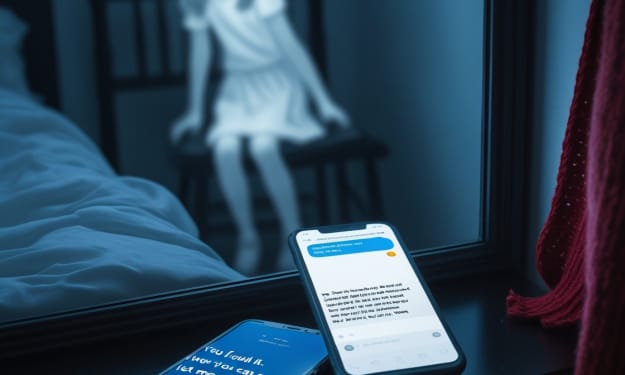
I was only fifteen when my twin sister, Eliza, died. It was a rainy October afternoon in 2005. We were supposed to walk home together from school, but I stayed behind for a group project. Eliza took the shortcut through the woods—something we’d promised Mom we wouldn’t do anymore. A fallen branch. A slippery hill. A single misstep. They found her body at the bottom of the ravine two days later. Broken. Still clutching her phone.
By Muhammad Saeedabout a year ago in Fiction
UEFA Women’s EURO 2025: Europe’s Queens of the Pitch Rewrite Football History
In the summer of 2025, while much of Europe sweltered under record-breaking heat, another kind of fire was blazing across stadiums from Berlin to Amsterdam—the passion and power of women’s football. The UEFA Women’s EURO 2025 became more than a tournament; it became a symbol of evolution, pride, and empowerment in the world’s most beloved sport.
By Ahmad Mustafaabout a year ago in Fiction
The Shape of the House
The gravel crunched under Liam’s tires as he pulled off the main road and onto the long dirt drive. The sky hung dark blue with the last traces of daylight, while the fields around the house had already sunk into shadow. He cut the engine.
By Tess M. Marlowabout a year ago in Fiction
A Wallet Full of Time
Leo Chen measured his life in minutes. Not minutes lived—minutes billed. As a mergers & acquisitions analyst at Sterling & Grey, his value was calculated in six-minute increments, the smallest unit on the firm’s time-tracking software. 14-hour days bled into weekends. His fiancée, Maya, had left six months ago, telling him, "You’re selling time you don’t own, Leo." He hadn’t understood. Not then.
By Habibullahabout a year ago in Fiction
The Crime- Final night
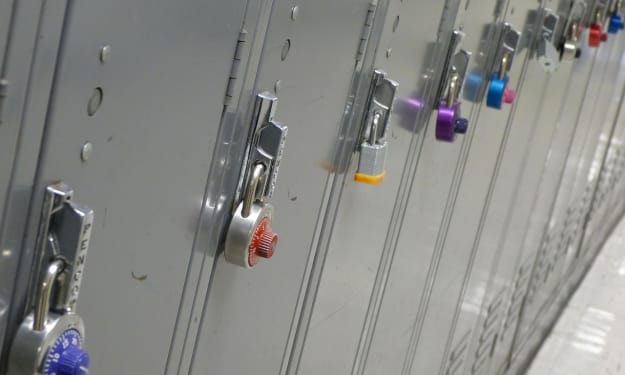
We walked down the hall till she got to the classroom she needed. I saw that it was dark, but for her others were waiting and the lights went on, and she said you better move on with your work, and she said thanks for listening and for setting me on my way. I continued down the hall and the locker was closed with a lock. Suddenly, I felt a light tap on my shoulder and a peck on my cheek and a warm feeling all over. I smiled and looked up. There she was all in glory and smiling.
By Mark Grahamabout a year ago in Fiction
The Crime- Still Another Night
The next night I followed my routine, and just as I was finishing I saw her the owner of Locker 111. She was walking down the hall as if going to a class it seemed. I caught up to her and she smiled. You listened and now I get to move on for that is all I needed someone to listen to me. There was another student that did harm, and you knew her for she was the one that killed me at my locker. She got what she deserved, but I wandered the halls till you started working here.
By Mark Grahamabout a year ago in Fiction
The Crime- Another night
Going about my working chores the next night I saw that the gate was fixed, and as I was passing locker 111 there was a cold breeze around me. I heard the whisper "I am so lonely here. Can I keep you company till you finish?" I whisper sure. I go about collecting the trash and straightening the classroom desks, then moving on to sweeping the hallways after my break. During my break I think "Did you have locker 111?" Heard something like sniffing and a "Yes". "What happened to you if you don't mind sharing with me about that."
By Mark Grahamabout a year ago in Fiction
The Crime-The Next Night
When doing my rounds sweeping the hallways I noticed that the locker was still open. I approached the locker as I was headed up the hall sweeping. I peeked in the locker, but there was nothing in it, but why then was it open two nights in a row? At that moment I felt a cold draft surround me, then a whisper. "Just want to keep you company while you clean for you do such a good job and you seem a little lonely." I continued down the hallway to finish up before I check classrooms for trash. Moving on....
By Mark Grahamabout a year ago in Fiction
The Crime
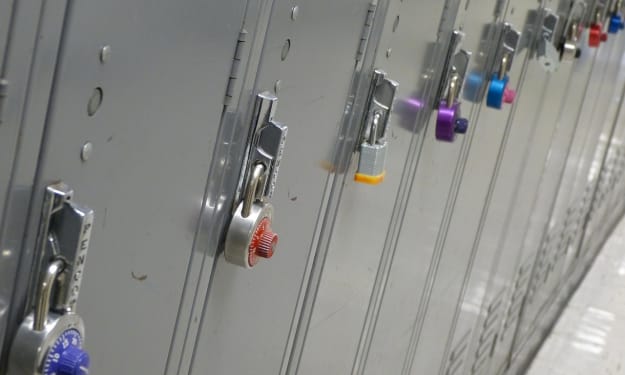
One night when walking down the halls of the high school I clean, I noticed an open locker. I wondered why a locker would be open now. There is a basketball game tonight, but nobody is allowed past the gate now. I walked to the gate, and it was slightly ajar. Now how did that happen for it seemed to be jimmied a little. Who would do this? I went back to the open locker and wrote the number down and also that a gate to the hall was jimmied. I took the note placed it on the principal's desk
By Mark Grahamabout a year ago in Fiction
The Mirror Between Worlds
Chapter One: The Forgotten Antique In the heart of an old European town nestled between misty hills, a young historian named Lena Ashford stumbled upon a crumbling shop labeled “Timeless Echoes.” The door creaked open with an eerie familiarity, as if it had been waiting.
By Echoes by Shafi--about a year ago in Fiction