Love
The Ways of Life and Love. Content Warning.
Boxes and papers lay scattered across the carpet, and the shadows of that final night kissing the sun goodbye as it went to sleep peeked in through the blinds, throwing swirls of fading light across the walls. Michael Holloway leaned against his couch from the floor, a glass of Bourbon in one hand.
By Lizzy Roseabout a year ago in Fiction
The King’s Garden of Shadows
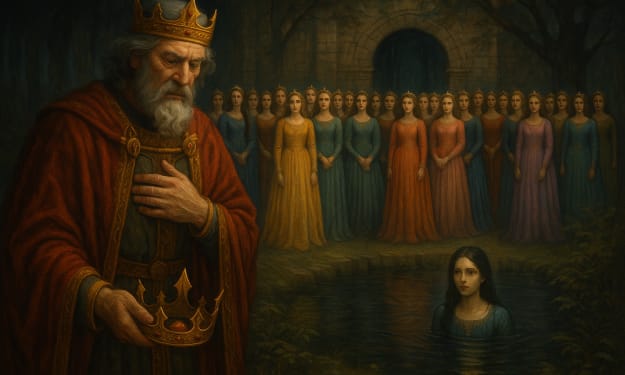
Once upon a time, in a kingdom surrounded by seven rivers and veiled in the perfume of eternal jasmine, there reigned a King known by the title "Raheem the Wise." His rule was not forged in blood but in books, not sustained by swords but by silence and soul-searching. His palace had no iron gates, only whispering wind-chimes and vines of lilies climbing its golden pillars.
By Muhammad Abdullahabout a year ago in Fiction
The Slave Who Knew the Stars
Once upon a time, in the ancient kingdom of Zaheerabad, nestled between black mountains and golden deserts, lived a Prince named Kamraan, son of the mighty King Ubaid. The Prince was fair in face and feared in sword, taught in the philosophies of men but untouched by the lives of those beneath him. The palace was carved from marble, adorned with silk and mirrors, but behind its glistening curtains brewed storms invisible to the blind.
By Muhammad Abdullahabout a year ago in Fiction
The Garden of Mirrors: A Tale of Two Thrones
Part I: The Echoes of the Orchard In an ancient land where rivers whispered secrets and mountains bore silent witness to time, there existed two mighty kingdoms, separated by a sea of sand and centuries of silence. One was Zahran, a land veiled in mist, where the people believed that dreams were fragments of lost truths. The other was Elburz, whose people trusted only what the eye could see and the hand could hold.
By Muhammad Abdullahabout a year ago in Fiction
"You". Top Story - June 2025.
Where are you? Do you hear me? Have you been watching me all these years? Do your stories include me? Do you look like me? What kind of personality do you have? Are you boisterous like our sister or reserved like our brother? Or are you somewhere in between those characteristics as I am? What are your passions? What were your dreams? Have you made them all come true?
By Shirley Belkabout a year ago in Fiction
Kisses in a Floral Dream
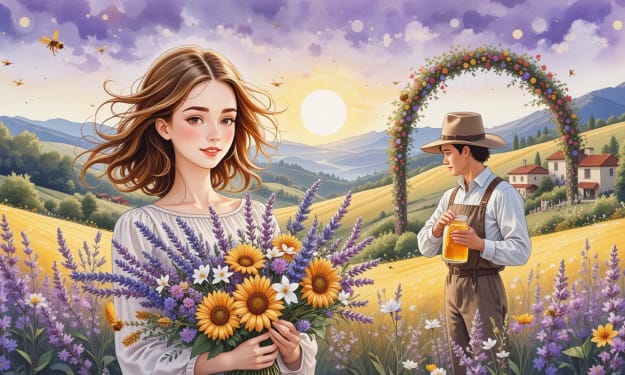
In the lush, flower-strewn valley of Provence, France, in the summer of 2024, the air was thick with the scent of lavender and the hum of bees. For 22-year-old Elise, this was a place of rebirth, where the wounds of her past could bloom into something new. Her story, woven with the delicate threads of love, friendship, and self-discovery, unfolded in a garden where kisses felt like dreams and flowers whispered hope.
By Shohel Ranaabout a year ago in Fiction
Raindrops on a Fragile Roof
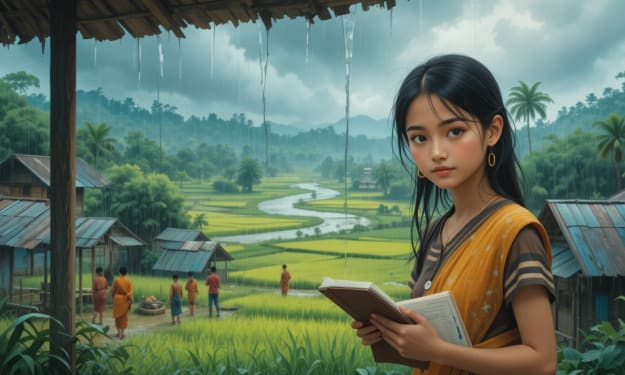
In the monsoon-soaked village of Shantinagar, Bangladesh, in 2024, the rain was both a blessing and a curse. For 16-year-old Runa, it was the rhythm of her life—each drop on the tin roof of her family’s small home a reminder of their fragility and resilience. The rains brought life to the rice paddies but also threatened to wash away everything her family had fought to hold onto. This is the story of Runa’s quiet courage, her dreams, and the community that became her shelter.
By Shohel Ranaabout a year ago in Fiction
The Silent Bell of Khorasan
Once, in the dusty and sun-scorned province of Khorasan, when the crescent moon hung like a blade in the heavens and kings were named after lions but ruled like foxes, there lived a monarch known as King Zulfiqar the Just—a title given not by the people, but carved in golden plates by his own court poets.
By Muhammad Abdullahabout a year ago in Fiction
The Perfume of the Slave
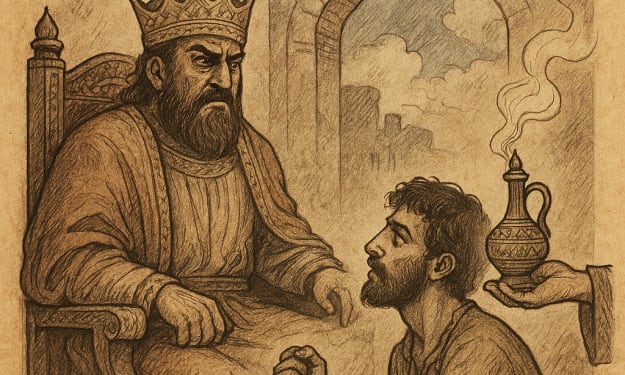
Once, in the time when kings ruled with iron fists but claimed to wear velvet gloves, there was a land called Khumyar, veiled in gold but rotting beneath. Its courtyards echoed with poetry while its prisons bled with silence. The king, Jalib the Proud, had a beard as thick as his cruelty and eyes that glistened with suspicion. His court was filled not with wise men but with flatterers dressed as philosophers. The pen was praised, but the sword decided justice.
By Muhammad Abdullahabout a year ago in Fiction
Through Tears and Time: How Crying Became My Cleansing Ritual
Tears used to scare me. They felt like cracks in the armor I worked so hard to build. Growing up, I was taught to keep them in. “Stay strong,” they’d say. “Don’t cry in front of others. Don’t let them see you weak.” So I didn’t. I held everything inside—grief, stress, heartbreak, even joy that felt too big to contain. But holding in my tears didn’t make me strong. It made me sick. For years, I carried the weight of unspoken emotions. I suffered from headaches, chronic fatigue, and anxiety that bubbled up at the worst times. My skin lost its glow, my appetite wavered, and sleep became a distant dream. Doctors gave me vitamins and sleep aids. Therapists suggested I talk more. But talking felt like another form of hiding. I needed something deeper, something more primal. That something came one night, unexpectedly. I was sitting on the floor of my apartment after a long, soul-draining day. No music. No phone. Just silence—and myself. My breath caught in my throat. My chest tightened. And suddenly, tears began to fall. At first, just a few. Then a flood. It was as if years of tension had burst open at once. I sobbed for everything: for the little girl who learned to stay silent, for the heartbreaks I never processed, for the person I pretended to be. But after the tears came something else: relief. My shoulders dropped. My breath deepened. I felt lighter, freer. Not healed—but finally human again. That night was the beginning of a new chapter in my life. A chapter where I stopped fearing my emotions and started honoring them. Where I realized that tears aren’t weakness—they’re wisdom. They are the body’s way of processing the unspoken, of cleansing the emotional clutter we refuse to name. From that day on, I gave myself permission to cry. Not in a dramatic, performative way—but privately, intentionally, and without shame. I began to research the science of crying. I learned that emotional tears are chemically different from the tears we cry when cutting onions. They contain stress hormones like cortisol and ACTH, as well as natural painkillers like leucine-enkephalin. In short, crying literally releases stress from the body. It helps regulate mood, lowers blood pressure, and rebalances the nervous system. No wonder I felt better after crying. My body had been waiting for this kind of release. Soon, I created what I now call my “cleansing ritual.” When life starts to feel too heavy, I give myself space. I light a candle, sit by a window, and just breathe. If tears come, I let them. I don’t rush to stop them. I don’t apologize. I treat my tears as sacred, as a sign that I’m alive and aware of my emotions. Tears have shown me the truth in situations I tried to ignore. They’ve surfaced in quiet moments after reading a poem, hearing a song, or looking at an old photo. Sometimes they arrive without warning—on a walk, in the shower, on a lazy Sunday afternoon. I no longer fear them. I welcome them like rain after a dry spell. Because that’s what tears are—a storm that cleanses, followed by clarity. People around me began to notice a shift. My skin looked better. My eyes had a softness they hadn’t had in years. I spoke more honestly, laughed more freely, and felt more connected to myself. I stopped bottling things up, and instead began journaling, meditating, and even creating art. Every time I cried, I felt like something toxic had left my body. I didn’t need expensive wellness programs or magic pills—I needed release. Eventually, I started sharing my journey. At first just with friends, then with strangers online. I was surprised how many people messaged me privately: “I haven’t cried in years,” they’d say. “I want to, but I don’t know how.” That’s the thing—so many of us don’t need advice. We need permission. We need to hear that it’s okay to fall apart sometimes, because healing often starts in the mess. Crying has also deepened my relationships. I’ve had conversations with my parents I never thought possible—real, tear-filled moments that brought us closer. I’ve sat with friends through their heartbreaks, no longer trying to fix them, but simply allowing space for their tears. And in doing so, I realized something profound: tears connect us. They are a universal language of pain, joy, and truth. Looking back, I see that the strongest version of me isn’t the one who holds it together. It’s the one who’s soft enough to feel and brave enough to express it. It’s the girl who lets tears fall and knows they won’t destroy her—they’ll transform her. Just like water shapes rock, tears shape the soul. Now, when I see myself in the mirror after crying, I don’t look broken. I look cleansed. There’s a beauty in red eyes and tear-streaked cheeks that no filter can replicate. It’s real. It’s raw. It’s proof that I’m alive and healing. So if you’re reading this and feel like the weight of the world is pressing on your chest—let go. Cry. Not because you're giving up, but because you’re releasing what no longer serves you. Let the tears fall. Let them teach you. Let them soften you, so that you can become stronger in the right ways. Because sometimes the most powerful thing you can do for your health, your heart, and your healing—is cry.
By Siraj Rahiabout a year ago in Fiction
My love story
"When the Lilacs Bloomed Again" It was always the scent of lilacs that brought her back. Each spring, when the bushes in the town square bloomed, Ava found herself walking the old path, past the rusted bike racks and toward the bench under the maple tree. It wasn’t marked, but it might as well have been his memorial. This was where they fell in love. And this was where she last saw him. Ten years. A decade had passed since Ben left. The pain had dulled, as time always promises, but never disappeared. It lingered like a scar — quiet, tender, but always present. They were only twenty-two when they met, both new to town and broke in every way that counted. Ava had moved for a job that barely paid enough to cover rent; Ben was chasing music and working nights at the diner. He'd sing under his breath as he wiped tables, and she, always the last to leave, started humming along without realizing it. That’s how it started. Not with fireworks — but harmony. Their first date wasn’t really a date. He walked her home after a late shift and stopped to point out the stars. “We don’t look up enough,” he said. “The sky’s been watching us our whole lives, and we barely say hello.” She laughed, not because it was funny, but because she was scared of how fast her heart responded. They fell in love like the seasons changed — inevitable and unnoticed until the cold turned to warmth. Days melted into nights filled with music, shared silence, and dreams too fragile to speak aloud. He wrote songs about her but never played them in full. “Not until it’s perfect,” he’d say. She never needed perfect. But life, as it does, got in the way. His mother got sick back home. He left with promises—calls, visits, letters. And at first, they came. Until they didn’t. The last time she heard from him, he sent a song — raw and unfinished. It ended with her name, like a whisper in the wind. No explanation. No goodbye. Just silence that stretched years long. People told her to move on. That he didn’t deserve her grief. That maybe he changed, or maybe he never really loved her. But she knew better. Love like theirs doesn’t vanish. It just waits. She tried, of course — to forget. Dated men who were kind, stable, even funny. But no one saw her the way he did — like she was the lyric he’d been waiting to write his whole life. So each spring, when the lilacs bloomed, she returned to the bench. Not because she believed in miracles. But because love, real love, deserves remembering. Today, the breeze carried the familiar scent. Ava sat, closing her eyes, letting herself ache just a little. “Still sitting here without me?” The voice was older, deeper, but unmistakable. She turned. Ben. Time had changed him — gray at the temples, lines around eyes that once only knew laughter. But the way he looked at her? That hadn’t changed. She stood, unsure whether to cry or hit him. Maybe both. “I wrote you every month,” he said softly. “They were returned unopened. I called. Nothing.” “My number never changed,” she replied, voice cracking. His hands trembled. “My father found the letters, Ava. I think he... I think he tried to protect me. Or maybe punish me. I don’t know. But I never stopped loving you. Not for a second.” Tears spilled silently. The years rushed back — all the birthdays, the loneliness, the hope she buried but never killed. “I thought you left,” she whispered. “I never did.” He reached for her hand — gently, like asking permission. And in that moment, under the maple tree, with lilacs in bloom and ten years behind them, Ava realized something simple and sacred: Some love stories don’t end. They just wait for the right season to return.
By Dr Gabriel about a year ago in Fiction
She wasn’t looking for him. But found him. On the night she went out for milk.
Rachel was heading home later than usual. Friday nights always felt like they belonged to someone else — too many sounds, too many faces, the unwanted scent of fast food, too much light from storefronts. Her workday dragged on, and she ducked into a nearby market only because she remembered the milk in her fridge had gone bad. The store was half-empty. Like her.
By Ella Morganabout a year ago in Fiction