Love
Where the Sky Held Its Breath
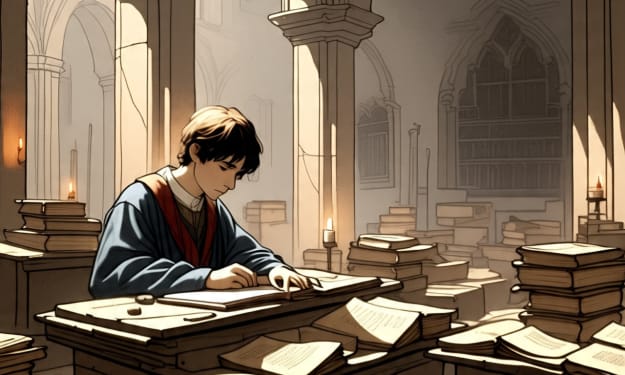
The clouds sat heavy on the horizon, glowing gold and bruised violet in the falling light. The wind had gone still. Even the insects had quieted. Martha stood near the back of the wagon, hands resting on the worn wooden frame. Her arms ached, not just from the day’s travel, but from the child wrapped tight against her chest, dozing, as if the miles had never touched him. They had made camp late. The wheel had cracked on one of the wagons ahead, and half the train had waited while the men repaired it with rope and borrowed wood. The tents were pitched quickly, the fires lit in silence. No one laughed tonight. Martha didn’t speak much anymore. There was no one left to talk to. Her husband had died on the second week of the journey—fever, they said. She had buried him in a shallow grave off the side of the trail, covered the spot with stones, and walked on. Two nights later, she found the baby. Or rather, heard him. The crying came from a canvas bundle near the remains of an abandoned cart, left half-burned at the edge of the grasslands. The others had passed it by without stopping. Martha had not. The child was wrapped in linen, bloodied and wailing, his mother lying cold beside him. No one knew how long they had been there. The wolves hadn’t come yet. So Martha had picked him up. No one argued. The wagon behind her creaked as the wind shifted. She turned toward the hills and watched the storm build, far off in the distance. The trail would be mud by morning. “Hungry again, are you?” she murmured, feeling the child stir. She had no milk. That had stopped days ago. Her body had long since stopped bleeding, long since stopped preparing for the child she lost two winters past. But other women still had enough to spare. She would walk, every night, from fire to fire. Always the same question, asked with quiet resolve. “Will you nurse him?” And they always did. Without hesitation. Tired women, sore and sunburnt, still opened their arms. Not for her. For him. He was growing. Thighs thickening. Eyes sharpening. He watched things now — the flapping of canvas, the flicker of flame, the motion of passing wagons. And sometimes he smiled. Martha hadn’t known it was possible for a smile to wound. She stepped away from the wagon and walked slowly toward one of the nearer tents. Smoke drifted up from a small fire. A woman sat beside it, rocking gently, feeding a child of her own. Martha hesitated, just a moment. Then: “Ma’am… mine hasn’t eaten since morning.” The woman looked up, eyes weary but warm. She shifted, freeing one arm. “Come sit.” Martha lowered herself carefully to the earth. Her knees cracked as she moved, her skirts brushing the grass. The stranger took the boy without question, cradling him to her breast like he belonged there. Silence passed between them as the baby latched, as the sun bled away behind the wagon line. “You his kin?” the woman asked quietly. “No,” Martha said. Then, after a pause: “But I’m all he’s got.” The woman nodded. “Then that’s enough.” For a moment, the weight of everything fell away. The trail. The dust. The graves left behind. There was only this: the sound of nursing. The whisper of wind in the grass. Two women, and a child who did not yet know what it meant to be alone. Martha stared into the fire and let herself breathe. Tomorrow, there would be more walking. More hunger. More sky pressing down on their backs. But tonight, there was milk. There was warmth. And there was one more mile behind them. --- Thank you for reading. Inspired by the resilience of women who carried more than just their own burdens across the vast American trail.
By Waqif Khanabout a year ago in Fiction
Children’s Joyful Celebrations in the New Year. AI-Generated.
When the New Year came, the whole town was full of lights, colors, and happiness. The streets were decorated with small shining lights, and the windows of homes had beautiful paper stars. The air was cold, but the hearts of the people were warm. Everyone was ready to say goodbye to the old year and welcome the new one with hope.
By Bilal Mohammadiabout a year ago in Fiction
My Heart Is, and Always Will Be Yours
The first time Noah saw Clara, she was standing in the rain without an umbrella, laughing as the drops soaked her hair and clung to her lashes. Most people rushed for shelter, but not her—she stood still, arms outstretched, like she was greeting the storm itself. Something about that moment made Noah’s heart pause. It wasn’t just her beauty—it was the freedom in her, the way she embraced life as if it belonged to her.
By Mahayud Dinabout a year ago in Fiction
She Forgets Me Every Morning.
The first time she forgot, I thought it was a joke. Ellie had always been playful, the kind of woman who left notes in my shoes, who named the spider in the corner “Gerald,” who kissed me every morning and said, “Nice to meet you, stranger.” So when she looked at me one Wednesday morning with blank eyes and asked, “Who are you?” I smiled. I told her I was the man lucky enough to marry her. She smiled back, unsure, and laughed in that familiar way that made my heart want to sing. But the next morning, it happened again. And again. The doctors used complicated words like early-onset Alzheimer’s, temporal lobe degeneration, and progressive deterioration. None of them could tell me when it would stop. Only that it wouldn’t. “She may forget more,” they said. “Possibly everything.” But I remembered. I remembered the café where we met—she ordered tea and spilled honey on my book. I remembered how her hands trembled when she first told me she loved me. I remembered our wedding, how she whispered, “Promise me, even when I forget the words, you’ll still speak them.” I promised. So now, every morning, I do the same thing. --- I wake before her. I brew the tea just the way she likes it—lavender and mint, three sugar cubes, no milk. I set it by her side of the bed, then sit in the old rocking chair across the room. When her eyes flutter open, I see the same confusion creep in like fog. She blinks at the ceiling, then at the cup, then at me. “Good morning,” I say softly. “I made you tea.” She hesitates. “Do I... know you?” And I smile, even though my chest aches. “Not yet. But you will.” --- Some days, she asks questions. “Where are we?” “Are you a nurse?” “Do I have a job?” Some days, she just nods and sips her tea, quiet and cautious, like a deer unsure of its surroundings. But every day, around the time the sun leans through the curtains and catches the dust in golden beams, something in her sparks. It might be a joke I make. Or a song on the radio. Or the way I tuck a flower behind her ear while pretending to be clumsy. Something breaks through the fog. Her eyes widen. And she says, almost like a gasp: “It’s you.” --- That moment—those three words—are why I get up every day. Why I wait through the silence, the questions, the pain. Because in that instant, she knows me. Not just my name, not just my face. She remembers us. All of it. And for that hour, or two, or sometimes just a fleeting minute, I get her back. She tells me stories she’s told a hundred times. She hums our wedding song. We dance in the kitchen while toast burns in the oven. We laugh until she cries, and I pretend I don’t see the tears because I’m too busy kissing them away. Then slowly, like dusk swallowing the day, she drifts. She forgets again. And I let her go gently, guiding her to rest, brushing her hair behind her ear. --- At night, when she’s asleep, I write in a journal. I fill it with what she remembered, what she smiled at, what made her laugh. I write it for me, yes—but mostly for her. For the woman who wakes each morning not knowing who she is or who I am. Because love, I’ve learned, isn’t just memory. It’s patience. It’s presence. It’s showing up for someone who cannot show up for you in the same way—and doing it anyway. --- Tomorrow, she will forget me again. But I will remember her. Enough for bothfs
By Azmat Roman ✨about a year ago in Fiction
The lone travellers
The first time Lila heard the train whistle echo through the valley, she knew this trip would change everything. Lila Hart was twenty-four, with wide hazel eyes and soft chestnut hair that framed her face in gentle waves. She had spent most of her life in the sleepy town of Marlowe, tucked between emerald hills and winding rivers. Adventure, for her, had always been confined to books and daydreams. But after the sudden passing of her grandmother—a spirited woman who had once traveled across Europe alone in the 1960s—Lila found herself yearning for something more than the quiet predictability of home. So, she packed a single backpack, clutched her grandmother's old leather journal, and boarded a cross-country train heading west. She hadn’t expected company. The train had just pulled out of the Denver station when he boarded—tall, lean, and with a careless kind of charm that seemed etched into his very presence. He was dressed in a light denim jacket, sunglasses tucked into his collar, and a camera slung around his neck. He scanned the half-empty coach and took the seat across from her. “Mind if I sit here?” he asked, voice low and smooth. Lila offered a polite smile. “Not at all.” “I’m Callum,” he said, extending a hand. “Lila.” They shook hands, and something unspoken passed between them. Not electricity—something gentler. Curiosity, perhaps. Over the next few hours, they talked. What began as small talk about weather and destinations soon unraveled into deeper conversations about photography, travel, childhood memories, and the unspoken dreams they kept tucked away. Lila discovered Callum was a freelance travel photographer, chasing the ever-shifting beauty of the American landscape. He was headed to Glacier National Park for a shoot. “And you?” he asked. “I’m just…going,” she said, almost surprised by her own answer. “No plan. Just away.” Callum grinned. “That’s the best kind of travel.” They spent the night on opposite bunks in the sleeper car. But neither slept much. Somewhere around midnight, Lila sat up and found Callum still awake, staring out the window at the moonlit plains. They talked until dawn, voices hushed but steady, like two people gently pulling the threads of something yet unspoken. By the time they reached Montana, they had become inseparable. When he asked if she wanted to tag along to Glacier, she hesitated only a moment before saying yes. Their days there were a dream painted in sunlight and snowmelt. They hiked narrow trails, skipped stones across glassy lakes, and shared stories under canopies of pine. Callum taught her how to use his spare camera, and Lila found herself seeing the world in sharper focus—details she would’ve missed before now felt rich with meaning. At night, they camped under an explosion of stars. Sometimes, they fell asleep in comfortable silence. Other nights, they stayed up late beside the fire, laughter floating into the dark woods. But love, Lila realized, doesn’t always announce itself with grand gestures. It sneaks in during the quiet moments. The way he brushed snow from her shoulders. The way her laugh made him turn his head with a kind of reverent wonder. The way they fit together in the silence. Still, she was afraid to name it. She had always been a dreamer, but never reckless with her heart. One morning, after a storm had swept through the valley, they woke to find the world covered in a gentle mist. Callum packed his camera, and they climbed to an overlook he had scouted the day before. As he adjusted his lens, Lila watched him with a mix of awe and tenderness. “Do you ever stop?” she asked, stepping beside him. “Stop what?” “Looking for beauty.” He lowered the camera and looked at her. “I don’t have to. Sometimes it finds me.” She knew he was talking about more than the mountains. That night, as they sat by the campfire, Callum handed her the journal he had seen her write in every evening. “May I?” he asked. She nodded. He flipped through a few pages, smiling at the sketches and pressed leaves tucked inside. Then he stopped on one page and read aloud: "There’s a kind of magic in traveling alone, but an even deeper magic in finding someone along the way who sees the world as you do. Not because they share your vision, but because they help you see it more clearly." He looked up. “Did you write this about me?” Lila hesitated, heart pounding. “Maybe.” Callum’s voice softened. “I hope so.” The kiss that followed was slow, certain, and unspoken in all the right ways. It wasn’t desperate. It didn’t feel like the start of a whirlwind. It felt like home. After Glacier, they traveled south together—Utah, Arizona, New Mexico. Every stop etched a deeper mark on Lila’s heart. They got lost once in Monument Valley, chasing a sunset that vanished too soon, and ended up spending the night in the back of a pickup truck, wrapped in blankets and laughter. They shared music through cracked earbuds, tried spicy street food that made them tear up, and took turns guessing strangers' life stories at bus stops. Each memory wove itself into the tapestry of something Lila was no longer afraid to name: love. But even perfect moments are subject to time’s slow unraveling. In Santa Fe, Callum got a call from a magazine. A six-week assignment in Patagonia. He almost turned it down. “You should go,” she told him, trying not to let her voice break. “Come with me.” Lila shook her head. “I can’t yet. I need to finish this journey on my own terms. Like I started.” He understood. They always understood each other. On the day he left, he gave her a single photograph—one he had taken of her the morning after their first kiss. She was laughing, sunlight in her hair, unaware of the camera. On the back, he had written: "Some places stay in your heart. Some people become them." They promised to write, to call, to meet again when the time was right. Months passed. Lila continued her journey alone, but she never truly felt alone. Each place she visited seemed to echo with traces of him. She learned to travel with her own voice, her own strength, but always with the knowledge that love didn’t demand possession. It only asked for presence—and when possible, return. And return he did. On a foggy spring morning back in Marlowe, a familiar whistle blew. A train pulled into the station, and Callum stepped off, camera still around his neck, his smile unchanged. Lila was there to meet him. They didn’t need a dramatic reunion. Just the meeting of eyes, the quiet step forward, the soft exhale of a heart finding its rhythm again. “You came back,” she whispered. “I never really left.” They walked out of the station hand in hand, two travelers who had gone searching for the world—and found each other instead.
By Julia Christaabout a year ago in Fiction
The Sound of Distant Bells"
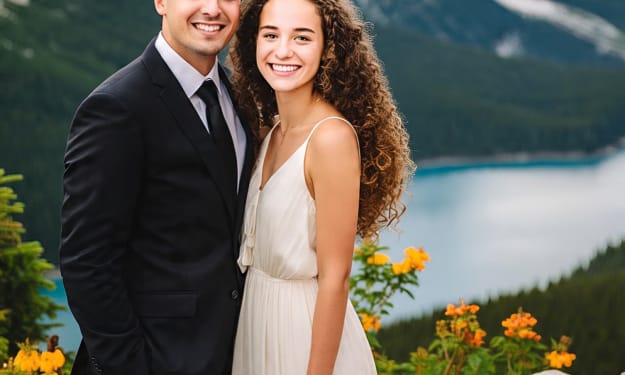
The campus was a world of soft stone and ivy, nestled in the hush of an early spring that clung to the edges of the old buildings. Miriam always arrived early to her literature seminar, slipping into the second row of seats with a notebook already open and a pen in hand. She liked the quiet before others came in—the way the light fell through the tall windows, the way dust swirled invisibly until it caught the sun. Dr. Ellis Wren was new to the university that semester, a visiting lecturer with a gentle British accent and a wardrobe of mismatched cardigans and suede shoes. There was nothing imposing about him, nothing that called attention in the way one might expect of a professor just ten years older than some of his students. But there was a stillness to him, an alertness behind his wire-rimmed glasses that made Miriam pause the first time he entered the room. He rarely looked up while lecturing, preferring instead to write quotes from Woolf or Eliot on the board and then turn, slowly, to expand on them with the kind of reverence usually reserved for sacred things. He was not charismatic in the traditional sense—he didn’t entertain—but there was something in the care of his words, the unspoken promise that language mattered deeply. Miriam was in her final year, already accepted into a graduate program in Edinburgh. She didn’t need this class; she had chosen it out of curiosity, a final elective to round out her credits. She found herself scribbling entire paragraphs in her margins, not because it was required, but because she wanted to hold on to the ideas. When Dr. Wren mentioned that he held optional discussions on Friday afternoons, she attended every one. They met in the library once, by chance. Miriam had her arms full of books, and he held the door open without seeming to notice who she was. But then he did. “Oh,” he said, with that quiet British restraint, “Miss Alavi.” “Hi,” she said, adjusting her glasses. “You’re reading Forster?” He gestured toward the book at the top of her stack. “A Room with a View?” “I’ve read it before. I think I’m just... looking for something in it this time.” “Isn’t that always the case?” he said, smiling faintly. “Books are not static things. They respond to the version of us that reads them.” They walked a few steps together into the reading room, where the high ceiling swallowed sound and the smell of old pages hung in the air. He didn’t ask to join her, and she didn’t offer, but the moment lingered—unspoken, suspended in the space between politeness and something else. Miriam thought of him more often than she liked to admit. Not in any inappropriate way, not with the breathless drama of a crush, but as one thinks of a particular line from a poem—something unfinished, something beautiful in its restraint. At the Friday sessions, they sometimes stayed past sunset. A few students would remain, discussing the melancholia of Thomas Hardy or the defiant realism of Jean Rhys. Miriam always stayed the longest. Once, as she packed her things, Dr. Wren looked at her over the rim of his mug and said, “You ask very careful questions.” She wasn’t sure what he meant, but she smiled anyway. “I suppose I like to leave room for answers.” There were rumors, of course. There always are, in places like that. Other students sometimes looked at her sideways, and she heard whispers once in the hallway—nothing cruel, just curious. She didn’t answer them. There was nothing to deny, because nothing had happened. But something had grown. A delicate, unvoiced intimacy that formed not from touch or confession, but from mutual understanding. He began to notice her mood from how she took notes—faster when anxious, more curved letters when calm. She could tell when he was distracted by how often he pushed his glasses up on his nose, how he paused longer between sentences. One afternoon in April, he ended class early and asked her to stay behind. The room emptied, the door clicked shut. He stood by the window, looking out over the budding trees. “I wanted to say something,” he said, without turning. “Before the term ends.” Miriam’s breath caught. “You remind me of someone I knew once,” he continued. “Not in appearance, but in... the way you listen.” She said nothing. The silence felt heavy, sacred. “I’ve been careful,” he said softly. “Because I must be. But I want you to know—this space we’ve shared, in thought and conversation—it’s meant more to me than I expected. Not in a way that crosses lines. Just... as a kind of rare understanding.” She felt warmth rise in her chest—not flattery, not excitement, but something gentler. Gratitude, perhaps. “I understand,” she said. He turned then, and the light caught the silver at his temples. “You’re going far, Miss Alavi. I hope you write. You have that hunger for meaning that great writers suffer from.” She smiled. “I plan to.” They never spoke of it again. Miriam graduated in June. The last time she saw him was at a reception, where he stood beneath a banner that read Congratulations, Class of 2025, sipping from a paper cup. They exchanged a small wave, nothing more. Years later, in Edinburgh, she would walk into a bookshop and find a thin volume of essays authored by E.W. Wren. She bought it immediately, even though money was tight. On the inside flap, he had dedicated it “to those who listen carefully.” She closed the book with a quiet smile. She never wrote to him, and he never reached out. But when she taught her own students years later, she found herself quoting him—never by name, but with the same reverence, the same quiet care. Some stories are not about grand declarations. Some are simply the sound of distant bells, ringing softly through the corridors of memory.
By Julia Christaabout a year ago in Fiction
Three Colors Before Dying
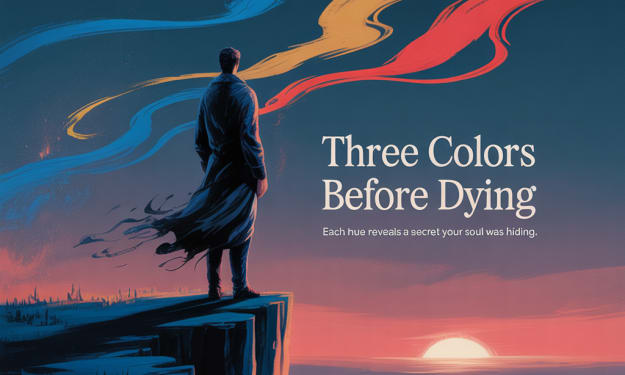
In the last days of his life, Elias saw blue, amber, and crimson. No one knows exactly when it started—when humans lost their ability to see the full spectrum of colors. Scientists called it Selective Retinal Suppression. Philosophers claimed it was a curse. But the people of the city called Astraea believed it was fate. In this dystopian world, you were born with the ability to see only three colors—no more, no less—and those three shades determined the trajectory of your life.
By Mehtab Ahmadabout a year ago in Fiction