Love
The House That Raised Me
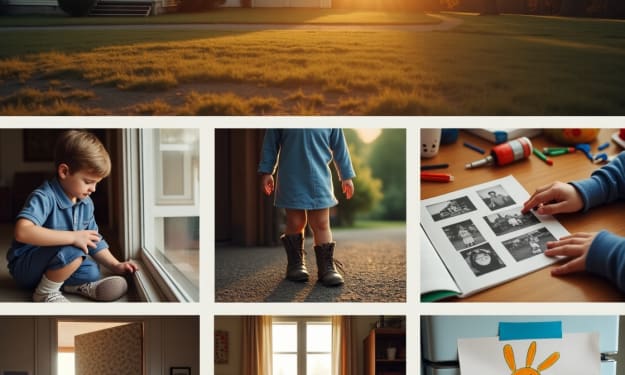
The House That Raised Me People ask me where I’m from, and I hesitate. It’s not because I don’t know the answer — it’s because the answer isn’t a simple town name or a street address. I could tell them about the faded white house on Maple Lane, with the peeling shutters and the front steps that creaked under your weight. But that house didn’t really raise me. A house is wood, paint, and plaster. The thing that raised me was something harder to name.
By Kine Willimesabout a year ago in Fiction
Our One and Only Night
Spend all your time waiting for that second chance, for a break that would make it ok. Montevideo and its calm pace of life. I became one with the delicious flow. The sun seemed to be mainly just caressing the beach. The golden hour. I said hi to the sea, visually it’s usually more than enough; and yet, this time as I went past all the people sharing with each other, it made me wish: “Wouldn’t it be nice to be here with someone else?”
By Laura Rodbenabout a year ago in Fiction
Ways to Say “I Miss You” Creatively — Ek Dil Chhoone Wali Kahani
Kabhi kabhi lafz “I miss you” itne mamooli lagte hain ke woh dil ki gehraiyon ko bayan nahi kar paate. Yeh jazba sirf doori nahi, balki dil ki ek gehri khwahish, yaad aur chahat hoti hai jo har lafz ke beghair hi samajh aati hai. Meri kahani bhi isi jazbe se shuru hoti hai, jab main apni sabse qareebi dost Sara se door ho gaya. Sara aur main bachpan ke dost the. Humari dosti mein hamesha ek khaas baat thi — hum bina zyada baatein kiye apni feelings samajh jaate the. Lekin jab zindagi ne humein alag kar diya, dooriyon ne humari dosti ko nayi tarah se parchayi dena shuru kiya. Door hone ke baad, humari mulakaat kam ho gayi, magar dil ki yaad zyada gehri hoti gayi. Jab main use “I miss you” kehta, lagta jaise woh lafz chhota pad jaaye. Tab maine socha, kyun na apni feelings ko thoda creative tareeqe se bayan karoon? Pehli baar, main usse ek handwritten letter bheja. Letter mein maine uss pal ki yaad likhi jab hum saath baithe the, ek chhoti si chai ki dukaan par, barish ki boondein sunte hue. Maine likha, “Har barish ki boond mujhe tumhari yaad dilaati hai.” Yeh baat uske dil ko chhoo gayi. Phir hum dono ne ek naya tareeqa ikhtiyar kiya — hum apni feelings ko natural elements ke zariye bayan karte. Maine use ek tasveer bheji, ek halki si dhoop ki, jis mein chhayaen badi pyaari lag rahi thi. Maine likha, “Tum meri zindagi mein dhoop ki tarah ho — har andhere ko roshan karne wali.” Usne mujhe reply kiya ek tasveer bhej kar jisme suraj ke peeche laharata hua samundar tha, aur likha, “Tum meri lehron mein bass jaate ho, hamesha mere paas.” Is tarah humari baatein sirf lafzon tak mehdood nahi rahi, balki jazbat ban gaye jo hum dono ko zinda rakhte the. Jab kabhi phone par baat karne ka moqa nahi milta, to hum ek doosre ko songs bhejte jo humari feelings ko bayan karte. Maine usse ek gaana bheja jiska pehla alfaaz tha, “Teri kami mehsoos hoti hai har pal.” Sara ne us gaane ko apne dil ke kareeb rakha. Ek din, main apni feelings ko ek alag andaaz mein bayan karne ke liye uske liye ek chhota sa video banaya. Video mein woh jagahain thi jahan humne apni dosti ki shuruat ki thi — park ki bench, chhoti si library, aur wo coffee shop jahan hum roz milte the. Har scene ke saath ek caption tha, “Tumhari yaad meri sabse pyari kahani hai.” Sara ne jab wo video dekha, uski aankhon mein aansu aa gaye. Usne kaha, “Mujhe tumhari har yaad ka ehsaas hai, ye video mera dil chhoo gaya.” Kuch din baad, Sara ne mujhe apni taraf se ek poem bheji. Us poem mein usne apne jazbaat ko is tarah bayan kiya ke main wahaan khud ko mehsoos kar sakta tha. Uski kuch lines yaad hain: “Doori ki hawaon mein tumhari khushboo hai, Har subah tumse milne ki duaa hai.” Is poem ko padh kar main sochta tha, sach mein jazbat kabhi lafzon ke saath bandhne wale nahi hote, balki dil se dil tak pahunchte hain. Ek din humne apni purani tasveeron ko dekha aur ek plan banaya ke hum apni yaadon ko naye andaaz mein jeeyenge. Humne apni purani photos ke saath naye captions banaye jaise, “Yeh woh pal hai jab tumhari hansi mere din ko roshan karti thi,” ya “Jab tum mere saath thi, to har safar suhana lagta tha.” Yeh yaadein hamare liye ek naya zariya ban gayi, apni mohabbat ko phir se jeene ka. Ek aur creative tareeqa jo humne apnaya, wo tha silent longing — bina kuch bole apne jazbat ka izhaar karna. Kabhi kabhi main Sara ke liye uska favorite coffee shop jaakar ek cup coffee order karta, usse photo bhejta aur kehta, “Yahan tumhari kami mehsoos hoti hai.” Sara bhi mere liye apni favorite jagah par jaakar mere liye ek chhota sa note chhupa deti, jo main agle din dhoond leta. Is tarah ki silent gestures ne hamari doori ko kam kar diya, aur jazbat ko gehra bana diya. Mujhe yaad hai jab Sara ne mujhe ek baar kaha, “Tumhari yaad ko bayaan karne ke liye mujhe lafz kam pad jaate hain, lekin tumhari har ek baat meri rooh ko chu jaati hai.” Is kahani se mujhe yeh seekh mili ke “I miss you” kehna sirf ek jumla nahi, balki ek ehsaas hai jo har shakl mein dikhaya ja sakta hai — chahe woh ek chhota sa note ho, ek poem ho, ek tasveer ho, ya ek silent gesture. Aaj bhi jab hum door hote hain, hum har roz naye tareeqe dhoondte hain apne jazbat bayaan karne ke liye. Kyunki asli mohabbat wahi hoti hai jo dooriyon ko mita kar dil ko kareeb le aaye. Aur asli “I miss you” woh hota hai jo sirf zubaan se nahi, balki dil se bola jata hai.
By Aman Ullahabout a year ago in Fiction
Little Texts, Big Love: How Tiny Messages Saved Our Spark
I used to think that keeping the spark alive meant surprise trips, fancy candlelit dinners, or expensive gifts. But I learned something extraordinary from the person I love: sometimes it’s the tiniest, cutest texts that keep the fire burning even brighter. It all started during a phase of our relationship when routine was threatening to slip in like a silent thief. We had been together for three years, living in different cities because of work. The calls were still there, the occasional weekend visits still happened, but the excitement—the giddy rush I’d felt in the first few months—had begun to fade into comfortable calm. Sweet, yes, but also a little scary. I didn’t want our love to settle into something that felt ordinary. One evening, while sipping my coffee and scrolling through old chats, I came across a random message from her. Just a simple line she’d sent almost two years ago: “Hey handsome, hope your smile is bigger than the sun today.” It was silly. Flirty. Utterly simple. But it made my chest tighten with something warm, something electric. Right then, I decided to bring that playfulness back, one tiny text at a time. So I texted her: “I hope your heart is dancing today. If not, send it over—I’ll teach it a move or two.” She sent back a laughing emoji, then: “Deal. But you’ll have to hold it forever.” That night, I lay in bed thinking about how easy it was to make her smile. No need for plane tickets or grand gestures—just a handful of words sent at the right moment. From then on, it became our little ritual. Each day, one of us would send a random, cute, and sometimes downright ridiculous text. Like: “Quick question: how did I get so lucky to be loved by a dream in human form?” “If kisses were raindrops, I’d send you a storm.” “Can you stop being so amazing? It’s making it really hard to focus on work.” Sometimes we’d turn it into games. I’d text: “Guess how many times I thought about you today?” She’d reply: “At least 5,000. Am I wrong?” “Totally wrong. It’s been 12,476. I’ve been keeping count.” Even on bad days—especially on bad days—these cute little texts stitched us together. Once she was stuck in a horrible traffic jam, frustrated and close to tears. I sent: “Sending you an army of invisible kisses to fight off the traffic blues. Check your shoulder—one just landed there.” She texted back a photo of her smile, slightly teary but brighter than anything else I’d seen all day. Over time, these tiny messages became more than just a way to flirt. They became reminders of why we chose each other, over and over again. A cute text could chase away the gloom of a hard week. A silly line could turn an ordinary Tuesday into something special. And when distance or routine threatened to dim our spark, these tiny digital notes fanned it right back into a roaring flame. I once asked her, jokingly, what her favorite of all my texts was. She surprised me by scrolling back months in our chat and screenshotting this: “I don’t just love you. I like you. I like the way you look at me when I talk about dumb things. I like how your laugh changes when you’re truly happy. I like the way you exist in this world—messy, gorgeous, and absolutely mine.” She said that line felt like I was seeing her, really seeing her, in all her messy, beautiful glory. That’s when I realized these small messages weren’t small at all. They were tiny keys unlocking doors inside her heart that might have otherwise stayed closed. So yes, I still plan surprises. I still want to buy her flowers and book those plane tickets. But I’ve learned that sometimes, the best way to keep the spark alive isn’t with fireworks. It’s with tiny, playful flames—each word a matchstick striking softly, beautifully, again and again.
By Aman Ullahabout a year ago in Fiction
Romantic Promises You Can Text Daily
They say distance makes the heart grow fonder, but no one ever tells you how painful it truly is to love someone you can’t touch, can’t hold, can’t simply sit next to in silence. We lived miles apart, in different cities, under different skies, yet somehow under the same spell of love that refused to break despite all odds. In the beginning, our calls were long and filled with laughter, our chats playful and endless. But as days turned into months, the distance began whispering cruel things in our ears. Doubts sneaked in like uninvited guests. Was she still mine? Was I still enough for her heart that could be tempted by someone nearer, someone real and tangible? One lonely evening, when my mind was a battlefield of love and fear, I decided to do something reckless yet sincere. I texted her, “Let’s try something new. From today, I’ll send you one promise every single day. Some will be tiny, some deep, but each one will be a thread pulling our hearts closer.” The first promise was simple, almost childish: “I promise to always say goodnight, no matter how tired I am.” The next day, it grew braver: “I promise to be patient with your silences.” By the end of the week, I found myself writing things I had never dared to say aloud, like “I promise to never let our fights mean more than our love.” And she… oh God, she surprised me in ways that still warm my chest. She would reply with her own gentle vows: “I promise to tell you when I’m sad instead of pushing you away.” Or “I promise to never let a day go by without reminding you that you are loved beyond measure.” Days turned into weeks, weeks into months, and soon these tiny promises became the very backbone of our fragile, beautiful long-distance love story. We promised to grow old together, to dance in our kitchen when we’re gray and wrinkled, to read poetry under the covers even when our eyes struggled to focus. Yet love, real love, always gets tested. There was a time we fought so badly I thought this was the end. Ugly words were thrown, tears were shed alone in dark rooms. That night, my pride screamed not to text her, to let her be, let her miss me first. But my heart, stubborn fool that it was, picked up the phone anyway and typed with trembling fingers: “I promise to fight for us, even when we’re the ones hurting each other.” Her reply didn’t come instantly. Hours dragged by like slow poison. Then, at 3:07 AM, my phone buzzed: “I promise to never give up on us, no matter how broken we get.” It felt like breathing again after nearly drowning. From then on, our promises grew deeper, more intertwined with hopes and dreams that were too sacred to say before. “I promise to be your calm when the world storms against you.” “I promise to build a home in my heart where you will always belong.” Now, years later, we finally share the same city, the same sunlit mornings, the same coffee mug sometimes. But every single day, without fail, my phone still lights up. “Good morning, love. I promise to still choose you tomorrow, even on days you’re impossible to love.” And I grin like a fool because some rituals are too precious to ever outgrow. Some promises are made to be kept forever. Love, in the end, isn’t built on diamonds or grand gestures—it’s sewn together by tiny, fragile, heartfelt promises whispered across miles and years. And maybe that’s why, even after all this time, when people ask me the secret to loving someone from afar, I tell them: “Make a promise daily. Not to her, not to him—but to your love. That’s how distance turns into destiny.”
By Aman Ullahabout a year ago in Fiction
Somewhere, You Still Exist
You left in August. I remember because the sun looked tired, like it had been burning too long for too many people. That day, even the wind felt final. We didn’t say goodbye properly. Not because we didn’t want to, but because we didn’t know how. Some moments don’t come with instructions. Some endings don't sound like goodbyes — they sound like silence. I still set the table for two sometimes. Out of habit. Or hope. I can’t decide which one is more dangerous. Your laughter used to echo through this apartment. Now, the only sound is the hum of the fridge and the occasional creak of wood—like the place itself is mourning you. I kept your sweater. The blue one. It still smells like that cologne you wore — the one that smelled like forests and something I could never name. Some nights, I press it to my face and breathe in like I’m drowning. I don’t cry as much anymore. But I do stare at walls. I think that’s just a quieter way to fall apart. You told me once that if love was real, it wouldn’t need reminders. But I see you everywhere — in strangers' faces, in the steam of my coffee, in the lines of my palms. If love doesn’t need reminders, why does everything remind me of you? There are things I never told you. Like how I memorized the way you took your tea. Or how I used to fake sleep just to hear you whisper things you were too afraid to say when I was awake. You said you needed space. I tried to be generous with it. I gave you galaxies. But I didn’t know I was handing you the distance to disappear. I walk the long way home now. Past the bookstore we loved. Past the bakery that spelled your name wrong on your birthday cake. These places still exist. But they feel like shadows. I exist in them, but never with you. Time moves, but I don’t. Not really. My body wakes up, eats, breathes — but my heart is curled up somewhere in the past, wrapped in the moment you looked at me like I was enough. I’ve started writing letters I’ll never send. They sit in a shoebox beneath my bed, collecting dust and courage. I call it our archive. Someday, maybe, I’ll burn them all. Or maybe I won’t. My mother asks if I’m okay. I nod. I say yes with my lips while my soul screams no. There’s no language for this kind of ache. I don’t hate you. I hate how I love you — even now. Especially now. Sometimes I dream of you. You’re always happy in those dreams. And I’m always just close enough to hear you laugh but too far to touch. Someone new tried to love me recently. But their hands didn’t know the rhythm of my skin the way yours did. I pulled away before they could find the beat. I don’t compare them to you. That wouldn’t be fair. You’re not a person anymore — you’re a feeling. A season. A storm I walk into willingly. If I saw you again, I don’t know what I’d say. Maybe nothing. Maybe everything. Maybe I’d just smile and hope it translated to “I miss you.” You once told me that people leave, but love doesn’t. You were right. You left. But love stayed. It set up camp in my chest and refused to move. Some nights, I imagine a version of us in another world. One where timing is kind. One where we’re brave. One where you stay. I hope you’re well. Truly. I hope you laugh hard, sleep deeply, and wake up loved. And if ever the wind carries this to you — know that somewhere, quietly and without expectation, I’m still holding space for you. Somewhere, you still exist.
By fazilat bibiabout a year ago in Fiction
Animal Farm (George Orwell) - Chapter-10 (last) (Novel)
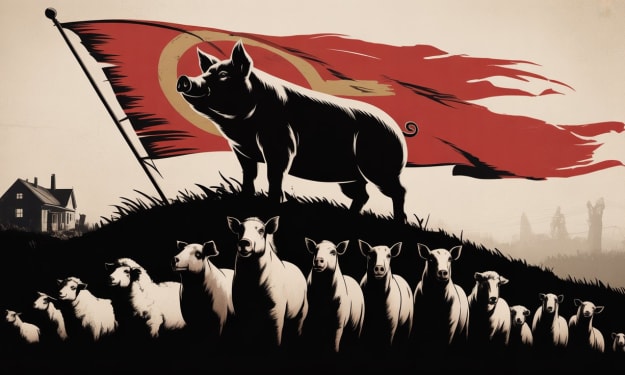
Years have passed since the animals first rose up and drove Mr. Jones from Manor Farm. The seasons change, and the once bright hope of revolution has faded into a grim reality. The animals of Animal Farm, now completely under the control of Napoleon, find themselves living under a government that is disturbingly similar to the one they sought to overthrow. Their dreams of equality and freedom have been replaced by oppression, manipulation, and betrayal.
By Echoes of Lifeabout a year ago in Fiction
Animal Farm — Chapter 3 (George Orwell)
With Manor Farm now transformed into Animal Farm, the animals waste no time in putting their new society into practice. They begin working enthusiastically in the fields, more motivated than ever under Mr. Jones. The pigs, thanks to their superior intelligence, take on leadership and planning roles, while the other animals throw themselves into physical labor. Boxer, a huge cart horse, becomes the farm's workhorse in both name and spirit. His personal motto - "I will work harder" - inspires everyone around him. Even the ducks and chickens do their best, picking up stray kernels of corn to ensure that nothing goes to waste. Although harvesting is difficult without human tools and skills, they manage better than expected, with greater success than ever before. There is a sense of pride and ownership in every mouthful of food they produce, which drives them to work harder and cooperate more willingly. The animals, for the first time, feel that their labor is truly for their own benefit, not for some master who steals the fruits of their labor.
By Echoes of Lifeabout a year ago in Fiction
Animal Farm — Chapter 2 (George Orwell)
After the powerful barn meeting where Old Major sows the seeds of revolution, the animals of Manor Farm find themselves transformed. Although Old Major dies peacefully in his sleep just three nights later, his ideas flash through their minds. The pigs, being the most intelligent of the animals, quickly take on the task of spreading his vision. Of these, three stand out: Napoleon, Snowball, and Squealer. Napoleon is a large, fierce-looking Berkshire boar with a reputation for getting his own way. Snowball is more lively, quick-witted, and inventive, while Squealer is a brilliant talker who can twist any argument to convince others.
By Echoes of Lifeabout a year ago in Fiction
Autumn Storms & Eternal Hearts
Chapter 1: A Tempest in the Quiet The storm hadn’t just arrived—it **crashed** into the city like a secret finally spoken. Outside, rain painted the windows of *Carter’s Books*, a quiet refuge tucked away between the chaos of traffic and time. Inside, the world felt slower. Softer.
By Shakespeare Jrabout a year ago in Fiction
Perfect Apple Pie
Baking a pie with you is a lot different than doing one alone. I’ve always baked my birthday pie without anyone with me. It isn’t because I’m a snob or a perfectionist. But I’ve just preferred to do it alone. Or that’s what I kept telling myself. As I started greasing the pie tin, I smiled as I listened to you hum. Before this I just listened to whatever podcast that I could find on my phone.
By Raphael Fontenelleabout a year ago in Fiction