Love
The Voice Memos I Never Sent
The first voice memo was for Michael. I remember recording it one evening while walking home. The sky had turned a soft indigo, and I’d just passed the coffee shop where we first met — not by fate, but because you knocked over my laptop with your messenger bag. You apologized, bought me a coffee, and the next thing I knew, we were building a life.
By ℍ𝕦𝕕 ℍ𝕦𝕕 𝔸𝕞𝕫about a year ago in Fiction
The Last Song She Played
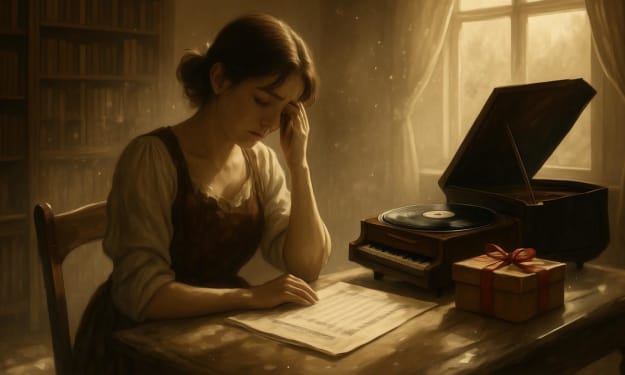
The Last Song She Played By Mahboob Khan The record player clicked softly. A few dust motes danced in the sunlight filtering through the old curtains. Daniel stood still, clutching the faded vinyl cover like it was something sacred. It had been her favorite — Chopin’s Nocturne in E-flat major.
By Mahboob Khanabout a year ago in Fiction
Behind My Girlfriend
I met Aleena on a rainy evening in September. She stood under a black umbrella near the bookstore, watching raindrops fall like silver threads from the sky. Her smile was gentle, her eyes unreadable. That night, something in me stirred—an unfamiliar mix of admiration and curiosity. We began talking. Slowly. Casually. From favorite books to shared playlists. Our connection was instant, but not rushed. Aleena had this graceful mystery about her. She spoke little of her past but listened to every word I said with soft attention. Two months in, I was deeply in love. Aleena wasn’t just beautiful—she was thoughtful, humble, and kind. But she often disappeared for hours, sometimes days. She’d return with a smile, saying she had been “visiting her aunt” or “working late.” I never questioned her. Love does that—it blinds you willingly. But behind my girlfriend, there was always something unsaid. One evening, we sat by the lake. The moonlight danced in her eyes as she rested her head on my shoulder. “You don’t ask where I go,” she said softly. “I trust you,” I replied, kissing her forehead. She smiled, but it didn’t reach her eyes. Weeks passed, and the gaps in our conversations widened. She grew quieter, and I grew restless. I noticed small things: a tiny scar on her wrist she never explained, the unread messages on her phone, the perfume scent that changed every few days. Then one night, I followed her. It wasn’t out of suspicion—it was desperation. I needed to know the part of her that remained hidden. She walked down the empty street, past familiar corners, and turned into an alleyway leading to a building I’d never noticed before. Inside, there was music—soft, soothing. I peeked through a dusty window. Aleena stood in a small room lit with warm lamps. Children gathered around her. She was reading aloud, her voice tender, patient. Her face lit up as she made each sentence come alive. One child rested on her lap, and another clutched her arm. They looked at her like she was their world. I stood there, frozen. Later, she exited the building and stopped when she saw me. “You followed me,” she whispered. I didn’t know what to say. She looked tired, more fragile than I’d ever seen. “I volunteer here,” she said. “It’s an orphanage. I come here every week.” “Why didn’t you tell me?” I asked. “Because it’s where I grew up.” Her voice cracked. “I was raised here until I turned eighteen. I come back because they need someone... someone who understands.” I walked up to her, touched her cheek. “You didn’t need to hide this.” “I was afraid,” she said. “Afraid you’d see me differently.” “I see you more clearly now.” We stood there in silence, the truth hanging between us like fragile crystal. From that day, I joined her. Every Thursday, we went to the orphanage together. I read stories too, awkwardly at first. Aleena would laugh and guide me, the children giggling at my silly voices. She opened up more. Her past was not broken, just unspoken. She had learned to protect herself by burying the hardest parts. Behind my girlfriend, I discovered a woman who had suffered and survived. A woman who turned pain into love. Months passed, and I watched her evolve—more open, more radiant. One evening, after reading a bedtime story to the kids, we sat outside on the steps. “I never thought I’d fall in love,” she said. “I always thought love was for others. People with normal families, safer stories.” “You’re my story,” I said. She looked at me, eyes filled with unshed tears. “Promise me something,” she whispered. “Anything.” “If I ever run away from myself again, follow me. Like you did that night.” I held her hand tighter. “I won’t let you go.” The city grew quiet around us. Only the sound of leaves rustling and children’s laughter fading in the background. We weren’t perfect. But behind my girlfriend, I had found a new version of love—one built on truth, compassion, and healing. A love that wasn’t afraid of shadows. A love that stayed. Note: This story was created with the assistance of AI (ChatGPT), then manually edited for originality, accuracy, and alignment with Vocal Media’s guidelines. Question for readers: Have you ever loved someone who kept part of their story hidden from you? How did you handle that moment of truth? Let’s share and grow together in the comments.
By The Blush Diaryabout a year ago in Fiction
In Her Home
The first time I saw her home, I didn’t know I’d find a new world inside. An old wooden gate guarded by marigold plants opened to a little house with faded yellow walls and windows always open to the breeze. I didn’t expect to fall in love that day — not with her home, nor with her. Amara was different. She wasn’t like the girls I used to meet — loud, social, or full of charm in parties. She was the calm after a storm. She didn’t wear makeup. Her hair was never styled. But when she smiled, something settled in me — something I didn’t know was restless. We met during a college volunteer program in her village. I was a photography student, and she was assisting the local library. I remember she wore a white kurta with orange flowers that day, and she had a book pressed to her chest like a secret. She didn’t say much — just smiled politely and walked away. But something about that smile stayed with me. Weeks passed before we spoke again. I had a minor injury on my foot from trekking and was taken to the only house near the trail. It was hers. Her mother treated the wound. Amara brought me lemon tea. The room smelled of sandalwood and cinnamon. A small radio played an old song. Her home felt... untouched by time. We spoke little. She asked about my camera. I asked about her books. She didn’t talk too much, but when she did, her words felt like poetry. I found myself returning, pretending I forgot something, or wanted to show her a picture I clicked. Each visit revealed a new detail about her home. A corner filled with pressed flowers in notebooks. A wall painted with clouds and stars she had done as a child. A collection of empty perfume bottles in her window. “They hold memories,” she told me once. One rainy evening, I arrived soaked. She smiled, handed me a towel, and made ginger tea. We sat on the porch, watching the rain wash the garden clean. She rested her head on her knees, and for the first time, she spoke of her dreams — of traveling to the mountains, writing a book, and keeping a diary of strangers she met. That night, I realized I didn’t just love her — I loved her silences, her unfinished thoughts, the way her home reflected her soul. It was a space of warmth and unspoken stories. And I wanted to be part of it. On my last day in the village, I came to say goodbye. She met me at the gate, holding a small jar of homemade jam. “To remember sweetness,” she smiled. I wanted to say so many things, but all I managed was, “Can I write to you?” Months passed. We exchanged letters. I sent her photos of city lights, cafes, and bookstores. She sent me pressed leaves, small sketches, and stories she wrote. Every word she sent carried the scent of her home. A year later, I returned — this time with no college program, no excuse. Just longing. I knocked on the wooden gate, heart thumping. She opened it with the same marigold smile. “You’re late,” she said softly. “I had to find the right reason to come.” She didn’t speak. Instead, she held my hand and led me in. The same room, the same scent. But this time, her diary was open, and her handwriting danced with hope. “I waited,” she whispered. “I always knew you’d come back.” I walked over to her bookshelf, picked up the first notebook I had seen when we met. Inside it, she had written: “He didn’t fall in love with me. He fell in love with the parts of me that lived in this home. The tea, the silence, the smell of rain. And I let him, because I loved how he made everything feel poetic.” I turned to her. “But I didn’t just fall in love with your home.” She stepped closer. “I know.” I kissed her forehead, and she leaned into my chest like she had always belonged there. Weeks turned into months. I began documenting the stories of her village, teaching photography to local kids. And every night, we sat on the porch, sipping tea, watching stars through the open window. Her home became mine — not because I moved in, but because I found my soul in it. Years later, we got married in the garden behind her house. The marigolds witnessed our vows, and her mother cried silent tears of joy. Now, whenever someone asks me where I found love, I don’t say a name. I say, “In her home.”
By The Blush Diaryabout a year ago in Fiction
I Am Your Partner
It all began on a rainy evening in Florence, Italy. The cobbled streets glistened with water, and the air was filled with the scent of roasted chestnuts and damp roses. Maya, a 27-year-old artist from London, stood outside a small café, brushing raindrops from her sketchpad. She had come to Florence to find inspiration, but little did she know she was about to find something even more profound — love. Inside the café, Aiden, an architect from Dublin, watched her from the corner. He was drawn to her — not just her appearance, but the way she moved, as if she carried stories in her fingers. Their eyes met when she stepped in, and fate, it seemed, chose that moment to begin its work. He offered her a seat at his table, and she accepted with a shy smile. They spoke of art and buildings, of stars and silence, until the coffee cups emptied and night crept in. Time, somehow, folded around them. Aiden wasn’t the romantic type — or so he thought. But Maya stirred something in him, something he hadn’t felt in years: the urge to stay, to know, to share. He walked her back to her apartment that night, holding an umbrella between them, as raindrops fell like whispers from the heavens. Days turned into weeks. Florence became their shared canvas. They explored hidden alleys, painted each other’s dreams, and danced barefoot in the courtyard under the full moon. Maya taught Aiden how to see beauty in colors, while Aiden taught Maya how structure could hold chaos. She would say, “You are my balance,” and he would reply, “And you are my spark.” One evening, while watching the Arno River reflect the dying sun, Aiden said, “What if I never go back?” Maya looked at him, surprised. “You’d leave your firm?” He nodded. “If that’s the cost of being your partner… I’m willing.” Maya laughed, not because she didn’t believe him, but because the word partner held such weight — it was deeper than lover and gentler than soulmate. “You mean it?” she asked, her voice trembling. “I do,” he said. “I want to be your partner in everything — in your art, your struggles, your morning coffee rituals, your weird fear of butterflies, and your wild dreams.” She took his hand and said, “Then I’ll be your partner too — in your blueprints, your doubts, your cold feet, and your silent nights.” They didn’t call it love — not yet. But it was something stronger. A silent agreement, a pact written in their shared glances and soft laughter. But no love story is without trials. Three months in, Maya received news from home: her father had fallen ill. She had to return to London immediately. She told Aiden the night before her flight, tears spilling as she clutched his sweater. “I can’t ask you to leave your life,” she whispered. “You don’t have to,” he replied. “I already did.” But she insisted he stay. She needed time — to help her family, to think. “If we’re really partners,” she said, “we’ll find our way back.” He kissed her forehead and said only, “I’ll wait.” Months passed. They spoke rarely. The silence was heavy but never bitter. Maya poured herself into caretaking, while Aiden returned to Dublin to sort out work commitments. Yet, every sketch Maya drew had his smile hidden in the strokes. Every building Aiden designed carried the softness of her voice in its arches. One year later, Maya returned to Florence. Her father was better, and her heart was restless. She walked through the city like a dreamer, half hoping to see Aiden, half afraid he’d moved on. She found the café again. It hadn’t changed. And there, in the same corner seat, sat Aiden — older, maybe, but still hers. He looked up and smiled. “I kept your seat.” She laughed through her tears and sat across from him. Neither said much at first. Words would only ruin it. Finally, Maya took out a small ring from her coat pocket. “I want to paint every sunset with you,” she said. “Will you still be my partner?” Aiden’s eyes softened. He took out a chain he always wore — on it was her drawing, folded neatly inside a glass pendant. “I never stopped.” They didn’t need a grand wedding or declarations shouted from rooftops. They had each other, and that was enough. From then on, wherever they went — whether in London, Dublin, or Florence — they remained partners. In success and failure, in sleepless nights and sunny days, in art and architecture, they grew not just as lovers but as teammates, confidants, and mirrors of each other’s souls. Years later, they’d sit on that same bench by the river with sketchpads and plans spread between them. Maya would lean her head on his shoulder and whisper, “I’m glad I said yes.” And Aiden, still carrying that quiet love, would reply, “I never stopped saying it.” --- Would you stay loyal for years if your partner asked for time? Or does true love need to stay constant, side by side? Tell us your thoughts.
By The Blush Diaryabout a year ago in Fiction
How to Be Happy
There was once a man named Liam who seemed to have everything: a stable job, a warm apartment, and a circle of friends who admired him. But happiness—true, soul-deep happiness—always seemed like a fleeting cloud that passed over him without soaking in. Every morning he woke up, brushed his teeth, poured his coffee, and went through the motions of life. But his heart often felt heavy, like it carried something too complex to describe. That changed one rainy Sunday when Liam walked into a cozy bookstore tucked between two bakeries on a quiet street in Edinburgh. He had no purpose that day, just a need to escape the drizzle and the boredom gnawing at his insides. He browsed titles lazily, touching the edges of paperbacks like they might whisper something comforting. And then, she walked in. Ella. She wasn’t flashy or loud. She wore a yellow raincoat, her curls frizzy from the moisture, her cheeks pink from the cold. She glanced at Liam, gave a slight smile, and headed toward the poetry section. He watched her from between the shelves. Something about her seemed... light. Like she carried joy in her pocket and gave some away just by existing. He didn’t speak to her that day. But fate would not let it end there. A week later, they met again at a local open mic night. She read a poem about loneliness, and Liam felt the air shift. Her words painted the emptiness in his chest. He clapped the loudest when she finished. After the show, he introduced himself. Their conversation lasted hours. They talked about favorite books, worst heartbreaks, the kind of music that makes you cry even when you’re happy. For the first time in years, Liam felt something different. Not just attraction—but peace. A strange, thrilling kind of calm. Their bond deepened over months. Ella taught Liam how to slow down, to appreciate the color of the sky at 7:12 p.m., the scent of a new book, the warmth of a hand resting silently in another. They hiked together, cooked together, danced barefoot in the kitchen. She made lists of things they loved—like old jazz records, mint tea, or the way her cat snored. But life has a way of testing us when we least expect it. Ella was diagnosed with a rare autoimmune disease. At first, it was manageable. She joked about it, saying she would become "that girl in the rom-com with a tragic illness." But over time, the hospital visits increased, the laughter thinned, and the weight of uncertainty grew heavier. Liam stayed by her side. Every step. Through medication side effects, sleepless nights, and moments of silent fear. He didn’t leave. He couldn’t. And through that pain, something remarkable happened. They discovered a deeper layer of happiness. It wasn’t built on grand adventures or romantic dinners. It came from watching the sun rise from a hospital window, from the way Liam helped brush her hair when her hands trembled, from the silly stories Ella told to distract herself from the pain. On one particularly rough night, Ella whispered, “I don’t want to be remembered for being sick. I want to be remembered for how I made people feel.” Liam responded, “You make me feel like I’m home.” When Ella passed away a year later, Liam was devastated—but not broken. He mourned, yes. He cried for weeks. But then he started to live as Ella had taught him. Slowly, gently. He began volunteering at the bookstore where they met. He picked up photography and started capturing little moments of joy: a child laughing in the park, a couple holding hands, an old man feeding birds. He even started writing—stories about Ella, about loss, about healing. His words touched others who were searching for happiness in their own pain. Years passed. Liam never forgot Ella. He never stopped loving her. But he did find happiness again. A quieter, more resilient kind. He learned that happiness isn’t something you chase or force. It’s something you notice. It’s in the way a flower tilts toward the sun, in a shared smile with a stranger, in remembering someone who loved you so well that even their absence feels like a gift. So how do you be happy? You start by letting yourself feel everything. The good, the hard, the in-between. You open yourself to love—even if it doesn’t last forever. You cherish the small moments. You forgive yourself. And above all, you keep going. Because happiness doesn’t come from having a perfect life. It comes from finding the beauty in an imperfect one. Note: This story was created with the assistance of AI (ChatGPT), then manually edited for originality, accuracy, and alignment with Vocal Media’s guidelines. Now your turn: Have you ever found happiness in the most unexpected place? Or has someone changed your view of life like Ella did for Liam? Share your thoughts and stories—someone out there may need to hear your light.
By The Blush Diaryabout a year ago in Fiction
Feelings for Hug
He stood quietly at the edge of the bus stop, tapping his foot nervously, eyes scanning the faces in the crowd. The autumn wind whispered around him, sending golden leaves swirling like tiny messengers of change. His fingers fidgeted with the strap of his bag while he waited. Not for the bus. Not for a cab. But for her. Elina. She was late. Not unusually so. She was always ten to fifteen minutes behind time, and somehow, those minutes felt heavier than the entire day. But today was different. Today wasn’t about a coffee date or a quick lunch between meetings. Today was about closure—or something like it. Maybe it was about confession. Or healing. Or the kind of hug that doesn't just wrap around your body but presses itself deep into your soul. They had been friends for years, skirting around emotions that dared not speak their name. There had been no dramatic kiss under the rain, no candlelit declarations. Just shared coffees, knowing glances, and late-night messages that said too much and not enough at the same time. Their story was composed of pauses. Not periods. Not commas. Just endless ellipses that made people wonder where it was going. If anywhere. Elina finally appeared, her scarf flapping like a ribbon caught in the wind. She waved when she saw him, breathless, cheeks flushed from the walk. “Hey,” she said, tucking a loose strand of hair behind her ear. “Hey,” he replied, giving a smile that didn’t quite reach his eyes. She knew something was off. She always knew. “You okay?” He hesitated. “I just… I needed to see you.” She nodded, silently understanding. They didn’t need explanations. They never did. That was the beautiful tragedy of it all. They walked together without a destination, feet tracing paths they didn’t plan, through the park near the old bookstore, where the benches knew more about them than their friends ever did. It was there, in the heart of the park, that they stopped. The sun was dipping, casting everything in a warm golden hue. Children’s laughter echoed in the distance. The air was crisp, scented with wood and change. “I miss this,” he said, his voice low. “Just us… walking.” She looked at him, her expression softening. “Me too.” There was a pause. And then another. He turned to face her fully. “I’ve been carrying something inside me for a while. And I think… if I don’t let it out now, it’ll eat me.” She held his gaze, silent, waiting. “I miss your hugs,” he said finally, almost like a confession. “I miss how they made everything quiet inside me. How… I felt seen. Held. Like I belonged somewhere.” Her eyes glistened, but she didn’t look away. “You never told me,” she said. “I was afraid. That if I hugged you again, I wouldn’t want to let go.” She stepped closer. So close he could feel the warmth of her breath. “Do you still feel that way?” “I don’t know,” he whispered. “That’s the thing. I came here today… hoping I could find out.” Without a word, she opened her arms. And he walked in. That hug wasn’t like their others. It wasn’t a greeting or a goodbye. It wasn’t even casual affection. It was raw. Real. It was the kind of hug that held unspoken apologies, years of longing, laughter they didn’t get to share, and nights they had spent thinking of one another when the rest of the world slept. Her hands rested on his back like she was afraid he might break. His face pressed against the curve of her neck, where everything smelled like familiarity and heartbreak. No one spoke. No one needed to. Because in that moment, nothing else existed. No timelines. No regrets. Just them. And the quiet ache of realization: this—this feeling—was love. When they finally pulled apart, he saw tears glistening in her eyes. And maybe she saw his, too. “Now what?” she asked softly. He looked down at her hand and gently took it in his. “Now we stop running from this. From us.” She didn’t smile. Not exactly. But the weight in her eyes shifted. And for once, the silence between them didn’t hurt. --- They spent that evening together, walking until the sky turned indigo. He told her about all the times he’d wanted to reach out and didn’t. She confessed she had waited, hoped, and then lost hope, again and again. “I used to imagine hugging you when I was sad,” she admitted. “It always made me feel better, even if it wasn’t real.” “It was real,” he said. “It was real to me too.” They stopped for coffee near the pier. The place where they once argued over nothing and ended up laughing about it a week later. Their fingers kept brushing as they sipped warm drinks, and neither of them moved away. That night ended with another hug. Longer. Warmer. No promises. Just feelings. And that was enough. --- Days passed, and their friendship shifted like a soft tide. The hugs became more frequent, more deliberate. A hand on the back during a goodbye. A squeeze of the shoulder during hard moments. Until one day, in the middle of a crowd, she wrapped her arms around him suddenly. He laughed. “What was that for?” “I just needed to remind myself,” she said. “Of what?” “That I still feel everything. Every time I hug you.” And so did he. They weren’t rushing into labels. They didn’t update relationship statuses. But they shared things that were deeper than any title: vulnerability, memories, hope. And above all, they shared hugs that spoke the words they still couldn’t say. Because some feelings don’t need explanations. They just need arms. --- Note: This story was created with the assistance of AI (ChatGPT), then manually edited for originality, accuracy, and alignment with Vocal Media’s guidelines.
By The Blush Diaryabout a year ago in Fiction
When the Rain Fell Softly. AI-Generated.
The first time I saw her, it was raining—not the wild, stormy kind, but the soft, gentle drizzle that makes everything feel like a dream. I was sitting outside a quiet bookstore in Lahore, under a small awning, sipping hot chai from a paper cup. The smell of wet earth, old books, and street samosas lingered in the air. That’s when she appeared—running, laughing, drenched but not bothered at all. Her dupatta clung to her, her hair wet and tangled, and her smile… it was the kind that didn’t ask for attention but captured it anyway. She looked at me, a stranger, and said, “Do you mind if I stand here for a while? My umbrella broke halfway down the street.” I moved slightly, making space under the already crowded shade. “Of course not.” She stood beside me, brushing water from her sleeves. There was a kind of quiet comfort in the moment—two strangers sharing shelter from the rain. I offered her some chai. She took it with a soft laugh and thanked me. That’s how it began. Her name was Areeba. She was a literature student, studying Urdu classics, and had a soft spot for rainy days and old poetry. That first conversation went from Faiz to Ghalib, from chai stalls to childhood stories. She told me how marigolds reminded her of her grandmother’s garden—how they were simple but lasted longer than roses. I remember thinking, This girl sees beauty in things most people forget to notice. We parted ways that day without exchanging numbers, just a smile and a soft “maybe I’ll see you again.” I didn’t expect to. But the city, in its strange way, kept bringing us back together. We met again a week later at the same bookstore. Then again in a chai shop nearby. After that, it became a pattern. We never made plans—we just kept running into each other like the universe was writing us into the same chapter. We talked about everything. She told me how her dream was to pursue her Master’s in Karachi. I told her how I loved photography but never had the courage to chase it seriously. She encouraged me, saying, “If something brings you peace, it’s worth following.” One day, I brought her a bunch of marigolds, tied in a simple white thread. She looked at them, then at me. “You remembered.” “I remember everything about you,” I replied. We sat on that bookstore bench for hours, not caring about time or the noise around us. She read me poems from her notebook. I took pictures of her holding those marigolds, the sunlight catching her smile. But not every love story ends with forever. Some just leave you with moments that never fade. One evening, as we sat under our favorite tree, Areeba told me she’d gotten her admission in Karachi. She was leaving in two weeks. “I’m happy for you,” I said, though my chest ached. “I don’t want to go,” she whispered. “But you have to,” I replied. “For yourself. And I’ll still be here. Always.” We didn’t make promises we couldn’t keep. We exchanged letters instead of big words. And when she left, I stood at the station with another bunch of marigolds, watching her train disappear into the horizon. We kept in touch for a while—calls, texts, voice notes filled with poetry and silly jokes. But life has its way of testing distances. Slowly, the messages grew shorter. The calls became less frequent. And yet… not a day goes by when I don’t think of her. Every time it rains, I look out the window and remember that day—her laugh, the broken umbrella, and the warmth of her hand brushing mine as she took the chai. I still visit that bookstore. I still sit on that same bench. And yes, I still buy marigolds. Because sometimes, a moment is enough. One walk in the rain. One poem. One girl who saw beauty in forgotten things. And honestly, even if love doesn’t last a lifetime, it can still change one. Forever.
By Sherooz khanabout a year ago in Fiction
The Letter Arrived 20 Years Late. AI-Generated.
The mail came at 3:16 PM. Same as always. But that day, something was different. Tucked between a water bill and a supermarket coupon booklet was a yellowed envelope—creased, brittle, and stamped with a date: March 12, 2005.
By Muhammad Riazabout a year ago in Fiction
The Man Who Walked Backwards
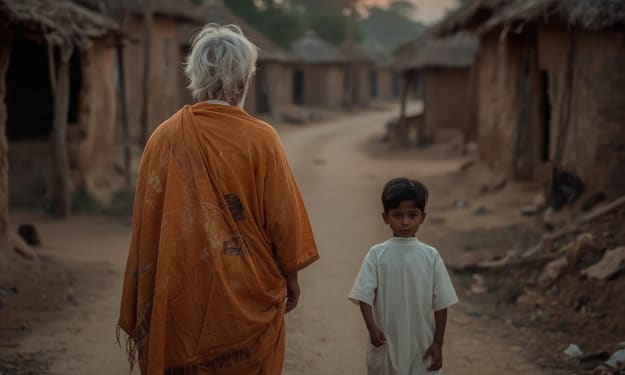
By Ikhtisham Hayat In the small village of Muridwala, where time seemed to rest beneath the shade of old banyan trees and children still played with marbles in dusty streets, lived a strange man everyone called Peeru Chacha. No one knew his real name anymore. What made him peculiar wasn’t just his weathered shawl or his rusted lantern, but the fact that he had been walking backwards for nearly ten years. Yes, backwards. Children laughed and mimicked him. Adults whispered stories. Some believed he’d lost his mind. Others said he had seen something that no man should ever see. But no one ever asked him why. Except I did. It was the winter I turned seventeen. My mother had passed away, and grief sat like cold iron in my chest. I wandered the village aimlessly, feeling detached from life, when I saw him – walking backwards from the masjid toward the hill that led to the old graveyard. He stopped, turned only his head, and looked straight at me. “Beta,” he said gently, “You walk forward, but your eyes are filled with the past.” His words stunned me. I don’t know what made me follow him, but I did. He led me to a bench under a neem tree. He sat, facing the opposite direction, still not turning his body. “You wonder why I walk like this?” he asked. I nodded. He smiled faintly. “Because the world taught me everything forward... but healing, healing came only when I walked back.” He began his story. Many years ago, he had been a teacher in the same village, a man of books and quiet smiles. He had a wife named Naseem and a son named Daniyal. His life was simple, but beautiful. Every morning, he walked to school, and every evening, Daniyal would run into his arms. But one rainy night changed everything. Daniyal had gone out to fetch a kite that had landed on the road. A speeding truck, a slippery corner, a scream that split the rain—and just like that, his son was gone. “My legs forgot how to stand,” he said, eyes glassy. “My wife never spoke again. She just... disappeared inside herself.” A week after the funeral, she handed him a box. Inside were Daniyal’s drawings—of kites, the masjid, a little family holding hands. “I kept walking forward,” Peeru Chacha said. “Everyone told me to. ‘Time heals,’ they said. ‘Move on.’ But every step forward felt like I was walking away from him.” Then one day, sitting beside Daniyal’s grave, he tried something different. “I took one step backward,” he whispered, “and it felt like I was returning to him.” So he kept doing it. One step, then another. It felt absurd at first. But strangely... freeing. It was his way of grieving, remembering, healing. People mocked him. Some called him mad. But he didn’t care. “Walking backwards reminded me of where I came from,” he told me. “Of who I had loved. And in that process, I found pieces of myself again.” I sat silently, the winter air biting at my fingers, but my heart warmer than it had been in weeks. My mother’s memory rose inside me like sunlight through mist. “You know,” he said, “we’re told to look ahead, dream of the future. But sometimes, to truly understand where we are... we must turn around.” Peeru Chacha never stopped walking backwards. But I saw him differently after that. I didn’t laugh. I didn’t feel pity. I felt... respect. One day, a traveler came through Muridwala. He watched Peeru Chacha, curious. I overheard him ask, “Is he mad?” I stepped forward and said, “No. He just walks where his memories live.” Years later, I moved to the city. Life was fast. The kind of fast that makes you forget who you are. But every now and then, when grief knocked, or loneliness curled around me, I’d walk backward down a quiet lane. And I’d remember my mother’s hands, her prayers, her stories. Sometimes, in the act of going back, we find the strength to face forward again. And perhaps that’s what Peeru Chacha had been teaching us all along. Not madness. Not obsession. But a strange, beautiful kind of wisdom... The wisdom of walking backwards.
By Ikhtisham Hayatabout a year ago in Fiction