Love
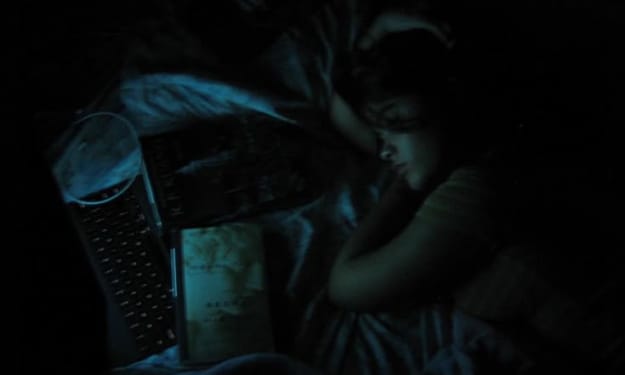
Last Night . AI-Generated.
It was just a regular Tuesday. Or at least, that’s how it looked. I had made dinner around 8:30 p.m. — just some roasted vegetables, a bit of garlic, oregano, and olive oil. Nothing fancy, just the kind of meal that feels like a quiet hug after a long day. I always find vegetables oddly comforting. Maybe it’s because growing up, my mom used to make this same dish when things felt heavy in the house. Simple food can feel like a memory you didn’t know you needed. I had no plans beyond a late cup of chai and an old film. The kind of night that usually slips away without much thought. But there was something in the air last night. A strange stillness. No traffic noises outside, no messages buzzing on my phone, not even a barking dog in the street. The silence was so thick that I could hear the ticking of the wall clock like it was a drumbeat. I don’t know if you’ve ever had a moment where you feel like something’s coming, but you don’t know what. That’s how I felt.
By Sherooz khanabout a year ago in Fiction
My Brother's Keeper
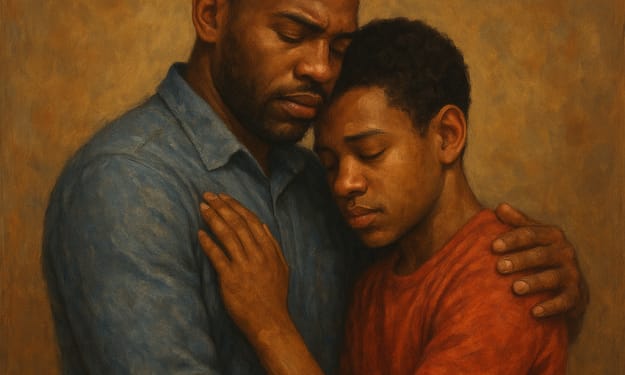
Growing up in a small rural town, my brother Malik and I were inseparable. I was the younger one by three years, always trailing behind him with wide eyes and a thousand questions. Malik had this quiet strength about him—he rarely spoke much, but his actions were louder than any words. He was my protector, my guide, and my hero. People used to say we were like David and Jonathan, but the truth is, Malik never needed a sling—his heart was strong enough to shield me from the world. Our father left when I was six. Malik was nine. One day, he was there at the breakfast table, sipping black coffee and complaining about the radio signal, and the next day, gone. No note, no goodbye, just silence. Mom worked two jobs to keep the house running, and while she was physically present, her exhaustion swallowed her emotionally. That’s when Malik stepped in—not just as a brother, but as a father figure too. He made sure I got to school on time, helped me with homework, cooked meals when Mom couldn’t, and once, when a bully shoved me into a puddle, Malik walked over and silently handed me his dry hoodie without saying a word. The next day, the bully had a black eye, and no one ever messed with me again. We dreamed big together. Malik wanted to be an engineer, and I wanted to be a writer. He would sit beside me as I scribbled stories in my notebook and sometimes even add his own ideas—usually practical ones, like how a machine could help the main character save the day. But life, as it does, began to pull us in different directions. Malik graduated from high school and started working at a local construction company to help with bills. College wasn’t an option for him—he gave up that dream so I could have mine. I got a scholarship to a university two hours away, and when I left, I promised him that I would make it worth his sacrifice. “You just do your thing,” he told me that day at the bus stop. “I got us.” I should have seen the wear in his eyes—the way he carried burdens he never spoke about. But I was too caught up in the freedom of a new beginning to notice that Malik was quietly unraveling. While I buried myself in books, lectures, and the dream of writing a novel, Malik was dealing with harsh realities. Long shifts. Low pay. A growing pressure to take care of everything back home. He stopped answering my calls as often. When I asked how things were, he always said, “All good, little bro. Focus on you.” Then one winter night, I got a call from Mom. Malik had been arrested for stealing construction equipment from the job site. My stomach dropped. This couldn’t be real. Malik? My brother who would give the shirt off his back to a stranger? I rushed home and found out the truth. The equipment had been sold to cover mounting debts—our mom had fallen sick, bills had piled up, and Malik had done what he thought he had to do. He pled guilty and refused to let us hire a lawyer. “Don’t waste money on me,” he said. “Let me take responsibility.” He was sentenced to two years in prison. Visiting him was like visiting a ghost. His eyes were dimmer, his voice lower. But every time I tried to apologize—for not being there, for not seeing the weight he carried—he’d stop me. “You don’t get it,” he said once through the glass. “Everything I did, I’d do again. I just didn’t want you to have this kind of life.” That broke me. I spent the next two years turning pain into pages. I wrote every single day. Stories about brothers, about love, about sacrifice. When Malik was released, I was waiting at the prison gates with the first printed copy of my debut novel. The dedication read: > For Malik—my brother, my protector, my keeper. I am because you were. He teared up, quietly, and said, “You did it. I knew you would.” We moved in together for a while after that. Malik found a steady job with a company willing to give former inmates a second chance. He started night classes in engineering—his old dream wasn’t dead, just sleeping. And I kept writing, feeding the world with the stories Malik helped inspire. But there’s one story I never published—this one. Because this one wasn’t fiction. It was real. It was raw. And for a long time, it felt too sacred to share. But now I think the world needs to hear it. We often idolize heroes in capes and masks, but some of the greatest heroes walk beside us silently, making sacrifices without applause. Malik never asked to be anyone’s savior. He simply loved, deeply and quietly, in the only way he knew how. He once told me, “You don’t have to carry guilt, bro. Just carry the torch.” So that’s what I do. Every book I write, every word I share, is lit by the fire he built when I was too young to strike the match myself. I am my brother’s keeper. But more importantly, he was mine.
By Nimatullahabout a year ago in Fiction
The Love I Never Said
I was twelve when I first felt it—that quiet flutter in my chest when he smiled. I didn’t know it was love back then, not really. But I knew it was something more than the joy I felt with other people. His name was Arman, and he was my cousin. We were always close, born just six months apart. Our families were tightly knit; weekends were for gatherings, for laughter and homemade meals and games in the backyard. Arman was a light in those days—charming, kind, effortlessly funny. He had a way of making everything feel like magic. We’d play hide and seek for hours. I always let him find me too easily, just to see the little victory grin that spread across his face. At night, when everyone sat around in the living room, I'd steal glances at him from behind a book or a cushion. Sometimes our eyes would meet, and he'd smile—not the smile that twisted my heart, but a simple one, warm and unaware. I never told him. How could I? I was afraid. Afraid of being laughed at. Afraid of ruining the easy, beautiful bond we had. Afraid of being wrong. Society has its rules, its boundaries. And though in some places love between cousins is accepted, where we lived, it was always spoken of in whispers—if at all. So I buried my feelings deep, like a precious stone hidden beneath layers of earth, only for me to know it existed. Still, I loved him in small, silent ways. I saved the last piece of cake for him when we shared dessert. I memorized his favorite songs, even the ones I didn’t like. I’d notice when he cut his hair, or wore a new shirt, and carry that image with me for days. I still remember one summer when he helped me ride a bike without training wheels. His hand steady on my back, his voice shouting, “You’ve got it, Julia! Keep going!” And I did, more for him than for myself. When we entered our teenage years, things started to shift. Arman became more distant—not in a cruel way, just in the way boys grow apart from the girls they used to see as playmates. He started hanging out more with his school friends, talking about girls he liked, girls who weren’t me. He never knew how I’d shrink a little inside each time. I never envied those girls. I envied their freedom to love him out loud. One night when I was sixteen, I cried myself to sleep after hearing him talk about a girl named Layla. I remember sitting on the porch with him, the stars above us, our legs barely touching. He told me she was beautiful, that she made him nervous and excited all at once. I smiled, nodded, asked him questions like a good cousin should. Inside, I was breaking. I think that was the first time I truly understood heartbreak. And yet, I never stopped loving him. I just got better at hiding it. Time passed. We grew up. He went off to university in another city, and we saw each other less. Texts became shorter, conversations less frequent. But whenever he came back for holidays, my heart would still race just a little when I heard his voice at the door. He once brought a girl home with him. I was twenty by then. She was sweet, and pretty, and everything I wasn’t. I was polite, of course. I smiled and helped serve dinner and pretended not to notice the way he looked at her. Later that night, when I was alone in my room, I held my pillow tight and wept. I often ask myself why I never told him. Maybe part of me hoped he would somehow feel it too, without needing the words. Maybe I was waiting for a sign. Or maybe I knew what the answer would be, and I couldn’t bear to hear it out loud. Even now, years later, I still love him. He’s married now. Two kids. We meet during family gatherings, and he still treats me with the same affection, the same warmth. He’ll ask me about my job, my life, and I’ll tell him everything except the truth I’ve kept all these years. Sometimes, I watch him playing with his children, and the ache returns. It’s softer now, like an old scar, but it’s there. A gentle reminder of the love I carried for so long. The love I still carry, in some quiet corner of my heart. I’ve tried to move on. I’ve dated, loved others, lost others. But it’s never quite the same. No one has ever made me feel the way Arman did—like the world was simpler, like I was safe. There’s a strange beauty in loving someone who never knew. It’s a kind of pure, selfless love—one that doesn’t ask for anything in return. Just the chance to exist quietly beside them, to cherish them from a distance. Sometimes, in the silence of my room, I imagine what it would have been like if I had told him. I picture us walking through the woods behind my childhood home, the leaves crunching beneath our feet. I would stop, turn to him, and say, “Arman, I’ve loved you for as long as I can remember.” But I never did. And maybe that’s okay. Maybe some loves are meant to remain unspoken. Maybe they exist to teach us about longing, about patience, about the resilience of the human heart. He’ll never know how deeply I loved him. How deeply I still do. But I know. And for now, that has to be enough.
By Julia Christaabout a year ago in Fiction
When Water Swallowed The Light
The house had been in the family for five generations. Built by hand on the banks of the Rappahannock, it stood tall and white, with weather-worn shutters and a wraparound porch that had seen more rocking chairs than most old Southern homes. The boards creaked like they remembered everything, and maybe they did.
By Ellie Hoovsabout a year ago in Fiction
The Cup of Tea She Never Finished
"The Cup of Tea She Never Finished" By Niamat Ullah The last time I saw my mother, she was sitting on the veranda, holding her favorite cup of tea. It was a quiet afternoon, the kind where even the birds forget to chirp, and the sky looks too tired to shine.
By Niamat ullahabout a year ago in Fiction
"The Lake Beyond the Pages"
The sun hung lazily in the sky, casting a golden hue over the rippling surface of the lake. I had come here for peace — for escape. A borrowed cabin in the woods, miles away from Wi-Fi, honking cars, and unread emails. It was just me, my books, and the gentle hush of summer.
By Ihsan Ullah LLCabout a year ago in Fiction