Love
A Moment In Time
It was hot; not just hot. It was incredibly humid, which made it feel as though you were in a pressure cooker as the sun slowly climbed in the sky. In the morning, he had gone out for a walk. It was sunny with no breeze. As he walked, he felt the temperature steadily increase. Even the air began to feel very warm and thick. He had wanted to get some exercise, but this was getting to be too much. It felt as if every inch of his clothes were stuck to him as he walked. The heat just sapped his energy, his desire to continue. He decided to keep his walk short. He couldn’t believe that this was only the beginning of his summer vacation from school. He headed home as the first clouds started to accumulate. He didn’t really notice the clouds just how oppressive the heat had gotten. He decided to grab a quick shower to cool off and feel human for at least a few minutes. As the water sprayed onto his skin it was an immediate relief.
By V. H. Eberleabout a year ago in Fiction
Real story Balochistan Girl
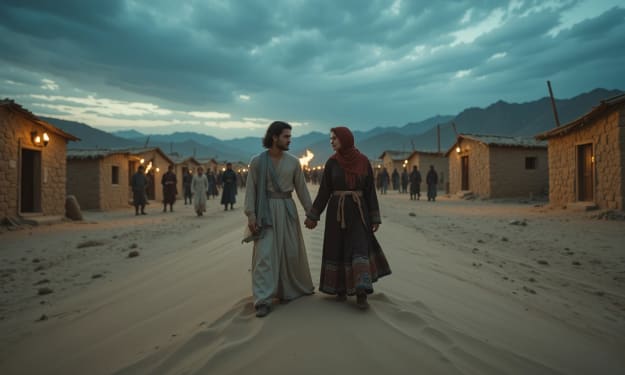
A year and a half ago, a young couple defied tradition and chose love. They married by their own will — an act that, in many parts of the world, is a celebration of freedom and partnership. But not here. Not in a land where love is often treated like a crime and women pay the price for choices men are allowed to make freely. They were invited back by their tribe. An invitation that, on the surface, seemed like a gesture of reconciliation — a meal, a family gathering. But this was no dinner. It was a call to judgment. Not of justice, but of so-called honor. 24-year-old Sheetal, wrapped in a large shawl, and 32-year-old Zarak were brought in a convoy of vehicles to a barren, dusty field. A desolate place, empty of trees or shade — the kind of space where nothing lives, and now, something would die. Nineteen men stood waiting, their faces cloaked in stone, their eyes hollowed by a purpose they had already decided to fulfill. Five of them held loaded guns, as though preparing for war. But there was no enemy. Only a young woman and a man, whose only crime was love. Sheetal stepped out of the vehicle, calm, her head high. She held a Qur’an in her hands — not as a shield, but as a declaration of her faith, her truth. As she looked at the men of her own tribe — the same men who once watched her grow, laugh, learn — she said quietly, “You may shoot. But only bullets.” She didn’t ask for mercy. She knew none would be given. She didn't cry, didn’t beg, didn’t tremble. Her feet walked steadily toward the killing ground, a place marked not by justice, but by betrayal. She knew exactly what was to come. And still, there was no fear in her steps, no desperation in her eyes, no scream caught in her throat. Only a silence — heavy, deep, louder than all the shrieks that never had the chance to escape the mouths of countless other women silenced in the name of honor. They didn’t fire once. They fired nine times. Nine bullets tore through her body, each one a symbol of a society that equates control with dignity, and death with honor. And then it was Zarak’s turn. He was the husband — the man who stood by her, who loved her, who married her knowing full well the wrath their decision might unleash. He, too, was executed. Shot nearly twice as many times. His body fell beside hers in the same dust, their blood mingling on the cracked earth — two lives buried not under soil, but under centuries of twisted tradition. There is little left to say. What can one write in a world where even death is not the end — where a girl can be killed and the ones who kill her can go home, wipe their hands, and sleep peacefully? What can you argue in courts, in homes, in the hearts of those who still believe a girl’s choice is a family’s shame? Where r**e victims are shunned, love marriages are condemned, and so-called "honor" becomes the excuse to murder daughters, wives, pregnant women — anyone who dares to live freely. In this story, Sheetal was not just a girl. She was a woman who knew she would die for love — and still, she loved. She walked willingly into the battlefield, unarmed, with faith in her heart and dignity in her silence. In front of the same people who should have protected her, she was executed — and they called it honor. To the Baloch tribe that arranged this brutal end: your version of honor demands death. Your piety demands violence. You crowned your turbans with another feather of shame while pretending it was pride. You stood in that field not as men of honor, but as executioners. You did not just kill Sheetal and Zarak — you killed the dream that love could ever be safe in the arms of culture. Another daughter lost. Another pair of bloodied footprints left behind. Another grave for love. And in return? Nothing but silence. Because here, screams aren’t heard — they’re buried. And the question remains: how many more Sheetals will be sacrificed before this honor loses its power to kill?
By Israr khanabout a year ago in Fiction
10 Dates Before Goodbye
Start writing...10 Dates Before Goodbye Zindagi ke aakhri chh mahine, pyaar ke sabse khoobsurat 10 din. --- Date 1: The Diagnosis Hospital ke khidki ke peechay Zoya khadi thi, uske haath mein ek file thi jo uski zindagi ki haqeeqat lekar aayi thi. Stage 4 blood cancer. Doctor ne sirf chh mahine zindagi di thi. Aankhon mein aansuon ke saath Zoya ne apne dil ki baat Ali se chhupate hue poocha, “Kya hum waqt ko rok nahi sakte? Ya phir ise thoda sa thehra nahi sakte?” Ali ne uski taraf dekha, jiska chehra dard se bhara tha, lekin uske labon par ek chhoti si muskurahat thi. Usne apni jeb se ek chhoti si diary nikali, pehla safha khola, aur likha: > “Chalo, hum 10 dates karte hain. Tumhari muskurahat roz dekhni hai, jab tak ho.” Zoya ne uski baat par thoda hansa, phir kaha, “Main marne wali hoon, aur tum dating ka plan bana rahe ho?” Ali ne aankhon mein chamak ke saath jawab diya, “Waqt kam hai, is liye pyaar jaldi karna hoga. Har pal ko jeene ka iraada hai.” --- Date 2: School Wali Bench Agla din tha. Ali ne Zoya ko usi purani bench par le gaya jahan bachpan mein woh school se bhaag kar chup jati thi. Wahan do sandwiches rakhe thay. Zoya ne hairani se poocha, “Yeh kya hai?” Ali ne kaha, “Bachpan ki bhookh kabhi nahi marti. Aur yeh sandwiches tumhari bachpan ki yaadon ke liye hain.” Zoya ki aankhon mein aansu aa gaye, “Aur bachpan ka pyaar? Kya woh bhi zinda hai?” Ali ne has kar kaha, “Woh to tumhare samne zinda hai. Aur main us pyaar ko zinda rakhne aaya hoon.” --- Date 3: Library Mein Khamoshi Wo din Ali ne Zoya ko library le gaya. Wahan ek purani kitaab chhupi thi, jisme usne chhote chhote pyar bhare khat likhe thay. Har safhe par ek yaad, har yaad mein Zoya ka naam tha. Zoya ne poocha, “Yeh sab kab likha?” Ali ne kaha, “Jab tum mujhse door thi, main har din tumhari wapsi ka intezaar karta tha. Har lafz mein mera pyaar chhupa tha.” Zoya ne uske haath thaame aur aankhon mein aansu bhar aaye. --- Date 4: No Filter Photography Ali ne Zoya ki 100 tasveerain khinchein — bina makeup, bina pose, sirf asli hassi aur jazbat ke saath. Zoya ne poocha, “Yeh sab kyun?” Ali ne jawab diya, “Main tumhein waise hi yaad rakhna chahta hoon, jaisi tum ho — hassi wali, thodi roothi hui, kabhi gusse wali, magar hamesha zinda.” --- Date 5: Khamosh Walk Dono ek lambe park ke raaste par chal rahe thay, bina baat kiye. Sirf unke saanson ki awaaz sunai de rahi thi. Zoya ne pehli baar Ali ka haath thaama, “Main tayyar hoon. Har pal jeene ke liye.” Ali ne kaha, “Yeh waqt humara hai, isse hum jeetenge.” --- Date 6: I Love You... In Writing Ali ne Zoya ke liye aik diary banayi thi — 30 pages, har zaban mein “I love you” likha tha. Zoya ne hans ke kaha, “Agar tum chalay gaye to?” Ali ne kaha, “Pyaar kabhi nahi marta, log marte hain, lekin jazbaat kabhi nahi.” --- Date 7: Chupke Se Raqs Ek purane café mein dono ne chupke se Bluetooth speaker lagaya aur bina shor sharabe ke raqs kiya. Zoya ne poocha, “Music kahan hai?” Ali bola, “Jahan tum ho, wahan har sans ek sur hai.” --- Date 8: Hospital Ki Chhat Ali ne Zoya ko hospital ki chhat par le gaya. Andhera tha, lekin sitare chamak rahe thay. Ali ne kaha, “Agar main chala gaya to, har barish mein mujhe dhundhna, har sitaray mein mera chehra dekhna.” Zoya ne uska haath mazbooti se pakda. --- Date 9: Shadi Ka Jhoot Zoya ne hospital staff ke saath mil kar chhoti si shaadi arrange ki — bina papers ke, magar asli pyaar ke saath. Ali ne kaha, “Yeh meri zindagi ki asli deal hai.” Zoya ne kaha, “Aur meri bhi.” --- Date 10: Goodbye Without Tears Aakhri date thi. Ali ne diary ka aakhri page Zoya ke haath mein diya, > “Mujhe yaad mat rakhna, mujhe jeeti rakhna.” Zoya ne usse gale lagaya, aansu rok kar. Ali ne aankhein band ki aur muskuraya. --- Epilogue: Aaj bhi Zoya har saal 10 naye logon ke saath 10 dates karti hai, unhe jeene ki umeed dene ke liye. > Kyun ke Ali ne usse sikhaya tha: “Pyaar zindagi mein nahi hota, pyaar zindagi bana deta hai.”
By Aman Ullahabout a year ago in Fiction
Highway Serendipity
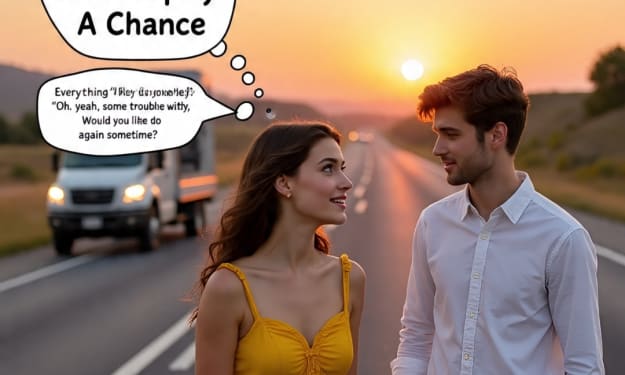
Highway Serendipity As the sun began to set on the bustling highway, casting a warm orange glow over the endless stretch of asphalt, two strangers' lives were about to intersect in a way they never could have imagined. The hum of engines, the rush of wind, and the occasional honk of a horn created a symphony of sounds that filled the air.
By Bilal Muhammadabout a year ago in Fiction
"He Chose His Mother Over Me"
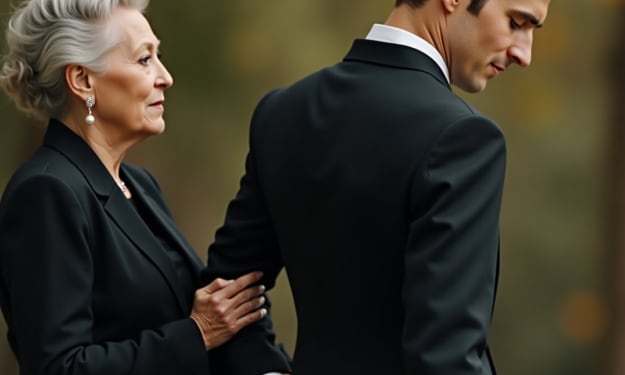
I never imagined that the happiest day of my life would turn into the most painful memory I carry. We were together for four years. Four beautiful, complicated, honest years. Aarav was everything I had ever hoped for—gentle, ambitious, funny in a quiet way. We met at university, shared late-night study sessions, endless cups of coffee, and dreams that intertwined more deeply with every passing year. I knew early on that his mother, Mrs. Malhotra, was… difficult. Not cruel, not unkind, but always distant. Sharp in her silences. She didn’t speak much to me at family gatherings, but when she did, her words were carefully measured. “You’ll learn,” she once said, when I offered to help with dinner and mistakenly added too much salt to the dal. “Wives must learn quickly in this family.” I thought it was just a matter of time—that she’d come around once she saw how happy Aarav and I were. But I underestimated the weight of her influence. When Aarav proposed, I said yes with tears in my eyes and joy in my heart. We began making plans—nothing grand, just simple, beautiful, and ours. I picked out a pastel lehenga. We booked a small venue near the lake. My family was thrilled. His seemed… quiet. Especially her. I noticed it in the way she sighed when we talked about wedding decorations. In the way she questioned every decision subtly, almost as if she were planting doubt in his mind. “Are you sure she’s the right one, Aarav?” I overheard her say on a phone call when I visited their house one evening. “Marriage isn’t love. It’s duty. Sacrifice. She’s not from our culture. She won’t understand how things work.” Aarav assured me she just needed time. “She’s traditional,” he said. “But she’ll come around. Trust me.” So I did. Two weeks before the wedding, things started to unravel. The invitations had gone out, the deposits paid, the rituals scheduled—but Aarav grew distant. Late replies. Missed calls. Hesitation in his voice. I asked him directly one night, “Is something wrong?” He sighed. “It’s just stress, Diya. Ma’s been saying things. She thinks we’re rushing. That maybe we should postpone—” “Postpone?” I repeated, my heart pounding. “Aarav, we’ve planned everything.” “I know. I just… need time to think. She’s been saying that this marriage won’t work. That she won’t bless it.” His words crushed me, not because they were hers, but because I realized he was listening to her. Still, I held on to hope. He loved me. I knew it. The final blow came three days before the wedding. He showed up at my house with red-rimmed eyes and trembling hands. My father invited him in, sensing something was wrong. Aarav sat on the edge of the couch, silent. Then, quietly, he said it: “I can’t go through with the wedding.” I stared at him, waiting for a punchline. A reason. A fight. Something. “My mother… she said she won’t come if I marry you. She says I’ll lose her forever. I’ve tried to reason with her, but she’s made up her mind.” "And you?" I asked, my voice barely a whisper. “I can’t lose her, Diya. She raised me alone. She gave up everything for me. If I go against her… I don’t know if I can live with that.” The silence that followed was the longest of my life. No yelling. No pleading. Just the cold realization that love, sometimes, isn’t enough. He left that night. So did my dreams. The wedding was canceled. Calls were made. Deposits lost. Gifts returned. The silence in our home was unbearable. My parents tried to be strong, but I could see the pain in their eyes. People talked, of course. “Did you hear? Her fiancé left her just days before the wedding.” “Must have been something serious.” “Poor girl.” I locked myself in my room for days, trying to understand how love could be overpowered so easily. How someone who promised me forever could break it so easily—not for another lover, but for a mother who refused to share her son. Weeks passed. Then months. I saw photos of him on social media, smiling beside his mother at a family function. He looked… different. Not unhappy. Just resigned. And me? I rebuilt. Slowly. Painfully. I returned to work. Traveled alone for the first time. Took up painting again. I learned to stop waiting for closure. To stop asking "why me?" Because the truth is, I loved a man who couldn’t choose between the woman who gave him life and the woman who wanted to build a life with him. And in the end, he chose her.
By Israr khanabout a year ago in Fiction
Love Silenced. AI-Generated.
Was Their Decision Right or Wrong From a human and emotional perspective, Ilyas and Zainab only followed what their hearts told them—they loved each other and dreamed of a life where they could be free, happy, and respected. In many parts of the world, falling in love is not a crime. In fact, it's seen as something beautiful and natural. So from a moral and personal freedom standpoint, their decision was not wrong.
By Bilal Mohammadiabout a year ago in Fiction
The Last Letter
The coffee had gone cold in Emma’s hands, but she didn’t notice. Rain tapped gently on the windows of the small café, a soft rhythm that matched the ache in her heart. It had been a year since she last saw Liam — and today marked exactly 365 days since he left. The last time they met was under this very roof. He had ordered chamomile tea, she had her usual black coffee, and they had spoken as if nothing had changed — even though everything had. Liam had received the news just days earlier: a rare condition, progressive and irreversible. He had smiled through it, joked that he’d finally have an excuse not to run marathons with her anymore. But Emma had seen the fear in his eyes. And when he told her he was leaving for Switzerland for treatment, she knew what he really meant. She begged him to stay, to fight. But he had already decided. “I don’t want you to remember me with tubes and pain,” he had said. “I want you to remember me like this. Alive. Whole.” He left her a letter that day. Unopened, it sat tucked inside her nightstand drawer for 364 days — until this morning. She had woken before the sun and sat on the edge of her bed, letter in hand. Her fingers trembled as she opened it. My Dearest Emma, I don’t know what day it’ll be when you finally read this. Maybe a week after I leave, maybe a year. But if I know you, you’ll wait. You’ll want to feel ready. And it’s okay. There’s no right time for goodbye. I wanted to write you something that wouldn’t be about endings, but about beginnings. Because you were the beginning of everything good in my life. Before you, I drifted. After you, I dreamed. I still remember the first time we met — bookstore, aisle three, you fighting with a stubborn paperback that refused to stay on the shelf. You mumbled, “Seriously?” and I laughed before I even knew your name. Something about you just felt... inevitable. That’s what you were to me, Em. Inevitable. I’ve thought a lot about time since I got sick. How cruel it feels when it slips through your fingers. But with you, even the shortest seconds stretched into something beautiful. Our mornings, slow and golden, with tangled limbs and sleepy smiles. Our nights, filled with whispered stories and dreams too big for two hearts to hold. Every moment with you was a lifetime. I’m sorry I had to go. I know it feels unfair. And it is. Life is rarely just. But it is still worth living. You are still worth living. Please don’t stop loving the world because I’m no longer in it. Read your favorite books again. Get lost in them. Take that trip to Italy you always talked about — eat too much pasta, drink too much wine, and flirt with someone who makes you laugh. You deserve laughter. Plant flowers in the spring. Paint, even if you still think you're terrible at it. Dance barefoot in the kitchen. Cry when you need to. Laugh when you can. And someday — not today, not tomorrow, but someday — let someone love you again. You have too much heart to keep it locked away. I’ll always be with you, Emma. In the quiet moments. In the wind that brushes your cheek. In the pages of your favorite book. In the songs that remind you of us. You once told me that love doesn’t die — it just changes form. So let mine live on in you. Until we meet again, in another life, under different stars — Forever yours, Liam Emma finished the letter with tears silently streaking down her face. Outside, the rain had stopped, leaving the world freshly washed and glistening. She ran her fingers over the paper, imagining his hands on it. The curve of his letters, the smudges where he must have paused — maybe even cried. She pressed the letter to her chest and closed her eyes. “Thank you,” she whispered. It didn’t make the pain vanish, but somehow, it made the weight of it easier to carry. She walked out of the café and into the city. Everything looked the same, and yet, everything felt different. Lighter, somehow. That night, Emma found herself in the kitchen, barefoot, dancing to a song Liam used to play on lazy Sundays. She laughed — really laughed — for the first time in months. And later that summer, she booked a ticket to Florence. She stood beneath the Tuscan sun, sipped wine on cobbled streets, and let her heart breathe again. She met someone there — kind eyes, warm smile, gentle voice. Not a replacement. Just another chapter. But she never stopped loving Liam. She carried his letter with her always, worn and folded, like a sacred charm. And on quiet nights, she'd take it out, read his words, and feel his love wrap around her like a blanket. Love, she realized, isn’t limited by time, or distance, or even death. It just changes form. And it always remains.
By Israr khanabout a year ago in Fiction