Humor
The Rot Within: An Italian Brainrot Story
Part I: Viral Echoes 2025 was the year irony became currency. For Dante Russo, a 24-year-old freelance digital artist from Trenton, New Jersey, life had become a looping feed of surreal clips and overstimulated memes. The latest obsession? "Italian Brainrot" — a bizarre TikTok trend where AI-generated animals, food, weapons, and furniture fused into garish hybrids, narrated by over-the-top, faux-Italian voiceovers. It started as a joke. A capybara holding a pasta machine. A flamingo with sunglasses named "Spaghetti Linguini." But then came the voice — deep, melodramatic, and entirely synthetic:
By Muhammad Abbas khanabout a year ago in Fiction
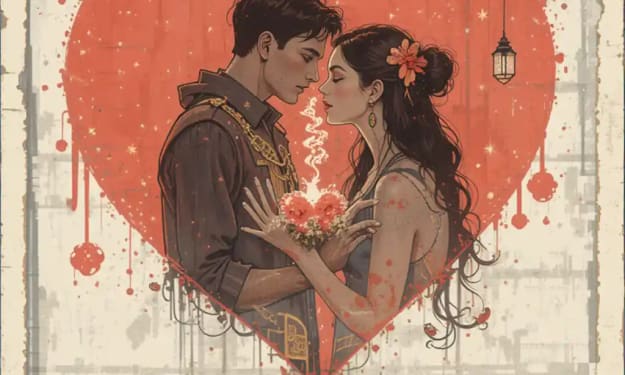
“From Rivalry to Romance”
Ayan Khan had always been the pride of his college’s cricket team — confident, sharp, and a born leader. His name echoed in corridors not just for his sportsmanship, but also for his razor-sharp wit and charm. Professors liked him, juniors admired him, and most of the campus secretly wished to be in his circle. But everything changed when Meher Saeed joined the university. She was different. Fierce. Brilliant. And unapologetically bold. Unlike others, she didn’t seem to care about Ayan’s so-called reputation. If anything, she seemed to enjoy knocking him off his pedestal. From the very first debate competition — where she publicly dismantled his argument with poise and a smirk — to the interdepartmental cricket match, where she stunned everyone by hitting the final six against his team, Meher made her presence impossible to ignore. It was war from day one. Their friends joked it was “the cold war of campus.” Whenever Ayan passed Meher in the hallway, it was with a half-scoff, half-smirk. Sometimes, he’d drop a sarcastic one-liner. Meher, never one to back down, would return fire — her words precise, her smile smug. But fate, as always, had its own wicked sense of humor. In their final semester, the university announced a mega cultural festival. A drama skit, dance performance, and storytelling competition — all rolled into one. Each department had to nominate a boy and a girl as lead performers. Ayan was obvious. The faculty trusted him. The students idolized him. But when Meher’s name was called alongside his — gasps filled the room. Ayan's jaw tightened. “I’d rather fail than work with her,” he muttered under his breath. “You can fail,” Meher replied, not even looking at him, “but I don’t lose.” Their first week of rehearsals was chaos. Every creative decision turned into a full-blown debate. Ayan accused Meher of being bossy. Meher called Ayan a control freak. The script was rewritten twice. One time, Ayan walked out. Another time, Meher refused to show up. But amidst all that friction… something strange started to happen. One evening, they stayed late to rehearse a particularly emotional scene. The campus was quiet. Most students had left. Under the glow of soft yellow lights, Meher stumbled over a line and let out a sudden laugh — not mocking, but genuine. It echoed softly through the empty hall. Ayan looked up, stunned. It was the first time he’d seen her not in battle mode. “You look… different when you laugh,” he said, almost to himself. Meher looked at him, raising an eyebrow. “And you don’t look half bad when you’re not trying to win.” Their eyes met. And for the first time, there was no sarcasm. No smirk. Just silence. Charged and confusing. After that, rehearsals shifted. There were still arguments — but now they ended in laughter. They shared meals, stayed late working on scenes, even opened up about their lives. Ayan learned Meher had moved around a lot as a kid — always the new girl. Meher learned that Ayan’s confidence was partly a mask for the pressure he felt to always be perfect. One night, rain poured as they sat on the auditorium steps, script papers soaked and forgotten. Ayan shrugged off his jacket and placed it over her shoulders. She looked at him — no words, just a long glance. “Why did you hate me so much?” he asked quietly. “I didn’t,” she replied, her voice soft. “I just thought you were too full of yourself. But now... I think you were just afraid to be seen.” Ayan leaned in slightly. “And maybe I never hated you either. Maybe I was just waiting for someone who could challenge me.” The night hung between them like a secret. The day of the competition arrived. Their performance was electric. The storyline — two enemies forced to work together, eventually falling for each other — felt eerily personal. The audience cheered, but Ayan and Meher only had eyes for one another as the curtain fell. Later that evening, under the old oak tree near the main ground, Ayan found her standing alone. He walked up, nervous for the first time in years. “I think I’ve been falling for you,” he whispered, “since the day you hit that cricket shot.” Meher turned, smiling. “Took you long enough.” She reached for his hand — not for a script, not for show — but for real. And in that moment, enemies became something much more.
By Aman Ullahabout a year ago in Fiction
This Is What I Meant to Say
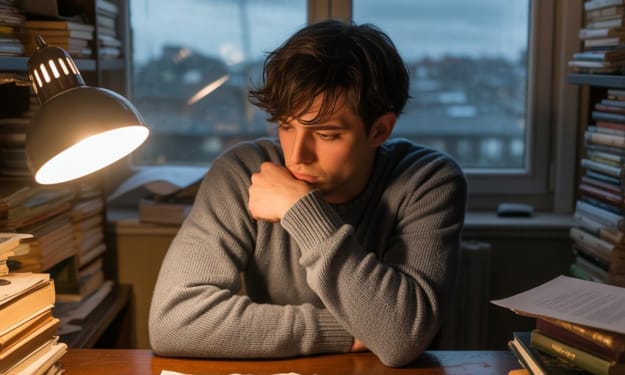
This Is What I Meant to Say A reflective monologue-style essay By [KINE WILLIMS] I didn’t say it then. I don’t know why. Maybe I was afraid of what it would mean, or maybe I thought the silence would protect me. But now, when it’s far too late for the words to matter, they won’t stop echoing in my head.
By Kine Willimesabout a year ago in Fiction
This Is What I Meant to Say
This Is What I Meant to Say; I rehearsed it a hundred times in my head. In the shower. On long walks. In the pauses between conversations. I even whispered it into my pillow some nights, just to see how the words felt in the air. But every time the moment came, I stayed silent. I smiled instead. I changed the subject. I told myself it wasn’t the right time — or worse, that you already knew.
By Kine Willimesabout a year ago in Fiction
Cat Nights Are Coming
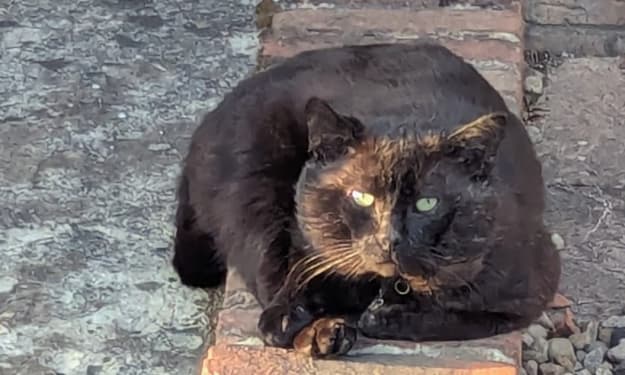
Introduction Cat Nights begin on August 17. This term harks back to the days when people believed in witches. A rather obscure old Irish legend said that a witch could turn herself into a cat eight times, but on the ninth time (August 17), she couldn’t regain her human form. This bit of folklore also gives us the saying, “A cat has nine lives.” Because August is a yowly time for cats, this may have prompted the speculation about witches on the prowl in the first place. Also, nights continue to get longer. Cats, crepuscular creatures, are nocturnal hunters. Their superior night vision means that the nights belong to them.
By Mike Singleton 💜 Mikeydred about a year ago in Fiction
I Was Reborn in Flames but Never Left the Fire
Let Me Tell You a Story You’ll Never Forget I was born for the third time on a night of red skies and black screams. In my village, we do not fear death. We expect it. Welcome it, even. Because here, death is never the end. We are reborn through fire every hundred years. It's our curse. Or blessing. It depends on who you ask.
By Isabella Woodabout a year ago in Fiction
Her Voice Note at 2AM
Story: It was exactly 2:07 AM when Hadi’s phone buzzed on the nightstand beside his bed. He blinked awake, squinting at the bright screen. Maybe another food discount message or a pointless app notification. But what popped up made his breath catch:
By Aman Ullahabout a year ago in Fiction
Whispers of the Tide: A Story Told in Shells
At first glance, the image is simple—serene, even. A ceramic bowl, resting gently on the damp sand, cradles an exquisite collection of seashells. They sit nestled together like quiet thoughts, each one shaped by time and tide. Beyond this peaceful arrangement, the shoreline stretches toward a glowing horizon, golden with the touch of evening light. A lighthouse stands distant and steady, a silent witness to the sea’s ever-shifting moods.
By Fazal Malikabout a year ago in Fiction