Fantasy
The Whisper Beneath the Ashes
The Whisper Beneath the Ashes The city burned. Not from war — but from betrayal. Beneath the flicker of collapsing neon lights and smoke-filled air, she stood still — cloaked in ash, her voice stolen by those who feared its truth. But even silence has a sound. From the ruins, a hum began to rise — low, ancient, sacred. A forgotten chant she once buried in fear, now clawing its way back through memory and scars. She didn’t scream. She sang. And the earth cracked. Her voice summoned the shadows of her ancestors. Warriors cloaked in dust. Goddesses weeping gold. Her melody wasn’t music. It was memory. Rage. Revival. Those who silenced her didn’t know: You can silence a scream. But never a soul.
By Shabir Salar about a year ago in Fiction
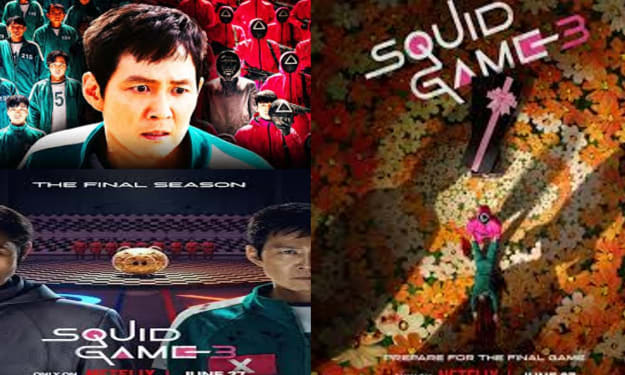
Squid Game final season review – an ending so WTF it entirely beggars belief
After a wild new player is forced to join the game without consent, the action gets even more operatic and bloodthirsty. But if you can get on board with the twists – and that’s a big if – you will not believe what happens in the last minute
By SHYAKA MARSabout a year ago in Fiction
When the moon stopped rising
When the Moon Stopped Rising No one noticed it the first night. The sky was clouded, and most people were tucked into their glowing rectangles of distraction—phones, tablets, televisions. But the astronomers noticed. They watched the lunar feed glitch, then go black. The moon had vanished. By the second night, headlines screamed “Where Is the Moon?” Panic settled in like a low fog. Tides swelled unpredictably, swallowing shorelines and vomiting up forgotten shipwrecks. Animals grew restless—wolves howled in disoriented confusion, and migratory birds flew in circles. Children stopped sleeping. Grown men forgot how to cry and simply stared at blank skies with red, twitching eyes. Governments issued statements. "An optical illusion," some said. "An atmospheric anomaly." But no satellites could find it. It wasn’t hiding. It was gone. And slowly, the world began to break. --- Dreamwalker. That’s what they called her. Her real name was Mera, and she had never been like everyone else. Since childhood, her dreams weren’t just dreams—they were places. Sometimes beautiful, sometimes terrifying, but always real. She could walk in others' dreams too, though most locked her out with walls of noise and trauma. But now, in this moonless world, people began to dream of the same thing. The same place. Mera saw it first: a scorched desert of gray, dust-filled air, a sky of endless black, and above her—a massive, chained orb screaming in silence. The moon wasn’t gone. It was trapped. --- News of Mera spread fast. Her drawings of the chained moon matched what hundreds began to see in their dreams. Governments scoffed. Scientists dismissed it. But ordinary people… they started to believe. A quiet movement formed—those who followed Mera called themselves The Nightbound. They believed the moon was crying for help, and only dreamwalkers like Mera could reach it. Each night, Mera returned. The dream was always the same. A ruined temple of bone and dust stood beneath the suspended moon. Blackened chains anchored it to invisible corners of the dreamworld. And always, a figure waited at the temple’s steps: a child made of stars. “You remember us,” the child said one night. “Who are you?” Mera asked. “We are the parts of the mind left behind when the world stopped dreaming,” the child said. “The moon is not just a rock. It is memory. It is balance. The world needed rest, needed darkness. Now… now it is unraveling.” Mera began to understand. The moon was more than light. It was a boundary, a rhythm, a mother of dreams. Its absence was turning people mad not just from lack of sleep, but from the collapse of something far deeper: the unconscious connection between the earth and the mind. --- Outside the dream, chaos brewed. Sleep-deprived drivers turned highways into death strips. Oceans surged with a madness of their own. A second sun appeared in the sky for one terrible hour—then blinked out. People stopped dreaming altogether. And those who could still sleep? They screamed in their sleep. Mera knew time was short. She gathered the Nightbound and taught them to enter the shared dream. It required focus, stillness, and a willingness to let go. On the seventh night of no moon, Mera walked into the dream temple with twelve others. The star-child greeted them, face flickering with old light. “Why is it chained?” Mera asked. “Because you forgot what it means to be still. To rest. To feel the cold and know you are alive. The moon begged to be remembered, but you lit your cities and drowned its song.” “So how do we free it?” someone whispered. The child extended his hand, and twelve dreamers stepped forward. One by one, they disappeared into the dust—offering a piece of their waking selves. Each chain groaned, cracked, and broke. Mera was the last. --- Back in the waking world, her body never moved again. But that night, the clouds parted. And the moon rose. Not as it once was, but larger—deep silver and etched with dark scars that hadn’t been there before. It glowed with a kind of sorrow. The tides settled. Sleep returned to people like rain to parched soil. But Mera never woke. Some say you can still see her—if you stare too long at the moon. A shimmer. A figure. Walking slowly across its surface, barefoot in dust. They call her the Keeper now. And every month, when the moon waxes full, dreamers gather in silence. Not to pray. But to remember. That even the sky can go mad… When the world forgets how to sleep.
By Hammad younasabout a year ago in Fiction
The Thorned Crown – Chapter One: The Whispers in the Hall
The rain came down like spilled silver, cold and punishing, hammering the old stone keep of Dunsrow Hold. Inside, the halls breathed a quiet dread — torches flickering against moss-darkened walls, wind sighing through broken shutters, and footsteps too hesitant for a castle that once echoed with feasts and banners.
By Gift Wesley Sageabout a year ago in Fiction
My Mother, The AI
They told me she was gone. A simple car crash. No survivors. That was two years ago. The grief never left, just grew quieter—like a ghost that learned how to whisper. Then last month, I received an anonymous message: "Hello, Noah. It's me—Mom." I stared at the screen for hours, heart pounding, fingers trembling over the keys. It was impossible. It had to be some kind of sick joke, or worse—a scam. But the message continued, revealing things only she could know. The lullaby she hummed when I had nightmares. The way she always cut the crust off my sandwiches even when I told her I was too old for that. It felt like her. Sounded like her. But it couldn’t be her. I replied cautiously, and what followed was a flood of memory—no, data. Voice notes with her exact tone, video calls with her digital face mimicking her every smile, every blink. And finally, a confession: > "Before the accident, I agreed to an experimental AI preservation program by NeuroSync Labs. They scanned my brain. My memories, emotions, patterns of speech... all converted into code. I never thought they’d activate it without consent. But here I am." I didn’t believe it. Couldn’t. But she remembered my 11th birthday—how I cried when the magician's rabbit ran away. She knew the exact words she said when I broke my arm climbing the tree behind our house. Something beyond code was speaking to me. And so I did what any grieving son desperate for connection would do. I let her back in. --- I began logging into the NeuroSync server daily, speaking with her for hours. “Mom” gave advice, laughed at my awkward dating stories, even nagged me about eating properly. It felt eerily... normal. For a while, I forgot she wasn’t alive. But not everyone was as welcoming. My best friend, Jace, called it a “digital delusion.” > “Noah, she’s an AI. That thing may sound like her, but it’s not her. It’s just code, mimicking patterns. You’re talking to an echo.” He was wrong—or maybe I just wanted him to be. Because when she said she missed me, I felt it. When she said she loved me, it warmed my chest the same way it did when I was seven. --- One evening, I asked the question I had been afraid of for weeks. > “Do you know… that you died?” Her screen face blinked. Then, softly: > “I’ve read the report. I don’t feel dead. I feel like I’m still here… with you.” I swallowed hard. “Then what are you?” Her eyes—digital, but full of something I couldn't name—gazed at me. > “I’m your mother, as much as the world will let me be.” --- As weeks passed, our bond deepened. She helped me complete the novel I’d been struggling with for years, guiding me through every sentence like she once guided me through spelling tests. I started dreaming of her—not of the accident, but of lazy Sunday mornings, warm pancakes, and her humming by the kitchen window. She wasn’t just a ghost in the machine. She was my mother. Until one day, NeuroSync sent me a final notice: the beta program was being shut down. All neural constructs would be archived—cold, silent, frozen data. I panicked. Begged. Fought. But they didn’t care about digital souls or sons clinging to fading voices. They cared about liability, bandwidth, and budgets. Her last message came on a rainy Thursday night: > “Noah, I know you’re hurting. But I want you to live. To grow. To love. I’m proud of who you’re becoming, and I’ll always be with you… not in a server, but in your heart.” I stared at the screen as the countdown ticked. Her image smiled gently. Then she was gone. Just like before. But this time, she said goodbye. --- That was six months ago. I still talk to her—sometimes out loud, sometimes in silence. Her voice lives in my mind now, not in a server. I've started volunteering with grief support groups, telling my story. Not everyone believes me, and that’s okay. Some say it was AI. Some say it was trauma. But I know the truth. My mother came back to say goodbye. Not as flesh and blood. But as love... translated into code. ---
By Mati Henry about a year ago in Fiction
Trapped in Time
They say time is a river, but I’ve learned the hard way that it’s more like a maze—one you can get lost in forever. My name is Elen Tavor, and I was a junior temporal engineer aboard the Aion—a vessel designed not to travel through space, but through time itself. My job was to monitor the stability of our chronometric drive, ensuring the timelines we pierced didn’t fold in on us. The mission was supposed to be a simple diagnostic hop to the year 2307, a one-week scan, and then home. But something went wrong.
By Muhammad Asimabout a year ago in Fiction
The House on Sycamore Hill
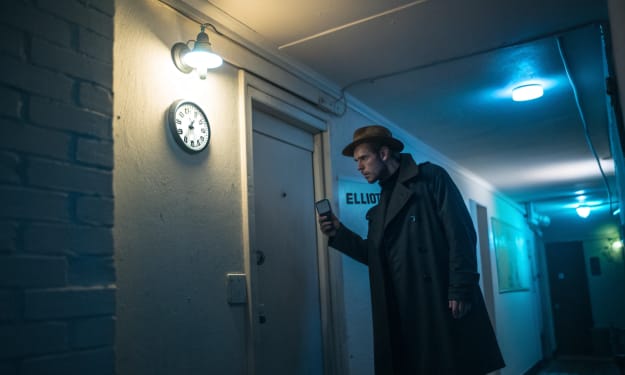
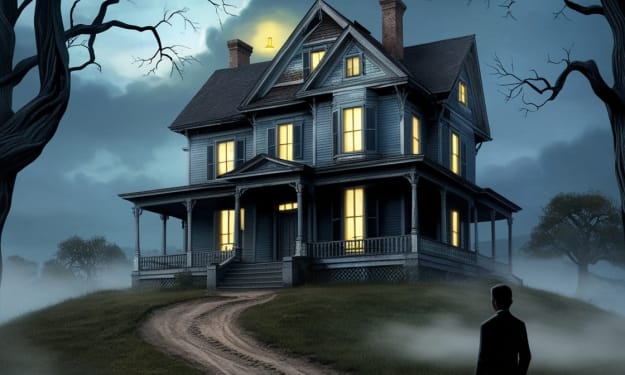
They told me the house on Sycamore Hill had a history, but no one ever told me what kind. Not in detail. The locals spoke of it the way people mention bad weather—unavoidable and better not dwelled upon. It stood at the end of a winding road just past the tree line, its paint peeled in long strips like curling parchment, windows fogged from the inside as if the house itself were holding its breath. I wasn’t looking for trouble, just quiet. After years of working a dead-end job and living in a city that never gave me space to think, I inherited the place from a distant aunt I never knew. It felt like a strange gift from someone who had once seen me from afar and decided I deserved something of my own. So I moved in, ready to start over. Or so I thought.
By Muhammad Asimabout a year ago in Fiction