Fantasy
Neon-Lit Diary
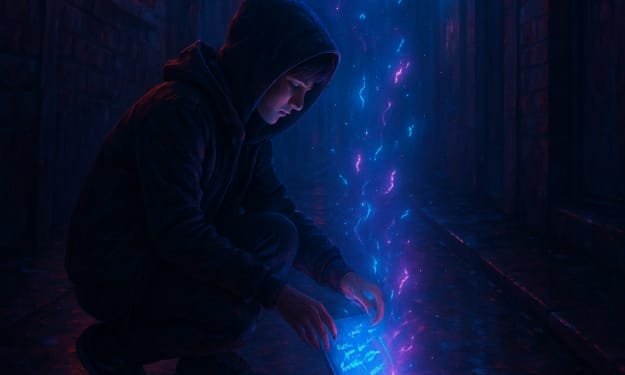
The city at night was a restless creature—half neon, half heartbeat. It murmured in alleyways, whispered across rooftops, and sighed through the vents of old apartments. Most people hurried past these quiet places, but Luca didn’t. Street-artists rarely did. They listened for what others missed. That night, after finishing a mural beneath a flickering streetlamp, Luca noticed something odd: a faint humming, soft and steady, like a neon sign breathing. It came from a small diary lying near a drain, its edges glowing with gentle pink and electric blue. The colors pulsed like a heartbeat, as if the book itself were alive. Luca reached for it cautiously. The diary felt warm, almost human. On the cover, a single line glowed: Write nothing. Read everything. The pages inside were blank—at least at first. But then the neon edges brightened, and faint handwriting began to ripple across the paper as though an invisible hand were writing directly onto light. “I hope my daughter will understand why I work so late.” The words rose from the page, shimmering softly, drifting upward like a tiny neon cloud before dissolving into the air. Luca stepped back, heart pounding. This wasn’t graffiti. This was something else—something that felt like magic stitched into electricity. The city hummed again. More words appeared. “I wish I hadn’t walked away from him.” “I hope tomorrow hurts less than today.” “I want to be brave enough to start over.” Each line belonged to someone passing by. Strangers whose faces blurred in the rain, whose footsteps echoed in hurried rhythms. Their hopes, regrets, and wishes glowed briefly in the diary, then floated upward into the night like fragile constellations. Luca felt the kind of hush that comes only when a truth is too gentle to speak aloud. Every night after that, Luca returned to the alley. The diary always greeted them with a soft neon heartbeat. People came and went—commuters, night workers, lonely wanderers, dreamers who no longer believed in dreams. None of them noticed the glowing diary at their feet, yet their hopes spilled into it effortlessly. But one night, a different kind of entry appeared. “I hope someone sees me.” Luca frowned. The handwriting trembled, the glow dimmer than usual. It didn’t drift upward. It stayed. The city grew quiet, its nightly hum softening into a fragile stillness. Another line appeared beneath it. “I hope I’m not too late.” Then another. “I hope I’m not as forgettable as I feel.” These weren’t soft confessions. They were the kind of words people buried deep, the kind that weighed down the chest. Luca felt an ache rise—not from the diary, but from somewhere inside themselves. And then, something unexpected happened. A final line formed slowly, hesitantly: “I hope… someone like you will read this.” Luca’s breath caught. Someone had passed through the alley carrying the weight of invisibility—and the diary had held onto their words, refusing to let them vanish. The neon glow dimmed. For the first time, the diary seemed tired. Luca closed it gently, holding it against their chest. “If you’re still out there,” Luca whispered to the empty alley, “I see you.” The diary warmed, a soft pulse like gratitude. From that night on, Luca didn’t just watch the words rise and disappear. They began painting murals inspired by the entries—large, glowing silhouettes of hopes and dreams splashed across bare city walls. People paused to look. Some cried. Some smiled. Some returned with their own quiet hopes tucked inside their palms. The city changed in small, delicate ways. And somewhere—maybe in a passing crowd, maybe in a quiet apartment, maybe standing just out of sight—the person who once hoped to be seen finally looked up and realized the sky glowed a little brighter, as if their hope had been painted directly onto it. The diary kept glowing. The city kept humming. And Luca kept listening. Because some stories didn’t need to be written. They just needed to be witnessed.
By Jhon smith11 months ago in Fiction
Rain-Stained Postcards
It begins the same way every time: the first shy whisper of rain against the window, like someone knocking politely on the edge of the world. I sit at my desk, listening, waiting, knowing the moment the sky opens, the impossible will arrive again. The postcards always come in the rain. They slip beneath my door with the hush of a secret, edges damp, ink blurring as if the words themselves are breathing. Some arrive curled like they carried the weight of storms across continents; others arrive crisp, smelling faintly of petrichor and places no map has ever held. I never hear footsteps. Never see a shadow through the pebbled glass of the entryway. Only the soft scrape of card on wood and the quiet certainty that someone—something—has written to me again. The first postcard came when I was sixteen. My mother had just left, dissolving into her own silence, and I walked through the house unable to speak, unable to feel anything but the hollow echo of her absence. Then, during a summer storm, a small blue postcard slid under the door. On the front: a watercolor coastline where the waves leaned toward shore like they were listening. On the back: a single line. “Some places hold you even when people don’t.” No name. No signature. No return address. I held it for hours, letting the rain dry from the ink, imagining a world painted solely from longing. Years passed. Storms came. And with each one, another postcard arrived. A town made of windows reflecting memories. A forest where the trees remembered your footsteps. A train station for people who were trying to leave themselves behind. A library where lost words slept in glass jars. Always a single line of longing on the back. Always something tender and aching, like the whisper of a stranger who somehow knew my heart better than I did. I kept them all. Dozens. Then hundreds. Enough to fill shoeboxes tucked beneath my bed, arranged by the kind of ache they carried—unspoken confessions, almost-forgotten hopes, soft reminders that life, even in the rain, was still quietly reaching for me. Tonight, the rain is heavy, falling in long, silver threads that comb the darkness. I sit on the floor surrounded by postcards, each one glowing faintly in the lamplight, each one a doorway into a world that shouldn’t exist but does. I think about the places they describe, the strange geography of yearning. I think about the hand that writes them, the voice I’ve never heard, the presence I’ve never seen. I think about why they chose me. Then, as thunder trembles through the room, a new postcard slides under the door. This one is different. The paper is thicker, like handmade pulp. The illustration on the front shows a narrow street with glowing puddles, every reflection brighter than the world it mirrored. Lanterns hang from doorways, and distant figures walk with umbrellas shaped like wings. My breath catches. This looks like here. Like my own street, but transformed—softened, dream-struck, as though the rain had peeled back the world and revealed the version of it that lived underneath. With trembling fingers, I turn it over. “The place you keep waiting for has always been you.” The words are smudged, not by rain, but by the warmth of the writer’s thumb. For the first time, I see something personal in the ink—something human, vulnerable, close. I stand and walk to the door. For years, something has been bringing me these fragments of longing. For years, I’ve lived in them instead of in myself. But now, the storm feels different. The air is thick with possibility, like the sky is holding its breath. I open the door. Rain rushes in, cool and wild. The street glows just like the illustration, puddles shimmering with reflections more brilliant than the lamps that cast them. The world smells like wet earth and new beginnings. And there, at the end of the street, stands a figure with an umbrella shaped like a wing. They turn slowly. Waiting. Maybe they have always been waiting. Maybe some connections are born in silence before they ever learn to speak. I step into the rain, leaving the postcards behind. All except the newest one, warm against my palm—a storm-born message finally bringing me home.
By LUNA EDITH11 months ago in Fiction
The Whispering Pines
Chapter One: The Legacy of Cedar Hollow Cedar Hollow was a town wrapped in mist and myth. Tucked deep in the Oregon Cascades, its streets were narrow, its houses cedar-shingled, and its people bound by stories older than memory. The greatest of those stories was Bigfoot.
By LunaRoseQuartz11 months ago in Fiction
Symbiotic: Chapter 4
Sara had taken the time to rest, letting her body adjust to the strange new balance of her stats. The ache in her leg was still there, but she could feel the network humming faintly inside her, spores knitting strength into her frame. She wasn’t healed, not yet, but she was steadier. And steadier meant ready to hunt.
By Canyon Cappola (TheNomad)11 months ago in Fiction
Emerald in Matrix
“Are you all right? You have that pensive look on your face again.” Juana Consuela Miguela Antonia Serrana y Herrero de Casa Esmeralda, True Scion of House Emerald, would smack anyone who tried to use her full name. I’m one of the few who could get away with using it, because I can’t stop my thoughts from leaking into her head.
By Meredith Harmon11 months ago in Fiction
Symbiotic: Chapter 3
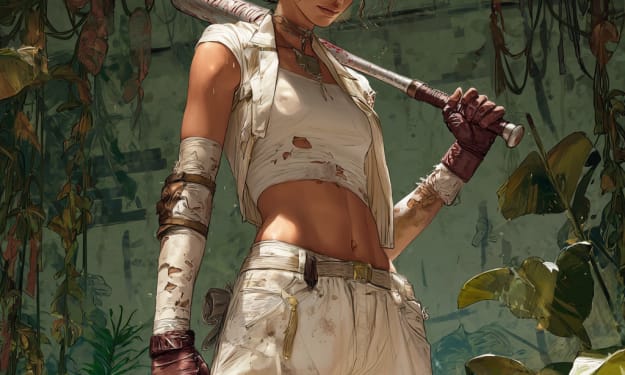
Sara limped forward, each step a reminder of the Mauler’s bite tearing at her leg. The silver-threaded bat doubled as a cane, its weight steadying her as she pushed deeper into the jungle. Retreat wasn’t an option. Behind her lay only blood and broken branches. Ahead, perhaps, shelter.
By Canyon Cappola (TheNomad)11 months ago in Fiction
Paper Wings
Elena Moreau had always believed that a courier saw more of a city than anyone else. Not the postcard version, but the real one—the quiet corners where people whispered their hopes into sealed envelopes, the stairwells that smelled of old wood and loneliness, the rooftops where freshly written dreams dried in the sun like pressed flowers. She didn’t plan to work this late, but the autumn chill carried a strange electricity, and something in her felt restless. The last delivery was meant to be simple: an abandoned apartment near Rue d’Anselm, scheduled for eviction. It should have been empty. But when she pushed the creaking door open, she found a small desk bathed in moonlight and, atop it, a stack of letters bound in twine. Some addressed, some not. All written in different hands, as if gathered by someone who had spent years collecting the unfinished wishes of strangers. Elena should have left them. Couriers weren’t meant to interfere. But one envelope sat slightly apart from the others, its edges folded with a precision that felt almost ceremonial. She picked it up, and when she unfolded the paper completely, it trembled—then lifted—hovering inches above her palm. She stared, breath caught in her throat. Paper wasn’t meant to move like that. She stepped back, and the letter rose higher. Against all logic, it fluttered toward the open window, as though waiting for her to follow. Elena hesitated only a moment before climbing onto the narrow ledge. The cold wind brushed her hair back, the night sky widening around her. She held the letter close to her chest. The paper warmed. And just like that— she lifted. The city unfolded beneath her like a secret atlas. Rooftops stretched out in soft silhouettes, chimneys exhaled thin ribbons of smoke, and the river carved a silver line through the sleeping streets. She wasn’t high above it—only a few meters above the tiles—but it was enough to feel the impossible. Enough to feel free. The letter in her hands glowed faintly, pulsing like the heartbeat of someone who still believed in hope. She drifted past the bakery where old Monsieur Delacroix woke every morning at four to knead dough for the neighborhood. She hovered above the public square where two musicians played violin every Saturday, trying to earn enough to fix their broken heater. She glided near the window of a darkened studio where a painter named Anja had once told Elena she didn’t think her art mattered. From this quiet height, everything mattered. She realized the city wasn’t built of stone and mortar alone—it was built of quiet desires, unspoken confessions, promises people were still afraid to send. When the glow of the letter began to dim, Elena descended gently onto a rooftop covered in moss and rain-softened tiles. She looked down at the paper in her hands. The ink had faded, as if whatever wish it held had been granted in the act of flight itself. She returned to the abandoned apartment at Rue d’Anselm, her heart still racing with that impossible lightness. The stack of letters waited where she had found them. Carefully, she took another envelope—the one with blue-ink handwriting curling like vines—and unfolded it along its creases. A hush passed through the room. The letter lifted. And Elena felt the night open for her again. She laughed softly, a sound that felt like shedding the weight she hadn’t realized she carried. One letter at a time, she thought. One forgotten hope, given wings. She didn’t know who had gathered these letters or why they were left behind. But she knew what she was meant to do with them. Deliver them—not to doorsteps or mailboxes—but back to the city itself. Back to the sky. Back to the quiet places where hope had been misplaced or abandoned. Elena slipped the letters into her satchel and stepped out into the night. Above her, the wind waited—patient, curious. And somewhere in the dark, the city’s hidden hopes rustled, ready to rise.
By Jhon smith11 months ago in Fiction
The Letters He Never Sent. AI-Generated.
Samuel Graves had not opened the study room in three years. Dust blanketed the shelves like tired snow; the curtains remained frozen in place, trapping darkness inside the walls. The house itself seemed to breathe differently when he stood at the doorway — as if recognizing him with a mixture of relief and sorrow.
By shakir hamid11 months ago in Fiction