Fan Fiction
Whispers Beneath the Willow
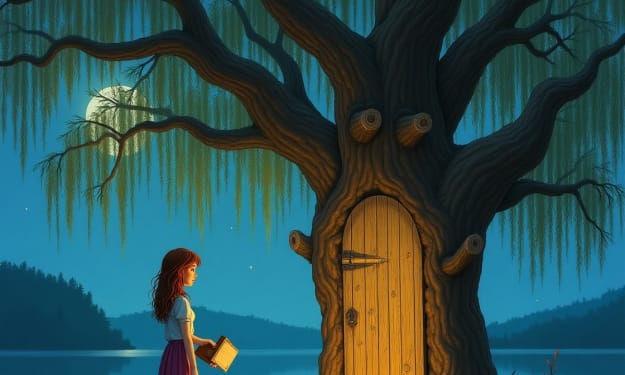
The village of Windmere was the kind of place you’d forget existed until a gust of wind reminded you of it. It didn’t appear on most maps. Surrounded by dense woods and silent hills, its greatest treasure was an ancient willow tree that stood by the edge of Willowmere Lake — its name forgotten, its legend remembered only in fragments. They said the tree could speak, if you listened closely on still nights. That it remembered things no one else did. Ellie had never believed in such stories. She had left Windmere at seventeen with a suitcase full of resentment and eyes too tired for her age. She never looked back — until her mother died. Returning after twelve years felt like stepping into someone else’s memory. The bakery still smelled of cinnamon and coal. The roads hadn’t changed. Neither had the old house on Elderberry Lane, though it felt colder, quieter. She wandered for hours on her first evening, following paths she had once taken barefoot. Eventually, she stood before the willow. Its long tendrils swayed even though there was no wind. She almost laughed. “Still whispering lies, old tree?” A sudden gust tossed her scarf into the water. Ellie cursed and waded in. As she reached for the scarf, her fingers brushed something buried in the mud — a small wooden box. She pulled it out. The latch was rusted shut, but when she pried it open, her breath caught. Inside were letters. Dozens of them. All addressed to her — in her mother’s handwriting. --- The first letter was dated the day after Ellie had left. > My dearest Ellie, I don’t know if you’ll ever read these. But every day you’re gone, I’ll write to you. Maybe one day, the tree will find a way to return them to you. > I was wrong. Not in loving you — never that — but in trying to make you someone you’re not. I see that now. The letters continued — one for every week, for every year. Each one was a window into her mother’s regret, her loneliness, her hope. Each one painted a version of her mother that Ellie had never known — softer, wiser, full of longing. She cried until her throat ached. And then she heard it. A soft voice. A whisper. No louder than the sound of leaves brushing silk. “You were always loved.” She spun around. No one. Only the willow, its branches glowing faintly under the silver moon. --- The next day, Ellie returned. Not out of superstition, but out of need. She sat under the tree with a journal and began to write. Not to her mother — she’d missed that chance. She wrote to herself. To the girl who’d run. To the woman she’d become. She poured out the hurt, the guilt, the things she’d never said aloud. Days turned into a week. Her walks to the willow became routine. Each time she sat beneath its boughs, the world felt quieter, lighter. She would sit in silence, feeling the air around her shimmer. Sometimes, just before she left, she would hear a soft laugh or the faintest rustle of leaves, as though the willow was responding. A quiet companion. But then, one evening, she noticed something unusual. At the base of the willow, where the trunk split into two, was a small pile of stones. Ellie had never seen them there before. She approached cautiously, bending down to inspect them. As her fingers brushed over the stones, the ground beneath her seemed to tremble. The faintest hum vibrated through her chest. With a flick of her wrist, she moved the stones aside, revealing a small trapdoor. The wood was weathered, old, and almost blended into the earth, but Ellie could see that it wasn’t just a natural part of the land. Her heart raced. The same sensation from before — a pull, a connection, as though she had been here before. Ellie opened the trapdoor, revealing a narrow staircase leading down into the earth. Her breath caught in her throat, but the curiosity gnawed at her. Without thinking, she descended, the scent of moss and earth filling her lungs. At the bottom, the space opened into a small room, its walls lined with the same twisting roots of the willow. Strange symbols were carved into the walls — symbols Ellie did not recognize, but somehow, she knew them. She traced her fingers over one of the symbols and watched in awe as the roots parted, revealing a hidden compartment. Inside was a wooden box, much like the one she had found earlier. It was slightly larger, covered in intricate carvings, and once again, Ellie’s heart raced with recognition. It was the same style as the box that had held her mother’s letters. She hesitated before opening it. As the lid creaked open, the space around her seemed to grow still, like the world was holding its breath. The box contained another letter — but this one was not addressed to Ellie. It was from her mother to… someone else. > My dearest Eleanor, I don’t know if you will ever read this. I pray that, if you do, you’ll understand why I had to leave. It was never you, my love — never you. But I couldn’t stay, not when the willow had chosen me. You were always meant for something more than this quiet life. I hope, one day, you’ll forgive me. Ellie’s fingers trembled as she read the words. Her mother’s secrets, hidden in the depths of the willow’s heart, seemed to stretch beyond Ellie’s understanding. She had thought she was the one running from the past, but it seemed her mother had been running too — from something older, more powerful than both of them. The letter ended with a simple line: > Find the truth, Ellie, before it finds you. Ellie’s pulse quickened as she realized that her return to Windmere was not just about facing her past. It was about uncovering the truth that had been buried here — a truth that tied her to the willow, to the village, and to her mother’s legacy. She returned to the village that evening, her mind swirling with questions. The next day, she went to the town’s old library, hoping to find answers. She spoke with an elderly librarian who seemed to recognize the letter. “You’ve found the truth,” the librarian said softly, her voice trembling. “The willow speaks to those who need it most. And it has chosen you, Ellie.” It was then that Ellie learned of the deeper magic that bound the willow to the village. The tree wasn’t just a natural wonder; it was the guardian of Windmere’s secrets — and the keeper of its history. Only those with a pure heart could hear its whispers, and only they could unlock its mysteries. The day Ellie left Windmere for the last time, she stood beneath the willow one final time. This time, she didn’t feel the sadness of her past. Instead, she felt a profound peace. “I’m not running anymore,” she whispered to the tree. The branches swayed gently, and Ellie swore she heard her mother’s voice one last time. “You never had to,” it said. And in that moment, Ellie understood that she was no longer bound by the past. The willow had not just given her the truth; it had given her the strength to heal.
By Shehzad khanabout a year ago in Fiction
When the Rivers Reversed
The rivers ran backwards the day the queen vanished. It began with a subtle ripple, unnoticed by most—a flicker in the flow that caught only the sharpest eyes. But as the sun climbed higher, the waters of the great Seran and Wyllow Rivers reversed, churning upstream in a slow, unnatural defiance of nature.
By Hamza Ahmadabout a year ago in Fiction
Harmony in the wild
"Harmony in the Wild" In the heart of the African savannah, where the sun dipped into the horizon and painted the sky with hues of crimson and gold, a peculiar friendship blossomed between two unlikely companions. A lion named Leo, with his majestic mane and powerful roar, and a lamb named Luna, with her soft wool and gentle bleat. Their paths crossed on a fateful day when Leo, wandering away from his pride in search of solitude, stumbled upon Luna, who had strayed from her flock. The lamb, trembling with fear, stood frozen as the lion approached. But instead of pouncing, Leo was taken aback by Luna's innocence and vulnerability. He remembered a time when he was a cub, playing with his siblings in the shade of the acacia trees, carefree and full of wonder. As the days went by, Leo found himself visiting Luna's flock more often, watching her graze on the lush green grass and listening to her playful bleats. The lambs would scatter at his approach, but Luna remained calm, sensing something different about this lion. She'd look up at him with big, curious eyes, and Leo would feel a strange sense of calm wash over him. One day, as the rains poured down, Leo sought shelter beneath a nearby tree. Luna, shivering with fear, huddled close to him, and to his surprise, Leo didn't mind. He let out a gentle rumble, and Luna nestled into the warmth of his mane. The lion's pride, witnessing this unusual friendship, began to understand that there was more to Leo than his fearsome reputation. As time passed, Leo and Luna grew inseparable. They'd explore the savannah together, Leo learning about the delicate balance of the ecosystem and Luna discovering the thrill of adventure. The lion's roar would echo through the grasslands, but it was no longer a signal of fear; instead, it was a call to Luna, a reminder that their friendship was a beautiful anomaly in the wild. The other animals began to notice the harmony between the lion and the lamb. Birds would perch on Leo's mane, singing sweet melodies, and Luna would frolic in the grass, her wool glistening in the sunlight. The lion's pride, once wary of humans, started to tolerate their presence, thanks to Leo's influence. One fateful evening, a severe drought hit the land, and the savannah's creatures struggled to find sustenance. Leo's pride was on the brink of starvation, and Luna's flock was dwindling. But the lion and the lamb refused to give up. Together, they ventured into the parched landscape, searching for a solution. Leo used his strength to dig a well, and Luna used her agility to fetch water from a distant stream. As the water flowed, the savannah's creatures gathered around, quenching their thirst and reviving their spirits. The lion and the lamb stood side by side, their bond stronger than ever. The drought eventually subsided, and the savannah flourished once more. Leo's pride and Luna's flock prospered, thanks to the lion and the lamb's unwavering friendship. As the years went by, their legend grew, a testament to the power of harmony in the wild. One day, as the sun set over the savannah, Leo and Luna sat together, watching the stars twinkle to life. The lion's mane had grayed, and the lamb's wool had grown long, but their bond remained unbreakable. They knew that in a world of predators and prey, their friendship was a rare and precious thing. As the night deepened, Leo let out a soft roar, and Luna responded with a gentle bleat. The savannah's creatures smiled, knowing that the lion and the lamb were still there, a symbol of harmony in the wild. And as the stars shone bright, Leo and Luna drifted off to sleep, surrounded by the beauty and wonder of the African savannah. Their story would live on, a reminder that even in the most unlikely of circumstances, friendship and harmony can thrive, bringing balance and beauty to the wild. 🌅🦁🐑 Would you like me to add anything to the story?
By Aftab Iqbal about a year ago in Fiction
A Mother's Goodbye Beneath the Olive Tree
The wind whispered through the fields of Amara village, carrying with it the scent of soil, wheat, and a quiet sorrow that lingered in every home touched by war. Mariam stood at the edge of her small wooden porch, her hands rough from years of working the land, her back hunched slightly—not from age, but from burdens carried in silence.
By Intresting Storiesabout a year ago in Fiction
When the Sky Forgot the Stars
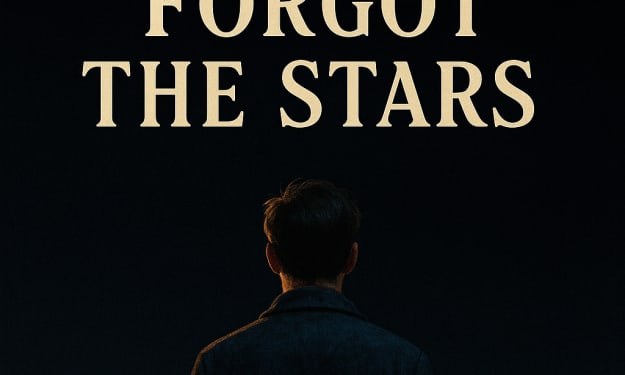
When the Sky Forgot the Stars It happened on a Thursday. Not the day of an apocalypse or a war—just a simple, quiet Thursday. The kind of day you forget before it’s even finished. That evening, people looked up and blinked in confusion. There were no stars. Not a single one. No blinking specks, no constellations, no Milky Way stretching like a silver ribbon across the night. Just a hollow darkness, deep and endless, like the sky had been scrubbed clean. Some thought it was pollution. Others blamed a blackout in some satellite system. But it wasn’t that. The stars were gone—and worse, no one remembered they were ever there. Except me. I first noticed it while walking my dog, Juno, down Harper Street. She stopped to sniff an old fence post, and I gazed up instinctively, the way people do when waiting for something to finish. The moon hung low and golden, bright but alone. “Strange,” I muttered. Juno barked at nothing. I asked around the next day. My sister, a teacher, chuckled and said, “Stars? You mean like in astrology?” “No. The actual stars.” She looked puzzled. “Like... the sun?” “No, the ones in the night sky.” She laughed like I’d made a joke. “There’s never been anything in the sky except the moon. You’re thinking of movies or something.” That’s when I realized it wasn’t just the stars that were gone. It was the memory of them too. I searched through books in the library—no constellations in the science section. No photos of starlit skies in the astronomy shelves. No mention of Polaris, Orion, or even shooting stars. It was as if history had been rewritten, globally, meticulously. Only the moon and the dark remained. Online forums didn’t help either. When I posted a thread titled, “Where did the stars go?” people replied with jokes. A few suggested I seek therapy. So I stopped asking. But I started writing. I filled notebook after notebook with star charts from memory: the jagged belt of Orion, the seven stars of the Big Dipper, the lonely light of Sirius. I even painted the night sky with cheap oil paints, splattering white dots over deep navy. Juno sat by my feet, as if she understood. I didn’t know why I remembered. I still don’t. But the ache grew stronger each night. As if something had been stolen—not just from the world, but from the soul. Weeks passed. One evening, while sorting through old photo albums in the attic, I found a picture. It was faded, probably from the 1990s. A camping trip. There were two kids—me and someone I didn’t remember. But in the corner of the sky, faint and grainy, there they were. Stars. I stared at it for hours. It was proof. Real, physical evidence that I wasn’t insane. I brought the photo down, framed it, and placed it on my living room wall. The next morning, it was blank. Same photo, same frame, but the sky was black. Smooth. Starless. Like the stars were being erased, even from paper. I checked my notebooks. Gone. The pages were blank. The paintings? Just dark blue canvases. No one believed me when I showed them the "vanishing evidence." I stopped trying. But Juno still barked at the sky sometimes. Then came the dreams. Every night, I’d drift off and find myself standing in a wide field. Above me, the stars blazed bright, singing like tiny bells. I could see everything—galaxies spinning, comets trailing fire, planets dancing around distant suns. Each night, the dreams lasted longer. Each time, I woke up crying. Until one night, I didn’t wake up alone. A knock on my door at 2:17 a.m. I opened it cautiously. A man stood there, maybe fifty, with wild grey hair and trembling hands. He held a thick leather book. “You remember too,” he whispered. His name was Ellis. He used to be an astrophysicist before funding dried up and the stars vanished from human thought. He had been waiting, he said, for someone else to wake up—someone who remembered. “I’ve met six others like us,” he said. “Scattered across the globe. Different ages. Different lives. But we all remember.” I invited him in. He showed me his journal—full of symbols, theories, and maps of the sky as it used to be. Unlike mine, his notes hadn’t vanished. He had hidden them in lead-lined drawers, covered in silver foil. He believed whatever force had erased the stars could only reach exposed memory. “I think it’s not natural,” he said. “More like... a theft.” “A theft?” I asked. He nodded. “Like something didn’t want us to look up anymore. To wonder. To dream beyond the Earth.” “But why?” Ellis looked at me, sadness in his eyes. “Because wonder leads to freedom. And someone, or something, doesn’t want us to be free.” That night, we stood in the field behind my house. Ellis held a strange device—something between a telescope and a tuning fork. “It’s not enough to remember,” he said. “We need to remind the sky.” He struck the fork. A low, humming sound vibrated through the air. Juno barked once, then went quiet. The ground trembled. And for a moment—a fraction of a second—I saw it. A flicker. One star. Then gone again. Ellis fell to his knees, shaking. “It’s still there,” he whispered. “Underneath the forgetting.” I don’t know what comes next. Ellis left a week later, searching for the others like us. He said they might be able to bring back the sky—if they worked together. I still look up every night. The darkness is deep. Heavy. But I remember. And sometimes, in the farthest corner of the sky, where even darkness is shy, I see a glimmer. A star. Just one. Waiting to be remembered. Author's Note: They say the night sky reflects the soul of the world. If that's true, maybe we've just forgotten how to look. Maybe it's time to remember.
By Atta Ullahabout a year ago in Fiction
"The Last Memory Collector"
In 2093, the most valuable currency wasn’t gold, crypto, or data. It was memory. The Memory Trade had become a trillion-dollar industry. Companies harvested moments—first kisses, childhood birthdays, the warmth of a mother’s hug—and sold them to those who could afford to relive feelings they'd never lived. The elite bathed in synthetic nostalgia. The poor sold their past just to buy food.
By Kabeer ullah about a year ago in Fiction
The time between generations
Long before the sun rose beyond the distant hills, the old oak in the meadow exhaled a slow breath. Its ancient branches stretched toward the sky like wise, gnarled hands, as if yearning to cradle tales from centuries past. Beneath its canopy stood a wooden bench, smooth with age and memory, and upon it—two souls tethered by time, yet separated by worlds.
By Mamoon Munaeemabout a year ago in Fiction
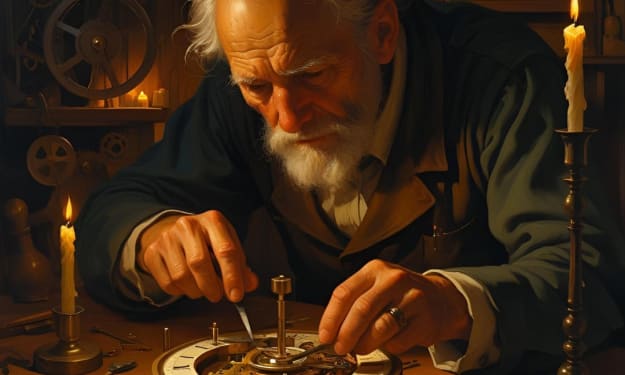
The Clockmaker's Secret. AI-Generated.
The village of Liermont was small, wrapped in hills and fog like an old secret. Time itself seemed to slow there, moving gently through cobbled streets and mossy rooftops, where stories outlived the people who told them. At the heart of it sat a crooked little shop with a weathered wooden sign that read:
By Awais Qarni about a year ago in Fiction
Ash and Oath”
They had passed beyond the reaches of the eastern wood, where wind moved like ghosts through burnt pines and the earth still bore black scars from fire unquenched. The boy, wide-eyed and silent, held close his dwarvish bow, though he had not loosed a single shaft. Night was nearing. “We’ll camp by the Runebreak,” the knight said, gazing at the ancient stones that jutted from the vale like a broken crown. “There’s water still. Cold, but clean.” Uurnik nodded but did not speak. He had grown quieter as they neared the heart of the realm. The dwarf's mind, always turning, seemed wound in thought—gears behind his eyes. That night, fire danced low. Ellowyn sang a song of her people, soft and sorrowful, in a tongue long and lilting. It was not meant for men, but the knight listened nonetheless, the song folding over him like a cloak. Uurnik stirred. “That tongue… it has not been sung in these lands since before the war of the Shattered Trees. Do you know what you carry, my lady?” Her voice trailed off. “My father’s house is gone. Who else is left to carry it?” The dwarf nodded gravely. “Then carry it you must.” The knight watched the stars through a veil of old sorrow. “Do you think the queen will hear us?” “She will,” Uurnik said, tossing another rune-etched log into the fire. “But hearing is not the same as believing. And belief is not the same as acting.” As the fire crackled low, a sound came on the wind. A shuddering, distant cry. Not beast. Not man. The boy’s eyes widened. Ellowyn turned toward the east. “Is it another drake?” she asked. “No,” said the knight. He stood, hand at the hilt of his blade. “Not yet. But something foul stirs. I feel it.” They slept in turns. But the knight did not close his eyes. --- The queen’s halls stood wreathed in sapphire banners and towers shaped like lifted spears. Ithilion was not yet burned, but it was a city tensed for doom. Archers paced walls; the commoners moved as though under weight. And within the throne hall, fear had a name. Queen Ysareth. She sat cloaked in white and silver, a woman whose crown seemed to burden more than bless. “You slew Mêmraahq?” she asked, disbelief bitter in her tone. “I did,” said the knight, his voice even. “Many have claimed such things,” the queen replied. “And yet, the skies still darken with wings.” Ellowyn stepped forward. “He does not lie. And we bring proof.” She drew forth the dragon’s tooth. The court murmured. The queen stared. Uurnik took a step. “Lady Queen, this is no tale spun by firelight. We come with warning, not praise. The drakes grow cunning. They strike not only for hunger. They strike for wrath. There is judgment in them.” Queen Ysareth stood. “Judgment? For what crime?” The knight met her gaze. “Perhaps for forgetting who they were… and what we have become.” Silence fell. Then: “And what would you ask of Ithilion?” “Not banners. Not swords,” said the knight. “Only counsel. And a path through the southern waste. There is one yet might help us. An ancient one.” The queen’s brow furrowed. “You speak of the Oracle.” He nodded. “I will grant this,” she said. “But beware—she sees not with love, nor kindness.” Ellowyn’s hand touched his. “I need neither,” the knight said. “Only truth.” --- End of Part II --- Want to keep building this world? Here are a few follow-up prompts you could try: Write the scene in the Oracle’s temple. Flash back to the knight’s battle with Mêmraahq. Explore a moment from Ellowyn’s past as a noble of Eletheme. Show Uurnik alone, crafting the bow he gives the boy. Introduce a new party member who joins them for the journey south. How is my fiction please 🥺 said in comment
By fazilat bibiabout a year ago in Fiction