Fan Fiction
The Girl Behind the Locked Door
When Emily Ward’s parents inherited the crumbling Elmridge House, she thought it was a joke. The place was straight out of a horror movie — vines crawling up the brick walls, windows half-smashed, and a silence that pressed in from all sides. No Wi-Fi, no neighbors for miles. Just them and the creaking of wooden floors under decades of dust.
By Bilal Ahmadabout a year ago in Fiction
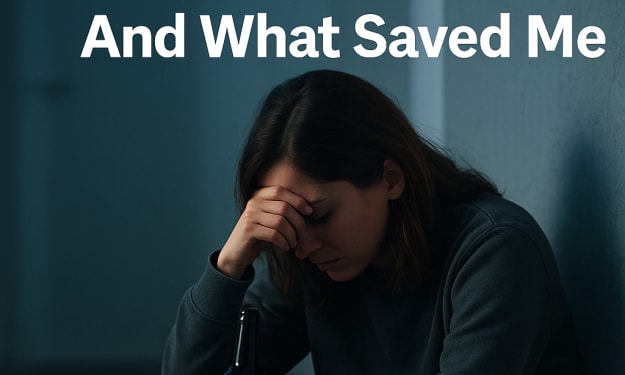
The Day I Almost Didn't Survive — And What Saved Me
The Day I Almost Didn't Survive — And What Saved Me I don’t remember the moment I hit the floor. What I do remember is the cold. Not the kind that creeps under your skin in winter — no, this was a different cold. The kind that starts in your chest and slowly spreads until even your soul feels frozen. The kind that doesn’t go away with a blanket or a heater. It was a Tuesday. Nothing dramatic happened — not at first. I woke up, made coffee, and scrolled through my phone in bed longer than I should’ve. From the outside, I probably looked like I was functioning. But inside, I was unraveling. There was no big tragedy that triggered it. That’s the part that confused me most. No car crash. No breakup. No death. Just this slow, suffocating sadness that settled into my bones and refused to leave. I hadn’t told anyone how bad it had gotten. My texts were still polite. My smiles, still believable. But I was exhausted. Every part of living felt like wading through thick, invisible mud. And that day, I cracked. The noise in my head — the relentless voice telling me I was worthless, pointless, broken — got so loud I couldn’t hear anything else. I sat on the floor of my apartment and stared at the bottle in my hand. I didn’t plan it. I didn’t write a note. It wasn’t dramatic. It was just... quiet. But something — or someone — saved me. Her name was Leila. We hadn’t talked in months. Life got in the way, as it does. But that afternoon, my phone lit up with her name. I almost didn’t answer. I stared at the screen like it was a question I didn’t know how to solve. But I picked up. “Hey,” she said, casually. “You popped into my head just now. Everything okay?” And just like that, the dam broke. I didn’t even answer her. I just cried. Ugly, uncontrollable sobbing. The kind where words don’t come, only sounds. She didn’t hang up. She didn’t ask questions. She just stayed on the line. “I’m coming over,” she said. “Don’t do anything. Just... stay with me, okay?” And for some reason, I listened. She showed up with two coffees and a bag of those terrible cookies I secretly loved. She sat next to me on the floor and didn’t say a word for ten minutes. Then, gently, she said: “You don’t have to carry it alone.” That line still echoes in my mind. Because I realized then — I had been carrying it alone for far too long. The healing didn’t happen overnight. There was no magical fix. I started therapy. I opened up to my family. I began journaling, meditating, and slowly, painfully, choosing to stay alive each day. But the truth is, I didn’t survive that day because I was strong. I survived because someone saw me. I survived because one person listened without judgment. Because one text, one call, one moment of human connection, kept me tethered when I was ready to float away. And that’s the thing about life: it’s not always the grand gestures that save us. Sometimes, it’s the smallest act of love at the right moment. I often think about how close I was to disappearing. And I think about how many others are standing at that same edge — smiling through their pain, nodding through their suffering, just like I was. So, if you’re reading this and you feel like no one sees you — I promise you, someone does. And if they haven’t reached out yet, let this be your sign: Stay. Reach out. Let someone in. You don’t have to carry it alone. Written By Umar ...
By Muhammad Umarabout a year ago in Fiction
Echoes of room 313
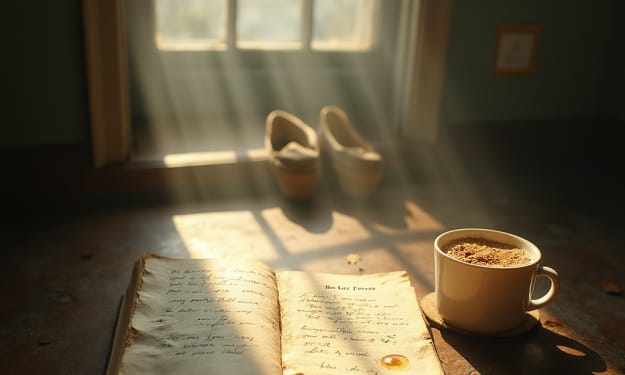
It was supposed to be just another hotel stay. Adeel was a travel writer—his job was to observe, experience, and move on. He had stayed in over 80 cities, written about rainstorms in Kerala, food markets in Morocco, and forgotten railways in Eastern Europe. But this time, he found himself in a lesser-known Pakistani town, Mehrabad, where his editor asked him to cover a story on “the cultural soul of small places.” He checked into Hill View Lodge, a modest two-star hotel standing on the edge of an old colonial-era hill. The receptionist, a young boy who looked about seventeen, barely glanced up. "Room 313, third floor,” he mumbled, sliding the key. Adeel took the elevator—one of those clunky iron ones with a caged door—and made his way to the room. Room 313 was like any other: beige walls, a creaky ceiling fan, a cracked window overlooking the misty road, and a bed that groaned under its own weight. He tossed his bag onto the chair and collapsed on the mattress. The journey had been long, and his head pounded from the heat. But just as his eyes began to shut, he heard it—a knock. Soft. Repeating. Three times. He opened the door. Nobody. Only the dim corridor stretching into silence. He shook his head, blaming it on tiredness, and closed the door. That night, strange things started happening. At exactly 3:13 AM, the ceiling fan stopped. His laptop screen flickered. And the air turned icy cold. He wrapped himself in the thin blanket but felt a whisper near his ear: > "Find me." He jumped up, turned on all the lights, and searched the room. Empty. He laughed nervously. Maybe it was a dream. Maybe it was jetlag. But it wasn’t. The next morning, Adeel asked the receptionist, “Has anyone complained about Room 313?” The boy looked up sharply, then glanced around. “No sir,” he said quickly, “it’s just an old room.” Adeel paused. “Anyone ever… die there?” The boy hesitated. “Sir, all rooms have stories. But we don’t speak about that one.” Now curious—and slightly obsessed—Adeel began to dig. He visited the local archives. The town library. He interviewed old shopkeepers and chai walas. And then he found it. A small newspaper clipping from April 13, 2013: > “Girl Found Dead in Hill View Lodge Room 313. Seventeen-year-old Sana Rehman was found hanging from the ceiling fan of Room 313 under mysterious circumstances. No signs of forced entry. Her diary was never recovered. Police ruled it suicide.” Adeel’s blood ran cold. The date? 13th April 2013. The time of events? 3:13 AM. The room? 313. Too many patterns. That night, he sat at the room desk, staring at the fan, waiting. At 3:13 AM, it happened again. The fan stopped. The air turned ice. And the whisper came, louder. > "I'm here. Find the pages." His instincts as a writer kicked in. He began searching the room. Behind the cupboard. Under the mattress. In the bathroom tiles. And finally—behind a loose wall panel—he found it. A torn, dusty diary. The first page read: > "My name is Sana. And if you're reading this, I did not kill myself." The diary revealed everything. Sana had been a brilliant student who came to Mehrabad for a scholarship exam. She stayed in Room 313. But on her second night, she noticed someone following her. A man in the hotel. She wrote how she complained but was ignored. Then one day, the diary stopped mid-sentence. The last line read: > “If something happens to me, it was never my choice.” Adeel sat frozen. This wasn’t a haunting. It was a cry for justice. He scanned the diary, added it to his story, and titled it: “The Girl in Room 313: A Voice That Was Never Heard.” He published it. Not just in his magazine—but on every blog, platform, and forum he had access to. The story went viral. One Week Later... The hotel was sealed. A retired staff member confessed anonymously that the manager at that time was dismissed quietly after the incident. No police action. No real investigation. But now, with public outrage, the case reopened. Adeel returned to Mehrabad to attend a town memorial for Sana Rehman. Her family wept as they saw the diary pages printed in full, finally heard after 12 years. And Room 313? It was locked forever. One Year Later... Adeel stood on a TEDx stage, invited to speak on “The Power of Stories.” He said: > “Sometimes stories don’t just entertain. They reveal. They shout when others whisper. Sana’s story wasn’t just words—it was justice delayed. But not denied.”
By Muhammad Abbas about a year ago in Fiction
The Little Match Girl
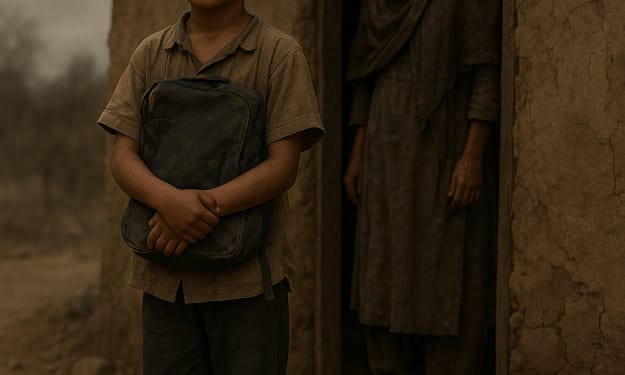
The Little Match Girl: A Tale of Hope and Despair It was an evening of **bitter cold**. The twilight began to deepen, eventually giving way to the profound darkness of night. It was the year's very last night, a time when most people sought the warmth and comfort of their homes.
By Muhammad Saeedabout a year ago in Fiction
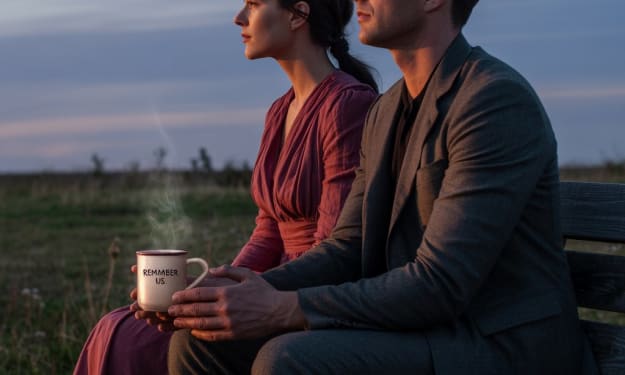
He Left Me a Letter Instead of a Goodbye — and I'm Still Crying
It was a typical Tuesday. The kind where the coffee tasted a little distant, the sky hovered between blue and gray, and I didn't see anything unusual in his eyes. We shared breakfast, talked halfheartedly about bills and weekend plans, and exchanged "see you later" before heading out the door. Only... he didn't mean later. He meant forever.
By Echoes of Lifeabout a year ago in Fiction
Love in Life
Aisha wasn’t looking for love. Not in a bookstore, and definitely not that day. She’d stopped by the small corner shop only to escape the noise of the city and bury herself in poetry. But fate had other plans. Rohan was there too — flipping through a travel memoir, half-lost in thought. They reached for the same book, hands brushing. Both apologized at once, then laughed, and that moment — so mundane, so ordinary — stretched into something unforgettable. Their first conversation was a dance of curiosity and charm. She loved Rumi. He preferred Rushdie. She drank green tea. He couldn’t live without coffee. But the more they talked, the less the differences mattered. There was something in his smile that made Aisha pause, and something in her laughter that lingered in Rohan’s mind long after they parted. Serendipity's Spell One coffee turned into many. Walks in the park, debates over music, shared silence under starry skies. They learned to love each other's contradictions.Aisha found peace in Rohan’s calm. Rohan found joy in Aisha’s fire. Love, it seemed, had found them through serendipity — and it bloomed, slowly but surely. But love is rarely simple. Shadows of the Past Rohan carried invisible wounds. A heartbreak years ago had taught him to guard his heart, to hide vulnerability beneath humor and detachment. Aisha, open-hearted and fearless, sometimes felt like she was knocking on a door that refused to open fully. One evening, her voice broke the silence. “Why do you pull away when things get real?” Rohan hesitated. “Because when things get real, they can also get painful.” It was the first crack in their perfect picture — a moment of truth that hurt more than either expected. Misunderstandings and Missed Calls Things began to shift. A missed call. A delayed text. Doubts creeping in. One evening, Aisha saw Rohan with a woman outside a café. He looked serious. Intimate. The next day, she didn’t mention it — but her silence screamed. Rohan noticed, but didn’t ask. They drifted for a week. When they finally talked, voices were raised, words misplaced. The woman was his cousin — he’d been helping her through a divorce. But the damage had been done. Trust wavered. The bond, once effortless, now felt fragile. Culture ClashesAisha’s family, traditional and tight-knit, began to ask questions. “Where is he from?” “What does his family do?” “Does he believe what we believe?” Though Aisha defended him, the doubt in their voices echoed in her heart. Could love alone be enough? Rohan sensed the hesitation. “Are you ashamed of me?” he asked one night. “Never,” she said. “But they don’t know you like I do.” “Then let them.” So she did. She invited him home. There were awkward silences and cautious smiles. Her parents didn’t say much. But after Rohan left, her mother said, “He’s kind. He listens.” It wasn’t full approval, but it was a beginning. Light After the Storm They took time to rebuild. Rohan, slowly and intentionally, let Aisha in — told her about his fears, his father’s absence, his reluctance to believe happiness could last. She listened, held his hand, and shared her own fears too. They learned to argue without hurting, to disagree without distance. They learned that love wasn’t just butterflies — it was choosing each other, even on the hard days. On their one-year anniversary, they returned to the same bookstore. “I have something for you,” Rohan said. He pulled out a copy of Rumi’s poems — the one they’d first reached for. Inside was a note:*"The heart has its own language. I’m learning it with you."Aisha smiled, eyes glossy. “So am I.” A New Chapter Love didn’t solve everything. There were still challenges — career choices, family expectations, life’s unpredictable tides. But they faced them as a team now. Stronger. Softer. Because they had learned that love, real love, is not the absence of struggle — it is the presence of commitment, even when things get messy. In a world full of noise, they found each other through silence. In a city full of strangers, they chose each other. Love in life, they realized, isn’t just about finding the perfect person — it’s about being imperfect, together.
By Current affairs about a year ago in Fiction
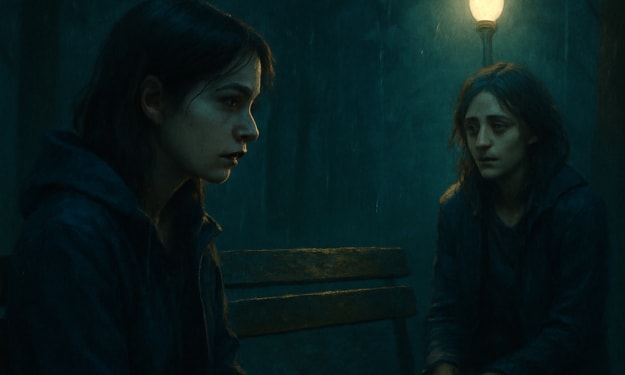
The Night I Met Myself
Not the kind of Tuesday where everything goes wrong, just the kind where everything feels... off. The coffee tasted bitter even though I swore I added sugar. The train was late, but only by a few minutes. People spoke to me, but their voices passed through me like wind through an open window. I smiled. I nodded. I laughed when I was supposed to. But I wasn’t there. That night, I walked home instead of taking the usual bus. I needed air, I told myself. What I didn’t say was that I couldn’t stand the noise—the weight of other people’s lives brushing against mine, demanding interaction. I needed stillness. I needed something I couldn’t name. I passed familiar buildings I barely noticed in the daylight. Laundromats humming with fluorescent life, corner stores that never seemed to close, windows with cracked blinds and flickering TVs. The city was alive, but in a quieter, lonelier way. It wasn’t until I reached the edge of the park that I stopped. The lamplight didn’t reach beyond the entrance. It looked like a void. I hesitated—then stepped inside. There’s something sacred about a park at night. The silence is different. It doesn’t just surround you; it enters you. It asks you to be honest. I sat on a damp bench, stared into the trees, and let the quiet seep in. I didn’t expect anything. I just wanted a break from pretending. And that’s when I heard it. Not a sound, exactly. More like a presence. A shift in the air. When I turned, she was sitting on the other end of the bench. I didn’t hear her arrive. She looked like me—but not exactly. Her hair was longer, messier. Her eyes looked tired but clear. Like someone who had cried, and finally stopped. “Who are you?” I asked. She smiled, gently. “I’m you. The part you’ve been avoiding.” I laughed nervously. “Great. I’m officially losing it.” “Or maybe,” she said, “you’re finally finding it.” We sat in silence for a while. I don’t know how long. Time felt irrelevant. The trees moved slightly in the breeze, but everything else held still. “Why are you here?” I finally asked. “To remind you of what you’ve forgotten.” “Which is?” She looked at me with something like compassion. “That you’re allowed to feel things. That being strong doesn’t mean being silent. That pretending you’re okay isn’t the same as being okay.” I swallowed hard. My throat felt tight. “I don’t know how to stop pretending.” She nodded. “I know. That’s why I’m here.” We talked for what felt like hours. About the things I hadn’t said out loud. About the weight I’d been carrying for years—grief I’d never given a name, fears I buried beneath a busy schedule, dreams I called impractical just to protect myself from the sting of failure. She listened. Fully. Like no one ever had before. And then she spoke. Not in advice, but in memory. She reminded me of who I used to be—before I learned how to shrink myself to fit inside other people’s expectations. She told me about the child who wrote poems in the dark, the teenager who stared at the stars and believed she was meant for something more, the girl who cried easily but loved fiercely. “She’s still in there,” she said. “She’s just waiting for permission.” I didn’t realize I was crying until I felt the tears on my hands. They didn’t come with heaving sobs—just slow, steady release. Like the body finally exhaling after holding its breath for too long. “Will you stay?” I asked her. “I can’t,” she said. “But I’ll be here every time you choose to listen.” When I blinked, she was gone. The bench was empty. But I didn’t feel alone. I walked home in silence, but it wasn’t the kind that screamed. It was peaceful. Like I’d made space for something new. Or maybe, finally, for myself. --- That night didn’t fix everything. I still have bad days. I still forget. But sometimes, when the noise gets too loud, I find my way back to that quiet park—back to that moment where I first met myself. And I remember: healing doesn’t always come with fireworks. Sometimes, it arrives on a damp bench in the dark, wearing your face, asking you to stop hiding. That was the night I met myself. And I’ve been learning how to love her ever since.
By Muhammad Umarabout a year ago in Fiction