Fan Fiction
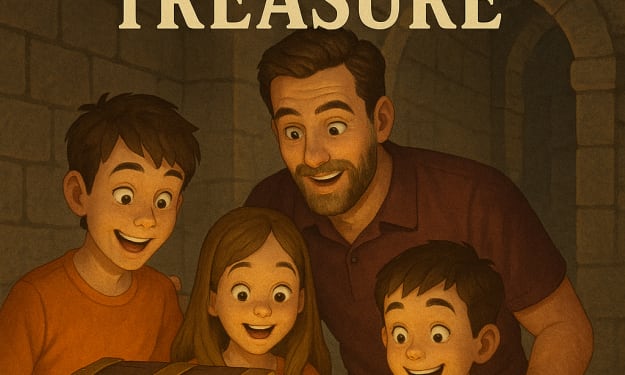
Seeking For Hidden Gold, Diamond Treasure
-- Seeki Once, there lived a kind and honest man who had accumulated a treasure of gold and diamonds over his lifetime. This treasure was not meant for luxury or pride—it was a gift for his children, a safeguard for their future. He hoped it would help them survive during difficult times and support them even in their old age. He and his children were known in their village for their honesty, generosity, and good character.
By Engr. Mansoor Ahmadabout a year ago in Fiction
Asian Koel: The Call of Spring and Nature’s Poetry
Introduction The Asian Koel (Eudynamys scolopaceus) is a well-known bird from the cuckoo family found across the Indian subcontinent, Pakistan, China, and Southeast Asia. Like other cuckoos, it practices brood parasitism by laying its eggs in the nests of other birds, but as an adult, it is mostly frugivorous. Its name in many languages is based on the sound it makes, and in Urdu, Hindi, Bengali, and Nepali poetry, it is remembered as a symbol of spring and love. Ancient Hindu traditions regard the koel’s call as a harbinger of prosperity and the arrival of spring.
By Newztweet Online Toolsabout a year ago in Fiction
The President’s Last Protester
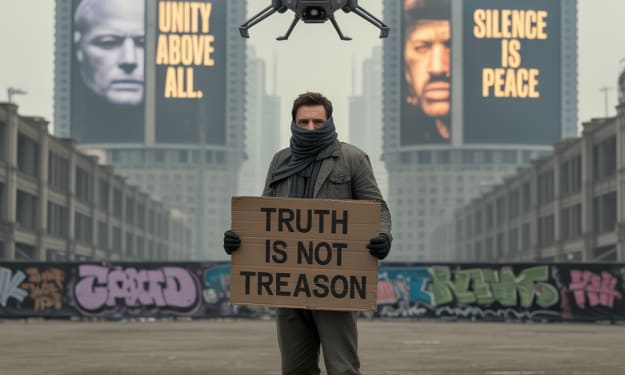
The sky over District 9 was always gray now. Not from clouds, but from the haze of burnt air, ash of deleted history, and the slow decay of freedom. The “Era of Unity,” they called it—a slogan stamped onto every building, drone, and screen like a warning. Tomas Rell hadn’t set out to be a symbol. He just wanted to hold a sign. It read: “Truth is not treason.” Painted in shaky strokes on torn cardboard, it barely lasted five minutes before the Enforcers came. They didn’t drag him away violently—that would be too obvious. They smiled, offered him water, and thanked him for his “civic engagement.” That was the new method: erase, not crush. Make dissent look like it never existed. He woke up in a clean, white room underground, bound not by chains, but by soft cushions and too much silence. Across from him sat Director Kael—sharp suit, soft voice, eyes like polished glass. “You’re Tomas Rell. 28. Freelance coder. No criminal record. One aunt, deceased. No partner. Quiet social presence. You don’t even vote,” Kael said, scrolling through a transparent tablet. “So why stand in front of Parliament Hall with that sign?” Tomas, voice dry, replied, “Because someone had to.” Kael smiled. “Interesting answer. But unoriginal. You’re not the first to say it. You are, however, the last.” The President had outlawed protest six years earlier—gently, surgically. No riots. Just re-education, quiet disappearances, and mass approval ratings that never dipped below 98%. That was the genius of it: not a dictatorship, but a preference. People preferred silence over danger. “You’re being given an opportunity,” Kael said, folding his hands. “We don’t execute dissenters. We upgrade them. Give them new stories, new names. You could work in AI ethics. Or water reclamation. Or drone choreography. The future loves a repentant soul.” Tomas stared. “You want me to lie.” “No,” Kael replied, standing. “We want you to forget.” Days blurred. He was shown holograms of “historical unrest”—doctored footage of protests devolving into chaos, with captions like “Rage is Regressive” and “Only Traitors Need Shout.” They let him watch his own digital funeral—an empty urn placed in a memorial square, mourners reciting state-approved farewells. His name was now marked as “Removed for Restoration.” “You died,” Kael said, sipping tea. “Now we’re building something better in your place.” But what they hadn’t predicted was the message. Before the Enforcers came, Tomas had dropped his sign. Not by mistake, but deliberately. A small camera drone—a relic he hacked together from spare parts—had recorded the entire encounter. The footage uploaded automatically to a dead man’s server. From there, it leaked. It spread like roots through old forums, underground networks, and darkfiber chatrooms. Someone dubbed the clip “The Last Protest.” The sign—“Truth is not treason”—became a watermark on every pirate broadcast. No movement, no leaders. Just questions. Who was Tomas Rell? Where did he go? Why did a government afraid of one man silence the whole country? Two weeks later, Kael returned with tighter eyes and a sharper tone. “You’ve become inconvenient.” Tomas smirked. “I thought I was dead.” “Dead people don’t trend.” Kael threw a paper on the table—actual paper, rare now. It was a printed flyer: Tomas’s face, stylized and grainy, above the words “REMEMBER THE LAST.” Kael paced. “You think this makes you a hero? You stood in a plaza for five minutes. You said nothing. You didn’t lead a revolution. You didn’t even bleed.” “I didn’t have to,” Tomas said. “You did all that for me.” They couldn’t kill him. That would prove too much. So they kept him, studied him, reshaped him—trying to turn him into a fable. They offered him scripts: to record apologies, give fake interviews, confess allegiance. Each time he refused, the myth grew stronger. In District 9, street artists tagged walls with his image. In District 3, schoolchildren whispered his name like a ghost. In the outer colonies, protesters wore blank masks with only the words: “I Might Be Tomas.” Ten months later, Kael stood alone in the interrogation room. Tomas wasn’t there. Not physically. But his absence was louder than his presence had ever been. He had vanished—officially “reintegrated,” but no record existed of where. Some said he escaped. Some said he was living under another name. Others believed he had died and been buried beneath the President’s garden. It didn’t matter. Because across the nation, silence was no longer preferred. People were speaking again. Carefully at first. Then openly. Then together. And it had all started with one man holding a sign. “Truth is not treason.”
By Ubaid Khanabout a year ago in Fiction
The Voice in Apartment 4B
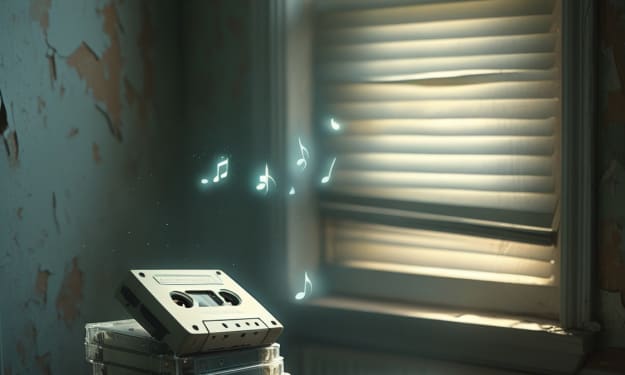
The Voice in Apartment 4B By [Ubaid khan] The first time I heard the music, it was subtle — a faint piano melody slipping through the thin walls of my studio apartment. I paused mid-bite of my cereal, listening. The tune was soft, melancholic, like something from a forgotten vinyl spinning in a dusty attic. I lived in 4A, and 4B — according to the building manager, Mrs. Evers — had been vacant for months. “Last tenant left in a hurry,” she had told me, pushing her cat-eye glasses up her nose. “Didn’t take much with her. Spooked or something. Strange girl.” That should have made me wary. But it didn’t. I’d only just moved to the city, trading a small-town existence for a one-room walk-up and dreams of a fresh start. If anything, the idea of a ghostly neighbor brought a kind of curious comfort. The city could be a lonely place. The second time I heard the music, it came with a voice. “You can’t just keep running,” it said softly. A woman’s voice. Clear. Intimate. As if spoken directly into my ear. I dropped the mug I was holding. The building was old, the walls thin, but 4B was still supposed to be empty. I pressed my ear against the wall that separated our units. Silence. Then, a rustle. Another whisper. “…but you already know that, don’t you?” My breath caught in my throat. I tried to laugh it off, muttering to myself about faulty plumbing, echoing radios, air vents. I didn’t sleep that night. On the third day, I knocked on 4B’s door. Three raps. Nothing. I tried the knob. It creaked open. The apartment was dim, heavy with stale air. Dust floated like lazy snowflakes through the beams of sunlight slipping between the blinds. The place was barren, except for an old milk crate in the center of the living room. Inside the crate: a small tape recorder, a stack of labeled cassette tapes, and a note that read: "For whoever’s listening — listen closely." The first tape was marked “Tape 1: Arrival.” I brought it back to my apartment, popped it into the dusty recorder, and hit play. A woman’s voice — soft, warm, almost familiar. “If you’re listening, then you’ve heard me,” she said. “I wondered who’d move in next door. I’ve been trying to reach someone… anyone. But I didn’t expect it to work.” She chuckled, low and bittersweet. “You’re probably confused. I would be too. I’m not dead, if that’s what you’re thinking. At least… I don’t think I am. Not in the usual sense.” A long pause. Then: “I found these tapes helped me speak. Not just to record, but… somehow, to respond. I started making them when the dreams began. When I started hearing things through my walls.” Over the next week, I listened to a tape each day. They began abstract — musings on loneliness, time, sound, and silence. The woman (she never said her name) spoke of feeling like she was unraveling, like her thoughts were drifting into the walls themselves. She talked to me — not in the way a diary talks to a future reader, but like she knew me, knew what I was feeling. “You wonder if you’re going crazy,” she said in Tape 3. “You’re not. But even if you are, sometimes madness is a doorway.” I hadn’t told anyone about the anxiety attacks. About waking up sweating, heart racing, uncertain of where I was. I hadn’t told anyone because I didn’t know anyone here. But she knew. The deeper I went into the tapes, the more direct the messages became. “I heard you crying last night,” she said in Tape 5. “I remember crying just like that. When I couldn’t tell if I was escaping something or leaving everything behind.” I stopped the tape. Stared at the wall between our apartments. My apartment. Her apartment. How could she know? I couldn’t resist any longer. I went back into 4B. This time, I explored. The place had an eerie stillness to it, but also a strange warmth — like someone had just left and would return at any moment. I opened the closet. There, taped to the inside wall, was a final cassette. It was labeled simply: “For Her.” My hands trembled as I placed it into the recorder and pressed play. “I think I made this for you,” the voice said. “I don’t know how I know you, but I do. You came here to disappear, didn’t you? Just like I did. You wanted a clean slate, to leave the hurt behind. But it doesn’t work like that. Hurt follows. It echoes.” A long pause. “But healing echoes too. Maybe that’s what I’ve been trying to send — an echo of healing. A message in a bottle through time and thought.” She inhaled, shaky. “If you stay… write your own tapes. Leave something behind. Someone might need it. Someone like you.” That night, I slept. Not just laid down — I slept. And the next morning, I pulled out a blank cassette from the crate, held it in my hand for a while, then wrote across the label in black ink: “Tape 1: Beginning.”
By Ubaid Khanabout a year ago in Fiction
She Was Never Real
I met her on a rainy Tuesday. The kind of rain that doesn't just fall—it lingers in the air, heavy and cold, like the universe itself is pressing down on you. I was sitting alone in a bookstore café, sipping cheap coffee and pretending to read a book I’d already abandoned. She sat across from me without asking, as if we’d done it a thousand times before.
By Leah Brookeabout a year ago in Fiction
The Museum of Forgotten Goodbyes
The Museum of forgotten goodbyes by AHMAD Tucked into a quiet corner of a forgotten town, where streetlights flickered like uncertain memories and the air always seemed tinged with the hush of secrets, stood a peculiar building known only by a small, rusted sign: The Museum of Forgotten Goodbyes.
By muhammad shahabout a year ago in Fiction