Fan Fiction
The Letter Arrived 20 Years Late. AI-Generated.
The mail came at 3:16 PM. Same as always. But that day, something was different. Tucked between a water bill and a supermarket coupon booklet was a yellowed envelope—creased, brittle, and stamped with a date: March 12, 2005.
By Muhammad Riazabout a year ago in Fiction
One Hundred Years of Solitude
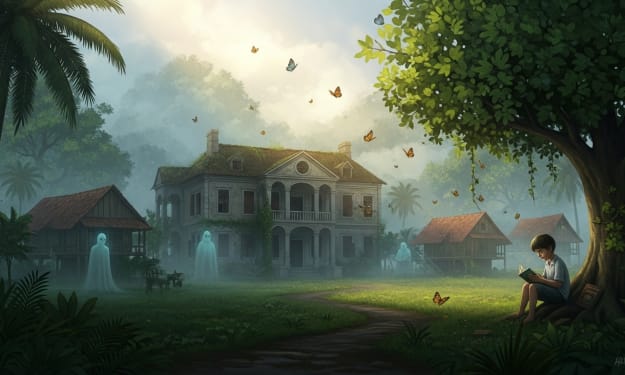
The Buendía house stood at the edge of the village of Santa Nieve, where the jungle whispered and time curled in on itself like old parchment. It had been there for a hundred years, though no one remembered building it, and no one dared to tear it down. The walls wept in the rainy season, the windows blinked with the wind, and strange lights flickered from the attic even when the house was empty. Except it was never really empty. The villagers swore they saw the same faces looking out from the upper window—faces of the dead. But it was not the dead that haunted the Buendía house. It was memory. --- Every generation of Buendías was born with two things: a peculiar birthmark shaped like an almond and an incurable yearning to escape the fate of their forebears. Yet they always came back—drawn by dreams, omens, or guilt—to the house that never aged, even as they did. Mateo Buendía was the last. At twelve, he wandered into the library on the second floor and found a dusty journal with a cracked leather cover. His fingers tingled when he touched it, as if the book had been waiting for him. Inside were entries dating back a century, written by hands that trembled with love, sorrow, and madness. The first entry: “Time is not a line. It is a circle made of forgetting.” Mateo read late into the night, the past whispering secrets through ink. --- He learned of Esperanza Buendía, who could see spirits but married a man who believed only in science. She danced with ghosts in the hallway and wept when her husband burned all her journals in a fire fueled by logic. Of Rafael, who tried to sail upriver to find the city of mirrors but returned years later with white hair, empty eyes, and a bottle that contained only silence. Of Alma, who once fell in love with a man in her dreams and searched the waking world in vain, never realizing he had been born decades after her death. And of Aureliano, the original—the first to write the journal, the first to speak of solitude not as loneliness, but as inheritance. --- “Why do they all return?” Mateo asked the old gardener one morning. The gardener, who had worked there longer than anyone alive could remember, said, “Because the house remembers what they forget.” That night, Mateo dreamed of Esperanza standing by the fig tree, beckoning him. Her voice echoed: "The curse is not solitude. It is silence. You must finish the story." --- Mateo wrote every night after that, filling page after page in a second journal. Not just with the tales of the Buendías, but with his own. Of feeling invisible at school. Of the boy who smiled at him once and never again. Of the silence that grew between him and his mother, who spoke to birds more than she did to him. The more he wrote, the more the house changed. The cracks in the walls healed. The air grew lighter. The attic door, sealed for generations, creaked open. Inside, Mateo found a mirror. But when he looked into it, he saw not himself—but every Buendía before him. They blinked, breathed, wept. And then, they smiled. --- Years passed. Mateo never left the house. People said he had gone mad like the others, obsessed with the past. But sometimes children saw him in the garden, speaking to butterflies or writing in the dust with his fingers. And at night, light still flickered in the attic. One stormy evening, lightning struck the fig tree. When the villagers came to check the ruins, the house was gone. All that remained were two journals under the roots—one old, one new—and a single almond-shaped birthmark burned into the earth. --- In time, the Buendía name became legend. A whisper. A tale told to children about the house that remembered and the boy who listened. No one dared rebuild on the land. For even in absence, solitude lived there still—eternal, magical, and waiting to be written again.
By Shah Nawazabout a year ago in Fiction
1984
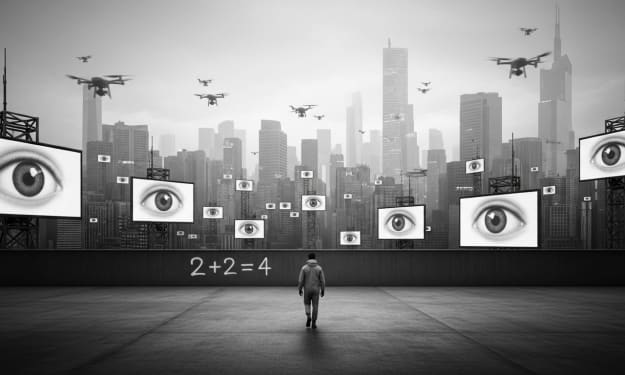
In Sector 7 of the Unified Republic, Winston Hale blinked away the sting of fluorescent light as the surveillance drone buzzed past his workstation. He kept his hands moving—filing data, erasing old entries, rewriting history. Truth was fluid here. And Winston, like everyone else, was expected to drown in it. It was the year 2084, but they still called it 1984, in tribute to the “Founding Vision.” The Party had long since digitized Orwell’s prophecy, weaponizing fiction into a blueprint. Every citizen wore their compliance like a second skin, and every screen whispered the same mantra: “Freedom is Obedience. Obedience is Peace.” Winston didn’t believe it. Not anymore. --- He first saw her in the corridor outside Archive Room Delta. Dark curls. Grey jumpsuit. Eyes too awake. Julia. Their first conversation was risky—a whispered joke about the food. The second was dangerous—a shared memory of the stars beyond the city domes. By the third, they were in love. And in rebellion. --- They met in abandoned metro tunnels, long forgotten by the city above. Julia brought old books salvaged from black market trades. Winston brought questions. "Why do they erase everything?" he asked once, flipping through a banned copy of History of the World Before Unity. "Because control," Julia whispered, “requires amnesia.” “They’ve made lies feel like truth,” Winston muttered. “No,” she said. “They’ve made truth illegal.” --- Hope, however, is combustible. And surveillance never sleeps. The morning the Thought Police came, Winston was already waiting. He didn’t resist as they dragged him from his apartment. He only asked one question: “Is she safe?” They didn’t answer. --- Room 101 was colder than he imagined. Not in temperature—but in silence. A single chair. A single screen. And behind the screen: Authority. Not a man. A voice. A system. “Winston Hale,” the voice echoed, “you are guilty of independent thought, emotional deviation, and unsanctioned intimacy.” “I know,” he said quietly. “Why?” He didn’t speak. “Why, Winston?” At last, he whispered, “Because I remembered who I was before I feared you.” --- Reeducation began with isolation. Then deprivation. Then immersion. For weeks, they fed him Party broadcasts until his dreams bled into propaganda. They made him watch videos of Julia’s arrest—real or fake, he couldn’t tell. In his final session, they presented him with a choice. A lever. A screen. One would spare Julia. The other, himself. “Choose,” the voice commanded. His hand trembled. Tears welled in his eyes. And then— He stepped back. “I will not.” Alarms blared. But Winston smiled. --- They released him. Broken, perhaps. Or maybe they thought he was. He returned to his job. Typed the lies. Filed the past. Wore the mask. But behind his eyes—still, a spark. Because rebellion isn’t always loud. Sometimes, it’s a memory. Sometimes, it’s the refusal to forget. --- Years later, children would find a scratched phrase hidden behind an old databank wall: “2 + 2 = 4” And though they didn’t understand it, they whispered it anyway. Like prayer. Like prophecy. Like truth.
By Shah Nawazabout a year ago in Fiction
Don Quixote
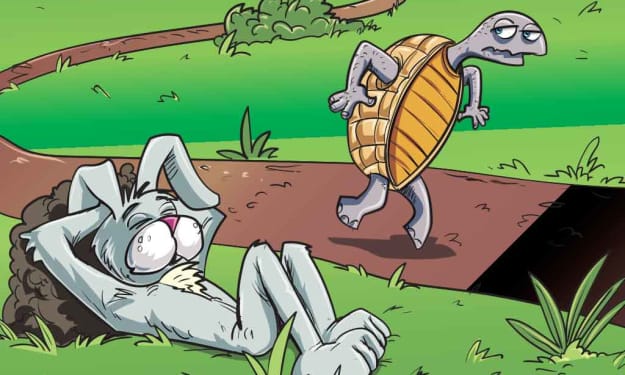
In the heart of a sunbaked town where the modern world met rusting traditions, lived an old man with a mind like a lantern in the fog. Everyone knew him—not for his wealth or status, but for the armor he wore, fashioned from scrap metal and car parts, and the rusting scooter he called his “noble steed.” Alonzo De La Vega had once been a literature professor, until time and grief peeled back the layers of academia and left behind only a man with a library of forgotten worlds in his heart. He now called himself Don Quixote, and to him, the world was still filled with dragons, damsels, and noble quests. Every morning, he rode through town in a crooked helmet, waving to shopkeepers and schoolchildren, quoting Cervantes as if they were gospel. “Have courage, my friends! For reality is only what we allow it to be!” Most smiled indulgently. Some laughed. A few pitied him. But no one could deny that the town felt different when he rode by—as though something magical stirred in the dust behind his wheels. --- One cloudy morning, Don Quixote burst into Café Lucia, clutching a wrinkled map. “I have found it!” he cried. “The lair of the dragon lies beyond the hills, near the abandoned wind turbines!” “Again with the dragons?” Lucia asked, handing him his usual black coffee. He leaned in, lowering his voice. “This one guards a forgotten truth. A great treasure. And I must retrieve it.” Sitting nearby, sixteen-year-old Marco rolled his eyes. “There’s nothing out there but weeds and rust.” Don turned slowly. “Every story begins with disbelief. Even yours.” “Mine?” “Yes, you—squire in disguise, afraid of your own potential.” Don Quixote placed a hand on Marco’s shoulder. “Come with me. Be the shield to my sword. See the world not as it is—but as it could be.” Marco laughed, but something flickered in his chest. A small defiance. A yearning he didn’t want to name. --- Two hours later, they stood at the base of the wind farm. Giant turbines groaned in the breeze, towering like ancient titans. “To you, they are machines,” Don said. “To me—they are wind giants. Keepers of forgotten battles.” Marco crossed his arms. “Okay. So where’s this treasure?” Don pointed to a crumbling bunker half-buried in dust. “There. Beneath the dragon’s shadow.” They entered. Dust motes swirled in flashlight beams. Metal creaked. And then—they found it. A trunk. Inside: a stack of journals, photographs, and a medal. “My wife’s,” Don whispered, lifting the medal with shaking hands. “She served… I buried this place after the war took her mind. I thought forgetting would heal me.” Marco blinked. “This is your treasure?” “No,” Don smiled. “This is the memory of who she was. This is why I ride.” --- On the way back, they were silent. But something had changed. The world looked different. The wind turbines weren’t just turbines anymore. They were possibilities. --- Weeks passed. Don Quixote rode daily, but now with a companion. Marco, now armed with a cardboard shield and a borrowed heart, became his “faithful squire.” Together, they “battled” injustice—fixing broken park benches, cleaning graffiti, delivering groceries to lonely elders. People started to believe. Not in dragons or giants. But in something bigger. Hope. Wonder. Imagination. One day, Don didn’t show up. Marco found him in his apartment, sitting by the window, armor by his side. “I think my steed is tired,” Don said, smiling faintly. “Time for this knight to rest.” Marco sat beside him. “But who will ride now?” Don took his hand. “You will.” --- And Marco did. Years later, the town still tells stories of Don Quixote and his squire. A bronze statue now stands in the square: a knight in mismatched armor, holding out a helmet to a wide-eyed boy. And every so often, on cloudy afternoons, children swear they see wind turbines bowing in the breeze. Not machines. Giants.
By Shah Nawazabout a year ago in Fiction
Death is a mystery
DEATH IS A MYSTERY😔... BUT IT OFTEN SEND SIGNS BEFORE IT COMES 😔 (Episode 1) The sun cast a golden hue over the village of UJUALA as the rooster's crow signaled the start of a new day. Elder Nneka, known for her wisdom and kindness, sat on her porch, sipping her morning tea. Children played nearby, their laughter echoing through the air. Suddenly, a hush fell over the village. A messenger arrived, bearing news that the village's oldest resident, Papa Obi, had passed away peacefully in his sleep. The villagers gathered, mourning the loss of a man who had been a pillar of their community. As the funeral preparations began, Elder Nneka felt a stirring in her heart. She realized that many in the village, especially the younger generation, feared death and saw it as a taboo subject. Determined to change this, she decided to share stories and lessons about death, aiming to inspire understanding and acceptance. The morning after Papa Obi's death, the village square was full. Not with noise, but with presence. Old women sat on mats, chewing kola nuts slowly. Men gathered in quiet corners, whispering in heavy tones. Children played unaware, but watching their mothers' eyes. A message had gone out “Come. It’s time to talk about life… and what ends it.” Elder Nneka, though quiet, had sent for ten people — people whose lives had been touched by death in strange ways. Some had lost loved ones suddenly. Others had battled sickness. And a few… had seen the shadow of death but returned. No one knew why she chose them. But she welcomed them one by one into her small compound, where the mango tree stood like a silent guard. The first to speak was Mrs. Chinelo, a woman who had lost her husband to stroke in his sleep. “He didn’t cry. He didn’t shout. Just turned… and left,” she said, wiping tears. Next was young Ebuka, who had survived a fatal accident. “I saw myself floating above my body. It was like sleep, but deeper. Peaceful. But a hand pushed me back — I heard my mother’s voice praying.” Others shared stories — some painful, others strange. But all of them pointed to one thing: And then Mama Nneka stood up. She looked around, her old eyes sharp and knowing. “My people,” she began, “We fear what we don’t understand. But death is not always the enemy. Sometimes, it comes as a friend to the tired, a release to the suffering, a reminder to the living.” She bent down and drew a circle in the sand. “This gathering is not just to mourn Obi. It’s to prepare,” she said slowly, “Prepare not just for death—but for the truth behind it. Some of you think you understand life. But until you understand death, your eyes are only half open.” She looked at each of them — the widow, the boy, the pastor, the herbalist, the quiet girl who hadn't spoken. “Each of you was called for a reason,” she added, her voice barely above a whisper. The wind suddenly blew stronger. The mango tree above them shook, and a single fruit dropped... not on the ground, but squarely in the middle of the circle she drew. Everyone gasped. Elder Nneka's eyes didn’t move. “That,” she said, pointing to the fallen mango, “is the first sign.” “But of what?” someone whispered. She looked up slowly, her face shadowed by the evening sun. “Of what death is truly coming for in this village... and who it will visit next.” Silence fell. And then she said, “Tomorrow, at this same hour, one of you… will not be here.” To be continued… We are not WEALTHY but we are HEALTHY.
By Haya princessabout a year ago in Fiction
“At Twenty-Five, Dad Caught Me in My Strange Midnight Ritual”
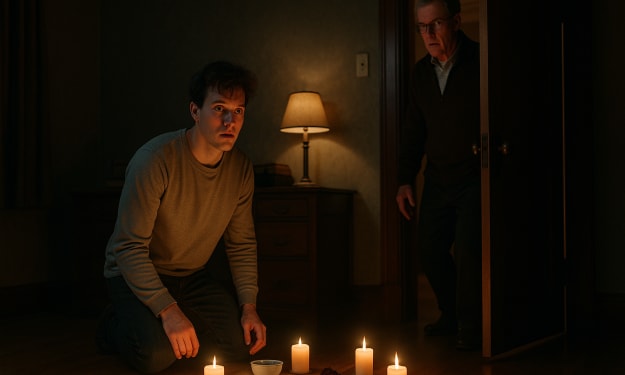
Even at twenty-five, I hadn’t let go of my odd habits. Some people grew out of theirs in their teenage years—mine only got more intense, more personal, and, honestly, a little weirder. While others my age were getting promoted, engaged, or planning trips to Bali, I found myself in my grandfather’s old study every night at 11:07 PM sharp, surrounded by dim candlelight and strange, broken relics that only made sense to me. It wasn’t something I ever talked about. I kept it hidden, the way most people hide shame or grief. On the desk, I’d carefully arrange a chipped teacup, a rusted pocket watch, a dried rose petal, and a strip of old velvet ribbon. I didn’t know why I chose those objects—they just felt… right. Then, as the candlelight flickered against the wallpaper, I’d close my eyes and whisper a name into the stillness. “Mara.” She was the name I held onto. Sometimes I wasn’t sure who Mara even was anymore—my grandmother, a lost friend, a part of myself that had slipped through the cracks. All I knew was that whispering her name made me feel less alone. It became a ritual of comfort, of memory, of meaning—strange to everyone else, but grounding to me. This went on for years. No one knew. I lived a relatively normal life during the day—meetings, emails, coffee breaks, small talk—but the nights were mine, private and peculiar. My father, who I still lived with at the time, probably chalked up the late nights to work stress or insomnia. He never asked. I never told. Until one Tuesday night. I came home later than usual, exhausted and barely hanging on to the rhythm of my life. Still, the ritual called to me. I walked quietly down the hall, slipped into the study, lit the candles one by one, and began arranging my objects. The soft glow wrapped around me like a blanket, familiar and still. I closed my eyes, took a breath, and whispered the name. “Mara…” And that’s when I heard it—the unmistakable sound of keys jingling in the lock. The door creaked open, spilling hallway light into the room like a spotlight on a stage I wasn’t ready to perform on. I froze. My father stood in the doorway, his face a mix of confusion and concern, eyes scanning the circle of candles, the strange objects, and me—kneeling in the center like some lonely monk performing a forgotten rite. “What… are you doing?” he asked quietly, stepping inside. I stared at him, caught mid-ritual like a child with their hand in the cookie jar. My heart pounded in my chest. I couldn’t lie—it was too bizarre to explain away. “It’s… hard to say,” I muttered, looking down at the teacup. “I’ve been doing this for years. It helps me feel connected… to things I’ve lost. To people. To parts of myself.” He didn’t speak at first. He just walked slowly to the desk and picked up the pocket watch, turning it in his fingers. Then, almost too softly to hear, he said, “This was your grandfather’s.” I nodded. “And the cup was Grandma’s. The rose was from the day she died.” He sat down beside me on the floor, the candlelight soft on his weathered face. I braced for a lecture, or a laugh, or maybe even anger—but it never came. “You know,” he said after a moment, “I used to come in here late at night too. After your mom passed. I didn’t light candles, but… I’d sit in his old chair. Just sit. It helped.” I looked at him, surprised. He smiled faintly, eyes still on the flickering flames. “We all grieve differently,” he continued. “Sometimes we need to hold onto strange little things just to stay standing. But you don’t have to do it alone.” And just like that, something shifted. The candles didn’t seem so eerie anymore. The ritual didn’t feel so heavy. For the first time, I wasn’t just the boy whispering into the dark—I was someone seen. That night, we didn’t blow out the candles right away. We sat together, sharing stories, memories, silences. And in those hours between midnight and morning, I realized that even the weirdest habits can be beautiful, as long as there’s someone willing to understand them. Since then, I’ve changed the ritual. I still light a candle sometimes, still whisper a name when the silence gets too loud—but I don’t hide it. I let others in. Because healing, I’ve learned, isn’t just about keeping the memory alive. It’s about letting love in, even in the strangest places. And it took being caught by my father, mid-whisper, to finally understand that.
By cheaper collectionabout a year ago in Fiction
The Summer That Never Came
In the year 2094, summer became a myth. People still spoke of it, mostly in past tense. It was in the children's picture books—the golden fields, the blue skies, the laughter that echoed through late evenings. But for eighteen-year-old Aarya, summer had only ever existed in stories told by her grandmother.
By MANZOOR KHANabout a year ago in Fiction