Fan Fiction
The Letter I Never Sent
I never thought I’d find that letter again. It was tucked between the pages of my old diary — the one I kept back in middle school when everything felt too big and confusing to say out loud. The paper was yellowed, the ink a little faded, but the words were still there, raw and honest, written in my shaky handwriting: Dear Lucas, I don’t know if I’ll ever have the courage to say this, but I think I like you. Like, more than a friend. And if you don’t feel the same, that’s okay. I just needed to tell you. I paused, my fingers trembling as I held the fragile paper. Lucas was my best friend then — the one who always made me laugh, who shared his lunch when mine was gone, and who left for another state just months later without a goodbye. I never sent the letter. I never even showed it to him. Now, sitting in my tiny apartment five years later, I thought about what might have been. Could things have been different? Did he ever wonder? Impulsively, I dug out an old address book from a drawer. To my surprise, there was an entry under “L” — “Lucas Bennett.” I hesitated, then dialed the number. The line rang twice before a familiar voice answered. “Hello?” “Lucas, it’s me. Stacy.” There was a pause, then a laugh, warm and surprised. “Stacy? Wow. It’s been forever.” We talked for hours that night — about school, dreams, mistakes, and everything left unsaid. Eventually, I told him about the letter. “I had it all wrong,” he said. “I always thought you knew how I felt.” I smiled, feeling a flutter in my chest. Maybe some things are worth waiting for.
By Haileyesusabout a year ago in Fiction
Footprints Across the Water
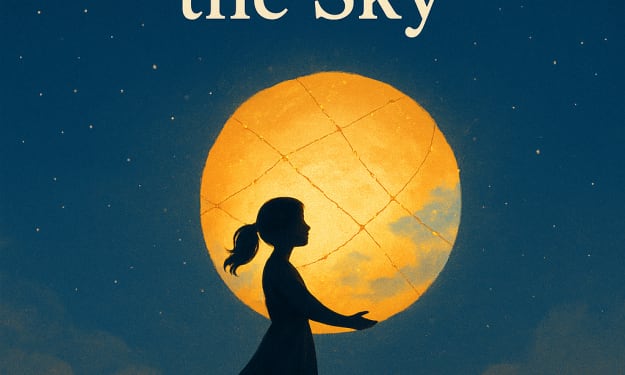
The waves whispered that night, pulling secrets from the moon and scattering them across the shore. I stood barefoot at the edge of the ocean, toes sinking into the cool sand, staring at the trail of shimmering footprints leading out onto the water.
By Hanif Ullah about a year ago in Fiction
The Keeper of Golden Wings
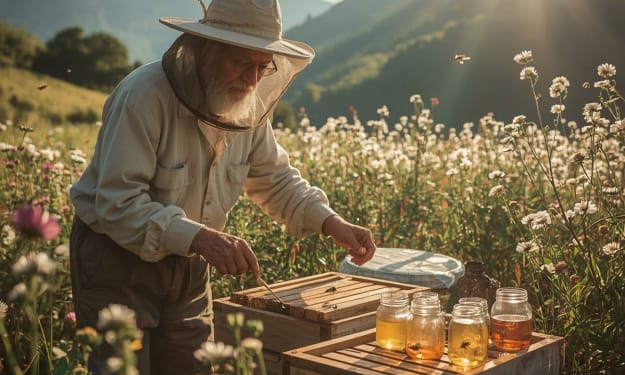
By Ikhtisham Hayat In the small valley of Shahpur, where wildflowers painted the hills in every shade of spring, lived Kareem, a quiet man with weathered hands and a patient soul. To most, he was simply “the honey man,” but his proper title was apiarist — a keeper of bees, a guardian of the tiny, golden-winged creatures that hummed like living jewels in the sunlight. Kareem’s love for bees began when he was just a boy. His father kept two wooden hives behind their home, teaching him that bees were more than just insects — they were partners in life’s delicate balance. “They take care of the flowers, and in return, we take care of them,” his father would say, brushing a honeybee off his arm as though greeting an old friend. After his father passed away, Kareem inherited not just the hives, but the responsibility to continue the work. Over the years, two hives became ten, ten became thirty, until his small plot of land buzzed with life from dawn to dusk. He knew each hive by its behavior — some calm and gentle, others hot-tempered and easily stirred. Every morning, Kareem donned his well-used veil and gloves, moving slowly so as not to alarm his bees. He would check the frames for healthy brood, making sure the queen was active and the workers busy. The scent of honey and wax mixed with the perfume of wildflowers as he lifted the frames, glistening with golden nectar. The bees, used to his presence, moved aside for him as if recognizing their caretaker. One summer, disaster struck. A dry season shriveled the flowers, and nearby farmers sprayed their fields with harsh chemicals. Kareem noticed the signs immediately — bees returning weak, some not returning at all. His heart sank. He knew the colony’s survival depended on his actions. He began planting rows of sunflowers, clover, and lavender around his land, creating a safe haven for the bees. Each day, he carried bowls of sugar water to give them extra strength. It was exhausting work, but Kareem never complained. “If we protect them now,” he told his young nephew, Ayaan, “they will return the favor for years to come.” The bees recovered slowly, their numbers growing again. That year, the honey harvest was smaller, but its taste was richer — a blend of wildflowers and survival, sweetened by care and resilience. Kareem bottled the honey in simple glass jars, each labeled with the words From the hives of Shahpur. His customers loved the taste, but they also loved the story. Many began visiting his farm to see the bees for themselves. Kareem would guide them carefully to the hives, explaining the intricate roles of workers, drones, and the queen. “Every bee has a duty,” he would say, “and they never complain. We can learn from them.” As the years passed, Kareem’s work became more than a livelihood. It became a calling — protecting not only his bees but the land they depended on. He joined other local apiarists to teach schoolchildren about the importance of pollinators. He donated part of his honey to hospitals and orphanages, believing that something made by nature should be shared freely. One autumn evening, Ayaan, now a young man, stood beside his uncle as they watched the bees return to their hives. The setting sun painted the sky in warm gold, matching the honey in Kareem’s jars. “Uncle,” Ayaan said softly, “why do you work so hard for them? They’re just insects.” Kareem smiled. “They are not just insects. They are the reason flowers bloom, fruits grow, and life continues. When you keep bees, you are keeping the chain of life itself.” He paused, watching a single bee land on his sleeve before flying away. “And they remind me that even the smallest creatures can create the sweetest things.” That winter, Kareem’s honey won first prize at the regional fair. The judges praised its purity and depth of flavor, but to Kareem, the real reward was knowing that his bees had thrived despite the hardships. Standing there with his prize, he felt proud — not of himself, but of his buzzing, tireless partners. Years later, people still spoke of the man from Shahpur whose honey tasted like sunlight and wildflowers. And when Kareem’s hands grew too old for the work, Ayaan took over the hives, just as his uncle had done before him. In the valley, the bees continued their dance from flower to flower, and the story of the apiarist lived on — in every golden drop of honey, in every blossom that opened to greet the day, and in the quiet hum of wings that carried the promise of life.
By Ikhtisham Hayatabout a year ago in Fiction
“The Last $50”. AI-Generated.
I was seventeen the summer I learned what $50 could mean. Back then, I thought $50 was just enough for a tank of gas, a movie ticket, and maybe a burger afterward. I didn’t think it could change anything important. I was wrong. --- It was late July, the air heavy with heat. My part-time job at the corner grocery barely covered my phone bill, but it gave me something to do besides sit at home. My father had been between jobs for months, and the tension in our small house was as constant as the hum of the ceiling fan. Money was not something we talked about — it was something we avoided. One Friday afternoon, after my shift, my manager called me into the back office. “You’ve been working hard,” he said, pulling an envelope from his desk. “Here’s a little bonus. Fifty bucks.” It wasn’t much — even I knew that — but the crisp bill in my hand felt like independence. It was the first money I’d earned that wasn’t already claimed by bills or gas for the old sedan I drove. I imagined buying something just for me: a new pair of sneakers I’d been eyeing, or maybe a ticket to that summer concert everyone at school was talking about. --- Walking home, the neighborhood looked different. The sun seemed warmer, the breeze lighter. Money in your pocket changes how the world feels, even if it’s just $50. That’s when I saw her. Mrs. Howard lived three doors down. She was in her eighties, a small woman with kind eyes, always in a blue cardigan no matter the season. That day she was standing at her mailbox, shuffling through envelopes with hands that trembled slightly. “Afternoon,” I called as I passed. She looked up and smiled, but it was the kind of smile that didn’t quite make it to her eyes. “Afternoon, dear.” As I walked by, I heard her sigh. She pulled a folded paper from her stack and stared at it. The word “PAST DUE” glared in red letters across the top. --- I don’t know why I stopped. Maybe it was the way she stood there — shoulders slumped, the weight of the paper dragging her down. “You okay, Mrs. Howard?” I asked. She hesitated, then gave a small, weary laugh. “Oh, I’ll be fine. Just… they raised my electricity rates again. Can’t seem to keep up this month. I’ll work it out.” --- I knew “work it out” meant sitting in the dark for a while. And suddenly, that crisp bill in my pocket didn’t feel so much like mine. I pulled it out before I could second-guess myself. “Here,” I said, holding it out. “This should help a little.” Her eyes widened. “Oh no, I couldn’t—” “Please,” I said, pressing it into her hand before she could refuse. “I got a bonus today. I’ll be fine.” For a moment, she looked at me like I’d handed her more than just paper. Then her eyes shone and she said, “You’re a good boy, you know that?” --- Walking away, I didn’t feel like a good boy. I felt conflicted. Part of me wanted those sneakers. Part of me wondered if this was enough to really help her. But as I turned the corner, I heard the shuffle of her feet hurrying back inside, and I thought maybe, for tonight at least, her house would stay lit. --- A week later, she called to me from her porch as I passed. “Come here, I have something for you.” She handed me a small plate wrapped in foil. “Peach cobbler. My mother’s recipe. Haven’t made it in years.” It was still warm. We sat on her porch, eating straight from the dish with two forks. She told me about growing up in Georgia, about her late husband who could fix anything, and about the time a neighbor had helped her when she was young, a kindness she’d never forgotten. “Kindness,” she said, “is a debt you repay forward, not back.” --- The $50 was gone, but I didn’t miss it. What stayed was something I couldn’t put a price on — a quiet connection between two people who might have kept walking past each other without a word. --- Years later, after Mrs. Howard passed away, her niece knocked on my parents’ door. In her hands was a worn, leather-bound book of poetry. “She wanted you to have this,” her niece said. Inside the cover was a note in Mrs. Howard’s shaky handwriting: > “For the boy who lit my home when I thought the lights would go out.” --- I still have that book. Sometimes I run my fingers over her words and remember that summer day — the heat, the hum of the ceiling fan, the weight of a crisp bill in my pocket — and the way giving it away made me richer than keeping it ever could. Because in the end, the last $50 I had wasn’t spent. It was given, and in that moment, it bought something priceless.
By Muhammad umairabout a year ago in Fiction