Fan Fiction
The Day I Lost My Family. AI-Generated.
It was a Sunday morning when the world I knew shattered into pieces. I still remember the sunlight sneaking in through the curtains, warm on my face, and the faint smell of tea drifting from the kitchen. For a moment, everything felt normal. My mother humming an old tune, my father tapping his newspaper, and my younger sister chasing our old cat around the living room—it was a picture of peace I never thought could disappear so suddenly. I had no idea that within hours, that very picture would only live in my memory. --- The Last Breakfast That morning, I joined them at the table. My mother served parathas the way she always did, slipping the crispy ones to my plate because she knew they were my favorite. My father reminded me to check the car’s oil later, while my sister teased me about how badly I drove. We laughed. We ate. And I didn’t realize I was experiencing my last breakfast with them. There’s a strange cruelty in life—it doesn’t tell you when a moment will be the last. --- The Call I was running late for work, so I left before everyone else. My parents and sister had plans to visit my grandmother in the nearby town. I promised I would join them in the evening. An hour later, I was sitting at my desk when my phone rang. It was an unknown number. I answered, expecting it to be a client, but instead, a shaky voice said: “Are you related to Mr. Rahman?” “Yes… he’s my father. Why?” “There has been an accident. Please come to the General Hospital immediately.” I froze. For a second, I couldn’t breathe. The words didn’t make sense. Accident? What accident? My heart pounded so hard I thought it would rip out of my chest. --- The Hospital When I arrived, the smell of antiseptic hit me first. The waiting area buzzed with cries, hurried footsteps, and whispers. A doctor walked toward me, his eyes heavy with pity. He didn’t even need to speak. My knees went weak, and the world blurred. “They didn’t survive,” he finally said. “I’m so sorry.” Those four words broke me. My family—my mother, father, and little sister—were gone. Just like that. A truck had lost control on the highway and slammed into their car. Instant. Final. Irreversible. --- The Funeral The days that followed were a haze. I don’t remember much except standing by three graves, the soil freshly turned, and my hands trembling as I tried to throw a fistful of dirt over each coffin. People came and went, offering condolences, touching my shoulder, whispering words I couldn’t hear. My ears rang with silence, the kind of silence that screams louder than any sound. At night, I lay in bed, staring at the ceiling, waiting for my mother’s call to dinner, my father’s voice discussing the news, or my sister’s laughter echoing down the hall. Nothing came. Only darkness. --- The Empty House Returning home was the hardest. The walls still smelled of my mother’s cooking, my father’s slippers were by the door, my sister’s books scattered on the floor. Everything was frozen in time, untouched, waiting for them to return. But they never would. The first night, I couldn’t bear it. I sat in the living room and cried until my body gave up. I thought about packing up everything, moving away, running from the pain. But how do you run from memories that live inside your chest? --- Guilt and Questions The days turned into weeks, but the pain didn’t ease. Instead, it changed shape. At first, it was raw grief, then it became guilt. Why didn’t I go with them? Why wasn’t I there? Could I have done something? Saved them? Taken their place? People told me it wasn’t my fault, but grief doesn’t listen to reason. Every mirror showed me the face of a survivor, and every night I asked myself: Why me? Why am I the one still breathing? --- Learning to Live Again It took months before I realized something: my family wouldn’t want me to waste the life I still had. My father always said, “Life is not in our hands, but how we live it is.” My mother wanted me to be strong, no matter what. My sister dreamed of traveling the world, and she used to say, “Don’t sit in one place too long, bhai. Life is bigger than this town.” Those memories became my strength. I started writing letters to them, pouring my pain on paper. I began volunteering at an orphanage, telling stories to children who also knew the sting of loss. And slowly, I discovered a truth: grief never really leaves you, but it teaches you how to carry it. --- The New Me Years have passed since that day, but it still feels like yesterday. I haven’t “moved on,” because you never move on from losing your family—you move forward, carrying their love with you. Their absence is a wound that never fully heals, but their memory is the reason I keep walking. Every time I cook parathas, I hear my mother’s humming. Every time I read the newspaper, I see my father’s glasses sliding down his nose. Every time I laugh a little too loudly, I know my sister is laughing with me. They may be gone, but they live in me. And that is how I survive. --- Closing Thought The day I lost my family was the darkest day of my life. But it also became the day I learned what love truly means—that it doesn’t end with death, that it remains alive in the heart of the one left behind. I am that one. The survivor. The carrier of their memory. And though my house may be empty, my heart is still full of them. ---
By Hazrat Bilalabout a year ago in Fiction
The Archivist Who Remembered Tomorrow
1. The Memory Market In 2091, memories were currency. They were encoded, traded, edited like video clips, and—if you could afford it—archived forever in cryo-ceramic vaults. There were laws, of course. Memories couldn’t be stolen, couldn’t be falsified, and certainly couldn’t be sold without the host’s consent. But laws are like old books in the age of memory trading—everyone agrees they exist, but no one really reads them. Eliah Ayers worked in one of the oldest vaults in New Geneva—a crumbling art-deco skyscraper called The Hollow Tower, where memories were stored like fine wine. The world had moved on to sleek mindcloud interfaces, but The Hollow Tower catered to the elite, the paranoid, and the nostalgic. Eliah was an Archivist. Not the kind that corrected metadata or fetched memories on request—he was a Purist. He cleaned memories. Restored them. Reassembled broken timelines. He spent his days inside other people’s minds, reliving births, funerals, betrayals, orgasms, murders.
By noor ul aminabout a year ago in Fiction
Eyelens: The World Beneath Sight
The first time Kieran slipped the Eyelens into his eye, he expected nothing more than sharper vision. He had read the promotional tagline—“See the world as it truly is”—and assumed it was just clever marketing. After all, every breakthrough in optics for the last century had promised the same thing.
By Princess Ladlyabout a year ago in Fiction
The Royal Wife
Jurgon stood in the shadows outside the storehouse, his phone pressed tightly to his ear. On the other end was Queen Rebecca’s voice—low, sharp, and cold like a blade cutting through the early morning air. “We must act fast. I know my husband. He’s already sending people to search for her. Let’s finish the last damage now. This will be the final kick of a dying horse—and it will ruin her forever.” Her words were dripping with malice. “Understood,” Jurgon replied quietly. “Organize a young man for the assignment. And remember—don’t kill her. Just make sure my son will never marry her. King Zuwu believes in reputation. Once he sees those pictures, she’s finished.” The plan was cruel—but it was already in motion. Inside a dim, dark shack, Esther lay bound to a wooden chair. Her arms and legs throbbed painfully where the ropes bit into her flesh. Every slight movement sent fresh waves of agony coursing through her limbs. Her mouth was gagged, turning her desperate pleas into muffled, pitiful sounds. The door creaked open. Two men in hoodies stepped inside. The moment Esther saw them, her body trembled violently. She tried to scream, but one of the men moved swiftly—pressing a cloth soaked in something sickly-sweet over her nose and mouth. The smell filled her nostrils as she struggled for breath. Her vision blurred. Her body weakened. The world tilted sideways—and then darkness swallowed her. When Esther awoke, she wasn’t in the shack. She lay on a bed in a furnished room she had never seen before. Her body felt heavy, like lead. Her eyelids moved sluggishly. Her eyes rolled slowly in their sockets. A young, shirtless man lay beside her, pretending to be asleep. A sudden flash of a camera lit up the room. Click. Another click. Someone whispered, “Got it. This will do.” Esther tried to speak, but her tongue felt numb and heavy. Before she could understand, darkness claimed her again. She woke next to the roar of an engine and the slam of a car door. Her body was limp as strong hands dragged her across rough dirt and dumped her beside a roadside, overgrown with dry grass. The midday sun beat down mercilessly on her face. Jurgon’s cold voice cut through the silence. “Leave her here. By the time she wakes up, it will be too late.” The sound of the car sped away, leaving only the chirp of cicadas and the burning silence of the roadside. A fly buzzed near her ear. Her eyelids fluttered. The sunlight stabbed at her eyes. Slowly, faces came into focus—school children in faded uniforms, farm workers with dusty boots. They stood at a cautious distance, whispering. “She’s alive,” one of them said. “We thought she was dead.” Esther tried to push herself up but winced at the pain in her wrists and ankles. Her clothes were stained with dirt and grass, her hair matted, and her lips cracked. “What happened to you?” someone asked. She searched her memory—only fragments came back. Two men in hoodies. A cloth pressed to her face. And then… nothing. The workers told her she had been lying there for hours. The schoolchildren had spotted her and called for help. The police, they said, were on their way to collect what they thought was a corpse. Esther’s pulse quickened. Why would anyone do this to her? She was just a tomato seller. No one had taken her purse. Her money and fruit basket were still there. And she hadn’t been… violated. So why abduct her at all? Meanwhile, at the market, King Zuwu was growing restless. He had sent trusted young men to scour surrounding villages—Sahr among them—each holding a picture of Esther. His instructions were clear: Bring her back alive. Ask anyone—search everywhere. As Esther brushed the dust from her clothes, her phone suddenly vibrated. An unfamiliar number. Hoping it was someone from the market, she answered. A man’s voice came through—hoarse, mocking. “Hope you’re awake now. Thank your stars.” Fear gripped her chest. “Who are you? What do you want from me?” “Easy, young lady. Check your phone. I have something for you.” The line went dead. Confused, Esther unlocked her phone. A video notification. She pressed play. Her stomach dropped. It was her. On a bed. A young, shirtless man lying beside her. She looked unconscious—just as she had been. Her breath caught in her throat. A text message followed: “Everyone has seen it. If you don’t want more embarrassment, don’t come back to the market.” Her hands shook. No one will believe me, she thought. No matter what I say, they’ve already made up their minds. She imagined Mode, his father, the traders… Their eyes filled with disgust. The people nearby were staring at her, whispering. To them, she must look like a woman abandoned after a night of shame. Tears blurred her vision. She waved down an Okada rider and told him to take her to her aunt’s house on the outskirts of the city. She couldn’t face anyone else. By evening, Zuwu’s search party returned empty-handed. Mofe, disheartened, was already thinking of leaving for Liberia to continue his search for a royal bride—since his father would never approve of Chief Paul’s daughter. But Zuwu refused to give up. His gut told him Esther was still alive. Back in Monrovia, Queen Rebecca was celebrating. Her spy reported that Esther’s stall remained empty. She smiled into her wine glass. Soon, her son and husband would return. And the girl who had dared to dream of royalty would be nothing but a forgotten name.
By Israr khanabout a year ago in Fiction
The Marble Man
He walked through the world a statue of his own making, a figure carved from the purest marble of public expectation. They knew him as Marcus Thorne, the philanthropist with a heart as wide as the ocean, the one who built schools in far-flung lands and funded medical research that saved lives. His smile was a sunrise, his words were silver threads weaving a tapestry of hope. He was a beacon, a moral compass for a weary public thirsty for a hero. They saw his press conferences, the well-rehearsed speeches, the perfectly framed photos with grateful children. They saw the man they wanted him to be, and he gave them that man in spades. This public self, this golden effigy, was a performance he had perfected over decades.
By Karl Jacksonabout a year ago in Fiction
Roman Rance: The Unyielding Storm
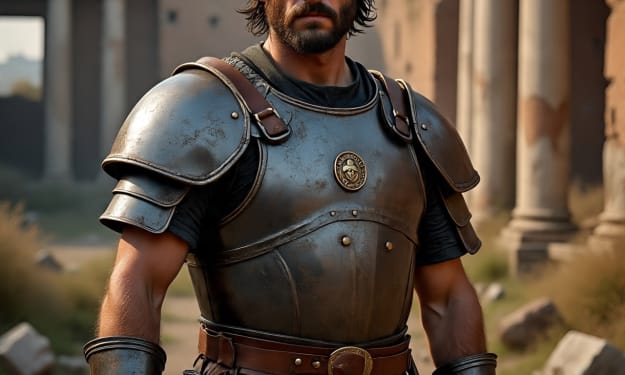
Roman Rance was born on the fringes of the Empire, in a small settlement where the stone walls of Rome’s power were more rumor than reality. His father was a soldier who never returned from campaign, and his mother a weaver who taught him the rhythm of patience, but it was in the wild fields and ruins near his home that Roman truly grew. He was a boy who fought the wind, shouted against storms, and swore that he would one day be more than just another forgotten name.
By Princess Ladlyabout a year ago in Fiction
Freakier Friday: Why a Body-Swap Between a Divorcing Couple Would’ve Been Way More Powerful
When people talk about the ultimate body-swap movie, Freaky Friday usually tops the list. A mother and daughter switch bodies, hilarity and healing ensue. Communication improves, empathy grows, family is saved. It’s charming and tender — but it’s also safe.
By Kayla Bloomabout a year ago in Fiction
The Wedding Photographer
The Routine Assignment Rohail was passionate about photography. Covering weddings was his everyday job. Bright lights, decorated halls, and smiling faces were always a part of his camera reel. For him, every wedding felt the same bride, groom, happiness, and the noise of celebration.
By Farooq Hashmiabout a year ago in Fiction
"The Bench by Willow Lake"
I still remember the exact spot where she used to sit. Every morning at seven, she’d arrive at the bench by Willow Lake—always with her coffee in a chipped white mug, the one with a tiny bluebird painted on the side. I never asked her name. We were just two strangers bound by routine and silence, yet in those quiet mornings, we became something more—two souls stitched loosely by time and presence. Now the bench is empty. At first, I thought she might be late. It happens. But when the clock ticked past 7:30, I began to feel the first strange tug of absence. That was six weeks ago. Her name, as I later learned from the librarian, was Marianne. She was 68, lived alone in the brick cottage near the post office, and used to be a music teacher. The librarian said it like she was reading a grocery list—no emotion, just facts. I remember nodding like it made sense, but truthfully, it didn’t. How could someone so present just vanish like mist? I keep going to the lake every morning. I bring my coffee in a travel mug—nothing fancy—and I sit where she used to sit. The ducks still glide across the surface, and the sun still breaks through the same patch of pine trees at precisely 7:12. Nature doesn’t notice when someone is missing. People do. It’s funny how we don’t realize someone’s importance until they’re gone. Marianne never said much. Sometimes, she’d hum softly—snippets of old songs I didn’t recognize but always found comforting. Once, I asked her if she was a singer, and she smiled—not with her lips, but with her eyes—and said, “Not anymore, but the music never leaves you.” I wish I had asked more. Asked anything, really. The police said there was no sign of foul play. Just a woman who never came home one day. Her back door was unlocked. Her coat still hung by the hook. A slice of bread left in the toaster. People don’t just disappear—but somehow, she did. Some say she moved away. Others say she walked into the woods and never came out. I don’t believe either. I think she simply left. Not in a morbid way—just... moved on, like the tide does when no one’s watching. Maybe she got tired of waiting for someone to ask her name. The town didn’t hold a memorial. No candles, no vigil, no photographs taped to lampposts. Just a hushed ripple of gossip that faded as quickly as it came. I hate that. I hate that the world doesn’t pause for people like Marianne. But I do. I pause every morning, coffee in hand, and I remember. Last Tuesday, I found something tucked beneath the bench. A folded piece of sheet music, yellowed at the edges. No name on it, but the handwriting was delicate and careful—each note drawn with love. I took it to the librarian, who confirmed it was Marianne’s. “She used to compose little melodies,” she said. “Gave them away like bookmarks.” I’m not sure why, but I framed that music and hung it by my kitchen window. I don’t even read music, but sometimes when the wind moves through the house just right, I swear I can hear it—the faintest tune, like humming. Sometimes I wonder if she’s watching. Not in a ghostly way, but in the way someone hopes they’re remembered. I wonder if she knows someone noticed her absence. That someone misses her. Because I do. I miss her quiet presence. Her coffee. Her music. I miss the feeling of knowing someone would always be there, even if we never exchanged more than a few words. It’s strange to miss someone you barely knew. But then again, maybe that’s the purest kind of missing—uncomplicated by expectation, memory untainted by disappointment. Just a presence, gone. Tomorrow, I’ll be back at the bench. I’ll bring two coffees—one in my mug, and one in a chipped white one I found at a thrift store. I’ll set it beside me and hum a melody I don't quite remember. Maybe she’ll hear it. Maybe she’s still listening.
By Israr khanabout a year ago in Fiction