family
How to Tie a Tie
With mechanical movements, I passed the tie around my neck, adjusted it, and started tying it. I watched myself in the mirror. He'd taught me how to do this. When I was eleven. In a rare display of patience, he'd stood beside me, and showed me, step by step. Pass the thicker end over the thimer one... Bring it up behind... Tuck it through... I try to squash the old man out of my head, but it's no use. He's determined to take up space today. + I remember sitting in the car with him, listening to him rant and yell... and not even feeling upset. I had no fear left. Just a detached wondering: was he really going to keep shouting for the whole journey? It was well over an hour. Do you know, I can't even remember where we were travelling from, or why we'd gone there? It doesn't matter, now, anyway. Staring out of the rain-speckled window at the darkening sky, I let his voice wash over me. Like the blurry lights whizzing past, and the white marks on the road, it had taken on an almost hypnotic quality. At one point he slammed his foot down, and swerved across the road. A lorry blared its horn at us. Dad yanked on the wheel again, and we missed the truck by a whisker. I barely even noticed his words anymore. They were bound to be his greatest hits, anyway. When was I going to be a man? Why was I such a disappointment to my poor mother? Blah blah blah. When he pulled up outside his house, where I was supposed to be staying, I noted with the same detachment, that, yes, he was still going. I didn't sigh. That would have riled him further. But I wanted to. I was just so tired of his shit. So tired. I got out of the car, and shut the door carefully. I opened the back, moving like a robot, and took out my bag. Slinging it over my shoulder, I turned, and started walking away. I didn't walk towards the house. I headed the other way, towards the main road. "Hey!" Of course he yelled after me. I kept going. "Hey!!" Oh, he was getting madder. I watched my reaction with vague interest. My steps did falter. Did he notice? Some part of me still wanted to manage his behaviour somehow. It was as much habit as anything else. I wondered how often I'd even succeeded... ...and then his hands landed on the back of my jacket. He yanked me off my feet and around to face him. My bag slid to the ground. The storm from his mouth blasted into my face in a cloud of rage, manipulation, and bad breath. I dangled from his grip, just wanting his tantrum over, with as little damage as possible. When he released me, he did it with a shove, as if he couldn't bear to have me near him another moment. I sprawled on the wet tarmac, and tasted blood. I knew he wouldn't stop. Ever. He would keep coming at me until he was forced to stop. One way or another. I powered myself to my feet just in time. He would have reached for me again, but I stepped forward and swung. The shock in his eyes was as satisfying as the crunch of my fist hitting his mouth. "Leave. Me. Alone." I could have spat at him that I was an adult, I had a job and a place of my own, I didn't need to deal with his shit anymore. I think I distilled it all down to those three words, and hurled them like rocks. I picked up my bag and walked away. The certainty had settled into my bones that I'd never see him again. Never waste another word on him. + I'm here today for my mum, and my sister. Not for him. I thought I wouldn't cry when this time came. But here I am, and I am not so sure. I'm angry at myself, because the old man doesn't deserve tears. Maybe I do. Maybe mum does. My reflection looks back at me, and just like the last time I saw my dad, I almost don't recognise myself. There I am, in my black suit, the same one I've used for job interviews. And court. I adjust the tie. It's black, to match the suit. He flickers in my mind, that last halfway happy memory with him in it...
By L.C. Schäferabout a year ago in Fiction
The Comedy of Errors
The Comedy of Errors: Shakespeare’s Hilarious Tale of Mistaken Identity "Meta Description" Dive into Shakespeare’s "The Comedy of Errors", a riotous farce of mistaken identity, twin mix-ups, and chaotic humor. Discover its plot, themes, and why it still delights audiences today!
By its_ishfaq_ahmadabout a year ago in Fiction
The Drawing of My Life
When I was a child, I believed that pencils held magic. Not the kind of magic that turned frogs into princes or moved mountains—but the quiet kind. The kind that turned thoughts into pictures, emotions into shapes, and silence into color. I didn’t speak much as a kid. While other children chased each other on the playground or shouted answers in class, I sat in the corner of my own world, sketching stick figures and stars on the backs of my notebooks.
By Esther Sunabout a year ago in Fiction
The Scribe of the Last Days
The world was in decline. A strange, heavy stillness hung in the air. The city's marketplaces, once vibrant with chatter, were now steeped in an eerie silence. Faces, once expressive, now mirrored only despair and exhaustion. The dazzling glow of technology had pushed humans apart, each lost in their own digital world, hidden behind a screen. It felt as if something monumental was about to end, but no one knew what, or when.
By Mian Nazir Shahabout a year ago in Fiction
Her Shoes Were Still at the Door After She Was Gone
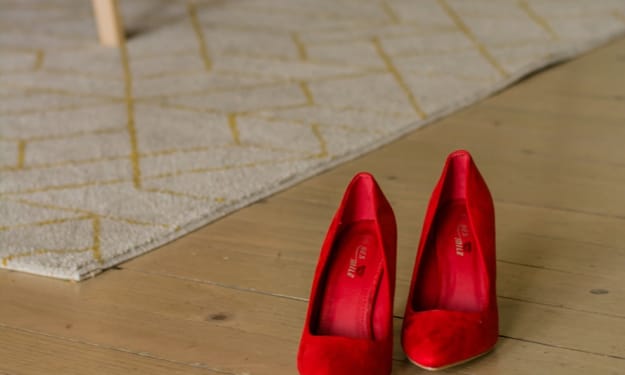
The day she left, I didn’t realize it was goodbye. We had argued over something small—something about laundry, or maybe the thermostat—and she left in a flurry, grabbing her keys but forgetting her coat. I remember the sound of the door closing behind her. Not a slam. Just... final. I figured she’d go for a walk, cool off, maybe get coffee like she always did when she needed space. That’s what we always did. Fight, fume, forgive. But this time, she didn’t come back. At first, I thought maybe she was staying at her sister’s. Or that she’d driven to the lake to clear her head. But as the sun dipped behind the skyline and the house filled with silence, something heavier began to set in. I called. No answer. Texted. Left voicemails. Tried not to panic. Then her sister called me—she hadn’t seen her either. That night felt endless. Every creak of the floor, every car passing on the street outside made my heart race. I barely slept, hoping she'd walk in any minute. She didn’t. Days turned into weeks. Police reports. Searches. Pleas on social media. I handed out flyers with her picture and clung to hope like it was the last thread of sanity I had left. But through it all, one thing remained constant: Her shoes—those scuffed, maroon canvas ones she loved—sat at the door. They were the first thing she kicked off when she got home. She wore them to the market, on our lazy Sunday strolls, and even once to a wedding just to make a point. They were part of her, like the way she twirled her hair when she read or hummed Fleetwood Mac while cooking. I couldn’t move them. Friends came and went. They brought casseroles, awkward hugs, and well-meaning advice. “She wouldn’t want you to suffer like this.” “You need to accept it and move on.” “You should get rid of her things—it’ll help.” But I couldn’t touch those shoes. They stood like silent witnesses to a life interrupted. To mornings filled with shared laughter and nights tangled in whispered dreams. They reminded me of who she was—vibrant, stubborn, alive. Every morning, I’d sit on the couch, staring at them. Waiting. Hoping. Months passed. Seasons changed. I kept telling myself maybe she was just lost. Maybe she was figuring things out. Maybe she was trying to protect me from something. But deep down, I knew. One rainy afternoon, I came home to find a small package at the door. No return address. Just my name in her handwriting. Inside was a note. > “I’m sorry. I couldn’t carry it anymore. You gave me more love than I believed I deserved. Please remember me in the light. —Em.” I collapsed to the floor, holding that note like it was her. Grief isn't loud. It's quiet and cruel and settles into the corners of your life. Into the empty spaces beside you in bed. Into the half-full cup of coffee on the counter. Into the shoes still waiting by the door. I still haven’t moved them. I don’t know if I ever will. Some days, I talk to them—tell them how work was, or how our dog still scratches at the bathroom door expecting her voice. I water the plants she loved, replay her favorite records, and let her memory live in the spaces she left behind. Grief has no expiration date. It just... becomes part of you. And those shoes—those damn shoes—remind me that once, she was here. She was real. She was mine. And maybe, in some way, she still is. Sometimes, I imagine her walking through that door again—smiling, apologizing, slipping back into those shoes like nothing ever happened. It’s a fantasy I can’t let go of. And maybe I don’t have to. Because love like that doesn’t vanish. It lingers... in the silence, in the shadows, in the shoes. #EmotionalStory #LostLove #GriefAndLove #LoveAndLoss #VocalMedia #TrueFeelings #HeartbreakingMoments
By Dr Gabriel about a year ago in Fiction
The Bookstore Where Our Eyes First Spoke
The old bookstore on Elm Street was supposed to be torn down by spring. It smelled like dusty paper and warm cinnamon, with creaky wooden floors that whispered with every step. Leah had wandered in on a rainy Tuesday, hoping to kill time. She wasn’t expecting to find the last piece of her heart between the pages of a book—or in someone else’s eyes.
By The Waiting Treeabout a year ago in Fiction
The Silent Artist of the Alley
The alley was a forgotten seam in the city's bustling fabric. It wasn't the kind of place you'd linger, not with its overflowing bins, the perpetual scent of damp concrete, and the shadows that clung stubbornly even on the brightest days. Here, dreams often came to rust, and ambitions dissolved into the grime. Yet, amidst this forgotten corner, lived a man known only as Elias. He was the quietest soul in the loudest city, a man who saw what others overlooked, and heard what others dismissed. Elias was deaf, and he spoke only in the language of his hands.
By Mian Nazir Shahabout a year ago in Fiction
"The Light in the Attic"
At the edge of the village, past the crooked oak trees and the overgrown path that children dared each other to walk down, stood an old house. Its wooden boards were worn and faded, its windows foggy with time. Most people whispered about the house but never got too close. They said an old woman lived there, alone, never seen during the day, and only a flickering light in the attic window hinted at life within.
By Muhammad Sananabout a year ago in Fiction
Come Sunday Morning
Sunday morning and another day to say that 'I am here, and I am loved." Sundays are a day of reflection, but to be honest it's also day to catch up or to even get ahead in some other 'work' that one must feel must be done. It is a day to remember some basic rules of living this life that the creator has seen to give us to do with what we please with it, but do we always make the right decisions for ourselves and/or others that happen to be around us and to be truthful I try.
By Mark Grahamabout a year ago in Fiction
Memorial Day
So, another Memorial Day is upon us this month of May. It seems that we all seem to have fun on this first summer holiday. There are so many of us who plan some sort of family gathering that could mean barbecues of many kinds of picnic foods from the common hamburgers and hot dogs and potato salad and whatever seems to be of interest to share. There may be some who drink, but I hope they do wisely for this is a day to remember the fallen who gave their all to this country we love and live for.
By Mark Grahamabout a year ago in Fiction
Energy
Johan reached out for a cheeky squeeze. Not to be confused with a squeaky cheese, by the way. Such as the one Martha had just trodden on, on her way back from Manson's bedroom. This caused a moment of panic, sure that Manson's little voice would pipe up from the nursery, or there would be the dreaded thud of little feet coming after her. Or a thin wail would gust from her 8own room where little Sinclaire was (for now at least) sleeping. Such was her tension and fatigue from putting the darling brat to bed for the nineteenth (or maybe the twentieth) time that evening, Martha was not in the mood. It took all her restraint and self discipline not to slap Johan's hand away. Harsh words were bitten back and caged behind teeth that threatened to break if she clenched them any tighter. Bags slung low under eyes that stared into the middle distance. Her hair frizzed out at the edges. Martha spent half a moment trying to remember if she'd brushed it yesterday... or was it the day before? Ignoring the baby sick on her leggings, the wedge-shaped yellow dog toy forgotten in her hands, Martha allowed the squeeze. She did not throw anything at him. Did not leap out of the window rather than being touched (again) by pawing hands that wanted something. It had been weeks since they'd had sex, and much longer since she'd enjoyed it. The other night had seen a scene unfold just like this, but his touch had been tentative and his tone understanding and supportive when he said, "Are you sure you're not too tired?" She'd rested one of her hands on his, leaned in close, and whispered, "Absolutely bloody knackered, babe." He'd held her for a while, and she'd got an early night. Tonight, he was silent, and less tentative. When he tilted her face to his, she closed her eyes and thought hard about the time, just a few short years ago, when she couldn't keep her hands off him. Couldn't get his clothes off fast enough, couldn't sate her hunger for his body. Remember that? Remember what that felt like? Martha held that feeling in her mind, and tried to super-impose it onto now. This. Tried.
By L.C. Schäferabout a year ago in Fiction