family
Echoes in the Static. AI-Generated.
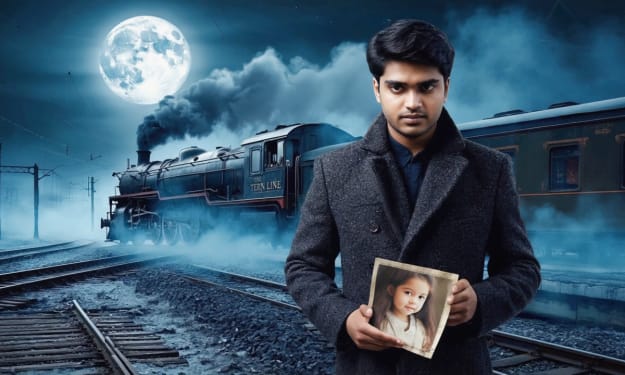
Dialing the Past It started with a power outage. A storm had swept through the neighborhood like an angry child knocking over furniture, leaving downed lines and darkened windows in its wake. I was home alone, the kind of alone that makes even the ticking of a clock sound suspicious. With nothing but candlelight and boredom, I dusted off an old battery-powered radio I hadn’t used in years.
By Money Talks, I Writeabout a year ago in Fiction
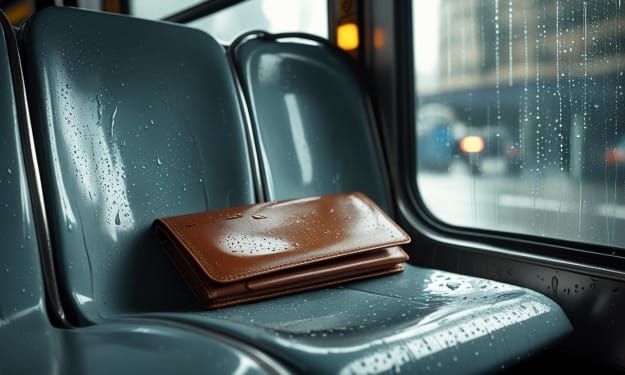
The Day My Brother Disappeared Without Saying Goodbye
There are moments in life that come silently, without warning, and yet leave behind a thunder that never stops echoing. For me, that moment came on a foggy Wednesday morning—the day my older brother disappeared. His name was Saad. He was three years older than me and, in many ways, everything I wasn’t. Quiet, brooding, thoughtful, and always lost in books or long walks. He had a smile that didn’t come easily, but when it did, it made you feel like everything would be okay. We were close once. Shared a room, a bicycle, even secrets. But as we grew older, something shifted. Saad began to pull away. At first, it was subtle—skipping meals, sitting alone on the rooftop, and staring into the night for hours. He would disappear for long stretches without explanation. When I asked him where he went, he’d just shrug and say, “Somewhere quiet.” There was always this weight in his eyes, like he was carrying something none of us could see. Our parents noticed too. My mother thought he was in love. My father assumed it was just a phase. But I knew something deeper was unraveling. Then came the morning. He left home like he always did — wearing his dark green jacket, headphones around his neck, and a small notebook in his pocket. My mother handed him his lunch, and he kissed her forehead, something he hadn’t done in years. Then he turned to me, gave a nod, and said, “Take care of them.” I laughed. “You act like you’re going off to war.” He smiled — a full, warm smile — and walked out the door. That was the last time we saw him. When he didn’t return that night, we thought he might’ve stayed with a friend. The next day, worry set in. By the third day, my father filed a missing person’s report. What followed were weeks of searching—calls, posters, visits to friends, hospitals, even the morgue. Nothing. Then, exactly thirty days after his disappearance, we received a letter. No return address. Just his handwriting. > “I’m not lost. I’m just away. I need to breathe, to feel something different. Don’t be angry. I love you all. Tell Mom her food still smells like home.” My mother held that letter to her chest and sobbed. My father crumpled it, then smoothed it out again. He read it every night for a month, always in silence. We never heard from Saad again. Years passed. We tried to move on. I finished school. My parents grew older. The house grew quieter. Saad’s room remained untouched — like a museum. His books, his scent, his scribbled poems in the margins — all still there. Sometimes, I’d lie on his bed and read his old journals. They were filled with thoughts too heavy for someone so young. He wrote about feeling invisible, misunderstood, exhausted by expectations. He questioned the purpose of everything — life, family, even himself. I often wondered — what was it that finally broke him? Was it the pressure to succeed? The silence around mental health? Or just the sheer weight of existing in a world that demands so much from people who feel too much? I don’t know. But I do know that we failed to see him. Really see him. Ten years later, I visited a small village in northern Pakistan for work. While walking through the bazaar, I passed a man who looked so much like Saad, I froze. He had the same walk, the same slouch, even the same dark green jacket. I called out, “Saad?” He turned for a second, stared at me. Our eyes locked. But then he turned away and disappeared into the crowd. Was it really him? Or just a ghost of my memory playing tricks on me? I don’t know. But that night, I dreamed of us sitting on the rooftop again, sharing stories, laughing about silly things. I woke up crying. Some disappearances are not about escape. They're about survival. About finding space to breathe, to heal, to exist on one’s own terms. If I could speak to him now, I’d tell him we forgive him. That we still love him. That not a single day goes by when we don’t think of him. That the door is still open. Always.
By Muhammad Usamaabout a year ago in Fiction
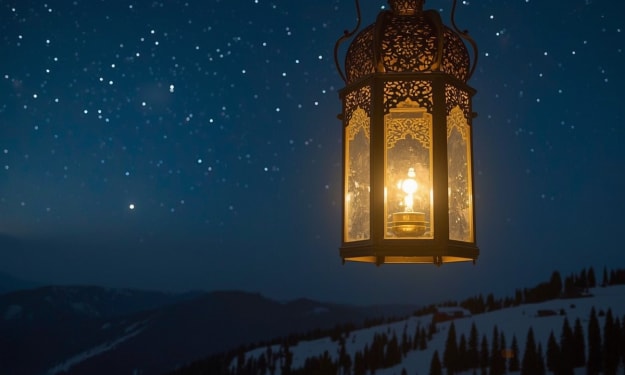
The Last Lantern of Gulmarg
By Ikhtisham Hayat Nestled in the heart of Kashmir, the small town of Gulmarg woke each winter under a blanket of snow that turned rooftops into sugar cubes and pine trees into white sculptures. It was a place of silence and snowflakes, of frozen lakes and whispering winds. But one thing made it truly unique—the Lantern Festival held each winter solstice. Every year, the townspeople released hundreds of lanterns into the night sky. It was believed that each lantern carried a wish, a prayer, or a memory to the heavens. Old and young alike came together in warmth and hope. But this year was different. This year would see the last lantern. The story begins with Meher, an 18-year-old girl with almond eyes and hair as dark as a moonless night. Meher lived with her grandfather, Baba Noor, a lantern maker known for crafting the most intricate and magical lanterns in all of Gulmarg. His shop, Noor’s Light, stood near the frozen river and smelled of cedar, wax, and memory. Ever since Meher’s parents died in a snowstorm five years ago, Baba Noor had raised her with stories, laughter, and the belief that light could heal anything. But Baba Noor had grown old. That winter, he coughed more than he spoke, and the light in his eyes dimmed. The doctor said it was his lungs—too fragile for the cold air of Kashmir. Meher knew he wouldn’t see another Lantern Festival. “I’ll make the lantern this year,” Meher said one evening, sitting beside him by the fireplace. Baba Noor smiled weakly. “It must be the most beautiful lantern Gulmarg has ever seen.” And so she began. Every evening, after school and chores, Meher shaped bamboo and rice paper with hands that remembered her grandfather’s every technique. But more than skill, she poured her heart into it—drawing stars, carving tiny doves in the frame, and painting inside the lantern a scene of the three of them: her, her mother, and her father, smiling in the summer sun. The night of the festival arrived. People gathered in the main square wearing thick shawls, their breath like smoke in the icy air. The snow crunched underfoot as they held their lanterns close to their chests. Music floated softly, and laughter warmed the silence. Meher stood at the edge of the crowd, holding her lantern. It was larger than the others, glowing a soft golden hue, its frame shaped like a flower blooming in snow. But her heart was heavy. Baba Noor, too weak to come, lay asleep in their home. As the countdown began—“Ten… nine… eight…”—Meher looked at the sky, then down at her lantern. She thought of her parents, of the nights her grandfather stayed up coughing, of the stories he told her under the stars. And then she whispered into her lantern: “Please carry him peace. Carry him home.” “Three… two… one…” Hundreds of lanterns lifted into the sky like a flock of firebirds. Children cheered. Elders closed their eyes in prayer. Meher released hers. Her lantern didn’t rise at first—it hovered, trembling in the air—then slowly floated upward. But something strange happened. Unlike the others, which drifted gently with the wind, her lantern rose straight up—higher, faster, glowing brighter. The crowd gasped. Someone whispered, “That one is different.” Another said, “It’s flying like it knows where it’s going.” Meher stared, tears freezing on her cheeks. The lantern had become a star. The next morning, she woke to silence. She walked to her grandfather’s room. He was gone. But his face was peaceful, a faint smile on his lips. Beside him on the pillow lay a small slip of paper, burned at the edges. It read: Your light will always guide me. I’m proud of you, Meher. Years passed. The Lantern Festival faded. Modern lights replaced old traditions. But in Gulmarg, on one hill overlooking the town, a single girl continued the ritual. Every solstice, Meher—now a woman, now a lantern maker—lit one lantern. Her lantern. The last lantern. She would stand alone and whisper wishes not for herself, but for others—for lost parents, for healing hearts, for peace. And in the sky above Gulmarg, on the longest night of the year, a single light would rise—carrying stories, memories, and love into the stars. Because sometimes, it only takes one lantern to keep the darkness away.
By Ikhtisham Hayatabout a year ago in Fiction
The Sweetest Dreams
In the quiet town of Meadowbrook, nestled between rolling hills and whispering woods, lived a young girl named Elsie. Barely ten years old, with eyes wide as the sky and curls as golden as morning sunshine, she was known for something rare—her dreams. Not just any dreams, but dreams so vivid and enchanting that people swore they could smell the flowers, feel the wind, and taste the honeyed air she described upon waking.
By NIAZ Muhammadabout a year ago in Fiction
The House at the Edge of Cedar Lane . AI-Generated.
I. The Sad House Everyone in the neighborhood called it the Sad House. It sat crookedly at the end of Cedar Lane, cloaked in ivy and shaded by two giant oaks that looked like they were mourning something ancient. Its shutters hung lopsided, one of them missing entirely, and no matter the weather, a veil of silence wrapped around it tighter than any storm.
By Money Talks, I Writeabout a year ago in Fiction
The Second First Time
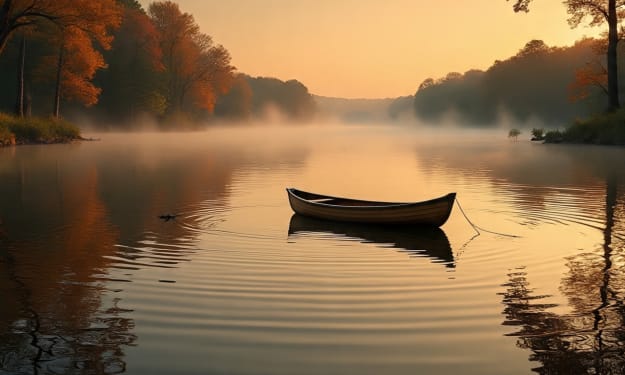
The morning air was thick with memory. Elena stood on the crumbling wooden dock, staring at the lake that had mirrored her childhood. A thousand dragonflies skated across its glassy surface. The boathouse, half-eaten by moss, leaned like an old man remembering youth. Everything looked just like it had twenty years ago—and nothing did. She exhaled. "You're really going to do it?" her younger sister, May, asked behind her. Elena nodded. “Yeah. I think I need to.” Her hand trembled slightly as she tightened her grip on the oars. The rowboat was the same one their father had used, the one he’d taught them both to row in when they were kids. Its faded green paint had chipped further, revealing scars of time, weather, and use. She had avoided it for years, ever since that day—the day that stole her first love, her best friend, and a piece of herself. She stepped into the boat. It rocked gently under her weight, as if waking from a long nap. Her bare feet remembered exactly where to go, as if no time had passed at all. --- Twenty Years Earlier “Elena, row us to the far side!” Danny grinned, pointing across the lake. “We’ll race the sun down!” She rolled her eyes playfully. “We’ll lose. The sun doesn’t get tired.” “But I do,” he said, reaching out to splash water at her. “And when I’m tired, I rest against the prettiest view on the lake.” Elena laughed. “What’s that supposed to mean?” “You.” He winked. She blushed. That summer, they were seventeen and reckless. They talked about leaving their small town together, maybe to New York, maybe to anywhere. Danny played the guitar and wrote poetry in a leather-bound journal. Elena dreamed of painting in cafés and selling her art in galleries. They carved their initials into the underside of the boathouse, where no one would find them. They made a pact: no matter where life took them, they would row out to the center of the lake once a year and talk about their lives. But that pact never survived their first year apart. The accident happened the following fall. Danny had gone hiking alone. A fall. A broken phone. A search that took too long. He was never found. --- Now Elena hadn't been back to the lake in nearly a decade. Too many ghosts. But this year marked twenty years. Twenty years since the day she felt the world tilt and fall apart. She had buried her grief deep beneath adult responsibilities and quiet art galleries, far from the green stillness of home. Until May called. “Mom wants to sell the house,” she had said. “We have to clear the lake cabin before July.” And so Elena came. And now she rowed. Each stroke felt unfamiliar, yet muscle memory guided her like a thread pulling through time. The lake was quiet except for the soft creak of oars and the occasional chirp of a curious bird. She reached the center, paused, and let the boat drift. Silence. Her heart beat louder than the water lapping against the hull. The last time she had floated here was with Danny. Now she was alone. Except… not quite. Elena reached into her satchel and pulled out a small object: a worn leather journal. Danny’s journal. She had found it in an old trunk in the attic the night before. It had been tucked inside a shoebox with their carved initials drawn carefully on top. Her hands shook as she opened it. --- Entry: July 14th, 2005 > Today, Elena and I carved our initials into the boathouse. She thinks I don’t believe in magic. She’s wrong. She just doesn’t know that all my magic is wrapped up in her. We’ll meet here every year. Even if we don’t. Even if I can’t. I’ll always be here. If you’re reading this, maybe you made it back. Maybe you needed this as much as I need you. —D. Her breath caught in her throat. Tears blurred the ink, but she didn’t wipe them away. The water below shimmered like liquid silver, as if reflecting not just the sky, but memories too. She felt something stir in her chest—a flutter she hadn’t allowed herself in years. She took a deep breath. “Hi, Danny,” she whispered. --- That Night Back at the cabin, Elena sat by the fire pit. May brought out marshmallows and cocoa, like old times. “You stayed out there for hours,” May said, gently. “I needed to remember,” Elena replied. “But not just the sadness. The joy too.” May nodded. “Do you think you’ll keep the cabin?” Elena looked around. “Maybe. Maybe I’ll fix it up. Come back each summer.” May smiled. “He’d like that.” --- One Year Later The cabin was brighter, newer in spirit. The dock had been reinforced, and Elena had repainted the old rowboat a bold, hopeful blue. This time, she wasn’t alone. A group of teens from her summer art program stood behind her, nervous and excited. She had opened a small creative retreat—Lake Still Studio—a place for young artists, writers, and dreamers. “I’m going to show you something,” Elena said, stepping into the boat. “It’s where I found my first love… and my second first time.” They watched as she rowed to the center, where the water held more than reflection—it held a promise kept. As the sun dipped low, Elena smiled. The past was still there, but it no longer drowned her. It buoyed her. Danny’s journal now sat on a small altar in the cabin, next to their initials etched into a frame. --- The Second First Time wasn’t just about returning. It was about allowing yourself to feel again. To open the heart like it had never been broken. And as Elena looked across the lake, wind brushing her hair, she whispered, “Thank you, Danny.” Because some first times come again—not to replace the old, but to remind us how deeply we once lived. And how we still can.
By Muhammad Siyab about a year ago in Fiction
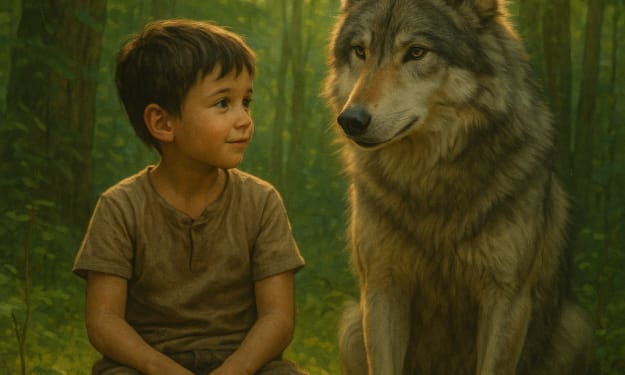
The Wolf and the Boy: A Friendship Beyond Fear
Ayaan was an inquisitive and compassionate youngster who lived in a peaceful village encircled by thick forests. Even though he was only nine years old, he had the courage to take on the sky. On one occasion, Ayaan got lost while pursuing a vibrant butterfly close to the woods.
By Jobir Khanaabout a year ago in Fiction
The Legacy of Home. Top Story - July 2025.
It was only August, but it already felt like Summer’s end. The heat had broken; maybe it was the thunderstorm of tears I had wept which had tempered the humidity and made the air less oppressive, as if the world were giving me some comfort. My eyes sizzled at the thought, threatening to begin bubbling pools again. I blinked fiercely, urging them silently to settle themselves. They obeyed, this time, and I sighed in relief. I did not want my eyes blurry as I traveled the tree arched mountain pass, her road ways curving up like a sanguine river. It was so peaceful, so familiar, and I cherished the sun sparkling through the emerald leaves and the smell of the sunlight toasting the onion grass as I drove onward towards home.
By Ellie Hoovsabout a year ago in Fiction